
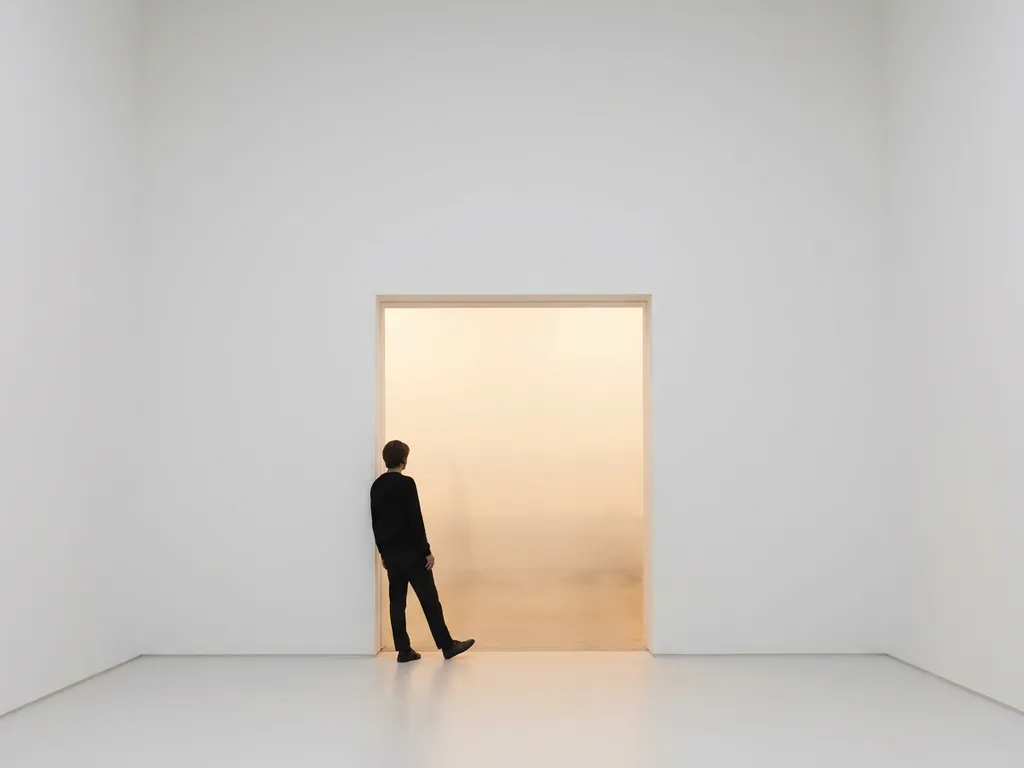
Creating an immersive experience means designing an environment where participants are fully surrounded by sensory input, narrative, and interaction, so completely that the outside world fades away. It combines physical space, digital technology, storytelling, and sensory design into a single, cohesive journey. The sections below unpack every dimension of that process, from foundational principles to production timelines and impact measurement.
What makes an experience truly immersive?
An experience becomes truly immersive when it engages multiple senses simultaneously, removes the distance between observer and content, and places the participant inside the story rather than in front of it. The defining quality is presence: the feeling of being somewhere, not just watching something. This shifts passive reception into active, embodied engagement.
Most media asks you to look at a screen. Immersive experiences ask you to inhabit a world. That distinction matters because the brain processes embodied experience differently from observed content. When the body is physically oriented within a space, when sound surrounds rather than projects, when scent or temperature signals reinforce the narrative, the mind treats the encounter as real rather than representational. Memory forms differently. Emotional responses run deeper.
Three qualities consistently separate genuinely immersive experiences from those that merely use immersive technology:
- Sensory coherence – every sensory channel reinforces the same world, not competing or contradicting each other
- Participant agency – the person can influence, explore, or respond rather than passively receive
- Narrative continuity – the story holds together regardless of where the participant looks, moves, or engages
Without these three qualities, even the most technically sophisticated environment risks feeling like a demonstration rather than an experience.
What are the key elements of immersive experience design?
The key elements of immersive experience design are spatial design, multisensory layering, interactive mechanics, narrative architecture, and audience journey mapping. Each element must be planned in relation to the others from the very beginning, immersive design fails when these components are developed in isolation and assembled at the end.
Spatial design and sensory layering
Space is the medium. Every surface, pathway, threshold, and volume communicates before a single piece of content activates. Spatial design determines how participants move, where their attention lands, and how long they dwell. Sensory layering then fills that space with sound design, scent, temperature, tactile elements, and lighting that shift as the narrative progresses. Smell, in particular, is one of the most underused and most powerful tools available, it bypasses rational processing and connects directly to emotional and memory centers.
Interactive mechanics and narrative architecture
Interaction design defines what participants can do and how the experience responds to their choices. This ranges from simple gesture-triggered content to branching narrative paths driven by participant decisions. Narrative architecture is the structural blueprint: the sequence of emotional beats, the pacing of revelation, the moments of tension and release. A strong narrative architecture means the experience feels purposeful and complete, not like a collection of impressive moments strung together.
Audience journey mapping ties everything together. It traces the full arc of the participant’s experience from arrival to departure, anticipating where attention peaks, where fatigue sets in, and where the most critical emotional moments should land. This is where design becomes empathy.
What technologies are used to create immersive experiences?
The core technologies used to create immersive experiences include virtual reality (VR), augmented reality (AR), mixed reality (MR), spatial audio, projection mapping, interactive sensors, and AI-driven personalization. These technologies are rarely used in isolation, most sophisticated immersive experiences combine several of them within a single physical environment.
Here is a practical overview of the most widely applied technologies in 2026:
- Virtual reality (VR) – head-mounted displays that replace the participant’s visual field entirely, enabling full 360-degree environments built in engines like Unreal or Unity
- Augmented reality (AR) – digital content overlaid onto the physical world via smartphone, tablet, or AR glasses, adding narrative layers to real spaces and objects
- Mixed reality (MR) – real-time interaction between virtual objects and the physical environment, with devices like Apple Vision Pro enabling spatial computing at a new level of fidelity
- Projection mapping – video content projected precisely onto irregular surfaces, transforming architecture, sculptures, or entire rooms into dynamic canvases
- Spatial audio – three-dimensional sound design that moves and responds to the participant’s position, reinforcing presence and directionality
- Interactive sensors – motion capture, RFID, depth cameras, and pressure sensors that detect participant behavior and trigger responsive content
- AI personalization – algorithms that adapt content, pacing, language, or narrative path in real time based on participant input or behavior
- Volumetric video and digital twins – photorealistic 3D captures of people and places that can be placed into virtual or augmented environments with full spatial depth
The selection of technology should always follow the experience concept, not precede it. The most effective immersive experiences are built around a clear emotional or educational goal, with technology chosen because it serves that goal, not because it is the newest available option.
How does storytelling shape an immersive experience?
Storytelling is the structural foundation of every immersive experience. Without it, even the most technically advanced environment becomes a novelty that fades quickly. Narrative gives participants a reason to care, a framework for interpreting what they encounter, and an emotional arc that makes the experience memorable long after they leave.
In traditional media, storytelling is linear and author-controlled. In immersive design, the story must function spatially and temporally across a range of participant pathways. This requires designing what experience architects call a “narrative container,” a world with consistent internal logic, populated with cues, characters, and consequences that hold meaning regardless of the order in which participants encounter them.
The most powerful immersive narratives do three things that conventional storytelling cannot:
- Place the participant inside the story – not as a viewer but as a presence whose movement and choices shape what unfolds
- Use the environment as a storytelling device – so that space, light, sound, and scent carry narrative weight alongside explicit content
- Create perspective shift – by putting participants in unfamiliar situations, immersive storytelling builds genuine empathy rather than intellectual understanding
This is why immersive experiences are particularly effective for education, social impact campaigns, and brand storytelling that needs to move beyond information delivery into genuine emotional connection. When people experience a story rather than hear it, they internalize it differently.
How long does it take to create an immersive experience?
Creating an immersive experience typically takes between three months and two years, depending on scale, complexity, and the number of technologies involved. A targeted AR activation for a product launch might be developed in eight to twelve weeks. A permanent museum installation or large-scale VR education program with custom narrative and hardware integration can take twelve to twenty-four months from concept to delivery.
The production process generally moves through five phases:
- Discovery and concept development – defining the goal, audience, narrative framework, and technology approach. This phase often takes four to eight weeks and is the most critical investment of time.
- Design and prototyping – spatial design, interaction design, content architecture, and early prototypes for testing core mechanics
- Content production – 3D modeling, VR/AR development, film and animation production, audio design, and sensory element sourcing
- Integration and testing – assembling all components in the actual space or platform, stress-testing interactions, and refining based on user testing
- Deployment and iteration – live installation, audience monitoring, and ongoing refinement based on real-world engagement data
Timeline is heavily influenced by the number of stakeholders involved in approval processes, the availability of source assets, and whether the experience is being built for a single venue or needs to be scalable across multiple locations. Working with a studio that handles concept through delivery under one roof significantly compresses timelines by eliminating handoff delays between agencies.
What’s the difference between AR, VR, and mixed reality experiences?
AR (augmented reality) adds digital content to the real world. VR (virtual reality) replaces the real world entirely with a digital environment. Mixed reality (MR) blends both, allowing virtual objects to interact with and respond to the physical environment in real time. Together, these three form what is known as extended reality (XR), the broader category of spatial computing technologies.
Augmented reality
In an AR experience, the participant remains fully aware of and present in their physical surroundings. Digital elements, 3D objects, animations, information layers, or characters, are overlaid onto the real world through a smartphone camera, tablet, or AR glasses. AR is highly accessible because it requires no headset and works in everyday environments. It is particularly effective for outdoor activations, museum enhancements, educational overlays, and product visualization.
Virtual reality
VR replaces the participant’s entire visual and auditory environment with a computer-generated world. Using a head-mounted display, the participant can look in any direction and see only the virtual environment. This creates the strongest sense of presence and is most effective for deep empathy experiences, training simulations, narrative storytelling, and scenarios that would be impossible, dangerous, or expensive to recreate physically. The trade-off is that VR requires dedicated hardware and a controlled physical space.
Mixed reality
Mixed reality occupies the space between AR and VR. Virtual objects not only appear in the real world but can interact with physical surfaces and respond to the participant’s movements and environment in real time. Devices like the Apple Vision Pro represent the current frontier of mixed reality, enabling spatial computing experiences where digital and physical coexist with high fidelity. MR is emerging as the most versatile format for professional training, architectural visualization, and next-generation brand experiences.
The choice between AR, VR, and MR depends on the experience goal, the deployment context, the target audience’s technical comfort level, and the physical space available. Many of the most effective immersive experiences we design combine elements of all three within a single environment.
How do you measure the impact of an immersive experience?
The impact of an immersive experience is measured through a combination of behavioral data, emotional response indicators, knowledge retention metrics, and long-term outcome tracking. The right measurement framework depends entirely on what the experience was designed to achieve, engagement metrics matter most for brand activations, while learning outcomes and behavior change matter most for education and social impact programs.
Practical measurement approaches include:
- Dwell time and interaction depth – how long participants engage and which elements they interact with most, tracked through sensor data or platform analytics
- Completion rates – the percentage of participants who move through the full experience, indicating sustained engagement
- Pre and post assessments – for educational experiences, structured knowledge or attitude assessments before and after participation reveal measurable learning gains
- Emotional response tracking – qualitative feedback, observation, and in some contexts biometric data (heart rate, facial expression analysis) that capture emotional engagement
- Social amplification – shares, user-generated content, and word-of-mouth following the experience, particularly relevant for brand activations
- Behavioral follow-through – downstream actions such as donations, purchases, enrollment, or attitude shifts measured weeks or months after the experience
The reason immersive experiences are increasingly favored over traditional media in education and campaigning is precisely because they generate measurable outcomes that passive content cannot match. When people move through a story physically, when they make decisions within it and feel its consequences, the experience encodes differently in memory. This is not a philosophical claim, it is the practical reason organizations from UNICEF to major universities are investing in immersive formats as a core communication and learning tool.
If you are exploring what an immersive experience could achieve for your organization, institution, or campaign, we would welcome the conversation. Contact us to discuss your goals and discover what becomes possible when technology and storytelling work together.
Gerelateerde artikelen
- What is an immersive display?
- What is an example of an immersive experience?
- How to create a virtual exhibition?
- What is the difference between brand activation and brand experience?
- What is the difference between experience marketing and experiential marketing?
- What are the guiding principles of immersive learning?
- What are examples of immersive technology?
- How to create an immersive event?
- How do immersive installations work?