
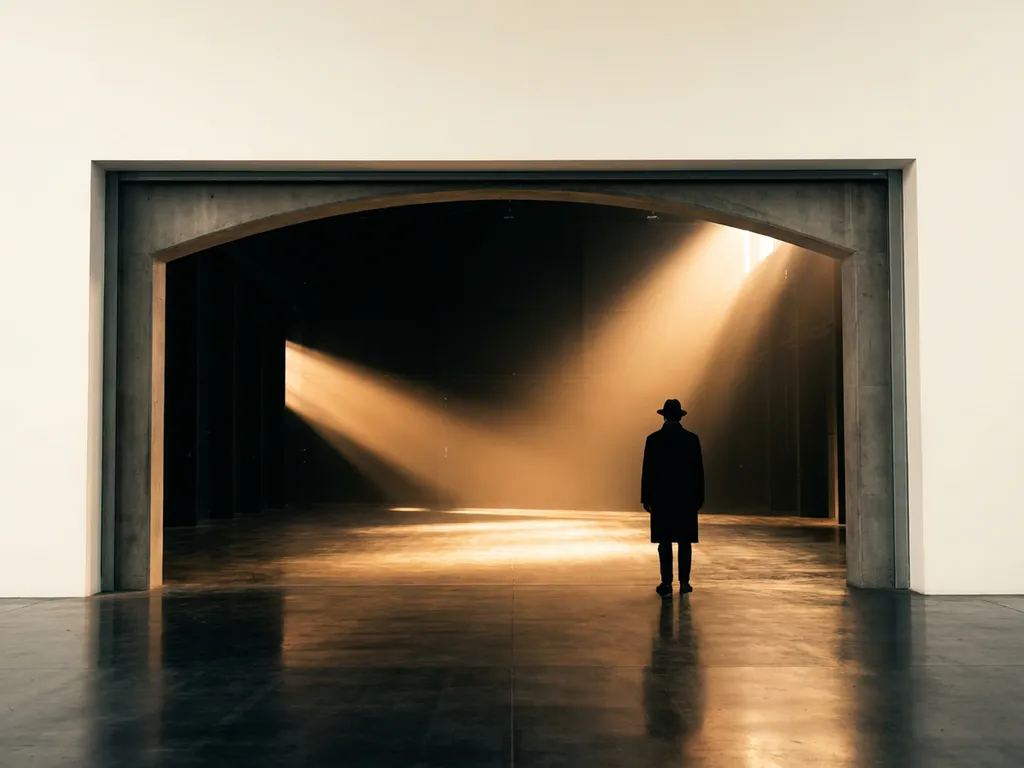
Creating an immersive event means designing a multi-sensory environment where participants are fully absorbed into a story, space, or experience rather than passively observing it. The result is an event that engages sight, sound, touch, smell, and movement simultaneously, making the experience feel lived rather than watched. The questions below unpack every dimension of immersive event production, from technology choices to measuring impact.
What makes an event truly immersive?
An event becomes truly immersive when the environment responds to its audience, the narrative surrounds rather than faces them, and multiple senses are activated at once. The key distinction is agency and absorption: participants feel they are inside the experience, not in front of it. Passive seating and a single focal point are replaced by spatial storytelling that unfolds in every direction.
Several qualities separate a genuinely immersive event from one that simply uses impressive technology. First, there is coherence: every element, lighting, sound, scent, physical texture, and digital layer, must serve the same story. A stunning projection mapped onto a wall loses its power if the soundtrack contradicts the mood or the floor beneath visitors’ feet feels generic. Second, there is responsiveness: when an environment reacts to the people inside it, whether through motion sensors, AI-driven content, or live facilitation, visitors shift from spectators to participants. Third, there is emotional intention: the design starts from what you want people to feel or understand, not from what technology is available.
This is the philosophy we build every project around at Rooftop Immersive. Technology is always a means, never the goal. The goal is that moment when a visitor forgets they are at an event and simply exists inside the world you have created for them.
What types of technology are used in immersive events?
Immersive events draw on a wide range of technologies including spatial audio systems, projection mapping, augmented reality, virtual reality, mixed reality, interactive screens, haptic feedback, scent diffusion, and AI-driven personalization. The specific combination depends on the venue, audience size, narrative goals, and the level of interactivity required.
Here is a practical breakdown of the most commonly deployed technologies:
- Projection mapping transforms irregular surfaces, walls, floors, and objects into dynamic canvases that respond to sound or movement.
- 360-degree domes wrap audiences in full panoramic visuals, creating the sensation of being transported to another place entirely.
- Augmented reality (AR) overlays digital content onto the physical environment via smartphones or headsets, adding invisible layers of story that visitors unlock.
- Virtual reality (VR) replaces the physical environment with a fully digital one, ideal for training simulations, historical reconstructions, or deep narrative experiences.
- Spatial audio places sound in three-dimensional space, so a whisper seems to come from behind a visitor and a thunderclap rolls across the ceiling.
- Haptic and environmental effects such as vibrating floors, temperature shifts, wind, and scent dispensers engage the body directly.
- AI avatars and interactive NPCs allow visitors to hold real-time conversations with virtual characters, personalizing the experience to each individual.
- Interactive screens and sensor-triggered installations invite physical participation, turning passive observers into active contributors.
In 2026, spatial computing platforms and next-generation mixed reality hardware are pushing these possibilities further, enabling real-time blending of physical and digital elements at a resolution and latency that were not achievable just a few years ago.
How do you design the narrative for an immersive event?
Narrative design for an immersive event starts with a single clear emotional or intellectual objective: what should a visitor feel, understand, or decide by the time they leave? Every spatial, sensory, and technological decision flows from that anchor. Unlike linear storytelling, immersive narrative must work in all directions simultaneously because visitors choose their own path through the space.
The design process typically moves through these stages:
- Define the core transformation. What shifts inside a visitor between arrival and departure? This is the story’s spine.
- Map the journey spatially. Divide the experience into zones or chapters that each carry a distinct emotional beat, while allowing for non-linear exploration.
- Identify sensory triggers for each beat. Which moment calls for darkness and low-frequency sound? Where does scent reinforce a memory or a place? Where does interactivity give the visitor agency?
- Build in choice and consequence. Even subtle moments where a visitor’s action changes what happens next deepen their sense of presence and ownership.
- Prototype and test with real people. Immersive narrative rarely works perfectly on paper. Iterative testing in the actual space reveals where visitors get lost, disengaged, or overwhelmed.
We approach narrative design as a collaborative process, working closely with clients to ensure the story reflects their values, their audience, and the specific impact they want to create. Co-creation is not a buzzword here; it is the method that produces experiences that feel authentic rather than manufactured.
What’s the difference between AR, VR, and mixed reality at live events?
Augmented reality (AR) adds digital content on top of the real world, virtual reality (VR) replaces the real world entirely with a digital environment, and mixed reality (MR) blends both so that digital objects interact with and respond to the physical space in real time. At live events, each technology serves a different purpose and creates a different relationship between the visitor and their surroundings.
Augmented reality at live events
AR is the most accessible option because it typically runs on smartphones or lightweight headsets. Visitors remain fully aware of the physical space and the people around them, making AR ideal for large crowds, outdoor activations, and experiences that layer story onto real objects or architecture. AR portals, image-tracking activations, and geospatial AR all fall into this category. The social dimension is preserved: visitors can share what they see and experience the event together.
Virtual reality at live events
VR replaces the physical environment with a fully digital world, creating the deepest level of individual immersion. This makes it powerful for emotionally intense narratives, training simulations, or experiences that require transporting visitors to a place that cannot physically exist at the venue. At live events, VR is typically deployed in dedicated pods or zones where visitors put on headsets for a defined duration. Synchronized group VR experiences, where multiple visitors share the same virtual space simultaneously, are increasingly popular for events with up to 200 participants.
Mixed reality at live events
Mixed reality, delivered through platforms like Apple Vision Pro, allows digital objects to be anchored to and interact with the real physical environment in real time. A virtual sculpture can cast a shadow on a real table. A digital character can walk around real furniture. This is the frontier of live event technology in 2026 and creates experiences that feel genuinely magical because the boundary between what is real and what is digital becomes impossible to locate.
How many senses should an immersive event engage?
An immersive event should engage as many senses as the narrative genuinely requires, with a practical minimum of three. Vision and hearing are the baseline. Adding a third sensory layer, whether touch, smell, or physical movement, is where experiences shift from impressive to truly unforgettable. Research in sensory psychology consistently shows that multi-sensory encoding dramatically improves emotional resonance and long-term memory retention.
The human brain does not process senses in isolation. When scent, sound, and visual information align to tell the same story, the brain registers the experience as more real and more meaningful. This is why a war documentary feels different from standing in a reconstructed trench with the smell of damp earth and the vibration of distant artillery in the floor beneath your feet.
In practice, the senses most commonly layered into immersive events are:
- Sight: projection, lighting design, AR/VR visuals, spatial displays
- Sound: spatial audio, directional speakers, vibrotactile bass
- Touch: haptic wearables, textured surfaces, temperature shifts, wind effects
- Smell: scent diffusion synchronized to narrative moments
- Proprioception: moving floors, raked surfaces, physical props that alter how visitors move through space
The goal is never sensory overload. Each layer must serve the story. When every sense is activated with intention and coherence, the result is an experience that bypasses intellectual resistance and lands directly in emotional memory.
How long does it take to produce an immersive event?
Producing an immersive event typically takes between three and twelve months from initial brief to live experience, depending on the scale, technical complexity, and degree of custom content creation required. A single-room activation with existing technology can move faster, while a multi-zone, fully custom installation with original film, AI systems, and bespoke hardware requires a longer runway.
The production timeline generally breaks into these phases:
- Discovery and concept development (two to six weeks): Defining objectives, audience, narrative arc, and technology approach in close collaboration with the client.
- Design and prototyping (four to ten weeks): Creating spatial layouts, content frameworks, interaction models, and low-fidelity prototypes to test assumptions early.
- Content production (six to sixteen weeks): Building the actual assets, 3D environments, film content, AR/VR experiences, AI systems, and physical elements. This is typically the longest phase.
- Technical integration and testing (two to six weeks): Assembling all elements in a test environment, stress-testing interactions, and refining based on real visitor behavior.
- Installation and live delivery (one to three weeks): On-site build, calibration, and final rehearsals before opening.
The single biggest factor that compresses or extends timelines is the clarity of the brief. Projects with a well-defined emotional objective, confirmed venue, and committed decision-making process move significantly faster than those where scope evolves mid-production.
How do you measure the success of an immersive event?
The success of an immersive event is measured against the specific objective it was designed to achieve. There is no single universal metric because an experience built to generate brand awareness requires different measurement from one designed to change behavior, teach a skill, or build empathy. Defining success criteria before production begins is as important as any design decision made during it.
Across different types of immersive events, the most meaningful metrics tend to fall into these categories:
- Engagement metrics: time spent in the experience, interaction rates, completion rates for specific narrative sequences, and return visits.
- Emotional impact: measured through post-experience surveys, biometric data where ethically appropriate, or facilitated reflection sessions that capture qualitative responses.
- Knowledge and behavior change: for educational and NGO applications, pre- and post-experience assessments reveal whether the immersive environment actually shifted understanding or intention.
- Social reach: organic sharing, user-generated content, and earned media coverage generated by the experience.
- Brand and commercial outcomes: for marketing activations, conversion rates, brand recall scores, and net promoter scores provide a commercial picture of impact.
The most valuable measurement approach combines quantitative data with qualitative insight. Numbers tell you what happened; conversations with visitors tell you why. When both align, you have a clear picture of what worked and what to refine for the next iteration.
If you are ready to move from concept to a fully realized immersive event, we would love to help you shape it. Contact us to start the conversation about what your experience could become.
Gerelateerde artikelen
- What are the four types of augmented reality?
- What is an example of a brand activation?
- What are VR examples?
- What is an example of a non immersive virtual reality?
- How can I use augmented reality?
- How much does extended reality cost?
- Why do people like immersive experiences?
- How do 360-degree experiences work in marketing?
- What is immersive learning?