
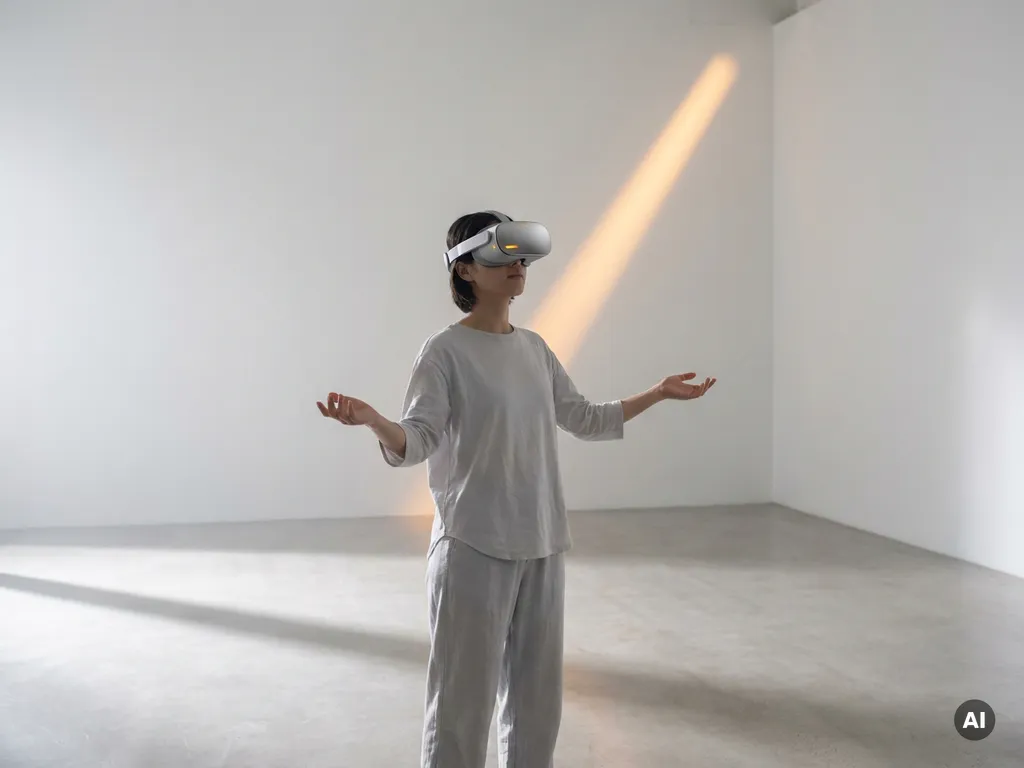
Virtual reality examples span a wide range of industries and use cases, from students exploring ancient civilizations inside a headset to surgeons rehearsing complex procedures in a risk-free simulation. VR is a technology that places users inside a fully computer-generated environment, replacing their physical surroundings with an interactive digital world. The sections below unpack the most common real-world VR applications, the hardware behind them, and how to decide when VR is the right tool for your goals.
How is VR being used in the real world today?
Virtual reality is being used today across education, healthcare, cultural heritage, corporate training, marketing, and entertainment. Organizations deploy VR to recreate environments that are too dangerous, expensive, or physically impossible to access in real life, making abstract concepts tangible and emotionally resonant for diverse audiences.
The breadth of real-world VR applications has expanded significantly as hardware costs have dropped and content creation tools have matured. What was once limited to defense simulation and high-budget gaming is now accessible to schools, museums, NGOs, and mid-sized brands. Key sectors driving adoption include:
- Healthcare and medical training — surgeons and nurses rehearse procedures without patient risk
- Architecture and real estate — clients walk through buildings before they are built
- Corporate learning and development — employees practice high-stakes scenarios such as conflict resolution or emergency response
- Tourism and cultural heritage — users visit remote or historically reconstructed sites
- Social impact and awareness campaigns — NGOs use first-person VR perspectives to build empathy around complex humanitarian issues
What connects all of these VR use cases is presence, the psychological sensation of actually being somewhere. That sense of presence is what makes virtual reality fundamentally different from watching a video or reading a report, and it is what drives measurable changes in behavior, retention, and emotional engagement.
What are the most common VR examples in education?
The most common virtual reality examples in education include immersive field trips to historical sites, science simulations that let students manipulate molecules or ecosystems, language immersion environments, and vocational training scenarios for trades and healthcare. These applications replace passive reading with active, first-person learning.
Educational VR works because it addresses two persistent challenges in teaching: motivation and comprehension of abstract concepts. A student who puts on a headset and stands inside a beating human heart understands circulatory biology differently than one who reads about it. Research in learning science consistently supports the principle that experiential, embodied learning accelerates retention and deepens understanding.
Classroom and curriculum VR
Schools and universities deploy VR headsets as shared classroom resources, rotating groups of students through experiences tied to curriculum objectives. History lessons become immersive reconstructions of ancient Rome or the trenches of the First World War. Geography classes visit ecosystems that students in urban environments would never encounter otherwise. Language programs place learners in simulated marketplaces or workplaces where they must communicate to progress.
Vocational and skills-based VR training
Technical colleges and apprenticeship programs use interactive VR to train students in construction, electrical work, welding, and medical procedures. These simulations allow learners to make mistakes, and learn from them, without material waste or safety risk. For institutions like those we work with through our immersive education projects, the ability to customize scenarios to specific learning outcomes is a decisive advantage over off-the-shelf content.
What are examples of VR in museums and cultural institutions?
Museums and cultural institutions use VR to reconstruct lost heritage sites, animate static artifacts, offer behind-the-scenes access to collections, and create fully virtual exhibitions that extend a physical visit. These applications help institutions attract younger audiences, increase dwell time, and tell stories that physical objects alone cannot convey.
Cultural VR examples range from intimate to monumental. A local history museum might use a single VR station to show visitors what their town looked like a century ago. A major national institution might deploy a multi-headset synchronized experience that takes groups of visitors inside a specific painting or archaeological site simultaneously. Both approaches share the same core goal: making heritage emotionally alive rather than intellectually distant.
Particularly powerful are VR reconstructions of sites damaged by conflict or natural disaster. When visitors can walk through a digitally restored version of a destroyed monument, the emotional weight of its loss becomes immediate and personal. This is the kind of storytelling that transforms a museum visit from an afternoon activity into a lasting memory, exactly the challenge that cultural leaders are trying to solve as visitor expectations evolve.
VR also gives institutions the ability to democratize access. A visitor who cannot travel to a site, or who has physical limitations that prevent them from moving through a traditional exhibition, can engage fully through a headset. This inclusivity argument is increasingly compelling for publicly funded institutions with broad mandates.
How do brands use VR in marketing and live events?
Brands use VR in marketing and live events to create memorable, shareable activations that place consumers inside a product experience, a brand world, or a narrative. Unlike passive advertising, VR marketing generates active participation, visitors become protagonists rather than observers, which drives stronger emotional recall and brand association.
Common brand VR applications include:
- Product launch experiences — consumers test-drive a car, tour a destination, or explore a product in an environment designed to communicate its values
- Trade show and event activations — VR draws crowds, creates queues, and generates social media content that extends reach beyond the physical venue
- Retail environments — shoppers visualize how furniture fits in their home or how a garment looks before purchasing
- Brand storytelling — companies use cinematic VR to communicate origin stories, sustainability commitments, or manufacturing processes in ways that text and video cannot match
The measurable outcomes brands seek from VR activations, engagement time, social sharing, lead capture, and emotional connection, are consistently stronger than those generated by traditional display advertising. For marketing teams under pressure to justify experiential budgets, this makes VR for business an increasingly defensible investment.
What’s the difference between passive VR and interactive VR?
Passive VR places users inside a pre-rendered environment where they can look around but cannot influence what happens, similar to watching a film from inside the scene. Interactive VR allows users to move through, manipulate objects within, and make decisions that change the experience. The key distinction is agency: passive VR delivers narrative, interactive VR delivers participation.
Both formats have genuine strengths, and the right choice depends on the goal of the experience rather than a hierarchy of quality.
When passive VR is the right choice
Passive or cinematic VR excels when the priority is emotional impact through storytelling. A 360-degree documentary that places a viewer inside a refugee camp, or a brand film that transports consumers to the origin of a product, works powerfully in passive format. The viewer’s attention is directed, the narrative is controlled, and the emotional arc is carefully crafted. For awareness campaigns, cultural storytelling, and brand films, passive VR often delivers more consistent results because the experience is the same for every viewer.
When interactive VR delivers more value
Interactive VR is the stronger choice when behavior change, skill acquisition, or deep engagement is the goal. Training simulations, educational games, and brand activations where users make choices and see consequences all benefit from interactivity. The sense of ownership over decisions, and the ability to explore at one’s own pace, significantly increases both retention and the duration of engagement. For organizations deploying VR in learning and development contexts, interactive formats consistently outperform passive ones on measurable learning outcomes.
What VR hardware is used in real-world deployments?
Real-world VR deployments most commonly use standalone headsets, tethered PC-based headsets, and location-based multi-user systems. The hardware choice is driven by the deployment environment, the number of simultaneous users, the required level of graphical fidelity, and whether the experience is fixed or portable.
Standalone headsets, devices that require no external computer or cables, dominate educational and corporate deployments because they are portable, relatively affordable, and simple to manage at scale. They are well suited to classroom rotations, training programs, and touring exhibitions that move between venues.
Tethered headsets connected to high-performance computers deliver greater visual fidelity and processing power, making them the preferred choice for high-end brand activations, architectural visualization, and experiences that require complex real-time rendering. The trade-off is reduced mobility and higher setup complexity.
For large-scale location-based experiences, synchronized group VR for events, domes, or permanent installations, purpose-built multi-user systems are deployed. These allow groups of up to two hundred people to share a VR environment simultaneously, which transforms the format from an individual activity into a collective event. This is the hardware architecture behind experiences like our VR Cinema and location-based installations, where shared presence amplifies emotional impact.
When should an organization choose VR over other immersive formats?
An organization should choose VR over other immersive formats when the experience requires full environmental replacement, when placing users inside a completely different world is essential to the goal. VR is the strongest choice when presence, emotional immersion, or the simulation of inaccessible environments is the primary objective. For experiences where the real world should remain visible, AR or mixed reality is often more appropriate.
Specific situations where VR is the clearest choice include:
- Dangerous or impossible environments — training for emergencies, exploring deep-sea ecosystems, or visiting conflict zones safely
- Empathy and perspective-taking — experiencing life from another person’s point of view, which is most powerful when the real world is completely replaced
- Controlled narrative delivery — when the organization needs to direct attention and emotion without environmental distractions
- High-stakes skill simulation — where learners must practice decisions and receive feedback in a realistic but consequence-free environment
- Collective immersive events — where a group of people needs to share the same experience simultaneously for maximum impact
When the goal is layering digital content onto the physical world, enhancing a product display, activating a printed poster, or guiding visitors through a physical space, augmented reality is typically the more effective and accessible format. Mixed reality sits between the two, enabling real-time interaction between virtual objects and the physical environment, and is particularly powerful on next-generation hardware.
The decision ultimately comes down to what the audience needs to feel and do. VR removes the physical world to replace it with something else. That is its greatest strength, and the clearest signal that it is the right tool. If your organization is exploring which immersive format fits your next project, we would be glad to help you think it through, contact us and let’s start the conversation.
Gerelateerde artikelen
- What are planetarium domes made of?
- How much does it cost to build an interactive museum?
- What are some ideas for interactive museum exhibits?
- What are immersive experiences and how do they enhance user interaction?
- What is an example of a non immersive virtual reality?
- How does virtual reality impact society?
- How much does it cost to create a VR experience?
- What are the technical requirements for immersive installations?
- What software is used for VR content production?