
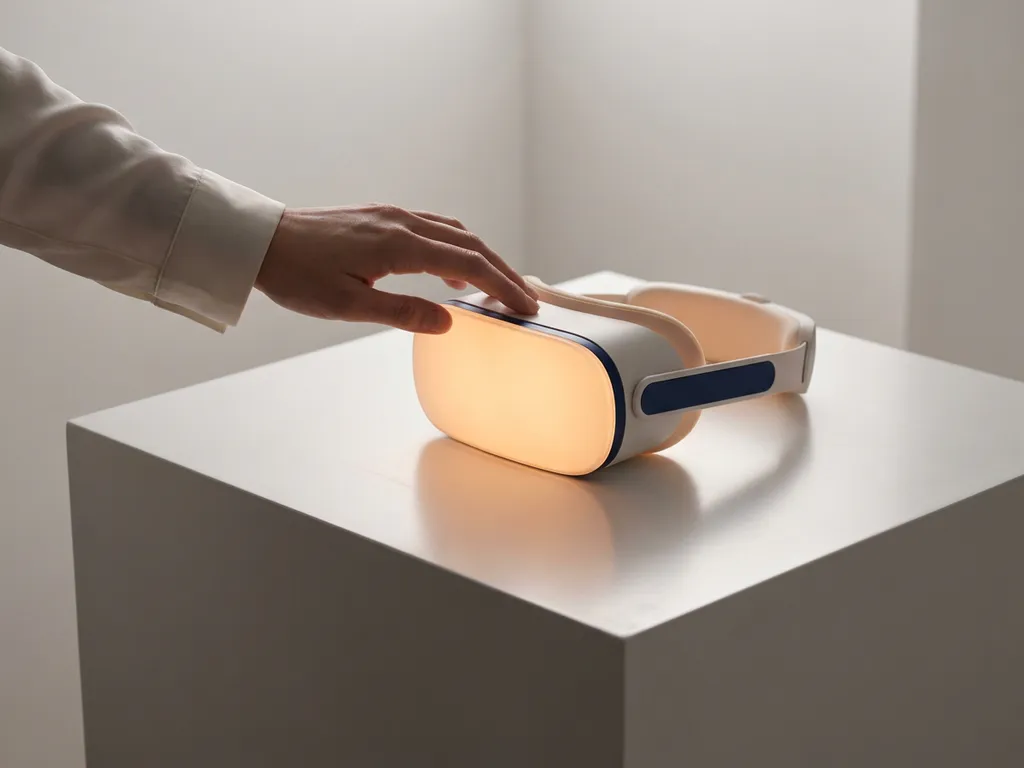
Virtual reality impacts society by fundamentally changing how people learn, connect, heal, and understand one another. Unlike passive media, VR places users inside experiences rather than in front of them, creating emotional and cognitive responses that traditional formats struggle to match. From classrooms and clinics to cultural institutions and corporate training floors, the societal effects of VR are already visible, and they are accelerating. The questions below unpack exactly how, where, and for whom those effects are most profound.
How is virtual reality already changing everyday life?
Virtual reality is already changing everyday life by transforming how people train for high-stakes work, access healthcare, experience culture, and engage with education. These are not experimental applications sitting in research labs. They are active deployments in hospitals, schools, military facilities, architectural firms, and retail environments across the world in 2026.
In healthcare, surgeons use VR simulations to rehearse complex procedures before operating on real patients. Physical therapists guide stroke recovery patients through virtual environments that encourage controlled movement. In the workplace, companies use immersive training to replicate dangerous scenarios, such as industrial accidents or emergency evacuations, without exposing employees to actual risk. The result is faster skill acquisition and stronger retention.
Retail and real estate have also shifted. Buyers tour properties they have never physically visited. Consumers configure products in virtual showrooms before purchasing. Architects walk clients through buildings that have not yet been constructed. Each of these applications removes friction, collapses distance, and creates decision-making confidence that flat screens and brochures simply cannot replicate.
Cultural access has expanded too. Museums and heritage sites now offer virtual tours to audiences who are geographically, physically, or financially unable to visit in person. This democratisation of cultural experience is one of VR’s most quietly significant contributions to everyday life.
What are the proven benefits of VR for mental health and well-being?
The proven benefits of VR for mental health include reduced anxiety, effective exposure therapy for phobias and PTSD, pain management during medical procedures, and improved outcomes in mindfulness and stress reduction programmes. Clinical research consistently supports VR as a credible therapeutic tool rather than a novelty.
Exposure therapy is one of the most well-documented applications. Patients with post-traumatic stress disorder, social anxiety, or specific phobias can confront fear-inducing scenarios in a controlled, repeatable virtual environment. The therapist controls the intensity and pacing, and the patient can exit at any moment. This level of control is impossible to replicate in traditional in vivo exposure settings.
Pain distraction is another validated use case. During burn wound care, chemotherapy, or post-surgical recovery, VR environments have been shown to reduce perceived pain by redirecting cognitive attention. The brain’s engagement with an immersive visual and auditory world competes with and diminishes pain signal processing.
For broader well-being, VR-based mindfulness environments, guided meditation experiences, and virtual nature immersions have demonstrated measurable reductions in cortisol levels and self-reported stress. In a world where access to genuine natural environments is increasingly limited for urban populations, virtual nature offers a meaningful, accessible alternative.
How does VR affect learning outcomes compared to traditional methods?
VR improves learning outcomes compared to traditional methods by increasing engagement, accelerating skill acquisition, and dramatically improving information retention. When learners are active participants in a simulated experience rather than passive recipients of information, the cognitive encoding process is deeper and more durable.
The core mechanism is experiential learning. Traditional instruction relies heavily on declarative knowledge, telling students what something is or how something works. VR creates procedural knowledge, showing students through doing. This distinction matters enormously for complex, high-stakes, or emotionally nuanced subjects where abstract explanation falls short.
Retention and the multisensory advantage
Memory formation is strengthened when multiple senses are engaged simultaneously. VR activates spatial awareness, visual processing, auditory cues, and, in advanced installations, even touch and smell. This multisensory stimulation creates richer memory traces than reading or watching video alone. For subjects where retention is critical, such as medical training, safety procedures, or language acquisition, this advantage is practically significant.
Motivation and learner engagement
One of the most persistent challenges in education is sustaining motivation, particularly for subjects that feel abstract or remote from a student’s lived experience. VR collapses that distance. A student studying the effects of climate change can stand inside a bleached coral reef. A history student can walk through a reconstructed ancient city. That sense of presence transforms passive interest into active engagement, which is a prerequisite for deep learning.
What are the negative effects of virtual reality on society?
The negative effects of virtual reality on society include risks of psychological disorientation, social withdrawal, physical discomfort, unequal access, and potential misuse for manipulation or misinformation. These concerns are legitimate and deserve honest examination alongside VR’s benefits.
Motion sickness and physical discomfort remain real barriers for a meaningful segment of the population. Extended use of VR headsets can cause nausea, eye strain, and disorientation, particularly in experiences with rapid movement or inconsistent frame rates. For vulnerable users, including children and individuals with certain neurological conditions, these effects can be more pronounced.
Social isolation is a subtler but important concern. If immersive virtual environments become preferred over real-world interaction, the social and relational skills that develop through physical presence could atrophy. The distinction between genuine human connection and simulated social experience matters deeply, and that boundary requires careful cultural and ethical attention.
Access inequality is another structural problem. High-quality VR hardware remains expensive, and the communities that might benefit most from immersive education or therapeutic applications are often those least able to afford the technology. Without deliberate policy and investment to close this gap, VR risks amplifying rather than reducing existing social inequalities.
Finally, the persuasive power of VR cuts both ways. The same capacity for emotional impact that makes VR effective for empathy and education also makes it a potent tool for propaganda, manipulation, and the distortion of perceived reality. Responsible design and ethical governance frameworks are essential as the technology scales.
How does VR build empathy and shift social perspectives?
VR builds empathy by placing users directly inside another person’s perspective, creating a first-person embodied experience of circumstances they would never encounter in their own lives. This perspective-taking mechanism is more cognitively and emotionally powerful than reading about or watching someone else’s experience from a distance.
When a person inhabits a virtual body that differs from their own, or moves through an environment shaped by poverty, conflict, disability, or discrimination, the emotional response is visceral rather than intellectual. This is the fundamental difference between sympathy, which is understanding at a distance, and empathy, which is feeling alongside. VR closes that distance.
Organisations working in humanitarian communication, social justice advocacy, and public health have recognised this capacity. NGOs have used VR to bring audiences inside refugee camps, drought-stricken communities, and climate-affected regions in ways that text and photography cannot replicate. The result is not just increased awareness but measurable shifts in willingness to act, donate, or advocate.
At Rooftop Immersive, this is precisely the kind of impact we design for. Our immersive storytelling work for organisations like UNICEF is built on the conviction that genuine empathy requires genuine presence, and VR is currently the most powerful tool available for creating that presence at scale.
Who benefits most from virtual reality technology today?
The groups that benefit most from virtual reality technology today are healthcare professionals and patients, educators and learners, organisations working on social impact, cultural institutions, and industries where high-risk training is essential. Each of these groups gains something from VR that no other medium can provide as effectively.
In healthcare, the beneficiaries span the full clinical spectrum, from surgeons who sharpen procedural skills to patients managing chronic pain or anxiety. The controlled, repeatable, and safe nature of virtual environments makes VR uniquely suited to medical contexts where stakes are high and mistakes are costly.
In education, students who struggle with abstract concepts, who lack access to field trips or specialist instruction, or who learn more effectively through doing than through listening are the clearest beneficiaries. VR meets diverse learning styles in ways that standardised classroom instruction rarely can.
Cultural institutions, particularly museums facing declining visitor numbers and an ageing demographic, benefit from VR’s ability to attract new audiences and deepen engagement with collections. A young visitor who explores an ancient civilisation through an immersive virtual experience is far more likely to return and engage with the physical collection than one who reads a wall panel.
Corporations in high-risk industries such as energy, construction, aviation, and emergency services benefit from training simulations that reduce real-world incident rates. The return on investment in these contexts is direct and measurable.
What does the future of VR mean for human connection and culture?
The future of VR means that human connection and cultural experience will increasingly transcend physical geography, enabling people to share presence, participate in collective rituals, and access cultural heritage regardless of where they are in the world. This is both an extraordinary opportunity and a profound responsibility.
As hardware becomes lighter, more affordable, and more spatially aware, the threshold for entering a shared virtual space will drop dramatically. Social VR environments already allow people to attend concerts, collaborate on creative projects, and hold meaningful conversations as embodied avatars. As fidelity improves and latency decreases, the experiential gap between physical and virtual presence will narrow further.
For culture specifically, VR offers a form of preservation and access that has no historical precedent. Endangered languages, disappearing landscapes, and fragile heritage sites can be digitally captured and made accessible to future generations in a form that is far richer than photography or video. This is cultural stewardship at a new scale.
The deeper question is not whether VR will reshape human connection and culture, but whether that reshaping will be guided by values of equity, authenticity, and genuine human benefit. Technology is always a reflection of the intentions of those who build and deploy it. The most important decisions about VR’s future are not technical. They are ethical, creative, and deeply human.
If you are exploring how immersive experiences can serve your organisation, your audience, or your mission, we would love to think through the possibilities with you. Contact us to start the conversation.
Gerelateerde artikelen
- How much does it cost to build an interactive museum?
- What is the difference between experience marketing and experiential marketing?
- What are the benefits of experiential marketing?
- What's the difference between VR and immersion?
- What makes something an immersive experience?
- Can you make money off 3D modeling?
- How do you measure success in experiential marketing?
- What makes interactive storytelling effective?
- What kind of computer do I need for 3D modeling?