
Experience marketing and experiential marketing are related but distinct disciplines. Experience marketing refers to the holistic, ongoing design of every touchpoint a customer has with a brand, while experiential marketing focuses on creating specific, live, participatory events or activations that people physically engage with. The difference matters because each approach serves a different strategic purpose, and understanding both helps marketers choose the right tool for the right objective. Below, each question is answered directly so you can apply these concepts with confidence.
Why do marketers use these two terms differently?
Marketers use these terms differently because they describe fundamentally different scopes of work. Experience marketing is a strategic framework that spans the entire customer journey, while experiential marketing is a tactical discipline focused on discrete, immersive activations. Conflating the two leads to campaigns that are either too narrow in ambition or too broad to execute with precision.
The confusion is understandable. Both terms live under the umbrella of brand experience, both prioritize emotional connection over passive messaging, and both have grown in prominence as audiences tune out traditional advertising. However, using them interchangeably creates real problems in planning, budgeting, and measuring success. A marketing director who asks for an “experience marketing campaign” may be expecting a multi-channel brand strategy, while their agency delivers a single pop-up event. Clarity about which discipline is being discussed prevents that misalignment from the very first brief.
What does experience marketing actually mean?
Experience marketing is the strategic practice of deliberately designing every interaction a person has with a brand, from the first advertisement they see to the packaging they open, the customer service call they make, and the loyalty programme they join. It treats the entire customer journey as a single, coherent experience that should feel consistent, intentional, and emotionally resonant at every stage.
At its core, experience marketing asks: what does it feel like to be a customer of this brand? That question extends far beyond any single campaign. It encompasses digital touchpoints such as website UX, app design, and social media tone, as well as physical ones like retail environments, product design, and in-person service interactions. The discipline draws heavily on customer journey mapping, persona research, and brand strategy to ensure that no touchpoint contradicts the overall brand promise.
Experience marketing is particularly relevant for brands with complex, multi-stage relationships with their customers. Educational institutions, subscription services, and cultural organisations, for example, interact with their audiences over months or years. For these organisations, the quality of the cumulative experience is the primary driver of loyalty, advocacy, and long-term impact. A museum does not just need a compelling exhibition opening; it needs every visit, every email, and every school programme to reinforce why that institution matters.
What does experiential marketing mean?
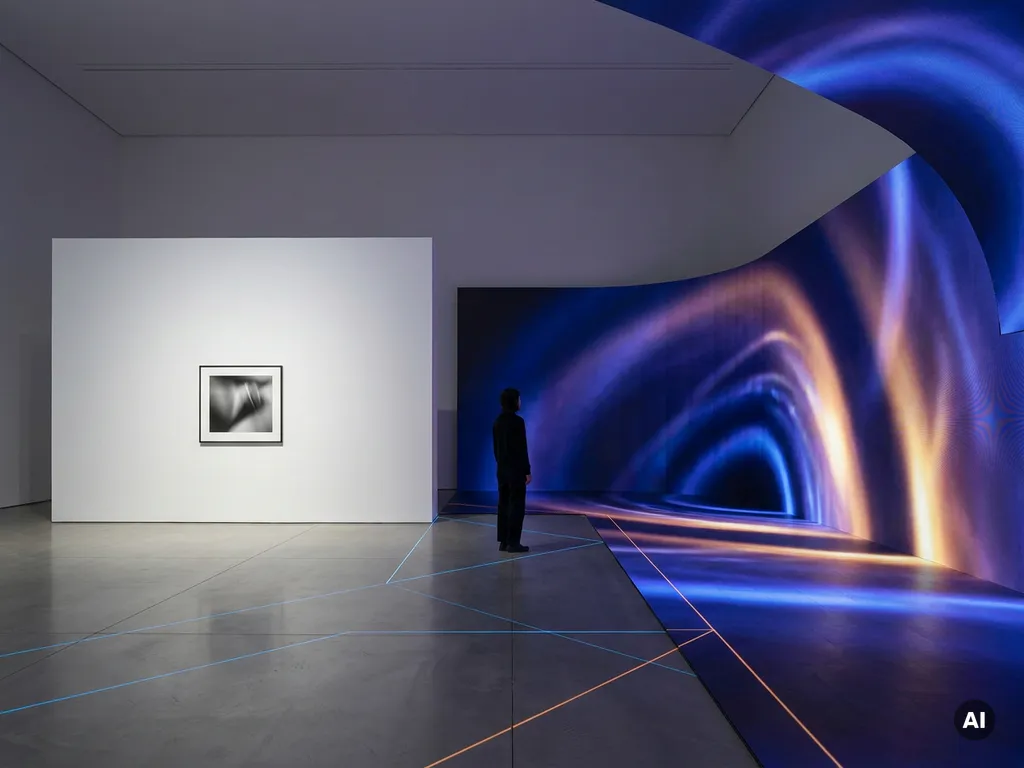
Experiential marketing is the practice of creating specific, participatory brand moments where audiences physically engage with a product, idea, or story rather than passively receiving a message. These activations, whether a branded installation, a live event, an immersive pop-up, or a location-based AR experience, are designed to generate immediate emotional impact, social sharing, and memorable brand association.
The defining characteristic of experiential marketing is active participation. Attendees do not watch; they touch, explore, respond, and co-create. This participation produces a qualitatively different kind of memory than seeing an advertisement. Research in cognitive psychology consistently supports the idea that doing something encodes it more deeply than observing it, which is why brands invest in experiential activations to shift perception and drive loyalty in ways that traditional media cannot.
Experiential marketing has expanded significantly with the rise of immersive technology. Augmented reality activations, virtual reality experiences, interactive 360-degree installations, and AI-driven avatars have all become legitimate tools in the experiential marketer’s kit. These technologies allow brands to create participatory moments that are not limited by physical venue capacity or geography, extending the reach of a single activation to audiences around the world while preserving the sense of personal engagement that makes experiential marketing effective.
What are the key differences between the two approaches?
The key differences between experience marketing and experiential marketing lie in scope, duration, and measurement. Experience marketing is strategic and continuous, covering the full arc of the customer relationship. Experiential marketing is tactical and event-driven, concentrated in a specific activation or campaign moment. Both aim to create emotional connection, but they operate at different levels of the marketing stack.
Scope and time horizon
Experience marketing operates at the brand architecture level. It is a long-term commitment to shaping how every interaction feels, which means decisions made under this discipline affect product design, customer service protocols, digital infrastructure, and communication tone simultaneously. The time horizon is typically measured in years, not quarters.
Experiential marketing operates at the campaign level. An activation has a start date and an end date. Its success is evaluated on the impact it generates within that window, including footfall, social reach, earned media, and brand sentiment shifts. The time horizon is weeks or months, which makes it far more responsive to seasonal moments, product launches, or cultural events.
Measurement and success criteria
Because experience marketing is continuous, its impact is measured through longitudinal indicators: Net Promoter Score, customer lifetime value, retention rates, and brand equity tracking. These metrics move slowly and are influenced by many factors simultaneously, which makes attribution complex but the strategic picture clear over time.
Experiential marketing is measured through event-specific metrics: attendance, social impressions, share of voice during the activation window, and direct conversion data where applicable. These metrics are more immediately visible, which makes experiential campaigns easier to evaluate in the short term but potentially misleading if used to draw conclusions about long-term brand health.
Can experience marketing and experiential marketing work together?
Yes, experience marketing and experiential marketing work most powerfully when they are integrated. A well-designed experiential activation reinforces the broader brand experience strategy, and a coherent brand experience strategy gives individual activations greater resonance because audiences already have an emotional frame of reference for the brand.
Think of it this way: experiential marketing creates a peak moment in the customer journey, while experience marketing ensures that the journey leading up to that moment and following it is equally compelling. A visitor who attends an immersive brand installation and then encounters a clunky website or an indifferent customer service interaction will have that peak moment undermined. Conversely, a brand with a beautifully designed customer journey but no memorable live touchpoints may struggle to generate the kind of deep emotional memory that drives advocacy.
The most effective campaigns we have seen treat experiential activations as deliberate inflection points within a broader experience strategy. The activation is designed not just to impress in the moment but to deepen the relationship that the brand has been cultivating across every other touchpoint. This integration requires close collaboration between brand strategists, experiential designers, and the teams responsible for digital and physical customer experience, which is precisely the kind of cross-disciplinary work that produces lasting impact rather than a one-day spike in social mentions.
Which approach is right for your campaign or brand?
The right approach depends on your objective, your audience relationship, and your time horizon. If you are launching a product, generating buzz around a cultural moment, or trying to shift brand perception quickly, experiential marketing delivers focused, measurable impact. If you are building long-term loyalty, repositioning a brand, or designing a customer journey from scratch, experience marketing is the appropriate discipline. Most mature brands need both, applied strategically at different stages.
Ask yourself three questions before committing to either approach:
- What outcome do I need and when? Immediate engagement and social amplification point toward experiential marketing. Long-term loyalty and brand equity point toward experience marketing.
- How complex is my audience relationship? A brand with a single product and a short purchase cycle can focus heavily on experiential moments. A brand with a multi-year relationship with its audience, such as an educational institution or a cultural organisation, needs the full architecture of experience marketing.
- What resources do I have to sustain the approach? Experiential campaigns are resource-intensive at launch but finite. Experience marketing requires ongoing investment in research, design, and cross-functional coordination.
For brands in education, culture, and the public sector, the distinction is especially consequential. These organisations interact with their audiences across years and through multiple channels, which means a single activation, however brilliant, cannot carry the weight of the entire relationship. The most impactful work we do at Rooftop Immersive sits at the intersection of both disciplines: immersive activations that are designed to function as meaningful moments within a larger, ongoing brand experience. You can explore examples of this integrated approach in our project portfolio. If you are ready to think about how immersive marketing could serve your specific objectives, we welcome you to contact us and start that conversation.
Gerelateerde artikelen
- What are the 5 C's of experiential marketing?
- What does AR stand for in marketing?
- How do immersive experiences work?
- What is the difference between interactive and immersive theatre?
- Can ChatGPT do 3D modeling?
- Why is my brand campaign not creating buzz?
- How do you align immersive experiences with brand identity?
- What technology is used in immersive installations?
- What content works best for dome installations?