
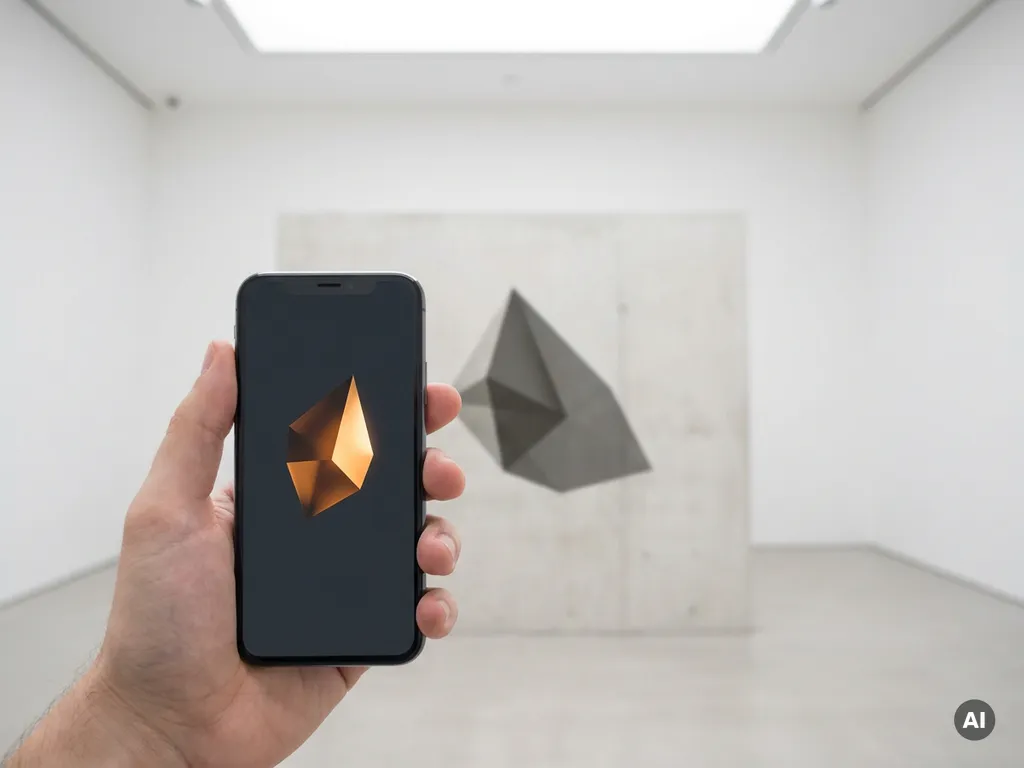
AR stands for augmented reality, a technology that overlays digital content such as 3D visuals, animations, sound, or interactive elements onto the real world, viewed through a smartphone, tablet, or headset. In a marketing context, AR transforms passive advertising into participatory brand experiences that people can see, interact with, and share. The questions below unpack exactly how AR works in marketing, why brands are investing in it, and when it makes strategic sense to choose it.
How does augmented reality actually work in a marketing context?
Augmented reality in marketing works by using a device’s camera and software to recognise a real-world surface, image, or GPS location, then rendering digital content on top of it in real time. The result is a live, blended view where virtual objects appear to exist in the physical world, a product sitting on your kitchen counter, a brand character walking across a billboard, or a virtual portal opening in a museum gallery.
From a technical standpoint, most AR marketing experiences rely on one of three trigger methods. Image tracking uses a printed asset, a poster, packaging, or event badge, as an anchor point. Surface detection uses the device’s depth sensors to map flat or curved surfaces and place content on them. Geospatial AR pins digital content to precise GPS coordinates, so the experience activates only at a specific outdoor location, without any QR code or marker needed.
What makes AR powerful in marketing is that it removes the barrier between a brand message and a physical action. Instead of telling a consumer what a product looks like, AR lets them see it in their own space. Instead of describing an experience, AR puts the audience inside one. That shift from passive viewing to active participation is where augmented reality marketing earns its reputation for driving deeper engagement and stronger recall than conventional digital advertising.
What are the most common types of AR used in marketing?
The most common types of AR used in marketing are image-triggered AR, face filters, product visualisation, geospatial AR, and AR portals. Each serves a different campaign goal, from awareness and entertainment to consideration and conversion, and the right choice depends on where the audience is and what action the brand wants to inspire.
- Image-triggered AR: A printed or digital image, a poster, a product label, a magazine ad, activates an animated or interactive layer when scanned. Film and event campaigns use this format extensively to turn static assets into dynamic storytelling moments.
- Face filters and lenses: Social platforms have made face-based AR one of the most distributed formats in brand marketing. Users apply branded filters to selfies and videos, creating organic, shareable content at scale.
- Product visualisation: Shoppers place a virtual version of a product, furniture, footwear, eyewear, cosmetics, in their own environment or on their own body before purchasing. This format directly reduces purchase hesitation and return rates.
- Geospatial AR: Digital content is anchored to real-world coordinates and activated at specific outdoor locations. Ideal for city-wide campaigns, tourism activations, and outdoor events where the physical context is part of the story.
- AR portals: Virtual doorways transport users into a fully rendered environment, a destination, a branded world, or a historical scene. Museums, tourism boards, and NGOs use this format to create empathy and perspective at scale.
We design and build across all of these formats, tailoring the technical approach to the narrative goal rather than defaulting to a single solution. The format should always serve the story, not the other way around.
What’s the difference between AR and VR in marketing campaigns?
The key difference between AR and VR in marketing is the relationship to the real world. Augmented reality adds digital content to the environment the user is already in, keeping them present and connected to their surroundings. Virtual reality replaces that environment entirely, transporting the user into a fully digital space. Both are immersive, but they create different kinds of engagement and suit different campaign objectives.
When AR is the stronger choice
AR works best when accessibility and scale matter. Because it runs on smartphones most people already own, an AR campaign can reach millions without requiring any specialist hardware. It integrates naturally into social sharing behaviour, and it meets audiences where they already are, at a retail shelf, at an event, or outdoors. AR advertising thrives when the goal is broad reach, spontaneous interaction, or layering digital storytelling onto a physical asset.
When VR is the stronger choice
VR is the right tool when depth of immersion outweighs breadth of reach. A headset experience removes all distractions and places the audience inside a narrative with full sensory control. This makes VR exceptionally effective for training simulations, empathy-building campaigns, and location-based experiences where a captive, focused audience can be guided through a structured journey. The tradeoff is that VR requires hardware, a controlled environment, and a more deliberate deployment model.
In practice, the most impactful campaigns often combine both. An AR activation at a brand event creates a wide top-of-funnel moment; a VR experience in a dedicated pod delivers the deeper, more transformative encounter for those who want to go further.
Why are brands shifting marketing budgets toward AR experiences?
Brands are shifting budgets toward AR experiences because traditional advertising has lost its ability to hold attention, while AR consistently demonstrates higher engagement, longer dwell time, and stronger emotional recall. In a media landscape saturated with passive content, augmented reality marketing creates a participatory moment, and participation is what converts awareness into memory and memory into action.
Several converging factors are accelerating this shift in 2026. Smartphone AR capabilities have matured to the point where high-quality experiences run smoothly without specialist apps. Social platforms have normalised AR interaction through filters and lenses, reducing the friction for consumers to engage. And brands that have invested in AR campaigns are reporting measurable lifts in conversion rates for product visualisation, longer session times on branded content, and higher rates of organic social sharing compared to equivalent static or video campaigns.
There is also a strategic dimension that goes beyond individual campaign metrics. AR brand activations create owned, repeatable assets. A well-built AR experience can be deployed at multiple events, updated with new content, and distributed across digital channels, making the initial investment work harder over time than a single-use media buy. For brands that want to build genuine emotional connections rather than just impressions, augmented reality advertising offers a fundamentally different value proposition.
What industries are using AR marketing most effectively?
Retail, consumer goods, entertainment, tourism, and education are the industries using AR marketing most effectively right now. Each sector has found specific applications where AR solves a real audience problem, whether that is reducing purchase uncertainty, deepening cultural engagement, or making abstract concepts tangible.
- Retail and e-commerce: Product try-on and room visualisation tools have become standard for categories like furniture, fashion, and beauty. AR removes the guesswork from online shopping and brings the fitting room or showroom into the customer’s home.
- Entertainment and media: Film studios, gaming companies, and live event producers use AR to extend narratives beyond screens, turning posters, packaging, and physical venues into interactive story worlds.
- Tourism and cultural institutions: Museums, heritage sites, and tourism boards use AR portals and image-triggered layers to bring history to life, attract younger audiences, and offer experiences that justify a visit in ways a website never could.
- Education and NGOs: AR makes complex, abstract, or emotionally difficult subjects accessible. Social impact organisations use augmented reality campaigns to build empathy and drive behaviour change at a scale that traditional outreach cannot reach.
- Automotive and real estate: AR miniatures and digital twins allow potential buyers to explore products and properties in three dimensions before committing, shortening sales cycles and increasing confidence in high-value decisions.
You can explore how we have applied these approaches across sectors in our project portfolio, where brand activations, educational installations, and cultural experiences sit side by side.
How do you measure the success of an AR marketing campaign?
The success of an AR marketing campaign is measured through a combination of engagement metrics, behavioural signals, and business outcomes, not reach alone. Because AR is interactive, it generates richer data than passive media: how long someone spent in the experience, which elements they interacted with, whether they shared it, and whether they took a desired action afterward.
The most meaningful metrics depend on the campaign objective, but the following indicators apply across most AR advertising scenarios:
- Session duration: How long users engaged with the AR experience. Longer sessions indicate genuine interest and signal that the content was compelling enough to hold attention.
- Interaction rate: The percentage of users who actively engaged with interactive elements rather than passively viewing. High interaction rates confirm that the AR mechanic was intuitive and rewarding.
- Share rate: How often users shared the experience to social channels. Organic sharing extends reach beyond paid distribution and carries peer endorsement, which is particularly valuable for brand campaigns.
- Conversion signals: For product visualisation and retail AR, downstream metrics such as add-to-cart rates, purchase completion, and return rates provide direct evidence of commercial impact.
- Return visits and dwell time: For location-based AR activations at events or cultural venues, tracking whether visitors return to the experience or spend additional time in the space reveals depth of engagement.
It is also worth measuring what AR campaigns do that other formats cannot: the qualitative shift in how audiences talk about and remember a brand. Post-experience surveys, social listening, and brand sentiment tracking complement quantitative data to build a complete picture of impact.
When should a brand choose AR over other experiential formats?
A brand should choose AR when it needs to combine broad accessibility with genuine interactivity, when the campaign must work at scale without requiring a controlled physical environment, or when the goal is to layer digital storytelling onto an existing physical asset. AR is the right format when the audience is mobile, the touchpoint is distributed, and the experience needs to travel beyond a single event or location.
Specifically, AR makes the strongest strategic case in these scenarios:
- The campaign needs to reach a mass audience through owned or social channels, not just those who attend a specific event
- A physical product, packaging, or printed asset already exists and can serve as an AR trigger, turning sunk costs into interactive experiences
- The brand wants to offer personalisation at scale, such as virtual try-on or customised content, without requiring one-to-one human interaction
- The objective includes driving social sharing, because AR experiences are inherently camera-native and designed to be captured and distributed
- The budget or logistics do not support a full VR deployment, but the campaign still demands something more memorable than video
AR is not always the answer. When the priority is deep, uninterrupted narrative immersion, as in empathy-building social impact campaigns or high-stakes training simulations, VR or a fully physical immersive installation may deliver more. The most effective brands treat AR as one tool in a broader experiential strategy, deploying it where its accessibility and interactivity genuinely serve the audience rather than simply because the technology is available.
If you are weighing up which immersive format fits your next campaign or project, we would welcome the conversation. Contact us to explore what the right experience could look like for your audience and your goals.
Gerelateerde artikelen
- What is immersive entertainment?
- What exactly is experiential marketing?
- What are the benefits of having sensory experiences?
- What is immersive entertainment?
- How do immersive experiences work?
- What is interactive storytelling?
- How do I create an immersive experience?
- What is immersive and interactive media?
- What are the benefits of immersive museum experiences?