
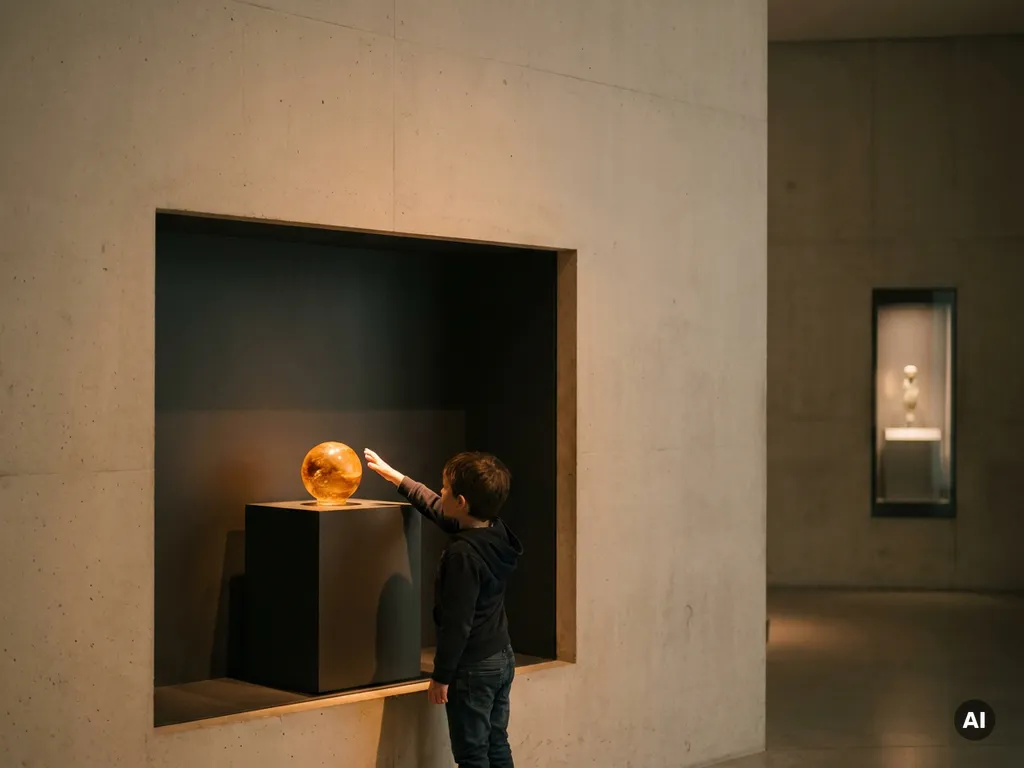
The most engaging interactive museum exhibits combine physical exploration with digital storytelling, giving visitors agency to discover, question, and connect rather than simply observe. The strongest ideas range from augmented reality overlays and virtual reality journeys to AI-powered characters, touch-responsive installations, and immersive 360-degree environments. What makes these ideas work is not the technology itself, but how thoughtfully it is woven into the narrative of the collection. This article unpacks the most effective formats, explains how specific technologies elevate the visitor experience, and helps cultural leaders make informed decisions before investing.
What makes a museum exhibit truly interactive?
A museum exhibit is truly interactive when it gives visitors meaningful agency, the ability to make choices, trigger responses, or shape their own experience rather than passively absorbing information. Interactivity is not simply a touchscreen or a button; it is the feeling that your presence and curiosity actually change what happens next.
The distinction matters because many exhibits described as “interactive” are really just self-guided. Genuine interactivity creates a feedback loop: the visitor acts, the exhibit responds, and that response deepens understanding or emotional connection. This can happen through physical manipulation, digital exploration, sensory engagement, or social participation with other visitors.
The most effective interactive exhibition design balances three elements:
- Agency – visitors choose their path, pace, or perspective
- Response – the exhibit reacts in a way that feels meaningful and immediate
- Reflection – the experience prompts visitors to think, feel, or question something they did not before
Museums that achieve all three consistently report stronger visitor engagement, longer dwell times, and more memorable outcomes. The technology used to deliver this, whether analogue, digital, or mixed, is secondary to the quality of the interaction design itself.
What are the most engaging types of interactive museum exhibits?
The most engaging types of interactive museum exhibits are those that activate multiple senses, invite exploration, and make abstract or historical content feel immediate and personal. Across cultural institutions worldwide, several formats consistently outperform traditional display cases and static panels in terms of visitor engagement and emotional resonance.
Immersive projection and 360-degree environments
Large-scale projection mapping and interactive 360-degree domes transform entire rooms into living environments. Visitors step inside a painting, a historical moment, or a natural ecosystem rather than looking at it from a distance. These environments work particularly well for art museums, natural history collections, and science centres, where the scale of the subject matter benefits from spatial immersion.
Touch and gesture-responsive installations
Installations that respond to touch, movement, or proximity invite physical participation without requiring instruction. When a visitor’s gesture changes what appears on a wall or floor, the exhibit becomes a conversation rather than a presentation. This format is especially effective for younger audiences and for collections covering complex scientific or social themes that benefit from hands-on exploration.
Narrative audio and spatial sound
Spatial audio design, where sound shifts depending on where a visitor stands, creates layered storytelling that rewards curiosity. Visitors who linger near a particular artefact hear a different story than those passing through quickly. This approach respects visitor autonomy while deepening the connection between object and meaning.
Collaborative and social exhibits
Exhibits designed for groups, where multiple visitors must work together to unlock content or solve a challenge, build social engagement alongside individual learning. These formats are particularly powerful for school visits and family audiences, where shared discovery becomes part of the memory.
How does augmented reality improve the museum experience?
Augmented reality improves the museum experience by layering digital content directly onto physical objects and spaces, revealing context, history, and stories that cannot be communicated through a label alone. Visitors point a smartphone or wear a headset and see a statue animate, a painting expand into a full scene, or a fossil reassemble into a living creature.
The power of AR in a museum context lies in its ability to show transformation over time. A Roman artefact can be displayed as it appears today alongside a digital reconstruction of how it looked two thousand years ago, all without touching the original object. This preserves collection integrity while dramatically expanding what visitors can perceive and understand.
AR also enables personalisation at scale. A single physical exhibit can deliver different content layers depending on the visitor’s age, language, or level of expertise, making the same gallery meaningful to a ten-year-old, a specialist, and a casual tourist simultaneously. Our immersive projects demonstrate how AR overlays can be built around existing collections without requiring significant physical alteration to the gallery space.
Practical AR applications in museums include:
- AR Art Alive – physical artworks that expand into animated scenes or reveal the artist’s process
- AR Portals – virtual doorways that transport visitors to the original location of an artefact or historical event
- AR Miniatures – scale models of buildings or archaeological sites that visitors can explore in three dimensions
- Image tracking – exhibition panels or posters that trigger video content, interviews, or additional storytelling when viewed through an app
When implemented thoughtfully, augmented reality does not compete with the physical collection, it amplifies it, giving objects a voice they could never have through glass and text alone.
How can museums use VR to take visitors somewhere impossible?
Virtual reality allows museums to take visitors to places that are physically inaccessible, historically lost, or simply beyond the reach of any physical collection, the surface of Mars, the interior of a medieval cathedral before it burned, or the perspective of a refugee crossing a border. VR creates presence, not just representation, and that distinction is what makes it transformative for cultural storytelling.
Unlike video or photography, VR places the visitor inside the environment. They can look in any direction, move through space, and experience a sense of scale and atmosphere that flat media cannot replicate. This embodied experience is particularly powerful for empathy-building content, when visitors inhabit another perspective physically, the emotional impact is significantly deeper than when they observe it from outside.
Museums are using VR in several distinct ways:
- Cinematic VR – guided 360-degree films that place visitors inside historical moments or natural phenomena
- Interactive VR experiences – environments where visitors make choices, solve problems, or explore freely
- Location-based VR – shared headset experiences for groups, synchronised so multiple visitors journey together
- VR Art Alive – entering a painting or artwork from the inside, experiencing it as a world rather than an image
For institutions with collections related to conflict, migration, climate, or social history, VR offers a way to communicate the human dimension of these subjects with a depth that no physical exhibit can match. The technology is now mature enough to be deployed reliably at scale, making it a practical investment rather than an experimental one.
What interactive exhibit ideas work best for children and schools?
Interactive exhibit ideas that work best for children and schools are those that combine play, discovery, and curriculum relevance, experiences where learning feels like an adventure rather than instruction. Children engage most deeply when they are active participants with genuine choices, and when the exhibit responds to what they do in ways that feel surprising and rewarding.
School groups in particular benefit from exhibits designed around collaborative problem-solving. When a class must work together to unlock a historical mystery, decode a scientific process, or complete a creative challenge, the social dimension of the learning becomes as valuable as the content itself. Teachers also respond well to exhibits that connect directly to curriculum themes, making the museum visit a natural extension of classroom learning rather than a standalone event.
Formats that consistently perform well with younger audiences include:
- AR Treasure Hunts – GPS and puzzle-based digital trails that guide children through a gallery or outdoor space, revealing content as they explore
- AR Children’s Books – physical books that come alive with animation when viewed through a device, bridging familiar formats with new technology
- Immersive Education VR – curriculum-aligned virtual experiences that place students inside the subject they are studying, from ancient civilisations to ecosystems
- Interactive 360 Domes – whole-class immersive environments where an entire school group experiences the same journey together
- Touch-responsive installations – exhibits that react to physical interaction, rewarding curiosity with immediate visual or audio feedback
The key design principle for school-focused exhibits is that the technology should disappear into the experience. Children should be thinking about the content, the history, the science, the story, not about how to operate a device.
How do AI avatars and digital characters change museum storytelling?
AI avatars and digital characters change museum storytelling by making history and knowledge conversational. Instead of reading about a historical figure or watching a recorded interview, visitors can ask questions and receive answers in real time, creating a dynamic, personalised dialogue that no static exhibit can replicate.
This technology is particularly powerful for museums dealing with living history, oral traditions, or figures whose voices have been lost to time. A digital reconstruction of a historical person, powered by AI and trained on historical records, can speak in the first person, respond to unexpected questions, and adapt its answers to the visitor’s level of understanding. The result is a sense of genuine encounter rather than passive consumption.
AI characters also solve a persistent challenge in museum design: the gap between what a label can explain and what a visitor actually wants to know. A curious visitor standing in front of an artefact rarely wants only the information on the panel, they want to follow their specific line of curiosity. An AI-powered guide or non-player character (NPC) can follow that thread wherever it leads, making every visit genuinely unique.
Beyond historical figures, AI avatars serve as accessible guides for visitors with different languages, learning needs, or levels of prior knowledge. A single digital character can switch languages mid-conversation, adjust the complexity of its explanations, and remember what a visitor has already explored, delivering a level of personalisation that no human guide could sustain across thousands of daily interactions.
What should museums consider before investing in immersive technology?
Before investing in immersive technology, museums should consider whether the technology genuinely serves the story they are trying to tell, whether their audience is ready to engage with it, and whether their institution has the operational capacity to maintain it over time. Technology that dazzles on opening day but frustrates visitors six months later does more harm than good to institutional reputation.
Narrative fit and curatorial integrity
The most important question is not “what technology is available?” but “what does this collection need to come alive?” Immersive technology should amplify the existing narrative of the collection, not impose a new one. Museums with strong object-based storytelling often find that AR layers and spatial audio serve them better than full VR environments, because they keep the physical object at the centre of the experience.
Audience readiness and accessibility
Different visitor demographics engage with technology differently. A museum serving primarily older audiences may find that smartphone-based AR creates barriers rather than removing them, while a science centre targeting families may find that the same technology is immediately intuitive. Accessibility considerations, including visitors with mobility limitations, sensory sensitivities, or visual impairments, should be built into the design from the start, not added as an afterthought.
Operational sustainability
Immersive installations require ongoing maintenance, content updates, and technical support. Hardware needs to be refreshed, software needs to be updated, and staff need to be trained. The total cost of ownership extends well beyond the initial build, and institutions that underestimate this often find themselves with impressive technology that gradually degrades in quality and reliability.
Partnership and expertise
The quality of the partner who designs and builds the experience is as important as the technology itself. Museums benefit most from working with teams that understand both the creative and technical dimensions of immersive experience design, partners who can translate curatorial vision into a functional, emotionally resonant digital experience without compromising the integrity of the collection.
At Rooftop Immersive, we work alongside cultural institutions from the earliest concept stage through to installation and beyond, ensuring that every technological choice is grounded in the museum’s specific narrative goals, audience needs, and operational realities. If you are exploring what immersive technology could do for your institution, we would welcome the conversation, feel free to contact us to discuss your vision.
Gerelateerde artikelen
- Can installation art be interactive?
- What exactly is experiential marketing?
- How to create a brand activation?
- How is augmented reality used in marketing?
- How to make an exhibition stand stand out?
- What is the strongest trigger to memory?
- What are the challenges of spatial computing?
- Why is immersive art so popular?
- What are the 4 elements of virtual reality?