
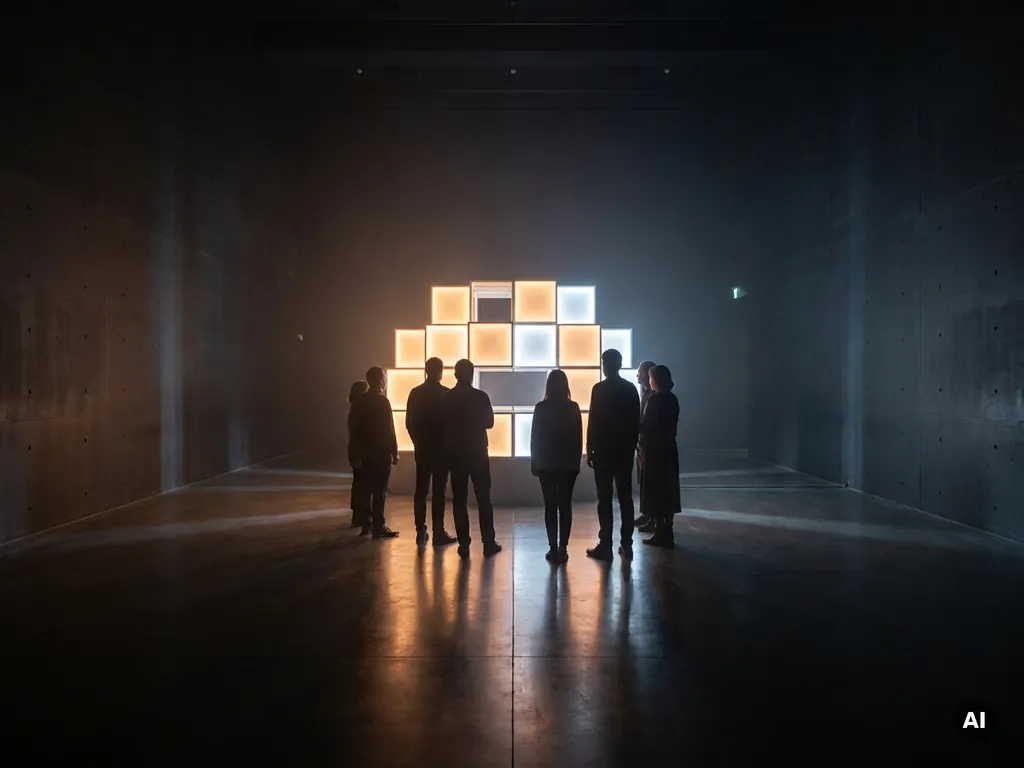
To create a brand activation, you design an experience that invites your audience to actively participate with your brand rather than passively receive a message. The most effective activations combine a clear strategic goal, a format that matches your audience’s behaviour, and a creative concept that generates genuine emotional engagement. This article walks through every key question, from defining your objective to measuring real-world impact.
What makes a brand activation different from regular advertising?
A brand activation is different from regular advertising because it replaces passive consumption with active participation. Where a traditional ad delivers a message to an audience, a brand activation puts that audience inside the experience, giving them something to do, feel, discover, or share. The defining quality is two-way engagement: the brand and the audience meet each other, rather than one broadcasting to the other.
Traditional advertising operates on reach and repetition. You buy space, place a message, and hope it lands. Brand activations operate on depth. A person who spends ten minutes inside an immersive experience, solves a puzzle tied to your brand story, or physically interacts with your product in an unexpected environment forms a memory that a banner ad simply cannot compete with.
This distinction matters because memory formation drives purchasing decisions and brand loyalty. Experiences that engage multiple senses, sight, sound, touch, even smell, create stronger and more durable associations than visual-only media. That is why experiential marketing has grown from a niche tactic into a central pillar of brand strategy for organisations that want to build genuine connection, not just awareness.
What are the most effective types of brand activation?
The most effective types of brand activation are those that create a direct, memorable interaction between the audience and the brand’s core message. The right format depends on your goals and audience, but certain approaches consistently deliver strong results across industries.
- Immersive pop-up experiences: Physical spaces designed around a brand story, where visitors move through environments that bring the brand to life through all their senses.
- Augmented reality activations: AR overlays that transform physical spaces, product packaging, or event environments into interactive digital layers, accessible via smartphone or headset.
- Virtual reality experiences: Fully immersive VR journeys that place participants inside a brand narrative, ideal for storytelling, product demonstrations, or emotional engagement campaigns.
- Interactive installations: Large-scale digital or physical installations at events, festivals, or public spaces that invite spontaneous participation and social sharing.
- Gamified brand experiences: Treasure hunts, challenges, or AR games that reward engagement and create a sense of discovery tied directly to the brand.
- Live event integrations: Activations embedded into concerts, sports events, or trade shows, where the brand becomes part of an experience people are already emotionally invested in.
What these formats share is a commitment to participation over observation. The audience is not watching the brand, they are inside it. We design across all of these formats, always starting from the question of what the audience should feel, not just what they should see.
How do you define the goal of a brand activation?
You define the goal of a brand activation by identifying the specific behaviour or perception shift you want to create in your audience. A clear goal answers three questions: Who do you want to reach? What do you want them to think, feel, or do differently after the activation? And how will you know it worked?
Goals for brand activations typically fall into one of several categories. Awareness goals focus on introducing the brand to new audiences or repositioning it in existing ones. Engagement goals prioritise time spent with the brand and the depth of interaction. Conversion goals connect the activation directly to a commercial outcome, a purchase, a sign-up, a donation. Advocacy goals aim to generate organic sharing, word-of-mouth, and earned media.
The mistake many brands make is treating “creating a buzz” as a goal. Buzz is an outcome, not a direction. A well-defined goal sounds like this: “We want first-time visitors to our stand to spend at least five minutes engaging with our product story and leave with a clear understanding of our key differentiator.” That kind of specificity shapes every creative decision that follows, the format, the narrative, the call to action, and the measurement framework.
How do you choose the right format for your brand activation?
You choose the right format for your brand activation by matching the experience type to your audience’s context, your message’s complexity, and the environment where the activation will take place. No single format is universally superior, the best choice is the one that removes friction between your audience and your story.
Consider your audience’s behaviour and expectations
Where does your audience spend time? What level of technological familiarity do they have? A consumer audience at a music festival responds differently to an interactive installation than a professional audience at a trade conference. Understanding the context your audience is already in helps you choose a format that feels like a natural extension of their experience rather than an interruption.
Consider the complexity of your message
Simple brand messages, a product launch, a seasonal campaign, a single emotional hook, work well in high-impact, lower-dwell-time formats like AR activations or anamorphic animations. Complex messages, a brand’s sustainability story, a new product category, a values-driven narrative, benefit from immersive formats that give the audience time and space to genuinely absorb what you are communicating. VR experiences, interactive installations, and multi-room pop-ups are particularly effective here because they can hold attention long enough for nuanced storytelling to land.
Budget, timeline, and scalability also shape format decisions. Some activations are designed for a single flagship event; others need to travel across multiple venues or be experienced by thousands of people over weeks. The format you choose must be operationally viable, not just creatively exciting. Explore our past projects to see how different formats have been matched to different strategic needs.
What does the creative development process for a brand activation look like?
The creative development process for a brand activation moves through five stages: strategic brief, concept development, experience design, production and build, and live delivery. Each stage builds on the last, and the quality of the first stage, the brief, determines the quality of everything that follows.
- Strategic brief: Define the audience, the goal, the key message, the environment, the timeline, and the budget parameters. This document is the foundation of all creative decisions.
- Concept development: Generate and evaluate creative concepts against the brief. The strongest concepts are those where the format and the message are inseparable, where the way the audience experiences the activation is the message.
- Experience design: Map the full participant journey, from first contact to final moment. Design every touchpoint, physical, digital, sensory, with intention. Consider what the audience sees, hears, touches, and feels at each stage.
- Production and build: Develop the assets, technology, and physical elements required. For immersive activations, this includes 3D modelling, software development, hardware integration, and spatial design, often running in parallel.
- Live delivery and iteration: Deploy the activation, monitor participant behaviour in real time, and refine where needed. The best activations are treated as living experiences, not finished products.
Co-creation with the client throughout this process is essential. The brand’s knowledge of its audience, its values, and its competitive context is irreplaceable, the creative partner’s role is to translate that knowledge into an experience that works in the real world.
How do you measure the success of a brand activation?
You measure the success of a brand activation by tracking metrics that correspond directly to the goals you defined at the outset. There is no universal measurement framework because the right metrics depend entirely on what the activation was designed to achieve.
For awareness-focused activations, relevant metrics include total reach (live attendance plus digital amplification), media coverage, social impressions, and brand recall measured through post-activation surveys. For engagement-focused activations, dwell time, interaction rates, and completion rates (how many participants moved through the full experience) are more meaningful than raw reach numbers.
For conversion-focused activations, the measurement connects directly to commercial outcomes, leads generated, products sampled, sign-ups completed, or sales attributed to the activation period. For advocacy-focused activations, user-generated content volume, organic social sharing, and net promoter scores captured on-site give a strong indication of whether the experience moved people enough to share it.
The most important principle is to define your measurement framework before the activation launches, not after. Deciding what success looks like in advance ensures you collect the right data and avoids the temptation to retrospectively pick metrics that make the results look better than they were.
What are the most common mistakes brands make with activations?
The most common mistakes brands make with activations are prioritising spectacle over strategy, underestimating operational complexity, and failing to connect the activation to a broader campaign or narrative. Each of these mistakes can undermine an otherwise strong creative concept.
Spectacle without strategy is the most frequent error. An activation that looks impressive but has no clear connection to the brand’s message or audience leaves people with a memory of the experience but no association with the brand. The format must serve the story, not replace it.
Underestimating logistics is equally damaging. Immersive activations involve hardware, software, spatial design, staffing, and real-time troubleshooting. Brands that treat the creative concept as the finish line and the operational build as an afterthought consistently run into problems at the moment of delivery, exactly when everything needs to work flawlessly.
Treating the activation as a standalone moment limits its impact. The most effective brand activation campaigns extend the experience before, during, and after the live event, through teaser content, social amplification, follow-up touchpoints, and integration with the broader brand narrative. An activation that lives only in the physical space misses the opportunity to multiply its reach through digital channels.
Ignoring the audience journey is a subtler but equally costly mistake. Every participant moves through the activation differently, some spend thirty seconds, some thirty minutes. Designing only for the ideal participant and ignoring those who engage briefly means a significant portion of your audience leaves without a meaningful impression.
Finally, not measuring what matters makes it impossible to learn and improve. Without a clear measurement framework tied to defined goals, brands cannot distinguish between an activation that genuinely worked and one that simply attracted a crowd. If you are ready to build an activation that is as strategically grounded as it is creatively ambitious, we would love to hear about your project: contact us to start the conversation.
Gerelateerde artikelen
- What is immersive dome projection?
- How much do brand activations cost?
- Why is experiential marketing key to winning over Gen Z?
- What can provide immersive training experiences?
- What is an example of immersive training?
- What is the difference between experiential learning and immersive learning?
- How does interactive storytelling engage audiences?
- What is immersive learning?
- What are the ROI benefits of experiential marketing campaigns?