
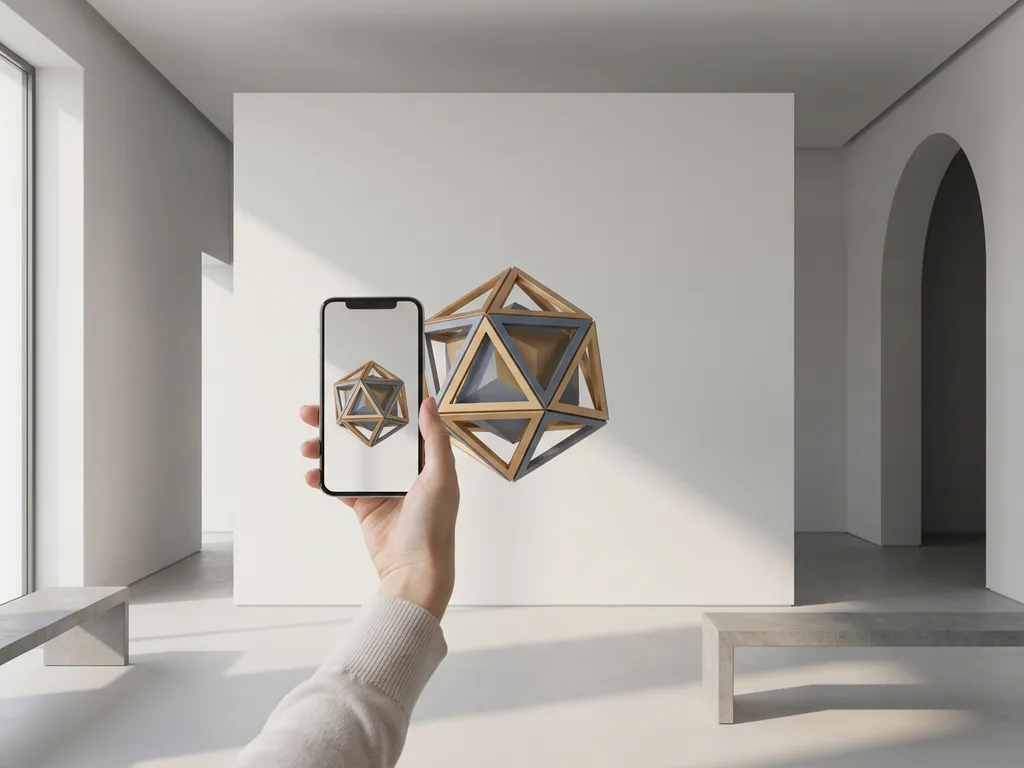
Augmented reality lets you overlay digital content, 3D objects, animations, text, or sound, onto the physical world in real time, using a smartphone, tablet, or headset. It works across industries, from retail and education to healthcare and cultural heritage. This article unpacks the most common questions about how AR works, where it’s used, and how to get started.
What can augmented reality actually do in the real world?
Augmented reality can add interactive digital layers to physical environments, objects, and printed materials, making static things dynamic, invisible things visible, and complex things tangible. It can animate a product label, guide a surgeon through a procedure, bring a museum exhibit to life, or place a virtual sofa in your living room before you buy it.
The practical applications go far beyond novelty. In architecture and real estate, AR lets clients walk through a building that hasn’t been constructed yet. In retail, it eliminates the guesswork of online shopping by letting customers visualize products in their own space. In public health campaigns, AR can make abstract data emotionally immediate, turning statistics into experiences that people actually feel.
What makes AR genuinely powerful is that it meets people where they already are. It doesn’t require a dedicated room, a headset, or a steep learning curve. A smartphone camera is often all it takes. This accessibility means AR can reach broad audiences across vastly different contexts, from a school classroom in Amsterdam to an outdoor brand activation in London.
Where is augmented reality being used today?
Augmented reality is actively deployed across retail, education, healthcare, manufacturing, entertainment, tourism, and cultural institutions. In 2026, these applications are no longer experimental: they are embedded in production workflows, marketing campaigns, museum exhibitions, and training programs around the world.
Retail and e-commerce
Retailers use AR to let shoppers preview products in their own environment before purchasing. Furniture brands allow customers to place virtual items in their homes. Beauty brands let users try on makeup through a phone camera. This reduces purchase hesitation and return rates while creating a more engaging shopping experience.
Cultural institutions and museums
Museums and heritage sites use AR to add interpretive layers to physical exhibits, animating historical artifacts, revealing hidden details, or transporting visitors to the time and place an object came from. For institutions facing declining visitor engagement or aging audiences, AR offers a compelling way to attract younger, digitally native visitors without compromising the integrity of the collection.
Healthcare and industrial training
Medical professionals use AR to visualize anatomy during surgical planning. Industrial technicians use AR overlays to guide complex assembly or maintenance tasks in real time, reducing errors and training time. These applications demonstrate AR’s capacity not just to inform, but to improve precision and safety in high-stakes environments.
How does augmented reality work on a smartphone?
Augmented reality on a smartphone works by using the device’s camera, sensors, and processing power to detect the real-world environment and anchor digital content to it. The phone’s camera captures a live feed, while software, powered by frameworks like ARKit on iOS or ARCore on Android, identifies surfaces, lighting conditions, and spatial coordinates to place virtual objects convincingly in the scene.
There are two primary detection methods. Marker-based AR triggers content when the camera recognizes a specific image, QR code, or printed pattern. Markerless AR uses spatial understanding and GPS data to anchor content to real-world locations without needing a trigger image. Geospatial AR, for example, can place content at a precise geographic coordinate outdoors, no QR code required.
The result is a seamless blend of digital and physical that updates in real time as the user moves. Modern smartphones are powerful enough to render 3D models, animations, and even real-time audio within AR scenes, making the experience increasingly indistinguishable from the physical world around it.
What’s the difference between AR, VR, and mixed reality?
Augmented reality adds digital content to the real world without replacing it. Virtual reality replaces the real world entirely with a simulated environment. Mixed reality blends both: digital objects interact with and respond to the physical environment in real time, rather than simply being layered on top of it.
Think of it as a spectrum. At one end, AR enhances what you see: your surroundings remain fully visible, and digital elements are added. At the other end, VR immerses you completely in a virtual space, cutting off the physical world. Mixed reality sits between them: virtual objects are anchored to physical surfaces, respond to real-world light, and can be occluded by real objects. Platforms like Apple Vision Pro are designed specifically for this kind of deep spatial integration.
These distinctions matter when choosing the right tool for a specific goal. AR works well for accessible, mobile-first experiences with broad reach. VR is best for deep immersion, empathy-building, or simulation-based training where full presence is the point. Mixed reality suits complex, interactive use cases where the relationship between the digital and physical world needs to feel genuinely integrated, not just overlaid.
How can businesses use augmented reality for marketing?
Businesses can use augmented reality in marketing to create interactive brand experiences that go beyond passive advertising, letting audiences engage with products, stories, and campaigns in a physical or spatial context. AR activations generate higher engagement, longer dwell times, and stronger emotional recall than traditional digital formats.
Practical applications include AR product launches where 3D models appear in a user’s environment, interactive event installations that respond to visitor movement, and AR-enhanced print or packaging that triggers video content or animations. Brands have used AR portals to teleport audiences into branded worlds, and volumetric hologram twins to present spokespeople or products at scale without requiring physical presence.
The marketing value of AR comes from a fundamental shift in how audiences relate to content. Instead of watching a brand message, they participate in it. That participatory quality drives organic sharing, extends campaign reach, and creates the kind of memorable moment that passive media rarely achieves. For brand managers operating in a saturated media landscape, this is the difference between being seen and being remembered.
We design AR activations that combine storytelling, spatial design, and interactivity, built to create genuine impact at product launches, exhibitions, and live events.
How is augmented reality used in education and training?
Augmented reality in education and training makes abstract or difficult-to-teach concepts tangible by placing interactive 3D models, simulations, and guided overlays directly into the learner’s environment. Rather than reading about a process or watching a video, learners can manipulate, explore, and interact with content in a way that accelerates understanding and retention.
In schools and universities, AR can bring historical events to life, visualize molecular structures at scale, or guide students through complex scientific processes step by step. For professional training, AR overlays can walk technicians through equipment maintenance in real time, reducing reliance on manuals and shortening onboarding time significantly.
The deeper value is rooted in how people learn. Multisensory, interactive experiences engage more of the brain and create stronger memory traces than passive instruction. When learners are physically involved, moving, pointing, responding, the material becomes part of an experience rather than a piece of information. This is why organizations like UNICEF and educational institutions have turned to immersive formats for programs where genuine understanding and behavior change matter more than surface-level awareness.
What do you need to get started with augmented reality?
Getting started with augmented reality requires three things: a clear goal, the right platform for your audience, and a development partner or tool capable of building the experience. The technology barrier is lower than most people expect: smartphones already carry everything needed to run sophisticated AR experiences without additional hardware.
For organizations exploring AR for the first time, the most important starting point is defining what the experience needs to achieve. Is it driving product engagement? Teaching a complex concept? Creating an emotional connection to a cause? The goal shapes every subsequent decision, from whether to use marker-based or geospatial AR, to whether the experience should run on a smartphone, a browser, or a dedicated headset.
On the technical side, common entry points include web-based AR (no app download required), native AR apps built on ARKit or ARCore, and platform-specific tools for headsets like Apple Vision Pro. Each option involves different trade-offs between accessibility, visual fidelity, and interactivity. The right choice depends on your audience’s devices, your distribution context, and the depth of experience you want to deliver.
Cost and timeline vary based on the complexity of the content, the level of interactivity, the number of supported devices, and whether custom 3D assets need to be created. A simple image-tracking activation is very different in scope from a fully interactive geospatial AR campaign or an educational simulation with branching content.
If you are ready to explore what augmented reality could do for your organization, whether for a brand activation, an educational program, or a cultural exhibition, we would love to help you shape the idea. Contact us and let’s start a conversation about what’s possible.
Gerelateerde artikelen
- What is an example of immersive experience?
- What is immersive entertainment?
- What are the benefits of multisensory learning?
- What can provide immersive training experiences?
- What are the types of immersive technology?
- What is the 20 20 20 rule for VR?
- What are the psychological effects of immersion?
- Which is an example of immersive experience technology?
- Do 3D artists get paid well?