
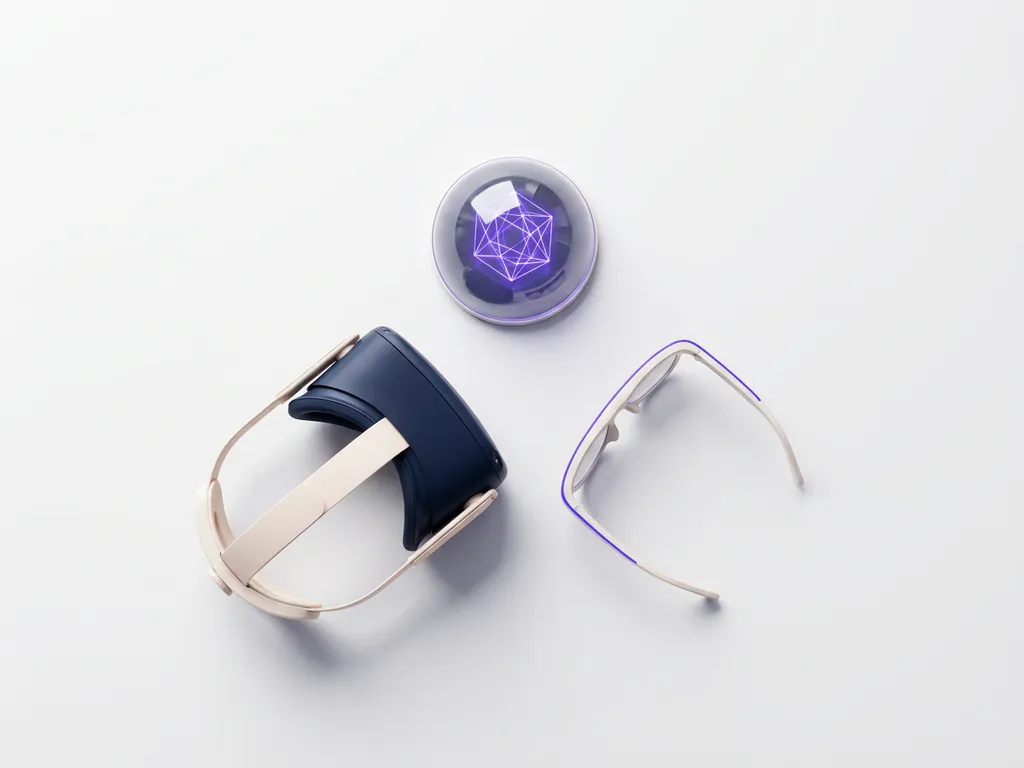
The main types of immersive technology are augmented reality (AR), virtual reality (VR), mixed reality (MR), and extended reality (XR), a collective term that covers all three. Beyond these core categories, immersive technology also includes spatial computing, 360-degree experiences, interactive installations, and multisensory environments that engage touch, smell, and sound alongside visuals. Understanding the distinctions between these types helps organizations choose the right approach for their specific goals, whether that is education, brand activation, cultural storytelling, or behavioral change.
How do the main types of immersive technology actually differ from each other?
The core difference between the main types of immersive technology lies in how much they replace or augment your perception of the real world. Virtual reality replaces your physical surroundings entirely with a digital environment. Augmented reality overlays digital content onto the real world. Mixed reality blends digital and physical elements so they interact with each other in real time. Extended reality is the umbrella term for all of them.
Think of it as a spectrum. At one end, the physical world remains fully visible and digital content is layered on top. At the other end, the physical world disappears entirely and you are placed inside a constructed digital space. Mixed reality sits between these poles, allowing virtual objects to respond to and coexist with real physical surfaces and people.
Each type serves different purposes, suits different contexts, and demands different hardware. The choice between them is never purely technical, it is fundamentally a storytelling decision about how deeply you want to transport your audience and how much of the real world should remain part of the experience.
What is augmented reality and where is it used?
Augmented reality (AR) is a technology that overlays digital content, 3D objects, animations, text, or sound, onto the real world as seen through a smartphone, tablet, or AR headset. The physical environment remains fully visible; digital elements are simply added on top of it. AR does not require users to enter a separate space or wear a headset that cuts them off from their surroundings.
AR is used across a wide range of sectors and contexts:
- Retail and brand marketing: Product visualizations, virtual try-ons, and interactive packaging that come alive through a phone camera
- Museums and cultural heritage: Artworks that animate, historical reconstructions layered over physical spaces, and AR guides that enrich exhibits
- Education: Interactive diagrams, AR books, and spatial learning tools that make abstract concepts tangible
- Outdoor and event activations: Geospatial AR campaigns that place content at specific GPS coordinates without QR codes
- Architecture and real estate: AR miniatures and building visualizations that allow stakeholders to explore projects before they are built
One of AR’s most significant advantages is accessibility. Because it runs on devices most people already own, it removes the barrier of specialized hardware. This makes it one of the most scalable forms of immersive technology available today.
What is virtual reality and what experiences does it enable?
Virtual reality (VR) is a technology that replaces your entire visual field with a computer-generated environment, experienced through a head-mounted display (headset). When you put on a VR headset, the physical world disappears and you are placed inside a fully constructed digital space. You can look in any direction, move through the environment, and, depending on the experience, interact with objects and characters within it.
VR enables experiences that would be impossible, impractical, or unsafe in the real world:
- Training simulations: Medical procedures, emergency response, construction safety, and conflict resolution scenarios where real-world practice carries risk
- Empathy-building experiences: Placing users in the perspective of another person, a refugee, a child in a conflict zone, someone living with a disability, to build genuine emotional understanding
- Immersive storytelling and cinema: 360-degree films and cinematic VR narratives that surround the viewer rather than presenting a flat screen
- Interactive entertainment and games: Fully participatory experiences where users make decisions, solve puzzles, and shape outcomes
- Group and location-based experiences: Synchronized VR for audiences of dozens or even hundreds, used at events, exhibitions, and public installations
VR’s defining strength is its capacity for presence, the psychological sensation of actually being somewhere. That feeling of being there, rather than watching from a distance, is what makes VR particularly powerful for empathy, training, and deep emotional engagement.
What is mixed reality and how does it differ from AR?
Mixed reality (MR) is a technology that blends digital and physical elements so they interact with each other in real time. Unlike augmented reality, where digital content is simply overlaid on the real world without responding to it, mixed reality allows virtual objects to recognize, react to, and anchor themselves to physical surfaces, objects, and people. A virtual character in MR can sit on a real table. A digital model can be occluded by a real wall.
The key distinction is interactivity between the two layers. In AR, a 3D model floats over your camera view. In MR, that same model behaves as though it genuinely exists in your physical space, it casts shadows, responds to your movements, and maintains its position as you walk around it.
Mixed reality typically requires more sophisticated hardware, such as the Apple Vision Pro or Microsoft HoloLens, which use spatial mapping and depth sensing to understand the physical environment in real time. This makes MR more technically demanding to develop but also more spatially convincing and interactive than standard AR.
For organizations designing next-generation product demonstrations, architectural walkthroughs, or collaborative workspaces, mixed reality offers a level of spatial realism that neither AR nor VR can fully replicate on its own.
What does XR mean and does it replace the other terms?
XR, or extended reality, is an umbrella term that encompasses augmented reality, virtual reality, and mixed reality under a single label. The “X” functions as a variable, it stands for any technology that extends or alters human perception of reality by blending the physical and digital worlds. XR does not replace AR, VR, or MR; it describes the broader category they all belong to.
The term has gained traction because the boundaries between AR, VR, and MR are increasingly blurry. Modern headsets and platforms often support multiple modes within a single device. A creator or organization working across all three technologies benefits from a single term that covers the entire spectrum rather than listing each type separately.
In practical terms, when someone says they work in XR, it usually signals that they are not limited to one specific technology. It is a signal of breadth. For clients and partners, XR as a term is most useful when the right technology for a project has not yet been determined, it keeps the conversation open to whichever approach best serves the experience.
What other immersive technologies exist beyond AR and VR?
Beyond AR and VR, immersive technology includes a range of spatial, sensory, and interactive approaches that can be used independently or combined with XR to create richer experiences. These technologies are often overlooked in conversations focused on headsets, but they play a crucial role in full-scale immersive design.
Spatial and environmental technologies
360-degree projection domes surround audiences in panoramic visuals without requiring any headset. They are highly scalable, capable of hosting hundreds of visitors simultaneously, and work well for public exhibitions, science centers, and large events. 4D cinemas add physical sensations such as wind, scent, heat, and seat movement to audiovisual content, engaging the body as well as the eyes and ears. Interactive installations use motion sensors, touch surfaces, and spatial tracking to create responsive environments where the audience’s presence and movement shape the experience.
AI-driven and digital twin technologies
AI avatars and non-player characters (NPCs) are virtual characters capable of holding real-time conversations, adapting their responses to user input, and personalizing the experience based on language, behavior, or learning style. Digital twins are photorealistic 3D replicas of real-world locations or objects, created through photogrammetry, that can be explored in AR, VR, or interactive web environments. These technologies extend immersive experiences beyond fixed content into dynamic, responsive interactions that evolve with each visitor.
Which type of immersive technology is best for education and training?
For education and training, virtual reality and interactive AR tend to deliver the strongest results, but the best choice depends on the learning objective. VR excels when the goal is practice, empathy, or experiential understanding, particularly for scenarios that are difficult, dangerous, or impossible to replicate in a classroom. AR works best when learners need to interact with real-world objects or environments while receiving digital guidance or information.
The reason immersive technology works so well for learning is rooted in how human memory functions. Passive consumption of information, reading, watching, listening, produces relatively shallow encoding. Active participation, emotional engagement, and multisensory input create stronger, more durable memories. Immersive experiences naturally combine all three.
For training scenarios involving complex procedures, high-stakes decisions, or empathy development, VR offers an unmatched environment for safe repetition and emotional presence. For classroom learning, field-based education, or interactive textbooks, AR provides a more accessible and cost-effective path that does not require dedicated hardware for every student.
Multisensory installations, combining spatial audio, tactile feedback, and visual immersion, are increasingly used in educational settings where the goal is not just knowledge transfer but behavioral change and lasting attitudinal shifts. This is particularly relevant for NGOs, public health campaigns, and social impact programs where emotional resonance is as important as factual accuracy.
How do you choose the right immersive technology for your project?
Choosing the right immersive technology starts with defining your core objective: what do you want your audience to feel, understand, or do differently after the experience? The technology should serve that goal, not the other way around. From there, four key factors shape the decision.
- Audience and accessibility: Who will experience this, and what devices or environments do they have access to? A smartphone-based AR experience reaches far more people than a VR installation requiring dedicated headsets.
- Depth of immersion required: How fully do you need to transport your audience? Training simulations and empathy-building experiences often benefit from the complete presence that VR provides. Brand activations and public campaigns may perform better with accessible AR that requires no special hardware.
- Scale and context: Is this a one-to-one experience, a group event, or a public installation? Some technologies scale naturally to large audiences; others are designed for individual or small-group depth.
- Budget and timeline: The complexity of the technology, the level of custom content required, the need for ongoing updates, and the hardware involved all influence both cost and production time. A simple AR activation and a fully interactive VR simulation represent very different investments.
The most effective immersive projects rarely rely on a single technology in isolation. They combine spatial design, digital content, sound, and sometimes physical sensation to create something that engages the whole person. That integration, knowing when to use VR for depth, AR for accessibility, and multisensory installation for scale, is where genuine expertise makes the difference.
If you are exploring which type of immersive technology best fits your project, we would be glad to help you think it through. Contact us to start the conversation.
Gerelateerde artikelen
- What is 360-degree dome projection?
- What does immersive event mean?
- How does virtual reality impact society?
- What are the statistics on the popularity of immersive experiences?
- How to create a virtual reality experience?
- What is the difference between interactive and immersive theatre?
- What are branded immersive experiences?
- How do brands use immersive installations for marketing?
- Can you make money off 3D modeling?