
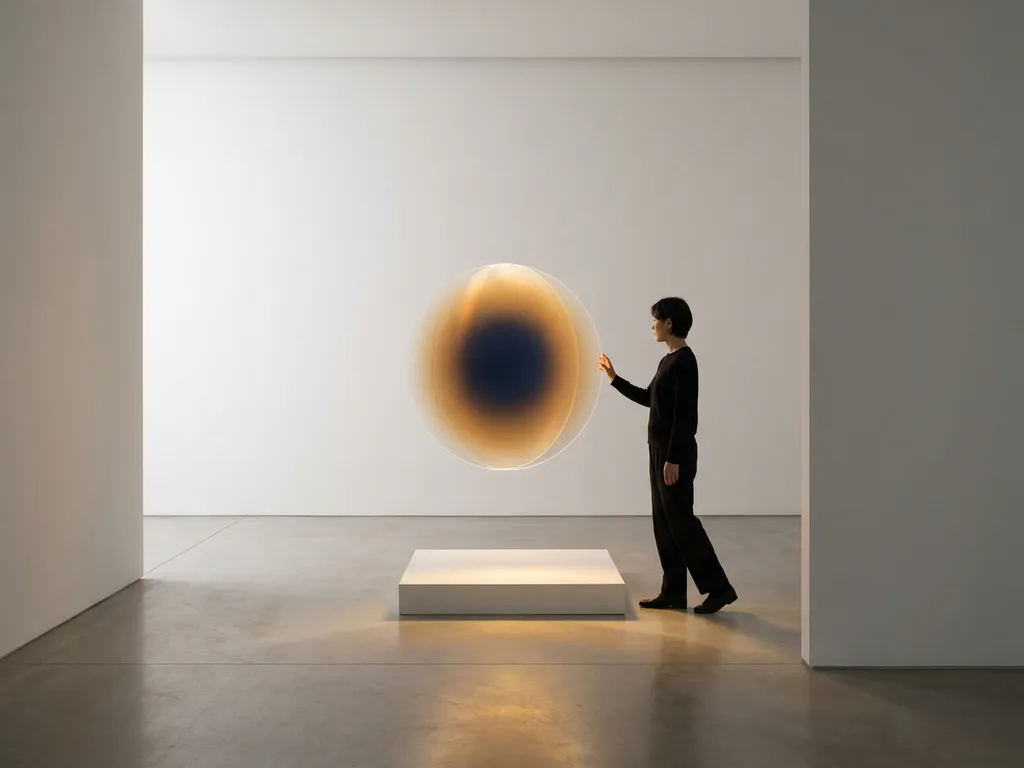
Immersive technology refers to digital tools and environments that surround users in sensory experiences, blurring the boundary between the physical and virtual worlds. Examples include virtual reality headsets that place users inside fully digital environments, augmented reality overlays that add digital content to the real world, mixed reality systems, interactive 360-degree domes, and multisensory installations that engage sight, sound, smell, and touch simultaneously. These technologies are used across education, marketing, museums, healthcare, and entertainment to create experiences that go far beyond passive screen consumption. The sections below unpack each dimension of immersive technology in detail.
How is immersive technology used in the real world?
Immersive technology is used in the real world to create experiences that engage people more deeply than traditional media. Museums use it to bring historical artifacts to life. Brands use it for product launches and experiential campaigns. Schools use it to teach complex subjects through simulation. NGOs use it to build empathy around social issues. In each case, the technology transforms passive observation into active participation.
The range of real-world applications is broad and growing. In the cultural sector, galleries and heritage sites deploy augmented reality layers over physical exhibits, allowing visitors to see a painting animate or hear an artifact tell its own story. In marketing, brands create AR activations at events and pop-ups that let audiences interact with products in three dimensions before they exist in physical form. In healthcare and safety training, virtual reality simulations allow professionals to practice high-stakes procedures in a risk-free environment. In social impact work, organizations use immersive storytelling to place audiences inside the lived experience of someone facing poverty, displacement, or climate disruption, generating a level of empathy that statistics alone cannot achieve.
What unites all of these applications is a shared principle: when people experience something rather than simply read or hear about it, they retain it longer, feel it more deeply, and act on it more readily. Immersive technology makes that level of engagement scalable and repeatable.
What are the most common types of immersive technology?
The most common types of immersive technology are virtual reality (VR), augmented reality (AR), mixed reality (MR), 360-degree video, spatial audio, and multisensory installations. Each type creates a different degree of immersion and serves different purposes depending on the context, audience, and goals of the experience.
- Virtual Reality (VR): Fully digital environments experienced through a headset, blocking out the physical world entirely. Used for training simulations, immersive storytelling, and interactive entertainment.
- Augmented Reality (AR): Digital content layered over the real world, typically via a smartphone or headset. Used for product visualization, educational overlays, and brand activations.
- Mixed Reality (MR): A blend of physical and digital where virtual objects interact with real-world surfaces and people in real time. Enabled by platforms like Apple Vision Pro.
- 360-Degree Video: Cinematic footage that surrounds the viewer in all directions, often delivered via headset or dome projection. Used for documentary storytelling and location-based experiences.
- Interactive Installations: Physical environments equipped with sensors, projection, spatial audio, and haptic or olfactory elements that respond to visitor behavior.
- AI-Driven Experiences: Environments or avatars that adapt in real time to a user’s language, choices, or emotional responses, enabling personalized immersive journeys.
These types are not mutually exclusive. The most powerful immersive experiences typically combine several of them, layering spatial audio over a VR environment or embedding AR interactions within a physical installation, to create something that feels genuinely transporting.
What is the difference between AR, VR, and MR?
AR, VR, and MR differ in how much they replace or augment the user’s physical environment. VR replaces reality entirely with a digital world. AR adds digital elements on top of the real world without replacing it. MR goes further, allowing digital and physical objects to coexist and interact with each other in real time. The key distinction is the degree to which the real world remains visible and interactive.
Augmented Reality (AR)
AR keeps the user anchored in the physical world while overlaying digital content onto it. A visitor pointing a smartphone at a museum exhibit might see an animated reconstruction of the artifact appear on screen. A shopper might preview how a piece of furniture looks in their living room before purchasing. AR requires no special hardware beyond a smartphone in most cases, making it highly accessible and scalable for public-facing campaigns and educational settings.
Virtual Reality (VR)
VR removes the user from the physical world entirely. Wearing a headset, the user is placed inside a fully rendered digital environment where they can look around, move, and interact. This total immersion makes VR particularly powerful for empathy-building experiences, training simulations, and entertainment. The trade-off is that it requires dedicated hardware and is typically a more controlled, single-user or small-group experience.
Mixed Reality (MR)
Mixed reality is the most technically sophisticated of the three. Rather than simply overlaying digital content, MR maps the physical environment and allows virtual objects to respond to it. A virtual character can sit on a real chair. A digital product can cast a shadow on a real table. Next-generation hardware like Apple Vision Pro is purpose-built for this kind of spatial computing, opening new possibilities for design, collaboration, and immersive retail.
How does immersive technology work in education?
Immersive technology works in education by replacing passive instruction with active, experiential learning. Instead of reading about a historical event, students can walk through it in VR. Instead of studying a molecule from a diagram, they can manipulate a 3D model in AR. Research consistently shows that people retain information more effectively when they experience it through multiple senses and make active choices, rather than receiving it passively.
The applications in formal and informal education are wide-ranging. Schools and universities use VR simulations to teach subjects that are difficult, dangerous, or impossible to experience in a classroom, such as surgical procedures, historical events, or environmental science fieldwork. AR tools allow learners to interact with digital layers placed over physical textbooks or classroom environments, turning static content into dynamic, explorable systems.
For organizations working on social impact and behavior change, immersive education takes on an additional dimension. Placing a learner inside the perspective of someone affected by poverty, conflict, or climate change builds a quality of empathy that lectures and videos rarely achieve. We design immersive educational experiences specifically for this purpose, working with institutions like UNICEF and UvA to create learning journeys that shift not just knowledge but attitudes and behavior.
AI-driven personalization adds another layer of effectiveness. An immersive learning experience can adapt its pacing, language, and content pathways based on how a learner responds, ensuring that the experience remains relevant and appropriately challenging for each individual, whether they are a primary school student or a senior professional.
Which industries benefit most from immersive technology?
The industries that benefit most from immersive technology are those where engagement, empathy, or skill transfer are critical and where traditional media consistently falls short. These include education, cultural heritage, healthcare, marketing and brand experience, public sector communications, and entertainment. In each of these sectors, immersive technology solves a specific, recurring problem that screens and print cannot.
- Education and training: Immersive simulations make abstract or high-risk learning concrete and safe.
- Museums and cultural institutions: AR and VR breathe life into collections, attract younger audiences, and deepen visitor engagement.
- NGOs and public sector: Immersive storytelling creates emotional connection to complex social issues, driving awareness and behavior change.
- Marketing and brand experience: Experiential activations create memorable brand moments that cut through advertising noise and generate genuine advocacy.
- Healthcare: VR is used for pain management, phobia treatment, surgical training, and patient education.
- Architecture and real estate: Digital twins and AR miniatures allow clients to experience spaces before they are built.
- Events and exhibitions: Immersive installations and 360-degree domes transform passive audiences into active participants at scale.
The common thread across all of these industries is that immersive technology delivers what conventional communication cannot: the feeling of being present inside an experience rather than observing it from a distance.
What hardware is needed to experience immersive technology?
The hardware needed to experience immersive technology depends entirely on the type of experience. AR typically requires nothing more than a smartphone or tablet. VR requires a dedicated headset. Mixed reality experiences designed for platforms like Apple Vision Pro require that specific device. Large-scale installations may require no personal device at all, as the environment itself is the medium.
This spectrum of hardware requirements is one of the most important practical considerations when designing an immersive experience. A brand activation at a public event needs to work for hundreds of people without requiring them to own specialist equipment. A training simulation for a professional cohort can justify dedicated headsets. A museum installation can use projection, spatial audio, and motion sensors to create immersion without any device in the visitor’s hands.
Common hardware categories include:
- Smartphones and tablets: The most accessible entry point for AR experiences, requiring no additional investment from the audience.
- VR headsets: Ranging from standalone devices to high-end tethered systems, used for fully immersive virtual environments.
- Spatial computing devices: Next-generation hardware like Apple Vision Pro, enabling mixed reality interactions in physical space.
- Projection systems and domes: Used in location-based installations to create immersive environments without personal devices.
- Haptic and sensory hardware: Devices that deliver touch, temperature, or movement feedback to deepen physical immersion.
The best immersive experiences are designed hardware first, choosing the technology that serves the audience and context rather than the other way around.
What’s the difference between location-based and remote immersive experiences?
Location-based immersive experiences take place in a dedicated physical environment, such as a museum, event space, or branded installation, where the space itself is part of the experience. Remote immersive experiences are designed to be accessed from anywhere, typically via a personal device or headset. The key difference is that location-based experiences can engage all the senses and control the full environment, while remote experiences prioritize accessibility and scale.
Location-based experiences offer the highest degree of immersion. A 4D cinema with synchronized scent, sound, temperature, and movement cannot be replicated on a smartphone. A 360-degree dome projection surrounding hundreds of visitors simultaneously creates a shared, communal experience that remote delivery cannot match. These formats are ideal for exhibitions, brand activations, and educational installations where the goal is maximum impact in a defined context.
Remote immersive experiences trade some sensory depth for reach. A VR experience delivered via headset to a school anywhere in the country, or an AR experience accessible through any smartphone, can scale to thousands of users simultaneously. For organizations working in education or social impact, this scalability is often as important as the depth of the experience itself.
In practice, the most effective immersive strategies combine both. A location-based installation creates a flagship moment of high impact. A companion remote experience extends that reach, allowing people who were not physically present to engage with the content on their own terms. This layered approach is increasingly how forward-thinking museums, brands, and educational institutions are thinking about immersive technology in 2026.
If you are exploring how immersive technology could serve your organization, whether as a cultural institution, a brand, an educational body, or a social impact initiative, we would love to help you find the right approach. Contact us to start a conversation about what is possible.
Gerelateerde artikelen
- What are some examples of interactive museum exhibits?
- What are 10 real-world examples of augmented reality?
- What are the three types of virtual reality?
- Does AR VR require coding?
- How much does augmented reality cost?
- How much do immersive installations cost?
- What are the benefits of immersive installations for brands?
- How does XR technology enhance brand experiences?
- How do you create educational immersive content?