
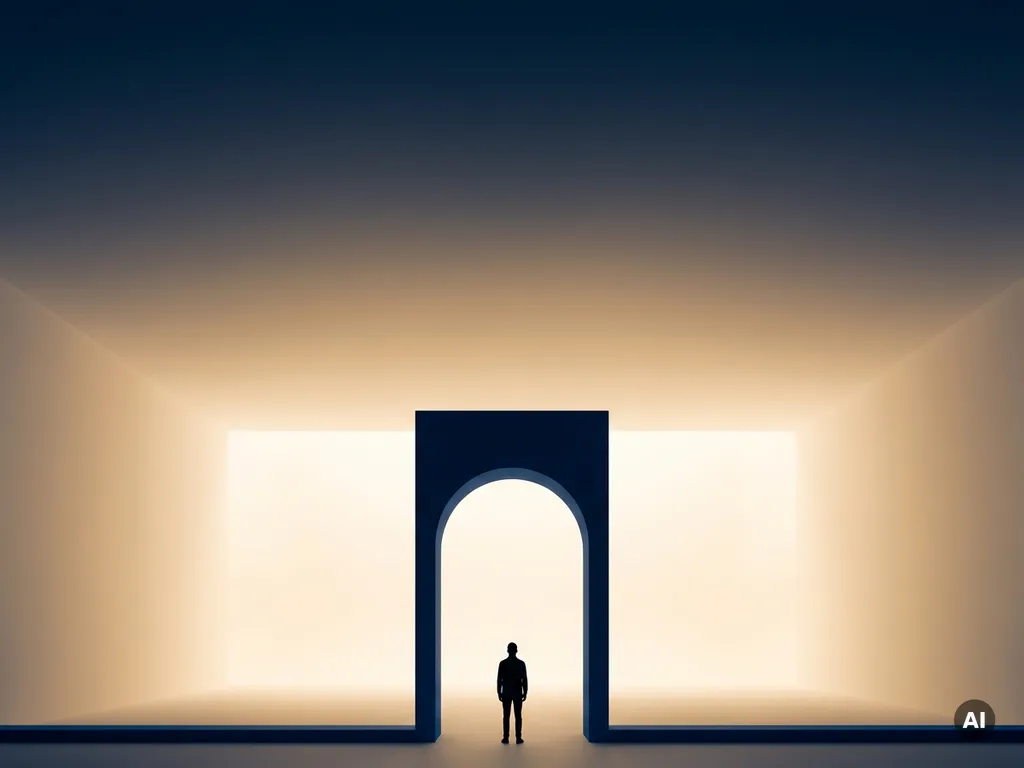
An immersive display is a visual system designed to surround, envelop, or deeply engage a viewer rather than simply presenting content on a flat screen in front of them. Unlike a conventional monitor or projector, an immersive display creates a sense of presence, the feeling of being inside the content rather than observing it from the outside. These systems range from curved LED walls and 360-degree projection domes to interactive floors and multi-sensory environments that blend light, sound, and space into a single cohesive experience. The questions below unpack how these technologies work, where they are used, and what separates them from other immersive formats like virtual reality.
What makes a display ‘immersive’ compared to a regular screen?
An immersive display differs from a regular screen by expanding the visual field beyond a single focal point and engaging the viewer’s peripheral vision, spatial awareness, and often additional senses. Where a standard screen asks you to look at content, an immersive display places you within it, dissolving the boundary between viewer and image.
Several qualities define whether a display earns the label “immersive.” The first is field of view. A typical desktop monitor occupies roughly 30 to 40 degrees of a person’s visual field. Immersive display technology expands this dramatically, sometimes to 180 or even 360 degrees, so the content fills the viewer’s natural line of sight in every direction.
The second quality is spatial integration. Immersive visual displays are built into or around a physical space rather than mounted on a wall as a discrete object. The architecture of the room becomes part of the canvas. Floors, ceilings, curved walls, and even the air itself can carry projected or rendered imagery.
The third quality is interactivity and responsiveness. Many modern immersive displays react to the viewer’s presence, movement, or touch. This transforms the audience from passive observers into active participants, a shift that fundamentally changes how information and emotion are received and retained.
Finally, immersive displays frequently layer in additional sensory channels, spatial audio, scent, haptic feedback, or temperature, to reinforce the sense of presence. It is this combination of expanded visual coverage, spatial design, and multi-sensory depth that separates a truly immersive experience from a large screen.
What are the main types of immersive displays?
The main types of immersive displays include 360-degree projection domes, LED volume stages, curved and cylindrical projection systems, interactive floors and walls, multi-screen CAVE environments, and large-format LED installations. Each type serves different spatial requirements, audience sizes, and storytelling goals.
360-degree projection domes
Dome theatres project content across the entire interior surface of a hemispherical or geodesic structure. Audiences seated or standing inside experience a full-sky visual environment. These are widely used in planetariums, festivals, and branded brand-experience settings because they accommodate large groups while delivering a genuinely enveloping visual field. Our interactive dome projects demonstrate how this format transforms educational and brand storytelling alike.
LED volume and curved LED walls
LED volumes use modular, high-resolution panels arranged in curved or multi-sided configurations to create a seamless visual environment. Originally developed for virtual film production, they are now applied in live events, retail installations, and permanent museum exhibits. The brightness and pixel density of modern LED panels allow for daylight-visible, photorealistic imagery at scale.
Interactive floors and walls
Interactive immersive displays use depth sensors, cameras, or touch technology to detect human movement and respond in real time. A projected floor can ripple like water when walked upon; a wall can shatter, bloom, or animate in response to a gesture. These installations are particularly effective in children’s museums, retail activations, and public art contexts where spontaneous participation is the goal.
CAVE environments
A CAVE (Cave Automatic Virtual Environment) surrounds a viewer on three, four, or six sides with synchronized projection. Unlike a dome, a CAVE maintains a rectilinear space, which makes it well suited to architectural visualization, scientific simulation, and training environments where spatial accuracy matters as much as visual immersion.
How does an immersive display actually work?
An immersive display works by rendering visual content across a non-standard surface geometry, curved, spherical, or multi-planar, using specialized projection mapping, LED panel arrays, or real-time rendering engines that warp and stitch imagery to fit the physical space precisely. The result is a seamless visual environment that appears natural to the human eye despite covering an unconventional surface.
At the core of most immersive display setups is a media server, a high-performance computer that manages the rendering and distribution of content to multiple output channels simultaneously. Each projector or LED zone receives its own precisely calibrated portion of the overall image, with edge blending and geometric correction applied in software to eliminate visible seams.
Projection mapping is a critical technique in this process. It involves digitally mapping a three-dimensional model of the physical surface and then adjusting the projected image so that it aligns perfectly with every curve, corner, or contour. When done well, the surface itself appears to transform, a plain white dome becomes a cosmos, a concrete wall becomes a living forest.
Interactive immersive displays add another layer: sensor systems that capture real-time data about viewer position, touch, or movement. This data feeds back into the rendering engine, which updates the visual output in milliseconds. The result is a display that feels alive and responsive, a quality that dramatically increases emotional engagement and dwell time.
Where are immersive displays used?
Immersive displays are used across museums, brand activations, education, live events, healthcare, retail, and public spaces. Wherever the goal is to move an audience beyond passive observation, to create genuine emotional engagement or lasting behavioral change, immersive screen technology has found a role.
In museums and cultural institutions, immersive displays allow curators to bring historical periods, scientific phenomena, or artistic worlds to life at a scale and fidelity that physical artifacts alone cannot achieve. A single room can transport visitors to ancient Rome or inside a living cell.
In brand and marketing contexts, immersive visual displays create the kind of shareable, memorable moments that traditional advertising cannot replicate. A product launch inside a 360-degree environment generates social content, emotional association, and word-of-mouth reach far beyond a standard event setup.
In education and training, immersive display technology enables learners to practice complex procedures, explore dangerous environments safely, or develop empathy by experiencing another person’s perspective. Medical training, safety drills, and social impact education all benefit from this format.
In public spaces and urban settings, large-format LED installations and projection-mapped facades transform architecture into storytelling surfaces, engaging passersby, communicating civic messages, or simply making a city more alive after dark.
What’s the difference between immersive displays and virtual reality?
The key difference between immersive displays and virtual reality is that immersive displays are shared, room-scale environments experienced without a headset, while virtual reality is an individual, headset-based experience that completely replaces the viewer’s visual field with a digital environment. Both create immersion, but through fundamentally different means.
Immersive displays keep the viewer physically present in a real space. Multiple people can experience the same environment simultaneously, moving freely, interacting with one another, and engaging with the content together. This makes them ideal for public exhibitions, events, and educational settings where social dynamics and group experience matter.
Virtual reality, by contrast, isolates the viewer inside a personal digital world. The headset blocks out the physical environment entirely, offering a level of individual presence and interactivity that a shared display cannot match. VR is particularly powerful for empathy-building exercises, individual training simulations, and experiences that require complete narrative control over what the viewer sees and hears.
In practice, the two technologies are often complementary rather than competing. A museum might use an immersive 360 display to orient a group audience, then offer individual VR headsets for a deeper, personalized journey into the same subject matter. We design experiences that combine both formats precisely because the most impactful storytelling often lives at the intersection of the shared and the personal.
What technology powers an immersive display setup?
An immersive display setup is powered by a combination of high-performance media servers, real-time rendering engines, projection or LED hardware, spatial audio systems, sensor arrays, and content management software, all working in precise synchronization to create a seamless, responsive environment.
Rendering engines such as Unreal Engine and Unity are increasingly central to immersive display production. Originally built for video games, these platforms now power real-time cinematic environments that can be updated, personalized, or made interactive without re-rendering pre-baked video files. This flexibility is transformative for live events and installations that need to adapt dynamically.
Projection technology has advanced significantly, with laser projectors now offering brightness levels, color accuracy, and lamp-free longevity that make large-scale permanent installations practical. For environments where ambient light is difficult to control, high-brightness LED panels offer an alternative with exceptional contrast and resolution.
Spatial audio is a frequently underestimated component of immersive display technology. Object-based audio systems, where individual sounds are placed and moved through three-dimensional space, reinforce the visual environment and significantly deepen the sense of presence. The brain processes sound spatially, and when the audio matches the visual field, immersion becomes visceral rather than merely visual.
Sensor and tracking systems, including depth cameras, LiDAR, infrared arrays, and computer vision, enable interactive immersive displays to respond to human presence in real time. When combined with AI-driven logic, these systems can personalize content based on who is in the space, how many people are present, or how they are moving and behaving.
How much does an immersive display installation cost?
The cost of an immersive display installation varies widely depending on a set of interconnected factors: the scale and complexity of the physical space, the type of display technology used, the level of interactivity required, the duration of the installation, and the depth of custom content production involved. There is no single price point, immersive display projects are inherently bespoke.
Scale and spatial complexity are among the largest cost drivers. A single curved LED wall in a retail environment requires far less infrastructure than a full 360-degree dome installation designed for thousands of visitors. The physical dimensions of the space determine the quantity of hardware, the complexity of structural rigging, and the calibration time required.
Content production is often as significant a cost factor as the hardware itself. Real-time interactive content built in Unreal Engine, volumetric video capture, or custom AI-driven personalization systems require skilled creative and technical teams working across extended production timelines. A pre-rendered linear film is substantially less resource-intensive than a fully interactive, sensor-responsive environment.
Interactivity and technology integration add further layers of investment. Sensor arrays, tracking systems, custom software development, and integration with existing venue infrastructure all carry their own costs, as does the ongoing maintenance and support that permanent installations require.
Duration and deployment model also shape the financial picture. A temporary activation for a product launch has a very different cost profile from a permanent museum installation designed to run for five or more years. Rental versus purchase, modular versus fixed, and single-venue versus touring formats all influence the overall investment.
If you are exploring what an immersive display could look like for your space or campaign, the most valuable first step is a conversation about your goals, your audience, and the experience you want to create. We would welcome that conversation, feel free to reach out through our contact page and let us help you find the right approach for your vision.
Gerelateerde artikelen
- What are planetarium domes made of?
- What are 10 real-world examples of augmented reality?
- What is an example of multi sensory learning?
- How did Gen Z break the marketing funnel?
- What are the three levels of immersion?
- Is VR an immersive experience?
- What is an immersive experience design track?
- How much do immersive installations cost?
- How does spatial design affect user engagement?