
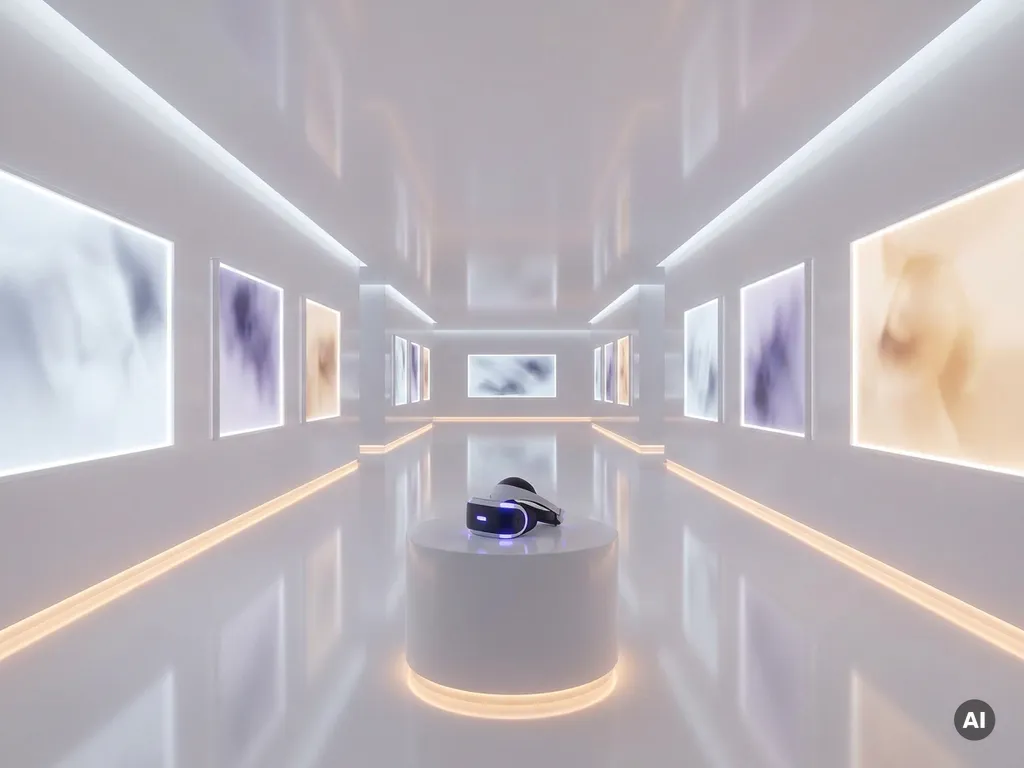
Creating a virtual exhibition involves designing a digital environment where visitors can explore curated content, artwork, artifacts, documents, or brand narratives, without being physically present. The process combines spatial design, storytelling, and technology to replicate or surpass the emotional depth of a physical visit. This guide answers the most important questions you will face when building one, from platform selection to visitor measurement.
What makes a virtual exhibition different from a physical one?
A virtual exhibition removes the constraints of physical space, geography, and operating hours, allowing unlimited visitors to engage with content from anywhere in the world at any time. Unlike a physical exhibition, which is bounded by walls, logistics, and visitor capacity, a digital exhibition can layer interactive elements, audio, video, and narrative depth into a single experience that evolves over time.
The most significant difference is not technical, it is experiential. In a physical space, visitors navigate with their bodies. In a virtual one, they navigate with intention, clicking, exploring, or immersing themselves through a headset. This shift demands that curators and creators think differently about pacing, attention, and emotional engagement.
Physical exhibitions rely on ambient atmosphere, lighting, temperature, the presence of other visitors, to create mood. Virtual exhibitions must engineer that atmosphere deliberately, using spatial audio, 3D environments, and interaction design to achieve the same emotional pull. When done well, a virtual exhibition does not merely replicate a physical space: it expands what is possible within one. Visitors can step inside a painting, travel to a location that no longer exists, or experience a historical moment from the inside.
There is also a data advantage. Every interaction in a virtual exhibition can be tracked and analysed, giving creators insight into which content resonates, where visitors linger, and where they disengage, intelligence that is nearly impossible to gather in a physical gallery.
What types of virtual exhibitions can you create?
Virtual exhibitions fall into several distinct formats, each suited to different goals, audiences, and budgets. The right type depends on the depth of immersion you want to achieve and the nature of the content you are presenting.
360-degree virtual tours
These are the most accessible format, panoramic photographs or renders stitched together to allow visitors to look around a space as if standing inside it. They work well for museums, galleries, and architectural projects that want to digitise an existing physical space quickly and cost-effectively. Navigation is simple, and the format is compatible with most devices including smartphones.
Fully immersive VR and interactive 3D exhibitions
At the more ambitious end of the spectrum, fully immersive virtual exhibitions are built inside game engines such as Unreal Engine or Unity. Visitors wear headsets or navigate richly rendered 3D environments through a browser or dedicated app. These experiences can incorporate interactive objects, animated sequences, spatial audio, and AI-driven guides. They are particularly powerful for storytelling-led exhibitions, educational programmes, or brand experiences where emotional impact is the primary goal. We design experiences at this level for cultural institutions, NGOs, and forward-thinking brands that want their audiences to feel something, not just see something.
Hybrid and web-based exhibitions
Between these two poles sits a growing category of web-based exhibitions that blend 3D environments with traditional media, video, audio, text, and imagery, accessible through a standard browser without specialist hardware. These are scalable, shareable, and measurable, making them a practical choice for organisations that need broad reach without the barrier of headset adoption.
What platform should you use to build a virtual exhibition?
The right platform for your virtual exhibition depends on three factors: the level of interactivity you need, the technical capabilities of your audience, and your production budget. There is no single best platform, there is only the best fit for your specific goals.
For straightforward 360-degree tours, platforms such as Matterport or Kuula offer accessible entry points with minimal technical overhead. They are well suited to galleries or museums digitising existing spaces for archival or promotional purposes.
For richer, more narrative-driven experiences, browser-based 3D platforms like Mozilla Hubs or custom-built WebGL environments offer greater creative control. These allow you to design purpose-built spaces rather than scanning existing ones, giving your exhibition its own visual identity and atmosphere.
For the highest level of immersion, real-time 3D, interactive storytelling, VR headset support, and AI integration, game engines are the industry standard. Unreal Engine delivers cinematic visual quality, while Unity offers broader cross-platform deployment. Both require specialist development expertise but produce experiences that are genuinely transformative.
The most important question to ask before choosing a platform is not “which is the most impressive?” but “which will my audience actually use?” A breathtaking VR experience that requires a headset most visitors do not own will reach far fewer people than a well-designed web-based exhibition accessible on any device. Accessibility and ambition must be balanced deliberately.
How do you plan the content and narrative structure of a virtual exhibition?
Planning a virtual exhibition starts with a clear narrative intention, the single emotional or intellectual journey you want visitors to take. Every content decision, from the sequence of rooms to the placement of interactive elements, should serve that central story. Without this spine, even technically impressive exhibitions feel like a collection of objects rather than a coherent experience.
Begin by defining your visitor journey: where they enter, what they encounter first, how the experience builds, and what they feel or know by the end. This is not fundamentally different from curating a physical exhibition, but the digital environment gives you far more control over pacing and sequence. You can guide visitors with lighting, sound, and spatial design in ways a physical gallery cannot.
Content selection should prioritise depth over volume. Virtual visitors are more likely to disengage when overwhelmed than when given fewer, richer objects to explore. For each piece of content, ask: what does this add to the narrative? What should a visitor feel, understand, or question after encountering it?
Interactivity should be purposeful, not decorative. Clickable elements, audio narration, embedded video, and animated sequences are powerful tools, but only when they deepen understanding rather than distract from it. The strongest virtual exhibitions use interaction to reveal layers of meaning that a static image or label could never convey.
Finally, plan for accessibility from the start. Subtitles, audio descriptions, adjustable text sizes, and keyboard navigation are not afterthoughts, they are part of responsible exhibition design that ensures your content reaches the widest possible audience.
How long does it take to create a virtual exhibition?
The production timeline for a virtual exhibition typically ranges from four weeks to six months, depending on the complexity of the environment, the volume of content, and the level of interactivity required. A simple 360-degree tour of an existing space can be produced in a matter of weeks. A fully interactive, custom-built 3D exhibition with narrative programming, spatial audio, and AI elements requires significantly longer.
The planning and content development phase is often the longest and most underestimated part of the process. Defining the narrative structure, gathering and preparing assets, writing scripts for audio guides, and aligning stakeholders on creative direction all take time before a single line of code is written or a single environment is rendered.
Technical production, building the 3D environment, integrating interactive elements, testing across devices and browsers, typically runs in parallel with content refinement. This iterative process is where most timeline pressure accumulates, particularly when feedback cycles are long or scope evolves mid-project.
A realistic rule of thumb: double your initial time estimate for any exhibition that involves custom 3D environments, real-time interactivity, or multi-language support. Building in a structured review and testing phase before launch is not optional, it is what separates exhibitions that feel polished from those that feel unfinished.
How much does a virtual exhibition cost to produce?
The cost of producing a virtual exhibition varies enormously based on the scope of the project, and there is no universal price point that applies across all formats and ambitions. Understanding the factors that drive cost is more useful than any single figure, because those factors are where your decisions as a commissioner will have the greatest impact.
Factors that shape production cost
The complexity of the 3D environment is one of the largest cost drivers. A photogrammetric scan of an existing physical space costs considerably less than a fully custom-designed virtual world built from scratch inside a game engine. The more detailed, animated, and interactive the environment, the more time, and therefore budget, it requires.
Content volume and asset preparation
The number of objects, artworks, or exhibits you want to include, and the quality at which they need to be digitised or rendered, directly affects cost. High-resolution 3D scans of physical objects, volumetric video of people, or photorealistic product renders each carry their own production overhead. Audio narration, multilingual subtitles, and video content add further layers.
Interactivity and technology integration also influence the budget significantly. A passive, navigable environment costs less than one with real-time AI guides, gamified learning pathways, or live event functionality. Platform licensing, hosting infrastructure, and ongoing maintenance are recurring costs that are often overlooked in initial budgeting but are essential for keeping the exhibition accessible over time.
The most cost-effective approach is to define your core narrative and visitor journey first, then make technology decisions in service of that story, rather than starting with the most impressive technology and working backwards. This keeps ambition focused and budgets aligned with genuine impact.
How do you attract and measure visitors to a virtual exhibition?
Attracting visitors to a virtual exhibition requires the same intentional effort as promoting a physical one, perhaps more, because there is no physical presence to signal that something is happening. A strong launch strategy, ongoing promotion, and clear calls to action are essential from the moment the exhibition goes live.
Start with your existing audience: email newsletters, social media channels, and partner networks are the fastest way to generate initial traffic. Press coverage, particularly from specialist media in your sector, arts, education, technology, or culture, can extend reach significantly. Embedding the exhibition on your own website and optimising it for search engines ensures it remains discoverable long after the launch moment has passed.
Partnerships amplify reach. Collaborating with other institutions, brands, or community organisations to co-promote the exhibition introduces it to audiences you could not reach alone. For educational exhibitions, direct outreach to schools or universities can drive structured group visits that generate both traffic and measurable learning outcomes.
Measurement is one of the genuine advantages of the virtual format. Analytics tools embedded in the platform can track how many visitors enter, how long they stay, which rooms or objects they engage with most, and where they exit. This data is invaluable for understanding what works and for making the case to funders or stakeholders that the exhibition is delivering impact.
Define your success metrics before launch, not after. Whether you are measuring total visits, average session duration, return visits, social shares, or learning outcomes, having clear benchmarks transforms your analytics from raw data into actionable insight. The most successful virtual exhibitions treat measurement not as an administrative task but as part of the creative feedback loop, using what visitors do to continuously improve what they experience.
If you are ready to bring a virtual exhibition to life, whether for a cultural institution, an educational programme, or a brand experience, we would love to help you design something that genuinely moves people. Explore our past projects to see what immersive storytelling can look like in practice, or contact us to start a conversation about your vision.
Gerelateerde artikelen
- What makes immersive experiences memorable?
- What is an example of a brand activation?
- What are the three types of virtual reality?
- Can AI make AR?
- Why is immersive art so popular?
- How to create immersive content?
- What makes something an immersive experience?
- How do immersive installations work?
- How do immersive experiences increase brand engagement?