
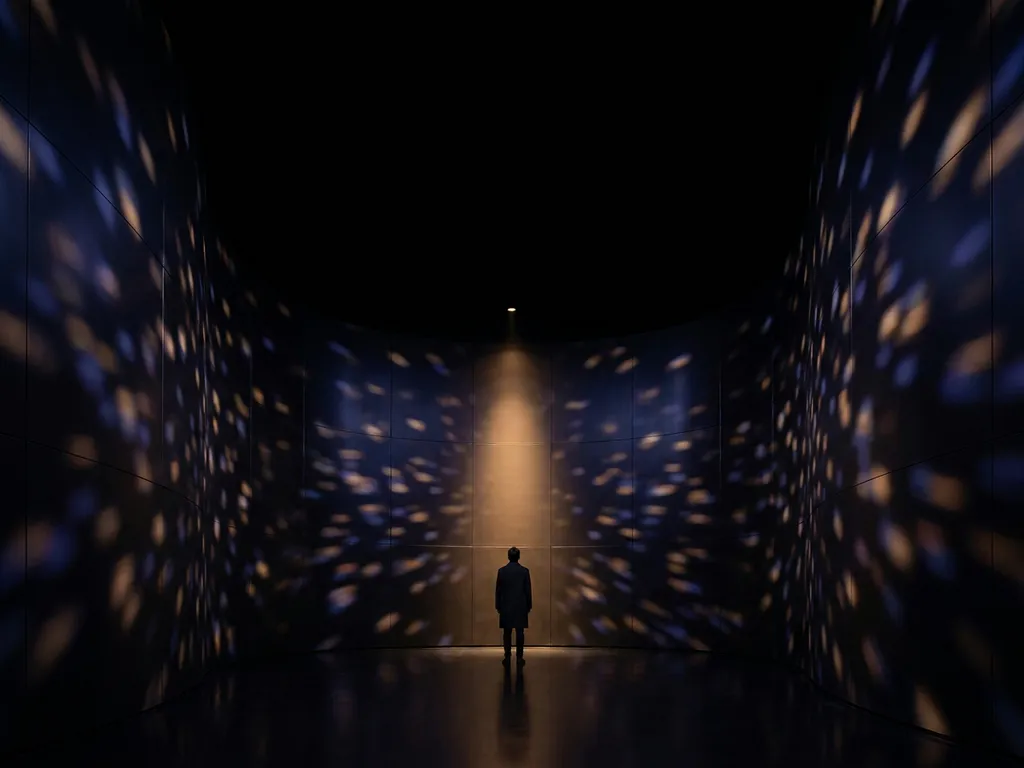
A successful branded immersive experience works when it puts the audience inside the story rather than in front of it. The brand becomes the environment, not the advertisement. What separates campaigns that generate lasting emotional resonance from those that fade within days is a precise combination of purposeful storytelling, sensory design, and technology that serves the narrative. The questions below unpack each of those layers in detail.
What separates a memorable brand activation from a forgettable one?
A memorable brand activation creates a moment the audience could not have experienced anywhere else. Forgettable activations deliver information; memorable ones deliver transformation. The single most important separator is emotional ownership: when a participant feels like an active part of the story rather than a passive observer, the experience becomes personal and therefore unforgettable.
Most brand activations fail because they prioritize visual spectacle over emotional depth. A large LED wall, a photogenic installation, or a branded selfie moment can generate short-term social sharing, but they rarely shift how someone feels about a brand at a deeper level. The experiences that endure are those that require something from the participant: a choice, a physical movement, a moment of genuine surprise or empathy.
There is also a structural difference. Forgettable activations are designed around the brand’s message. Memorable ones are designed around the participant’s journey. The brand message arrives as a conclusion the visitor reaches themselves, not a headline they are handed at the entrance. This distinction is subtle, but it changes everything about how an experience is designed, from the spatial layout to the pacing of information.
What elements make up a successful branded immersive experience?
A successful branded immersive experience is built from five core elements: a clear emotional objective, a spatially coherent narrative, multisensory design, meaningful interactivity, and a strong exit moment. Remove any one of these and the experience risks feeling incomplete, confusing, or forgettable, regardless of the production budget behind it.
Emotional objective and narrative coherence
Before any technology is chosen or any space is designed, the team must define exactly what the participant should feel at the end. Not what they should know, not what they should see, but what they should feel. That emotional destination shapes every subsequent creative decision. The spatial narrative, meaning the sequence in which visitors encounter spaces, objects, and moments, should build toward that feeling with the same intentionality a film director brings to a final scene.
Multisensory design and meaningful interactivity
Truly immersive experiences engage more than the eyes and ears. Scent, temperature, texture, sound spatialization, and physical feedback all contribute to the sense that a participant has entered a different reality. When the body believes it is somewhere new, the mind follows. Interactivity deepens this further: when a participant’s actions change what happens next, they invest emotionally in the outcome. That investment is what converts a visitor into an advocate.
The exit moment is often underestimated. How an experience ends determines what the participant carries away and whether they talk about it. A strong closing beat, whether it is a physical takeaway, a reflective pause, or a final reveal, anchors the emotional memory and gives the participant a story worth telling.
How does storytelling drive immersive brand experiences?
Storytelling is the architecture of a branded immersive experience. Technology, space, and sensory design are the materials, but without a story structure holding them together, they remain disconnected novelties. Effective immersive storytelling places the participant inside a narrative arc where they have a role, a perspective, and something at stake, which is why the experience feels meaningful rather than merely impressive.
The most effective immersive brand stories operate on two levels simultaneously. On the surface, there is the immediate sensory and spatial journey: what the participant sees, hears, and touches as they move through the experience. Beneath that surface is the brand’s deeper truth: its values, its purpose, the reason it exists beyond its products. When these two layers align, the brand message lands not as communication but as conviction.
Perspective is a particularly powerful storytelling tool in immersive environments. Placing a participant in the shoes of someone whose life is shaped by a brand’s work, whether that is a child learning through technology, a craftsperson whose skills are being preserved, or a community transformed by a product, generates empathy that no advertisement can manufacture. That empathy is durable. It changes how a person thinks about a brand for months or years after the experience ends.
What role does technology play in branded immersive experiences?
Technology in a branded immersive experience should be invisible in the best possible sense: present everywhere, noticed nowhere. Its role is to make the impossible feel real, to remove friction between the participant and the story, and to personalize the journey in ways that would be impossible with physical design alone. Technology fails when it becomes the point of the experience rather than the enabler of it.
The range of technologies available in 2026 is broad. Augmented reality layers digital content onto physical spaces without replacing them, making it ideal for brand experiences that want to enrich a real environment rather than substitute for it. Virtual reality creates fully enclosed worlds that remove all external distraction, which is powerful for deep emotional storytelling. Mixed reality, particularly on spatial computing platforms, allows real-time interaction between physical and digital objects in the same space. Each technology has a different emotional register and a different relationship with the participant’s body.
AI is increasingly shaping how immersive experiences adapt in real time. When a participant’s choices, pace, or language preferences can influence what they encounter next, the experience stops being a fixed route and becomes a responsive conversation. This level of personalization dramatically increases emotional relevance because the participant encounters content that feels curated for them specifically, not broadcast to everyone in the room.
The most important technology decision is not which platform to use but when to let the technology recede. The moments of highest emotional impact in an immersive experience are often the quietest ones, where the technology has done its work and the participant is left alone with a feeling.
How do you measure the success of an immersive brand experience?
The success of an immersive brand experience is measured across three dimensions: emotional impact, behavioral change, and reach. No single metric tells the full story. An experience that generates strong social sharing but produces no shift in brand perception has succeeded technically and failed strategically. Meaningful measurement requires defining success before the experience is built, not after it opens.
- Emotional impact: Post-experience surveys, sentiment analysis, and qualitative interviews capture how participants felt during and after the experience. The most valuable data point is often the unprompted story a participant tells someone else, because it reveals which moments were genuinely memorable rather than merely noticed.
- Behavioral change: For brands, this might mean purchase intent, brand preference shift, or willingness to recommend. For NGOs and educational organizations, it means whether participants took a specific action after leaving. Behavioral metrics require a baseline measurement before the experience opens to be meaningful.
- Reach and amplification: Physical attendance, social sharing, media coverage, and digital engagement with experience-related content all contribute to understanding how far the experience traveled beyond its physical location. A well-designed immersive experience generates organic content that extends its reach significantly beyond the people who attended in person.
Dwell time is an often-overlooked indicator of quality. When participants stay longer than the designed duration, linger at specific moments, or return for a second visit, the experience is working at a level that surveys cannot fully capture. Spatial data, gathered through movement tracking or observation, reveals which elements are generating genuine engagement and which are being skipped.
What are the most common mistakes brands make with immersive experiences?
The most common mistake brands make with immersive experiences is leading with technology rather than intention. When the brief begins with “we want a VR experience” rather than “we want people to feel X,” the result is almost always a technically impressive environment that leaves participants emotionally unmoved. Technology is a means, not a message.
Several other mistakes appear consistently across unsuccessful brand activations:
- Over-messaging: Attempting to communicate too many brand values or product features within a single experience dilutes the emotional focus. Immersive environments work best when they pursue one clear feeling with relentless precision.
- Ignoring the physical journey: Queuing, entry, and exit are part of the experience. Brands that invest heavily in the central installation but neglect the moments before and after it undermine the emotional arc they have built.
- Treating interactivity as decoration: Adding touchscreens or gesture controls that do not meaningfully affect the narrative gives participants the sensation of agency without the reality of it. Participants notice the difference and disengage.
- Underestimating production time: Immersive experiences require longer development cycles than traditional campaigns. Compressing the timeline to meet an event deadline typically results in technical instability or creative compromise, both of which damage the brand rather than elevate it.
- Neglecting repeatability: An experience designed for a single event that cannot be adapted, scaled, or toured represents a significant investment with a narrow return. Modular design thinking from the start dramatically extends the commercial life of an immersive production.
When should a brand invest in an immersive experience over other marketing formats?
A brand should invest in an immersive experience when its objective requires emotional depth that passive media cannot deliver. If the goal is awareness at scale, a broadcast campaign is more efficient. If the goal is shifting how a specific audience feels about a brand, building genuine empathy, or changing behavior rather than just generating attention, an immersive experience consistently outperforms traditional formats.
There are specific moments in a brand’s lifecycle where immersive investment makes particular strategic sense. Product launches that need to communicate a complex or counterintuitive value proposition benefit enormously from environments where participants can experience the product’s meaning rather than read about it. Brand repositioning, where a company needs to replace an existing perception with a new one, requires the kind of visceral, memorable encounter that only physical and sensory engagement can produce.
Events with a captive, high-value audience, such as trade shows, partner conferences, or flagship retail moments, represent natural opportunities because the logistical infrastructure for gathering people already exists. The question shifts from how to attract an audience to how to make the most of the one already present.
Budget is a factor, but it is rarely the deciding one. The real question is whether the brand has a story worth telling in three dimensions. If the answer is yes, and if that story has the potential to create advocates rather than just impressions, the return on an immersive investment tends to exceed what the same budget would achieve in conventional media. The experiences that justify their investment are those designed with a clear emotional purpose, built by a team that understands both technology and storytelling, and measured against outcomes that matter to the business.
If you are exploring whether an immersive experience is the right move for your brand, we would welcome the conversation. Reach out through our contact page and let us help you find the format that fits your story.
Gerelateerde artikelen
- What is an example of multi sensory learning?
- What are the types of immersive technology?
- Who is the leader in augmented reality?
- What is the role of sound in immersive experiences?
- What is immersive and interactive media?
- How to create an immersive experience?
- How much space is needed for dome installations?
- Is immersive the same as virtual reality?
- What is immersive learning?