
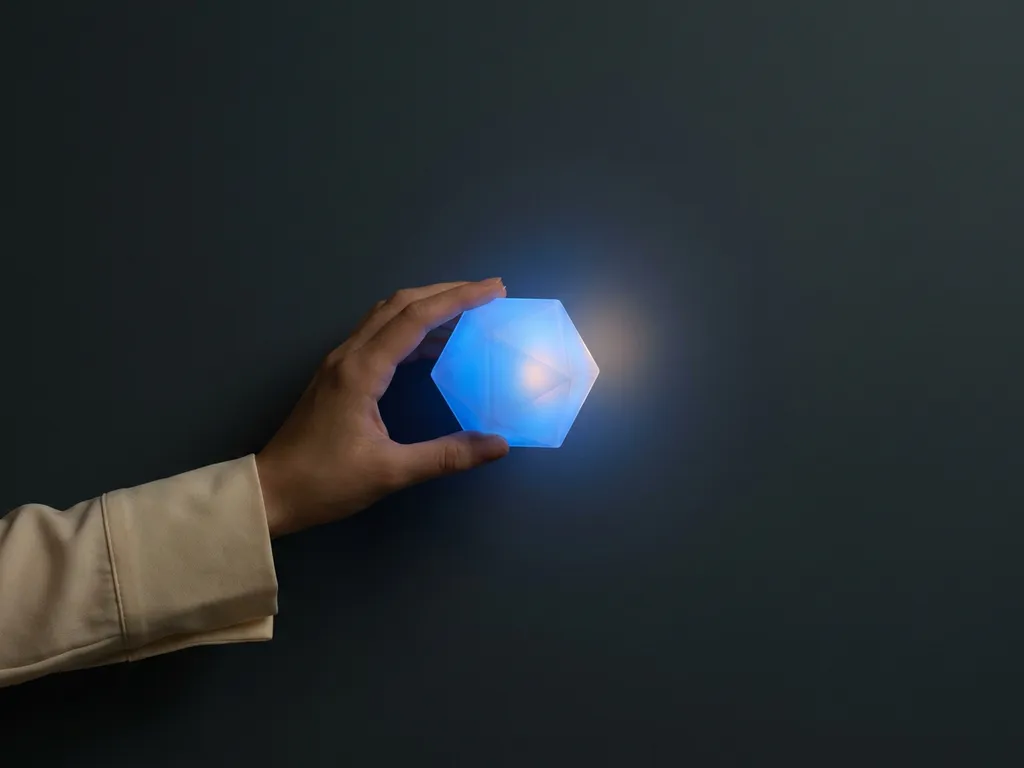
Immersive and interactive media are forms of content and experience design that place the audience inside the story, environment, or message rather than in front of it. Unlike traditional media, which delivers information to a passive viewer, immersive media surrounds people with sensory input, and interactive media invites them to shape what happens next. Together, they represent a fundamental shift in how human beings receive, process, and remember information. The sections below unpack how these experiences work, where they are used, and what makes them so much more effective than conventional communication.
How do immersive and interactive media differ from traditional media?
Traditional media places the audience outside the experience as observers. Immersive and interactive media place the audience inside it as participants. In traditional formats, a film plays regardless of whether you are paying attention. In an immersive or interactive experience, your attention, movement, or choices directly influence what you encounter. This shift from passive consumption to active participation is the defining distinction.
Traditional media communicates through a single channel at a time: a screen you watch, a page you read, a speaker you hear. Immersive media, by contrast, engages multiple senses simultaneously. Spatial audio surrounds you. Physical environments respond to your presence. Scent, temperature, and tactile elements reinforce the narrative. This multisensory engagement is not novelty for its own sake. Research in cognitive science consistently shows that memories formed through multiple sensory channels are significantly stronger and more durable than those formed through a single channel.
Interactivity adds another layer. When people make choices within an experience, they invest emotionally in the outcome. That emotional investment accelerates learning, deepens empathy, and drives the kind of behavioral change that a static advertisement or classroom lecture rarely achieves. The result is media that does not just inform people but genuinely moves them.
What are the main types of immersive and interactive media?
The main types of immersive and interactive media are augmented reality (AR), virtual reality (VR), mixed reality (MR), interactive installations, 360-degree film, and AI-driven interactive experiences. Each type creates a different relationship between the audience and the content, ranging from light digital overlays on the physical world to complete sensory environments that replace it entirely.
- Augmented Reality (AR): Digital content layered over the real world, experienced through a smartphone, tablet, or headset. Examples include AR activations at product launches, interactive museum labels, and geospatial outdoor campaigns.
- Virtual Reality (VR): A fully computer-generated environment experienced through a headset that replaces the user’s visual and auditory field. Applications range from cinematic storytelling to training simulations and educational experiences.
- Mixed Reality (MR): Real-time interaction between virtual objects and the physical environment, where digital elements respond to and coexist with real-world surfaces and people. Platforms like Apple Vision Pro are driving this category forward in 2026.
- Interactive Installations: Physical spaces equipped with sensors, projections, sound, and responsive elements that react to visitor presence and behavior. These include 360-degree projection domes, 4D cinemas, and interactive screens in public spaces.
- 360-Degree Film: Cinematic video that captures the full sphere around the camera, allowing viewers to look in any direction. Often used for storytelling, journalism, and empathy-building campaigns.
- AI-Driven Experiences: Experiences that adapt in real time based on user behavior, language, or choices, powered by artificial intelligence. This includes AI avatars that hold genuine conversations and personalized learning environments that adjust to individual pace and style.
How does immersive media actually work?
Immersive media works by replacing or augmenting the sensory signals the brain uses to construct its understanding of reality. When enough sensory channels, including vision, hearing, spatial awareness, and sometimes touch or smell, are engaged simultaneously and coherently, the brain begins to treat the experience as real rather than representational. This is called the sense of presence, and it is the engine behind why immersive experiences are so emotionally powerful.
On a technical level, immersive experiences are built from several interconnected layers. Real-time 3D engines such as Unreal Engine or Unity render visual environments that respond dynamically to the viewer’s position and actions. Spatial audio systems calculate sound based on where the listener is standing. Motion tracking sensors follow head and body movement so that the virtual environment updates accordingly. In physical installations, projection mapping, responsive lighting, and environmental controls add further sensory dimensions.
The interactive dimension is powered by input systems: touch sensors, gesture recognition, eye tracking, voice commands, GPS location, or controller inputs. These signals feed into the experience’s logic layer, which determines how the environment or narrative responds. When AI is integrated, the system can learn from the user’s behavior across a session, personalizing the pacing, content, or difficulty in real time.
The combination of these technologies creates a feedback loop between the participant and the experience. You act, the world responds, and your brain interprets that responsiveness as meaning. That loop is what makes immersive media memorable in a way that a passive video or printed brochure simply cannot replicate.
What is immersive media used for in education and social impact?
In education and social impact, immersive media is used to make abstract or emotionally distant subjects tangible and personally felt. It transforms concepts that are difficult to explain through text or lecture into experiences that can be lived, even briefly. This is particularly powerful for complex topics like climate change, poverty, historical events, health conditions, or social inequality, where understanding requires more than information transfer.
For educators, immersive experiences solve a persistent problem: students can hear facts without truly understanding their weight. A VR simulation that places a student inside a refugee camp, a historical battlefield, or a human cell creates a visceral reference point that anchors subsequent learning. This is why organizations like UNICEF and educational institutions, including universities, have invested in immersive formats to communicate their most important messages.
In the social impact space, immersive media drives empathy and behavioral change in ways that traditional campaigning struggles to achieve. When someone experiences a situation from another person’s perspective, even for a few minutes, their emotional understanding of that situation shifts. That shift can translate into donations, policy support, volunteer engagement, or simply a more informed and compassionate worldview.
We design experiences specifically for this purpose, working with NGOs, public sector organizations, and educational institutions to create immersive learning environments that are both emotionally resonant and pedagogically sound. The goal is always the same: not just to inform, but to genuinely change how people think and act.
How do brands use immersive and interactive media for marketing?
Brands use immersive and interactive media to create experiences that cut through the noise of a saturated media landscape and generate genuine emotional connection with their audience. Rather than interrupting people with a message, immersive brand activations invite people into a world that embodies the brand’s values, products, or story. The result is engagement that is voluntary, memorable, and far more likely to be shared.
In practice, this takes many forms. A product launch might use AR to let customers visualize a product in their own space before purchasing. A brand activation at a trade fair might deploy a 360-degree dome experience that transports visitors into the brand’s narrative. A retail environment might integrate interactive screens that respond to customer behavior and guide them through a personalized journey.
The measurable impact of these approaches is significant. People who physically engage with a brand experience remember it longer and associate stronger positive emotion with the brand than those who see a conventional advertisement. In an era when attention is the scarcest resource in marketing, immersive media is one of the few formats that commands it fully.
Brands like Porsche and Unilever have worked with us to develop activations that go far beyond conventional campaigns, creating moments that audiences genuinely want to participate in and talk about long after the event ends.
What’s the difference between AR, VR, and mixed reality?
AR, VR, and mixed reality differ in how much they replace or augment the user’s perception of the real world. Augmented reality (AR) adds digital content on top of the real world. Virtual reality (VR) replaces the real world entirely with a digital environment. Mixed reality (MR) blends both, allowing digital objects to interact with and respond to real physical surfaces and people in real time.
Augmented Reality (AR)
AR keeps the user in their physical environment while overlaying digital information, objects, or animations onto it. It is typically experienced through a smartphone camera or a lightweight headset. Because users remain aware of their surroundings, AR is highly accessible and practical for everyday applications: product visualization, interactive marketing, educational labels in museums, or outdoor location-based campaigns. No special room or controlled environment is required.
Virtual Reality (VR)
VR immerses the user in a fully digital world by replacing their visual and auditory field through a headset. The user’s physical surroundings become irrelevant; what they see and hear is entirely computer-generated or filmed in 360 degrees. VR is the most immersive of the three formats and is particularly effective for training simulations, empathy-building storytelling, and experiences that need to transport people to places or scenarios that cannot be visited in person.
Mixed Reality (MR)
Mixed reality goes a step further than AR by allowing virtual objects to understand and respond to the physical environment. A virtual character in MR can walk around a real table, cast shadows on a real floor, or react to a real person’s gestures. Platforms like Apple Vision Pro are defining this category in 2026, enabling experiences where the boundary between the digital and physical worlds becomes genuinely fluid. MR is particularly powerful for spatial computing applications in design, collaboration, and next-generation brand experiences.
Together, these three technologies are often grouped under the umbrella term Extended Reality (XR), which encompasses any technology that extends, alters, or replaces human perception of reality.
Who creates immersive and interactive media experiences?
Immersive and interactive media experiences are created by specialist studios that combine creative direction, spatial design, software development, and production expertise under one roof. Building these experiences requires a genuinely multidisciplinary team: creative directors who understand narrative and emotion, 3D artists and animators, developers working in real-time engines, sound designers, UX specialists, and production teams who can deliver the physical elements of an installation.
The production process typically begins with a strategic brief: what is the experience meant to achieve, who is the audience, and what emotional or behavioral outcome is the goal? From there, the team moves through concept development, prototyping, content creation, technical build, and finally testing and deployment. The timeline and complexity vary enormously depending on the scope, from a targeted AR activation that can be built in weeks to a large-scale immersive installation that requires months of development.
The cost of an immersive experience reflects this complexity. Factors that influence investment include the number of sensory dimensions involved, the degree of interactivity and AI personalization, the physical scale of the installation, the number of simultaneous users it must support, and whether the experience needs to travel to multiple venues. There is no single price point because no two experiences are the same.
What separates a great immersive studio from a technology vendor is the ability to hold the creative vision and the technical execution in equal tension. Technology should serve the story, not the other way around. If you are exploring what an immersive experience could do for your organization, we would love to help you shape that vision. Contact us to start the conversation.
Gerelateerde artikelen
- What are some examples of interactive museum exhibits?
- Can AI make AR?
- What is the 20 20 20 rule for VR?
- What are the psychological effects of immersion?
- What are 360-degree experiences?
- How do you optimize spatial design for different audiences?
- Should I use AR filters for my product launch?
- What is experiential marketing?
- What software is used for VR content production?