
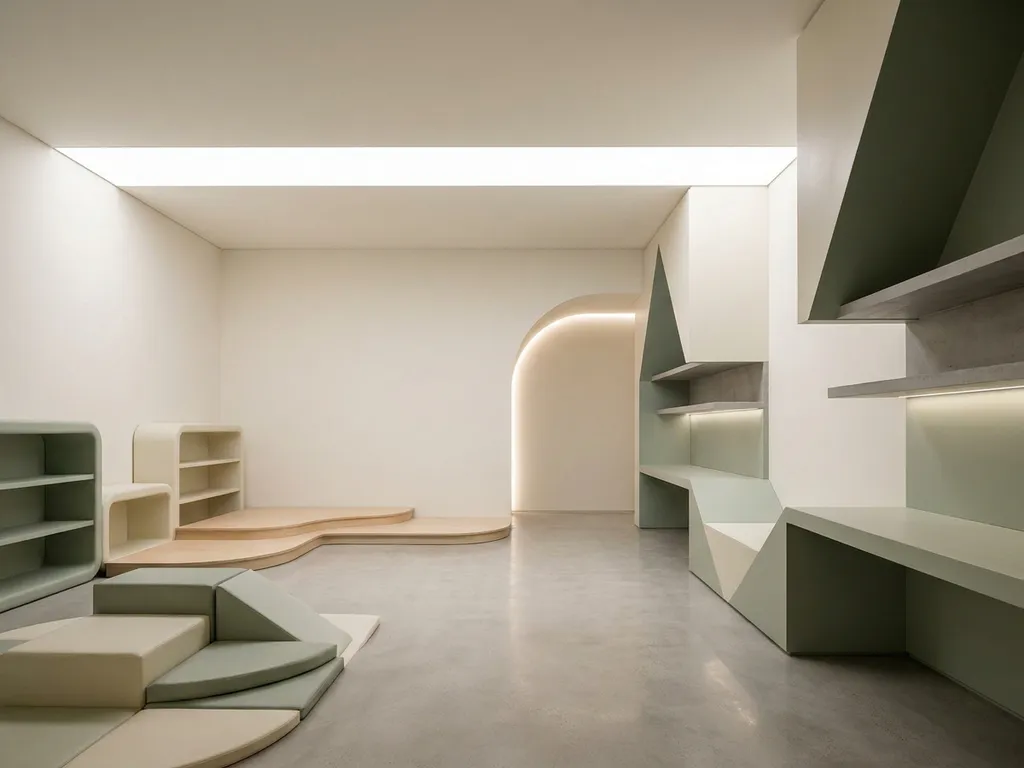
Optimizing spatial design for different audiences means adjusting the physical layout, sensory layers, pacing, and interactive elements of an immersive environment to match how specific groups perceive, move through, and emotionally respond to space. No single configuration serves every audience equally. The variables that matter most include age, cultural context, accessibility needs, group dynamics, and the core purpose the experience is designed to serve. The questions below unpack each of these dimensions in detail.
What makes spatial design work differently for different audience types?
Spatial design works differently for different audiences because people bring fundamentally different cognitive frameworks, physical capabilities, and emotional expectations into any environment. A space that feels intuitive and engaging to one group can feel confusing, overwhelming, or alienating to another. Effective immersive spatial design starts by treating the audience not as a passive recipient but as an active participant whose background shapes every interaction.
The core variables that differentiate audience responses to space include prior experience with immersive technology, cultural associations with certain visual languages, physical and sensory capabilities, and the social context in which someone enters the space. A first-generation museum visitor and a seasoned VR user will orient themselves differently in the same room. A child and a corporate executive will prioritize different entry points and pacing rhythms.
What this means in practice is that spatial designers need to build flexibility into every layer of an experience. That includes adjustable pacing, multiple entry points into the narrative, scalable sensory intensity, and clear wayfinding that does not assume prior knowledge. The goal is an environment that feels personally relevant to whoever is standing inside it, regardless of how different their starting points may be.
How does visitor age affect spatial design decisions?
Visitor age directly influences spatial design decisions across every dimension, from physical layout and navigation logic to sensory intensity and narrative complexity. Younger audiences typically respond to higher stimulus density, gamified interaction, and shorter attention cycles. Older visitors tend to prefer clearer spatial orientation, lower sensory overload, and more time to absorb each moment before moving forward.
For children and young learners, immersive spaces benefit from tactile interaction points positioned at lower heights, bold visual contrast, and reward loops that make exploration feel like play. Narrative should be delivered in short, emotionally vivid bursts rather than sustained linear sequences. Physical pathways need to be wide, clearly marked, and forgiving of non-linear movement, because children rarely follow a prescribed route.
For adult and senior audiences, the design priorities shift toward legibility and comfort. Font sizes, lighting levels, and audio clarity all become more critical. Navigation cues need to be unambiguous without being condescending. Pacing should allow for reflection rather than rushing visitors toward the next stimulus. When an experience spans multiple age groups simultaneously, layered design becomes essential: a surface level that engages children immediately and a deeper layer of meaning that rewards adult attention.
What role does cultural background play in immersive spatial experiences?
Cultural background shapes how visitors interpret symbols, navigate space, respond to authority cues, and assign emotional meaning to color, sound, and gesture. In immersive spatial design, ignoring cultural context produces experiences that feel foreign or even offensive to significant portions of the audience. Designing with cultural awareness means building environments where diverse visitors feel recognized rather than excluded.
Directional conventions are one of the most practical examples. Cultures that read right-to-left will naturally scan a room in the opposite direction from those accustomed to left-to-right orientation. Spatial narratives that assume a single reading direction risk losing a significant share of their audience in the first thirty seconds. Similarly, color associations vary considerably across cultures. White signals mourning in several East Asian contexts, while it reads as purity or clinical neutrality in many Western settings.
Sound design carries cultural weight as well. Musical scales, rhythmic patterns, and voice tones that feel warm and inviting in one cultural context can feel jarring or inappropriate in another. For experiences designed to travel across regions or serve multicultural audiences, the most resilient approach is to build a culturally neutral structural layer and then apply culturally specific content overlays. This allows the same spatial framework to speak authentically to different communities without requiring a complete redesign for each context.
How do you design immersive spaces for audiences with accessibility needs?
Designing immersive spaces for audiences with accessibility needs means building inclusion into the spatial architecture from the start, not retrofitting it as an afterthought. This covers physical accessibility, sensory accessibility, cognitive accessibility, and communication accessibility. Each dimension requires deliberate design decisions that allow visitors with diverse abilities to engage fully with the experience.
Physical accessibility begins with floor plans that accommodate wheelchair users, mobility aids, and visitors who need to sit during extended experiences. Interaction points should be reachable from multiple positions, and pathways should allow for easy reversal or exit without disrupting the flow for other visitors. Tactile elements and audio descriptions extend the experience to visitors with visual impairments, while visual transcripts and captioning serve those who are deaf or hard of hearing.
Cognitive accessibility is often overlooked in immersive design but is equally important. Spaces should offer clear orientation cues at every decision point, avoid sensory overload that can distress visitors with autism or sensory processing differences, and provide pacing options that allow individuals to move at their own speed. For experiences with high sensory intensity, a lower-stimulus version or a designated calm zone significantly broadens the audience that can participate comfortably.
The principle that drives all of this is simple: an experience that excludes a portion of its intended audience has not fully achieved its design purpose. Accessibility is not a constraint on creativity; it is a measure of how genuinely inclusive that creativity is.
What’s the difference between designing for group experiences versus individual journeys?
The fundamental difference between designing for group experiences and individual journeys lies in how agency, pacing, and social dynamics are managed within the space. Group experiences require synchronization, shared narrative anchors, and spatial configurations that make collective movement feel natural. Individual journeys demand personal agency, self-directed pacing, and a design logic that rewards curiosity without requiring a guide or a group to make sense of it.
Designing for group cohesion
In group experiences, the spatial design must account for the social choreography of multiple people moving and reacting together. This means creating gathering points where the group naturally converges, designing sight lines so that no single participant is ever completely isolated from the shared narrative, and calibrating audio so that content is audible across a range of positions within the space. Synchronized moments, where the entire group experiences the same stimulus at the same time, are particularly powerful for building shared emotional memory.
Designing for individual exploration
Individual journey design prioritizes discovery. The space should reward exploration without punishing visitors who take unconventional routes. Layered content, where a casual visitor encounters a satisfying surface experience while a more curious visitor uncovers deeper narrative threads, is the hallmark of strong individual journey design. Wayfinding should be intuitive enough that visitors never feel lost, but open enough that they feel genuinely free to choose their own path through the experience.
How does the purpose of an experience shape its spatial layout?
The purpose of an experience is the single most powerful determinant of its spatial layout. An experience designed to build empathy requires different spatial logic than one designed to train a skill, launch a product, or entertain a crowd. Purpose defines the emotional arc, the pacing, the density of information, and the degree of interactivity the space needs to support.
Educational experiences typically require a clear sequential structure, because knowledge builds progressively. The spatial layout should guide visitors through a logical narrative without forcing them to backtrack or skip critical information. At the same time, active participation points should be distributed throughout the journey rather than clustered at the end, because engagement sustains retention far more effectively than passive observation.
Brand activation experiences follow a different spatial grammar. Here, the priority is emotional impact and shareability. The layout should create peak moments that visitors want to photograph and discuss, with enough breathing room between high-stimulus zones to prevent sensory fatigue. The spatial journey should feel effortless, because friction in a brand experience translates directly into disengagement.
Awareness campaigns for NGOs and public sector organizations sit at a different point on the spectrum again. These experiences often need to move visitors through discomfort toward understanding and, ultimately, toward a call to action. The spatial layout should manage emotional intensity carefully, offering moments of relief and reflection before delivering the most challenging content, and always ending in a space that feels empowering rather than overwhelming.
Which spatial design elements can be adapted in real time using AI?
Several spatial design elements can be adapted in real time using AI, including audio environments, lighting intensity, narrative pacing, language and content delivery, and the sequencing of interactive elements. AI-driven personalization transforms a fixed spatial experience into a responsive one that adjusts based on who is present, how they are moving, and what they appear to need in the moment.
Behavioral sensing is the foundation of real-time adaptation. When a space can detect visitor movement patterns, dwell times, and interaction choices, AI systems can use that data to adjust the experience dynamically. A visitor who lingers at a particular exhibit can trigger deeper content to surface automatically. A group that moves quickly through a section can receive a more condensed version of the narrative to maintain engagement without losing the thread.
Language adaptation is one of the most immediately practical applications. In spaces that serve multilingual audiences, AI can detect language preference through a simple interaction and adjust all audio, text, and digital content accordingly, without requiring visitors to navigate a settings menu. This is particularly valuable for museums, public installations, and international brand activations where the audience composition shifts from day to day.
Sensory intensity is another dimension where real-time AI adaptation adds genuine value. Lighting levels, ambient sound, and haptic feedback can all be modulated based on the number of visitors in a space, the time of day, or signals from individual visitor profiles. We integrate AI-driven personalization into our immersive installations precisely because a space that responds to its audience creates a fundamentally different quality of connection than one that delivers the same experience to everyone regardless of context.
The result is not just a smarter space; it is a more human one. When an environment feels as though it was designed specifically for the person standing inside it, the emotional impact deepens considerably, and that depth of impact is what transforms a visit into a memory that lasts. If you are ready to explore what audience-responsive spatial design could look like for your next project, we would love to contact us and start that conversation.
Gerelateerde artikelen
- What are some examples of digital cultural heritage?
- What are VR examples?
- What are the types of immersive technology?
- What is an experimental immersive design?
- How to create an immersive event?
- What are 360-degree experiences?
- What are the benefits of immersive installations for brands?
- How do immersive experiences increase brand engagement?
- What is the ROI of immersive brand activations?