
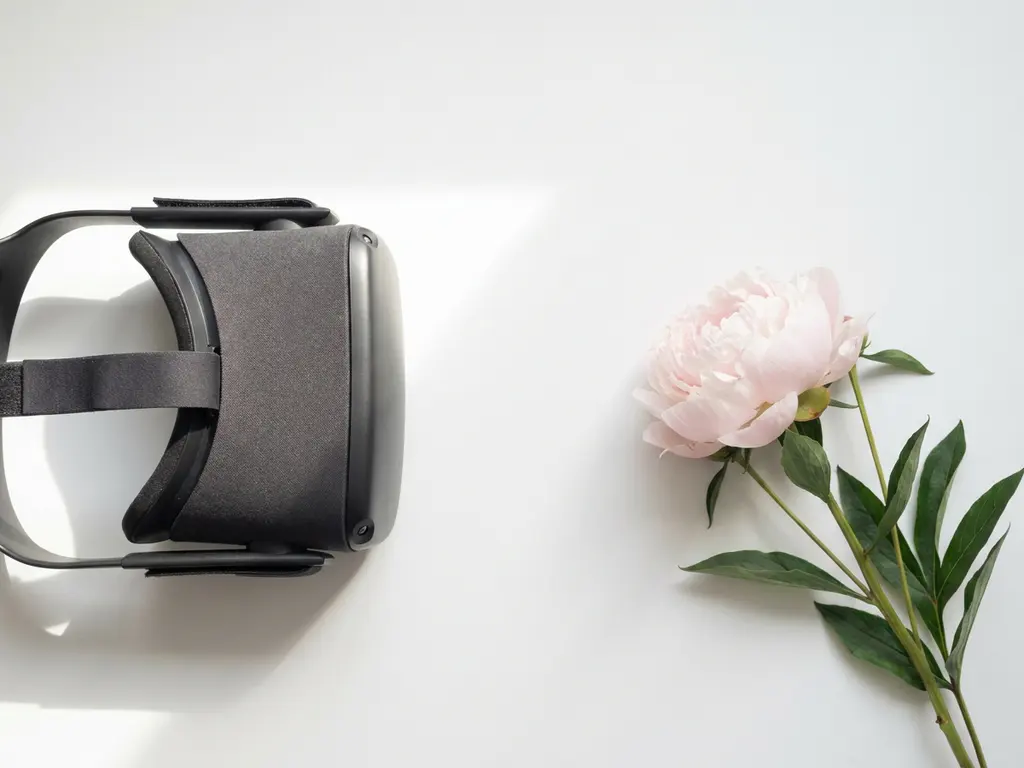
Immersive is not the same as virtual reality. Virtual reality is one specific technology within a much broader category of immersive experiences. An immersive experience is any designed environment or encounter that draws a person deeply into a sensory, emotional, or cognitive state, and that can be achieved through VR headsets, augmented reality, physical installations, spatial sound, scent, and more.
The confusion is understandable. VR is the most visible form of immersive technology, and its dramatic visual impact has made it a shorthand for the entire field. But reducing immersive experience to a headset misses most of what makes these experiences powerful. This article unpacks the full landscape: what counts as immersive, how VR fits into it, and what actually makes an experience land.
What types of experiences count as immersive?
An immersive experience is any designed encounter that surrounds a participant with stimuli, sensory, spatial, or narrative, to the point where they feel genuinely inside the experience rather than observing it from the outside. This includes virtual reality, augmented reality, mixed reality, 360-degree projection environments, interactive installations, multisensory theatre, and AI-driven environments.
The defining quality is not the technology used but the degree of presence it creates. Presence is the felt sense of “being there”, a psychological state where attention is fully captured and the outside world recedes. A well-designed physical installation with spatial audio and scent can create stronger presence than a poorly designed VR application.
In practice, immersive experiences span a wide range of formats and contexts:
- Virtual reality (VR): Headset-based experiences that replace the user’s visual and auditory field entirely
- Augmented reality (AR): Digital layers placed over the real world via smartphone or headset
- Mixed reality (MR): Real-time interaction between virtual objects and the physical environment
- 360-degree environments: Dome projections or panoramic screens that surround the viewer
- Interactive installations: Physical spaces that respond to presence, movement, or touch
- 4D and multisensory cinemas: Environments that add scent, heat, vibration, and movement to visual storytelling
- Geospatial AR: Location-anchored digital content experienced outdoors without QR codes
Each format serves different goals, audiences, and contexts. The choice of format should follow the experience objective, not the other way around.
How does virtual reality differ from immersive design?
Virtual reality is a technology. Immersive design is a discipline. VR uses a headset to replace a person’s entire visual and auditory environment with a computer-generated one, creating a closed, self-contained world. Immersive design is the broader practice of intentionally crafting any environment or encounter to produce deep engagement, emotional resonance, and a sense of presence.
Think of it this way: all VR is immersive, but not all immersive experiences use VR. A VR experience is one tool in the immersive designer’s toolkit. The discipline of immersive design draws on spatial architecture, narrative structure, sensory psychology, interaction design, and technology to shape how people feel, think, and behave inside an experience.
VR has specific strengths that make it valuable within this broader discipline. It offers complete visual control, enabling designers to place people inside environments that would be physically impossible, dangerous, or prohibitively expensive to recreate. It creates a strong sense of embodiment, particularly in interactive formats where users can move and make decisions within the virtual space. This makes VR especially effective for empathy-building, skills training, and education around complex or abstract subjects.
However, VR also has real constraints. It is individual by nature, requiring one headset per person. It isolates users from each other and from the physical world. And the quality of the experience depends heavily on the quality of the content and interaction design, not just the hardware. A passive, poorly structured VR film can feel far less immersive than a thoughtfully designed physical environment that engages multiple senses simultaneously.
Immersive design, at its best, treats VR as one option among many and selects it only when it is genuinely the right fit for the experience goal.
What other technologies are considered immersive besides VR?
Beyond VR, the immersive technology landscape includes augmented reality, mixed reality, spatial computing platforms, 360-degree projection systems, interactive screens, AI-driven avatars, digital twins, and multisensory physical installations. Each technology creates immersion through a different mechanism and is suited to different use cases.
Augmented and mixed reality
Augmented reality overlays digital content onto the physical world. Unlike VR, it does not replace the environment, it enriches it. AR can animate a printed poster, bring a museum artifact to life with additional context, or place a virtual product in a real space. Mixed reality goes further, allowing virtual objects to interact with physical surfaces and respond to real-world conditions in real time. Platforms like Apple Vision Pro represent the current frontier of spatial computing, where the boundary between digital and physical becomes genuinely fluid.
Projection and installation-based environments
360-degree projection domes and large-scale interactive installations create immersion through scale and physical presence rather than a headset. These environments can host hundreds or even thousands of people simultaneously, making them powerful for public events, museum exhibitions, and educational settings. 4D cinemas add scent, temperature, vibration, and movement to the audiovisual experience, engaging the body as well as the eyes and ears. These formats are particularly effective when group experience and shared emotion are part of the design goal.
AI and interactive digital systems
AI avatars and non-player characters (NPCs) that hold real-time conversations represent a newer category of immersive technology. Rather than placing users inside a visual world, they create immersion through dialogue and personalization, adapting to the user’s language, pace, and responses. Interactive screens and geospatial AR systems extend immersive experiences into public and outdoor spaces, reaching audiences without requiring any wearable device at all.
When should you choose VR over other immersive formats?
Choose VR when the experience requires full environmental control, embodied perspective, or the simulation of situations that cannot be recreated physically. VR is the strongest choice when you need to place someone inside a scenario, a conflict zone, a historical moment, a surgical procedure, a perspective radically different from their own, and have them feel genuinely present rather than simply informed.
Specific situations where VR is the right tool include:
- Empathy and perspective-taking: Experiencing a situation from another person’s point of view, used effectively in human rights education, social awareness campaigns, and leadership development
- High-stakes training simulations: Practising complex or dangerous procedures in a safe, repeatable environment
- Environments that don’t physically exist: Historical reconstructions, future scenarios, or locations that are inaccessible or prohibitively expensive to visit
- Controlled narrative journeys: Experiences where the designer needs to direct attention and sequence information precisely
- Individual, deep-focus engagement: Situations where undivided attention and personal immersion are more valuable than shared group experience
VR is less suited to large group experiences, situations where physical interaction with real objects matters, or contexts where the audience cannot or should not be separated from their physical environment. In those cases, AR, projection environments, or hybrid physical-digital installations will typically serve better.
Can an experience be immersive without a headset?
Yes, absolutely. Some of the most powerful immersive experiences ever created use no headset at all. Immersion is a psychological and sensory state, not a hardware specification. Physical environments, spatial audio, scent, temperature, movement, and narrative can all produce deep presence without any digital wearable.
Immersive theatre, escape rooms, and large-scale art installations have demonstrated for years that physical space, carefully designed, can absorb participants completely. In the world of immersive technology, 360-degree projection domes achieve full environmental immersion for entire audiences at once. Interactive installations that respond to movement or touch can create powerful engagement without a single headset in the room.
Multisensory design is particularly significant here. Research in cognitive psychology consistently shows that experiences engaging multiple senses simultaneously produce stronger emotional responses and more durable memories than single-sense encounters. An experience that combines spatial sound, scent, physical texture, and visual storytelling can be more immersive than a VR application that only addresses sight and hearing.
This is a core principle in how we approach immersive design. We consider all available sensory channels, including smell, touch, temperature, and spatial movement, not just screens and headsets. The result is experiences that reach people more deeply, regardless of the specific technology involved.
What makes an experience truly immersive?
An experience becomes truly immersive when it achieves presence: the felt sense of being inside the experience rather than consuming it from the outside. This requires three things working together, sensory depth, narrative coherence, and meaningful agency. Remove any one of these and the experience risks feeling like a demonstration rather than a genuine encounter.
Sensory depth means engaging more than one sense in a coordinated way. Visual and auditory design are the baseline. Spatial audio that responds to movement, physical elements that can be touched, scent that anchors a memory, temperature that signals environment, each additional sensory layer reinforces the reality of the experience and makes it harder for the mind to dismiss.
Narrative coherence means the experience has internal logic that the participant can follow and trust. This does not require a linear story. It requires that every element, visual, spatial, sonic, interactive, serves the same underlying purpose and emotional direction. When design elements contradict each other or feel arbitrary, presence collapses. The participant steps back into observer mode.
Meaningful agency means the participant’s choices or presence actually matter within the experience. This does not require complex interactivity. Even small moments of genuine choice or response, a door that opens when approached, a narrative that shifts based on a decision, an AI character that responds to what is said, signal to the brain that this is a real environment rather than a passive display.
Beyond these three foundations, truly immersive experiences are designed around a clear emotional intention. The technology is always in service of a feeling, a question, or a shift in perspective. The most memorable immersive experiences are not remembered for their technical sophistication, they are remembered for how they made people feel, what they understood differently afterwards, or whose perspective they inhabited for a few minutes.
If you are exploring what an immersive experience could do for your audience, your brand, or your educational programme, we would be glad to think through the right approach with you. Feel free to contact us and start the conversation.
Gerelateerde artikelen
- Does projection mapping require a custom animation?
- Can an audience interact with a projection show?
- What is a digital exhibit?
- What is the role of sound in immersive experiences?
- How to create an immersive exhibition?
- What are the benefits of immersive experiences?
- Should I use AR filters for my product launch?
- How does interactive storytelling engage audiences?
- What are the benefits of immersive museum experiences?