
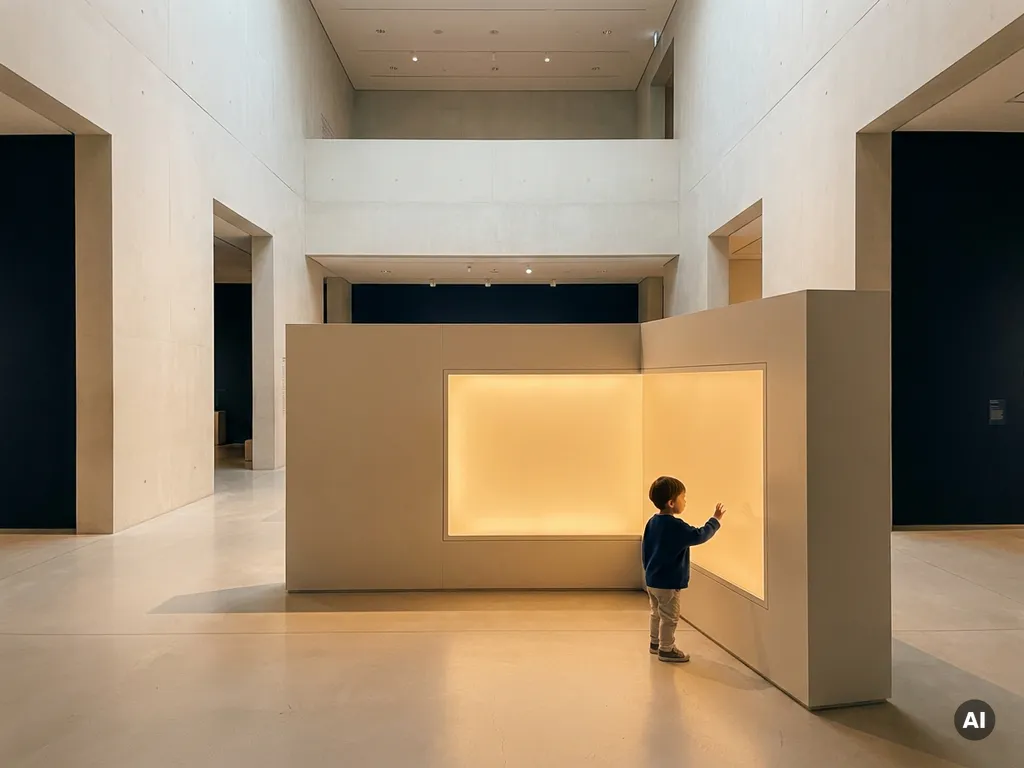
Interactive museum exhibits are displays or installations that invite visitors to actively participate rather than passively observe. They range from touchscreens and motion-sensor displays to fully immersive augmented and virtual reality environments. These hands-on museum experiences transform cultural spaces into places of discovery, making content more memorable and emotionally resonant for a wide range of audiences. This article unpacks the most important questions around interactive museum technology, from real-world examples to costs and implementation considerations.
What makes a museum exhibit truly interactive?
A museum exhibit is truly interactive when it requires and responds to visitor input in a meaningful way. Rather than presenting information for passive consumption, it creates a two-way exchange: the visitor acts, and the exhibit reacts. The best interactive museum exhibits combine physical engagement, sensory stimulation, and narrative depth to create moments that stick long after the visit ends.
True interactivity goes beyond pressing a button to trigger a video. It involves agency: the visitor’s choices shape the experience. This can take the form of solving a puzzle to unlock historical context, navigating a virtual environment to witness a past event, or contributing to a collective installation that evolves with every visitor. The exhibit becomes a conversation rather than a lecture.
Several qualities define genuinely interactive museum experiences:
- Responsiveness: The exhibit reacts to what the visitor does, not just what they see.
- Multimodal engagement: Sound, touch, movement, and sometimes even scent are woven into the experience.
- Narrative purpose: Interaction serves the story or educational goal, not spectacle alone.
- Accessibility: Multiple entry points allow visitors of different ages, abilities, and backgrounds to engage meaningfully.
- Emotional resonance: The experience creates a feeling, not just a fact.
When these qualities align, an exhibit stops being a display and becomes an encounter. That shift is where genuine impact lives.
What are some well-known examples of interactive museum exhibits?
Well-known examples of interactive museum exhibits include the StormHouse installation at the Science Museum in London, where visitors experience hurricane-force conditions safely; the touch-based anatomy tables at medical museums that let users explore the human body in layers; and the immersive Van Gogh experiences that have toured globally, placing visitors inside the artist’s paintings through projection mapping and spatial audio.
Beyond these widely recognised cases, engaging museum displays are taking many forms across the world:
- Natural history museums use motion-capture floors that simulate walking with dinosaurs, triggering footstep sounds and animations as visitors move.
- History museums deploy AR portals that overlay historical scenes onto present-day spaces, letting visitors see a battlefield or ancient city as it once appeared.
- Science centres build collaborative experiment stations where groups work together to solve real engineering challenges using physical and digital components.
- Art museums are increasingly adopting digital layers that let visitors point a device at a painting to hear the artist speak, see the work evolve through time, or explore hidden compositional details.
- Children’s museums design entire rooms as interactive environments, from weather simulation chambers to miniature city layouts where kids role-play civic life.
What unites these examples is a shared commitment to participation. The exhibit does not end when the visitor stops reading. It continues as long as the visitor keeps engaging. Our work on immersive cultural projects reflects this same philosophy: technology should deepen the story, not distract from it.
How do AR and VR work in museum exhibits?
AR (augmented reality) and VR (virtual reality) work in museum exhibits by layering digital content onto physical spaces or transporting visitors into fully virtual environments. AR uses a smartphone, tablet, or headset to overlay 3D animations, audio, or information onto real-world objects. VR replaces the physical environment entirely with a simulated one, accessed through a headset that tracks head movement and renders a 360-degree scene.
How AR enhances museum collections
In practice, AR museum exhibits allow a visitor to hold a device over an ancient artefact and watch a reconstruction of how it was used in daily life. A Roman coin becomes a market scene. A fragment of textile becomes a full ceremonial garment. AR adds context without altering the original object, preserving institutional integrity while dramatically expanding what a visitor can learn and feel.
Geospatial AR takes this further by anchoring digital content to precise GPS coordinates, meaning visitors moving through an outdoor heritage site can see historical structures appear at their original locations as they walk the grounds. No QR codes, no printed guides: the environment itself becomes the interface.
How VR creates new dimensions of access
VR museum exhibits offer something no physical collection can: the ability to be somewhere else entirely. A visitor can stand inside a coral reef, walk through a reconstructed ancient temple, or witness a pivotal historical moment from multiple perspectives. This is particularly powerful for subjects that are geographically remote, no longer physically accessible, or too fragile to display.
Group VR experiences, where multiple visitors share a synchronised virtual environment, add a social layer that traditional exhibits rarely achieve. Shared wonder creates shared memory, and that is one of the most durable forms of engagement a museum can generate.
What types of visitors benefit most from interactive exhibits?
Interactive museum exhibits benefit the widest range of visitor types, but they are especially impactful for younger audiences, reluctant learners, and visitors with different learning styles. Children and teenagers who find passive displays unstimulating often engage deeply with hands-on museum exhibits that reward curiosity and movement. Visitors who learn by doing rather than reading absorb information more effectively through interactive formats.
Beyond age, interactive exhibits support visitors with accessibility needs. Audio-responsive installations, haptic feedback elements, and multilingual digital interfaces make content available to visitors who might otherwise find traditional museum formats exclusionary. When an exhibit speaks multiple languages, responds to touch, and offers multiple ways to engage, it widens the door considerably.
Adults and older visitors also benefit, particularly when interactive displays connect emotional memory to historical content. A VR recreation of a city as it looked decades ago, for instance, can generate powerful personal resonance for visitors who lived through that era. The interaction becomes a bridge between personal experience and collective history.
For educational groups and school visits, the benefit is both cognitive and motivational. Students who interact with content demonstrate higher retention and greater willingness to explore further. The exhibit becomes a starting point for curiosity rather than an endpoint for information delivery.
How do interactive exhibits increase visitor engagement and return rates?
Interactive exhibits increase visitor engagement by shifting the visitor from observer to participant, which creates stronger emotional investment and longer dwell time. When visitors actively shape their experience, they pay more attention, retain more information, and form stronger memories of the visit. Higher engagement directly correlates with positive word-of-mouth, social sharing, and the likelihood of returning.
Return rates improve because interactive digital museum exhibits can evolve. A static display offers the same experience on every visit. An interactive installation can be updated with new content, seasonal narratives, or personalised pathways that give repeat visitors a genuinely different experience each time. This transforms a museum from a place you visit once into a destination you return to.
Social dynamics also play a role. Visitors who experience something surprising or emotionally affecting share it, both in person and online. Immersive museum exhibits generate the kind of spontaneous documentation and conversation that traditional displays rarely inspire. That organic reach extends the exhibit’s impact far beyond the physical walls of the institution.
For museums specifically, the combination of extended dwell time, repeat visits, and organic advocacy creates a compounding engagement effect. Each interactive touchpoint deepens the relationship between visitor and institution, building the kind of loyalty that sustains cultural organisations over the long term.
What technology is used to build interactive museum exhibits?
Interactive museum exhibits are built using a combination of hardware and software technologies, often layered together to create seamless experiences. The most common technologies include projection mapping systems, touchscreen interfaces, motion sensors, AR platforms, VR headsets, spatial audio systems, and increasingly, AI-driven personalisation engines that adapt content to individual visitors in real time.
At the hardware level, large-format LED walls and projection domes create immersive visual environments. Haptic devices and physical props with embedded sensors add tactile dimensions. Spatial audio systems place sound precisely in three-dimensional space, reinforcing the sense of presence.
On the software side, game engines such as Unreal Engine and Unity power many of the most sophisticated immersive museum exhibits, enabling real-time rendering of complex 3D environments. These platforms allow content to respond dynamically to visitor input, whether that means a character reacting to a spoken question or a virtual landscape shifting based on where a visitor looks.
AI is becoming an increasingly important layer. AI avatars and non-player characters can hold real-time conversations with visitors, answering questions about an exhibit in natural language and adapting their responses based on the visitor’s age, language, or prior interactions. This personalisation capability means no two visitor journeys need to be identical, even within the same exhibit.
At Rooftop Immersive, we design with all of these layers in mind, integrating technology choices around the story and the visitor experience rather than the other way around.
How much does it cost to create an interactive museum exhibit?
The cost of creating an interactive museum exhibit varies widely depending on several interconnected factors. There is no single price point because the investment reflects the complexity of the experience, the technology involved, the scale of the installation, and the depth of content development required.
Key factors that shape the budget include:
- Scope and scale: A single interactive touchscreen station requires far less investment than a multi-room immersive environment with custom hardware and real-time rendering.
- Technology type: AR experiences built on existing platforms carry different cost structures than bespoke VR environments developed from scratch in a game engine.
- Content depth: The amount of narrative content, 3D modelling, animation, voice recording, and localisation required significantly affects production time and cost.
- Hardware requirements: Some experiences require proprietary hardware, custom enclosures, or specialised sensors that add to the overall investment.
- Longevity and maintenance: Exhibits designed to run for several years need robust build quality and ongoing technical support, which should be factored into the total cost of ownership.
- Customisation versus off-the-shelf: Fully bespoke experiences designed around a specific collection or narrative cost more than adapted versions of existing formats.
The most important principle is that cost should be evaluated against impact. An exhibit that drives repeat visits, generates media coverage, and attracts new audience segments delivers value that extends well beyond the installation budget. A conversation with an experienced immersive design partner is the most reliable way to understand what investment is appropriate for a given set of goals.
What should museums consider before choosing an interactive exhibit format?
Before choosing an interactive exhibit format, museums should consider their audience profile, the nature of the content they want to communicate, their available space, their long-term maintenance capacity, and how the technology will serve the collection’s integrity. The format should emerge from the story and the visitor, not from a preference for a particular technology.
A clear set of questions helps frame the decision:
- Who is the primary audience? Children, school groups, adult specialists, and general visitors have different needs and engagement thresholds. The format must match the audience.
- What does the content demand? Some subjects benefit from spatial immersion, others from tactile interaction, and others from layered information access. Let the content guide the format.
- What is the physical space? Ceiling height, footprint, lighting conditions, and visitor flow all constrain or enable certain technologies. A dome projection requires very different conditions than a handheld AR experience.
- What is the maintenance model? Interactive digital museum exhibits require ongoing technical support. Museums should understand who will manage updates, hardware failures, and content refreshes before committing to a format.
- How does this serve the institution’s mission? Technology should enhance the museum’s core purpose, not compete with it. The best interactive museum technology is invisible: visitors remember the experience, not the device.
Co-creation with an experienced partner is invaluable at this stage. The right collaborator will challenge assumptions, identify the format that genuinely serves the visitor, and ensure the final experience reflects the institution’s values as much as its ambitions. If you are exploring what interactive exhibits could look like for your institution, we would be glad to help you think it through. Contact us to start the conversation.
Gerelateerde artikelen
- What are the advantages and disadvantages of immersive technology?
- What is a full dome planetarium?
- How much does a planetarium dome cost?
- What are the types of immersive technology?
- How does virtual reality impact society?
- What are examples of immersive technology?
- What technologies are used in immersive experiences?
- How do immersive experiences improve experiential marketing?
- What equipment is needed for 360-degree content creation?