
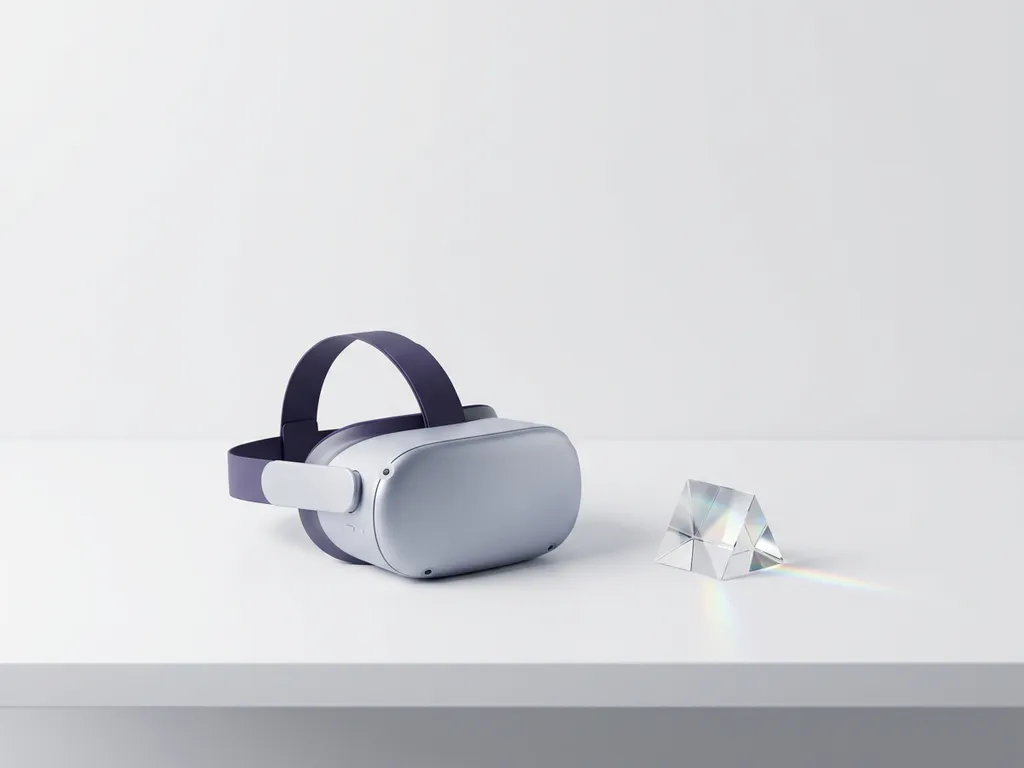
Immersive experiences are built using a combination of technologies including augmented reality (AR), virtual reality (VR), mixed reality (MR), spatial audio, artificial intelligence, volumetric video, photogrammetry, and large-scale projection systems. These tools work together to engage multiple senses simultaneously, creating environments where participants feel genuinely present rather than simply observing. The sections below unpack how each technology works and where it delivers the most impact.
How do AR, VR, and mixed reality differ in immersive experiences?
AR, VR, and mixed reality each create immersion in fundamentally different ways. Augmented reality layers digital content over the real world, virtual reality replaces the real world entirely with a simulated environment, and mixed reality blends physical and digital elements so they interact with each other in real time. Together, these three form what is known as extended reality, or XR.
In practice, the distinction shapes the entire design of an immersive experience. An AR activation at a product launch might overlay 3D animations onto a physical stage, allowing audiences to see both the real presenter and virtual content simultaneously. A VR training simulation places a learner inside a fully rendered scenario, removing all external distractions so the experience becomes the entire environment. Mixed reality, particularly on platforms like Apple Vision Pro, goes further still, allowing virtual objects to respond to and interact with physical surfaces and people in the room.
Choosing between these formats is not simply a technical decision. It depends on the context, the audience, and the goal. AR works well in public-facing settings where people cannot be asked to remove themselves from their surroundings. VR excels when deep focus, empathy, or scenario-based learning is the priority. Mixed reality is emerging as the most sophisticated option for environments where the boundary between digital and physical needs to dissolve entirely.
What role does spatial audio play in immersive environments?
Spatial audio is the technology that makes sound feel like it exists in three-dimensional space around the listener, rather than coming from a single direction. In immersive environments, spatial audio is not an enhancement; it is a structural component. When sound responds to where a person is looking or moving, the brain registers the experience as physically real, dramatically deepening the sense of presence.
In a 360-degree dome installation or a VR experience, a voice that appears to come from behind you, footsteps that pass from left to right, or ambient sound that shifts as you turn your head all contribute to what designers call spatial coherence. When the audio and visual layers align spatially, the experience stops feeling like content and starts feeling like a place.
Beyond presence, spatial audio carries emotional weight. Music and sound design have always shaped how audiences feel. In an immersive context, those effects are amplified because the listener is surrounded rather than addressed from a fixed direction. For educational experiences dealing with sensitive or emotionally complex subjects, spatial audio becomes a powerful tool for building empathy, placing the listener inside a perspective rather than in front of it.
How does AI personalize immersive experiences?
Artificial intelligence personalizes immersive experiences by adapting content in real time based on the individual’s behavior, choices, language, learning pace, or emotional responses. Rather than delivering a fixed sequence of content to every participant, an AI-driven experience can branch, adjust, and respond, making each journey through the experience genuinely unique.
This personalization operates at several levels. At the surface level, AI can switch languages, adjust reading speeds, or simplify complex concepts based on user input. At a deeper level, AI-powered avatars and non-player characters (NPCs) can hold real conversations, answer questions, and respond to unexpected inputs in ways that feel natural rather than scripted. This transforms a passive experience into a dialogue.
For educational and social impact applications, AI personalization is particularly significant. A learner struggling with a concept can receive additional context without the experience stalling for the rest of a group. A visitor to a museum installation can explore a topic at their own depth. For brand experiences, AI allows a single installation to feel tailored to each person who interacts with it, increasing both engagement and the emotional connection to the brand. We integrate AI-driven personalization across both our educational and commercial projects precisely because it closes the gap between content designed for an audience and content that speaks to an individual.
What is volumetric video and where is it used?
Volumetric video is a filming technique that captures a person or object from multiple angles simultaneously, generating a full three-dimensional video model that can be viewed from any direction. Unlike traditional video, which is flat and fixed, volumetric video allows the viewer to move around the subject, experiencing it as a spatial, physical presence rather than a recording on a screen.
The most recognizable application is what is often called a hologram twin: a photorealistic 3D version of a real person that can be placed inside an AR or VR environment. These are used for product launches, virtual hosts, educational storytelling, and memorial or heritage projects where capturing the likeness and movement of a real individual carries particular meaning.
In practice, volumetric video requires specialized multi-camera rigs and significant post-production processing. The result, however, is a level of realism that no animated character can currently match. When a historical figure appears to stand in the room with a museum visitor, or when a brand ambassador seems to address each individual directly, the emotional effect is immediate and lasting. This technology sits at the intersection of film production and spatial computing, and its applications are expanding rapidly as the hardware required to display it becomes more accessible.
What technologies power large-scale immersive installations?
Large-scale immersive installations are powered by a combination of projection mapping, multi-channel audio systems, real-time rendering engines, motion tracking, and environmental sensors. These technologies work in concert to transform physical spaces, domes, galleries, arenas, or purpose-built environments, into fully responsive, sensory worlds that can accommodate hundreds or thousands of visitors simultaneously.
Projection and rendering systems
At the visual core of most large installations are high-lumen projectors calibrated to cover curved or irregular surfaces without distortion. Real-time rendering engines such as Unreal Engine process and display content dynamically, meaning the visuals can respond to triggers, time of day, or audience interaction rather than simply playing back a pre-rendered file. In 360-degree domes, the entire interior surface becomes a screen, wrapping participants in imagery that has no visible edge or boundary.
Sensory and environmental layers
What elevates a large-scale installation beyond spectacle is the integration of additional sensory channels. Directional scent systems can release specific aromas timed to visual content. Haptic platforms and subwoofer arrays allow visitors to feel vibrations and bass frequencies physically. Environmental controls can adjust temperature or airflow to match the narrative. In 4D cinema formats, all of these elements combine to create what is genuinely a full-body experience rather than a viewing event. These multisensory layers are not decorative; research in cognitive science consistently shows that engaging more senses strengthens memory encoding and emotional response.
How do photogrammetry and 3D scanning work in immersive design?
Photogrammetry is the process of taking hundreds or thousands of overlapping photographs of a real object or space, then using software to reconstruct a highly accurate three-dimensional digital model from those images. In immersive design, this technique allows real-world locations, artifacts, and objects to be captured and placed inside AR, VR, or mixed reality environments with photorealistic fidelity.
3D scanning achieves a similar result using laser or structured light sensors rather than photography, often with greater precision for smaller objects or complex geometries. Both methods produce what are called digital twins: exact digital replicas of physical things. A museum can scan a fragile artifact and allow visitors to handle and examine a virtual version in detail impossible with the physical object. An architect can scan a building and walk clients through a life-size VR representation before construction begins.
In cultural and educational contexts, photogrammetry is transformative. Heritage sites that cannot accommodate large visitor numbers, objects too delicate to display publicly, or locations that no longer physically exist can all be preserved and experienced through accurate 3D capture. The technology democratizes access to things that were previously available only to those who could be physically present.
Which immersive technology is best for education and social impact?
For education and social impact, interactive VR experiences and AI-personalized learning environments consistently deliver the strongest outcomes. VR’s ability to place a learner inside a scenario, rather than describing it from outside, creates the kind of experiential engagement that accelerates understanding and builds genuine empathy. When combined with AI that adapts the experience to the individual, the result is a learning environment that responds like a skilled teacher rather than a fixed curriculum.
That said, the best technology for any specific educational or social impact goal depends on the context, the audience, and the nature of the subject matter. Several factors are worth considering:
- Accessibility and scale: AR experiences on smartphones can reach large audiences without requiring dedicated hardware, making them well suited for public awareness campaigns or school programs with limited budgets.
- Depth of immersion required: Subjects that demand perspective-taking, refugee experiences, historical events, medical scenarios, benefit most from fully immersive VR, where the participant cannot look away from the environment.
- Group versus individual learning: VR cinema formats allow synchronized group experiences, which are powerful for shared reflection and discussion. Individual VR or AI-driven modules suit self-paced or differentiated learning.
- Emotional sensitivity: For topics involving trauma, inequality, or loss, the design of the experience must balance immersion with care. The technology is only as ethical as the storytelling framework around it.
Our work with organizations like UNICEF and educational institutions demonstrates that the most impactful projects are those where the technology serves a clearly defined human goal, not the other way around. Immersive technology works in education and social impact because it transforms abstract information into lived experience, and lived experience changes behavior in ways that passive content rarely can. If you are exploring how immersive technology could serve your educational or social mission, we would welcome the conversation; contact us to discuss what is possible.
Gerelateerde artikelen
- Can you give me some examples of digital museums?
- What is immersive dome projection?
- What does immersive event mean?
- What is an example of a brand activation?
- What makes something an immersive experience?
- What is the difference between WebAR and app-based AR for marketing?
- How do you align immersive experiences with brand identity?
- What makes a successful branded immersive experience?
- What equipment is needed for 360-degree content creation?