
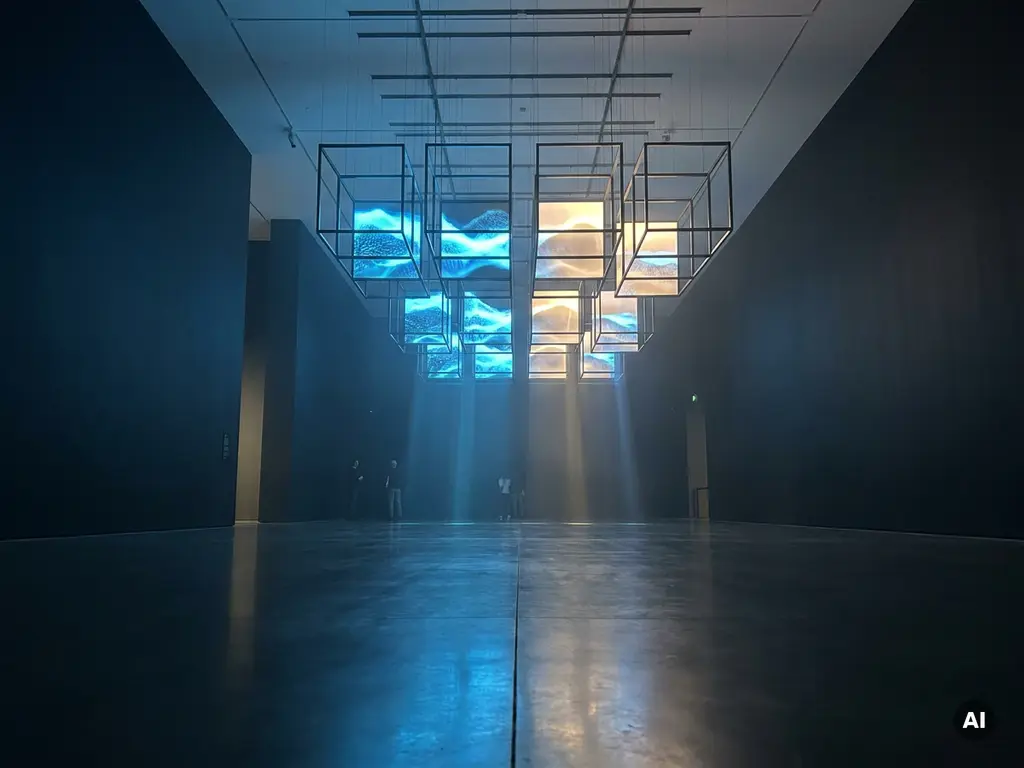
Digital museums are cultural institutions, platforms, or experiences that use digital technology to present, preserve, and make accessible collections, artworks, or educational content, either online, in physical spaces, or through immersive formats like VR and AR. Some digital museums exist entirely online as virtual destinations, while others are traditional institutions that have layered digital experiences onto physical exhibitions. The questions below explore what sets them apart, which examples lead the field, and how immersive technology is pushing the concept further than ever before.
What makes a museum ‘digital’ in the first place?
A museum becomes ‘digital’ when it uses technology to present, distribute, or enhance its collections and storytelling beyond what physical display alone can achieve. This ranges from high-resolution online archives and interactive touchscreens to fully virtual environments, augmented reality overlays, and AI-driven visitor experiences. The defining characteristic is not the absence of physical space, but the deliberate use of digital tools to deepen engagement.
In practice, digital museum technology falls along a spectrum. At one end, institutions digitise their collections and publish them online, making artworks and artefacts searchable and viewable from anywhere in the world. At the other end, purpose-built digital museums use spatial computing, projection mapping, and interactive installations to create environments where visitors are active participants rather than passive observers.
What unites every point on that spectrum is intent: the goal of making cultural content more accessible, more meaningful, and more memorable. Whether a visitor explores a collection on a smartphone or walks through a fully immersive digital museum installation, the underlying ambition is the same, to connect people with ideas, histories, and experiences that matter.
What are the most well-known examples of digital museums?
Several institutions have become widely recognised as leading examples of digital museums, each taking a distinct approach to bringing collections and stories into the digital realm.
- Google Arts & Culture – A platform that partners with thousands of museums worldwide to offer high-resolution imagery, virtual tours, and interactive stories. It remains one of the most accessible online museum experiences available globally.
- The Smithsonian Institution (Washington, D.C.) – The Smithsonian has invested heavily in digitising its vast collections and creating 3D models of artefacts, making millions of objects explorable online through its Open Access programme.
- The Rijksmuseum (Amsterdam) – The Rijksstudio platform allows anyone to download and remix high-resolution images from the collection, turning passive viewing into active creative engagement.
- teamLab Borderless (Tokyo) – A purpose-built digital art museum where projection-mapped environments respond to visitor movement, creating an experience that exists nowhere else in the world. The museum relocated and reopened in 2024 with an expanded concept.
- The British Museum – Through its online collection database and partnerships with Google Arts & Culture, the British Museum offers virtual tours and detailed digital access to artefacts spanning human history.
- Musée d’Orsay (Paris) – It has developed rich virtual museum examples through immersive online exhibitions and partnerships that bring Impressionist masterworks to global audiences.
These institutions demonstrate that digital museum collections can serve both accessibility and engagement simultaneously, reaching audiences who cannot visit in person while offering depth that a physical label could never provide.
Are there digital museums built entirely in virtual reality?
Yes. A growing number of digital museums exist entirely within virtual reality, accessible through VR headsets or browser-based platforms without requiring any physical visit. These virtual museum examples are designed from the ground up as spatial experiences, not as digital replicas of existing buildings.
The VRChat platform hosts community-built virtual museums and galleries where users explore curated art and cultural content in shared virtual spaces. Mozilla Hubs and similar WebXR platforms have enabled cultural institutions to build accessible virtual rooms that work on desktop browsers as well as headsets.
Dedicated VR museum projects have also emerged around specific subjects, from virtual natural history environments to interactive reconstructions of ancient civilisations. These experiences allow visitors to stand inside a Roman forum or walk through an ecosystem that no longer exists, offering educational depth that physical museums simply cannot replicate.
For organisations looking to commission purpose-built VR museum experiences, the technical architecture typically combines 360-degree environments built in engines like Unreal Engine or Unity with interactive elements, allowing visitors to examine objects, trigger narratives, and move through space with genuine agency. This is precisely the kind of immersive project work we develop for cultural institutions and educational organisations.
How do digital museums use AR to enhance exhibits?
Digital museums use augmented reality to layer additional information, animation, or storytelling directly onto physical objects and spaces, allowing visitors to see what a painting looked like before it aged, watch a sculpture rotate in three dimensions, or step through a portal into a historical scene, all through a smartphone or AR headset.
AR enhances exhibits in several distinct ways:
- Object animation – Static artefacts come to life with contextual animations that show how they were used, made, or worn in their original context.
- Historical reconstruction – AR overlays can show what a ruined site or faded artwork originally looked like, superimposed onto what visitors see in front of them today.
- Multilingual and accessible content – AR labels can deliver information in any language and in formats suited to different learning styles, including audio descriptions and visual guides.
- Interactive storytelling – Visitors can trigger narrative sequences, uncover hidden details, or make choices that shape how a story unfolds, transforming passive viewing into active participation.
- AR portals and spatial transport – Visitors are ’transported’ to another time or place through virtual doorways anchored in the physical gallery space.
The most effective AR museum experiences treat the technology as a storytelling tool rather than a novelty. When AR serves the narrative, deepening emotional connection to an artefact or a moment in history, it becomes genuinely transformative rather than merely impressive.
What’s the difference between a virtual tour and a digital museum?
A virtual tour is a navigable digital reproduction of a physical space, typically a series of 360-degree photographs stitched together so that users can move through rooms as they exist in the real world. A digital museum is a broader concept that may include virtual tours but goes significantly further, using interactive content, curated narratives, educational programming, and immersive technology to create an experience with its own identity and depth.
The key distinction is passivity versus participation. A virtual tour lets you look around a space. A digital museum invites you to engage with it, to interact with objects, follow stories, make choices, and leave with something you did not have before.
Virtual tours are valuable for accessibility and orientation. They allow people to preview a physical museum before visiting or explore it remotely when visiting is not possible. But they rarely replicate the emotional and intellectual engagement of a well-designed digital museum experience, which uses technology to create meaning rather than simply to document space.
For cultural institutions, the strategic question is not whether to offer a virtual tour, but whether the digital layer they build around their collection genuinely serves their audience’s curiosity and learning.
Which digital museums are best for educational use?
The digital museums best suited for educational use are those that combine accessible content with interactive depth, curriculum alignment, and the ability to scale across different age groups and learning contexts.
Platforms with strong educational credentials
Google Arts & Culture offers educator tools, curated thematic collections, and Art Camera close-ups that allow students to examine brushwork and detail invisible to the naked eye. Its breadth across thousands of partner institutions makes it a versatile classroom resource.
The Smithsonian Learning Lab is purpose-built for educators, offering tools to build custom digital collections, annotate artefacts, and create assignments directly within the platform. Teachers can combine objects from across the Smithsonian’s vast holdings into tailored learning experiences.
Immersive educational experiences
Immersive VR and AR museum experiences designed specifically for schools represent the frontier of educational digital museums. These go beyond browsing, placing students inside historical events, scientific phenomena, or social realities that build genuine empathy and comprehension. Research consistently shows that experiential learning produces stronger retention and emotional engagement than passive content consumption.
Organisations like UNICEF have used immersive digital experiences to help young people understand global challenges in ways that text and video cannot achieve. Purpose-built educational VR experiences, including the SDG Pod format used in awareness programmes worldwide, demonstrate how digital museum technology can serve learning goals at scale.
How are museums using AI and immersive technology to go further?
Museums are using AI and immersive technology to personalise visitor experiences, animate historical figures, generate real-time translations, and create adaptive learning environments that respond to individual visitors rather than delivering a one-size-fits-all narrative.
AI-driven applications in museum contexts include:
- Conversational AI guides – Virtual characters powered by large language models that can answer visitor questions in natural language, adapting their responses to the visitor’s level of knowledge and curiosity.
- Personalised pathways – AI systems that track visitor interests during an experience and suggest relevant content, creating a journey that feels individually curated.
- Language accessibility – Real-time AI translation delivered through AR overlays or audio, removing language barriers for international visitors without requiring separate printed materials.
- Collection discovery – AI-powered search tools that allow visitors to find artefacts by visual similarity, emotional theme, or historical connection rather than by catalogue number alone.
Immersive technology extends these possibilities further. Projection-mapped environments respond to visitor movement. Haptic feedback adds a tactile dimension to digital objects. Spatial audio places visitors inside reconstructed soundscapes from other eras. When combined with AI personalisation, these technologies create digital museum experiences that feel genuinely alive, adapting in real time to the person inside them.
At Rooftop Immersive, we design exactly these kinds of experiences, combining spatial storytelling, AI personalisation, and full sensory immersion to help cultural institutions create digital museum environments that resonate long after visitors leave. If you are exploring what immersive technology could mean for your institution or project, we would love to think through the possibilities with you, feel free to contact us to start the conversation.
Gerelateerde artikelen
- What are the different types of interactive museums?
- What are the positive effects of virtual reality?
- What is an example of a non immersive virtual reality?
- How did Gen Z break the marketing funnel?
- What is immersive experience design?
- How much to build an immersive room?
- What are the benefits of immersive experiences?
- What are the benefits of immersive installations for brands?
- What are some examples of virtual reality?