
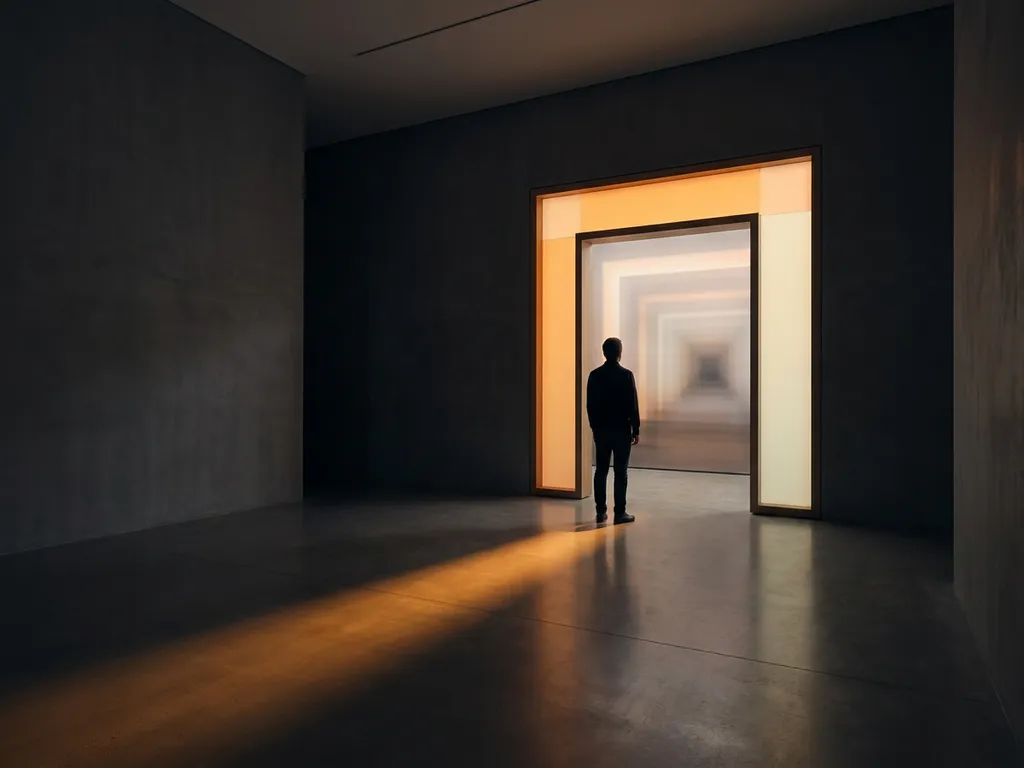
Immersive experience design is the practice of creating environments and encounters that fully absorb a participant’s attention, senses, and emotions, moving them beyond the role of passive observer into active presence. Rather than delivering content at people, immersive design places people inside the content itself. It draws on spatial design, storytelling, technology, and sensory input to produce experiences that feel genuinely real, meaningful, and memorable.
The discipline spans physical installations, digital environments, and everything in between. It applies equally to a museum exhibition that transports visitors to another era, a brand activation that creates emotional connection with a product, and an educational programme that makes abstract concepts tangible. The questions below unpack how immersive experience design works, what it takes to build one, and why it consistently outperforms traditional media in creating lasting impact.
How does immersive experience design differ from traditional design?
Traditional design communicates to an audience. Immersive experience design communicates through an audience. Where conventional design, a poster, a website, a presentation, asks people to receive and interpret a message from a distance, immersive design dissolves that distance entirely. The participant becomes part of the environment, and the environment responds to their presence.
This shift changes everything about how a designer works. In traditional design, the frame is fixed: a screen, a page, a stage. In immersive design, the frame is the entire sensory field of the participant. That means every element, spatial layout, sound design, lighting, scent, texture, narrative pacing, and interactivity, must be considered as part of a unified experience rather than isolated components.
The practical consequences are significant. Traditional campaigns are built to be seen. Immersive experiences are built to be felt. That distinction drives different creative decisions, different production disciplines, and a fundamentally different relationship between the audience and the content. Engagement is not measured in seconds of attention; it is measured in emotional depth and behavioural response.
What are the core elements of an immersive experience?
The core elements of an immersive experience are spatial presence, multisensory engagement, narrative structure, interactivity, and emotional resonance. No single element creates immersion on its own. It is the deliberate combination of all five, calibrated to the audience, the context, and the intended outcome, that produces the sensation of being fully inside an experience.
- Spatial presence: The physical or virtual environment is designed to surround the participant, removing cues that remind them they are observing from outside.
- Multisensory engagement: Beyond sight and sound, truly immersive design incorporates touch, scent, temperature, and movement to deepen the sense of reality.
- Narrative structure: Every immersive experience tells a story, whether that story is linear or exploratory. Without narrative, even the most technically sophisticated environment feels hollow.
- Interactivity: Participants influence what happens. This agency transforms passive reception into active involvement and dramatically increases emotional investment.
- Emotional resonance: The experience is designed to produce a specific emotional response, curiosity, empathy, wonder, urgency, that connects the content to something personally meaningful for the participant.
These elements are not decorative additions to a conventional format. They are the structural foundation on which the entire experience is built. Removing or underinvesting in any one of them weakens the whole.
What technologies are used in immersive experience design?
Immersive experience design uses a broad range of technologies, including virtual reality (VR), augmented reality (AR), mixed reality (MR), spatial audio, projection mapping, motion tracking, artificial intelligence, and physical sensory systems. The choice of technology is always driven by the experience goal, not the other way around.
Extended reality (XR) technologies
VR headsets place participants inside fully rendered digital environments. AR overlays digital content onto the physical world through smartphones or headsets. Mixed reality, such as experiences built for Apple Vision Pro, enables real-time interaction between virtual objects and physical surroundings. Together these form the extended reality (XR) spectrum that underpins most immersive digital experiences today.
Physical and environmental technologies
Projection mapping transforms architecture, objects, and surfaces into dynamic canvases. Spatial audio systems create three-dimensional soundscapes that respond to movement. Scent delivery systems, haptic feedback devices, and environmental controls for temperature and airflow add the multisensory dimensions that screens alone cannot provide. Interactive floors, responsive lighting, and motion-capture systems complete the physical layer of immersive installations.
Artificial intelligence and personalisation
AI is increasingly central to immersive design. AI-driven avatars and non-player characters (NPCs) hold real-time conversations with participants, adapting their responses dynamically. AI personalisation engines adjust the pace, language, and content of an experience based on individual behaviour, learning style, or preference. This makes it possible to deliver deeply personal experiences at scale, a critical capability for educational programmes and public-facing campaigns alike.
Where is immersive experience design used?
Immersive experience design is used across education, cultural institutions, brand marketing, healthcare, public sector communications, live events, and entertainment. Its applications have expanded rapidly as the technologies have become more accessible and the evidence for their effectiveness has grown stronger.
In education, immersive learning environments allow students to explore historical events, scientific processes, or social scenarios that would otherwise be inaccessible. Medical and safety training programmes use VR simulations to prepare practitioners for high-stakes situations without real-world risk. Museums and cultural institutions use AR and projection mapping to animate collections and attract younger audiences. NGOs and public sector organisations use immersive storytelling to build empathy around complex social issues and inspire behaviour change.
In the commercial world, brands use immersive activations at product launches, trade shows, and retail environments to create emotional connections that traditional advertising cannot replicate. The experience becomes the message, and because participants physically inhabit it, the memory it creates is far more durable than anything a billboard or digital ad could produce.
How does immersive design create emotional impact?
Immersive design creates emotional impact by engaging the body and the senses simultaneously with the mind. When a person is physically present inside an experience, surrounded by its environment, responding to its stimuli, making choices within it, the brain processes that experience in ways that are neurologically closer to real memory than to observed content. This is why immersive experiences are remembered long after screens are forgotten.
Multisensory input is the key mechanism. Research in cognitive science consistently shows that memory formation is strengthened when multiple senses are engaged at the same time. A scent, a texture, or a spatial sound cue can anchor an emotional moment in a way that a visual alone never achieves. This is why immersive experiences that incorporate smell, touch, and spatial audio alongside visual and narrative content consistently outperform purely screen-based equivalents in terms of emotional recall.
Narrative and agency deepen the effect further. When participants make choices that influence the story, they develop a personal stake in the outcome. That ownership creates empathy, because the participant has not just observed a situation, they have lived inside it. For organisations working on behaviour change, social awareness, or values-based education, this capacity for genuine perspective-shifting is the most powerful tool available.
What’s the difference between AR, VR, and mixed reality in immersive design?
AR, VR, and mixed reality are three distinct points on the extended reality spectrum, each defined by the relationship between the physical and digital worlds. AR adds digital content to the real world. VR replaces the real world with a digital one. Mixed reality blends both in real time, allowing digital and physical elements to interact with each other.
Augmented reality (AR)
AR overlays digital content, 3D models, animations, information, characters, onto the participant’s real-world view through a smartphone camera or AR headset. The physical environment remains visible and present. AR is particularly effective for location-based activations, product visualisation, educational overlays, and bringing physical objects such as artworks or architectural models to life without requiring participants to leave the real world behind.
Virtual reality (VR)
VR replaces the participant’s entire field of view with a rendered digital environment. Using a headset, the participant is transported into a world that has no physical counterpart in the room around them. VR is the most powerful tool for perspective-taking and deep narrative immersion, placing a participant inside a historical event, an inaccessible environment, or a scenario designed to build empathy or train a specific skill.
Mixed reality (MR)
Mixed reality, exemplified by platforms like Apple Vision Pro, enables digital objects to exist within and respond to the physical world in real time. A virtual character can sit on a real chair. A digital model can be placed on a real table and viewed from every angle. MR represents the frontier of spatial computing, experiences that are neither purely physical nor purely digital, but genuinely both at once.
How long does it take to design an immersive experience?
The time required to design and build an immersive experience ranges from a few weeks for a focused AR activation to twelve months or more for a large-scale permanent installation. The timeline depends on the complexity of the concept, the number of technologies involved, the degree of customisation required, and the scale of the deployment environment.
A straightforward AR poster or image-tracking activation, where digital content is layered onto an existing physical asset, can move from brief to delivery in four to eight weeks. An interactive VR experience with custom environments, narrative branching, and AI-driven personalisation typically requires four to nine months of development. A full immersive installation incorporating spatial audio, projection mapping, physical set design, and multi-user interactivity for a permanent venue can demand a year or more from concept to opening.
The production process itself moves through several distinct phases: strategic briefing and concept development, creative and narrative design, technical architecture and prototyping, content production, integration and testing, and finally deployment and training. Each phase requires close collaboration between the client and the production team. The quality of that collaboration, how clearly the brief is defined, how quickly decisions are made, and how well the creative vision aligns with technical constraints, is often the single biggest variable in how efficiently a project progresses.
How do you measure the success of an immersive experience?
The success of an immersive experience is measured through a combination of engagement metrics, behavioural outcomes, emotional response data, and long-term impact indicators. The right metrics depend entirely on the experience’s original objective, what it was designed to change, teach, communicate, or inspire.
For commercial and brand applications, success metrics typically include dwell time, interaction rates, social sharing, audience reach, and downstream brand sentiment or purchase intent. These are measurable, comparable to other campaign formats, and directly tied to marketing ROI. Interactive installations and AR activations can capture granular data on how participants engage with specific elements, providing actionable insight for future campaigns.
For educational and social impact applications, success is measured differently. Knowledge retention tests before and after the experience reveal learning effectiveness. Surveys and qualitative interviews capture shifts in attitude, empathy, or intention. Behavioural follow-up, did participants take the action the experience was designed to inspire? provides the most meaningful long-term measure of whether immersive storytelling achieved its purpose.
Emotional response data, gathered through post-experience surveys or biometric tools where appropriate, adds a layer of insight that neither engagement metrics nor knowledge tests can fully capture. Understanding how an experience made someone feel, and whether that feeling aligned with the intended emotional arc, is essential for refining immersive design over time and building a body of evidence for its effectiveness.
If you are exploring what an immersive experience could do for your organisation, whether that is deepening audience engagement, transforming a learning programme, or creating a brand activation that genuinely resonates, we would welcome the conversation. Contact us to tell us what you are trying to achieve, and we will help you find the right approach.
Gerelateerde artikelen
- How much does it cost to build an interactive museum?
- How to make an exhibition stand stand out?
- What are immersive experiences and how do they enhance user interaction?
- What is the primary goal of experiential marketing?
- What is an immersive brand experience?
- How do brands use immersive installations for marketing?
- What technologies are used in immersive experiences?
- How much space is needed for dome installations?
- What makes an immersive experience?