
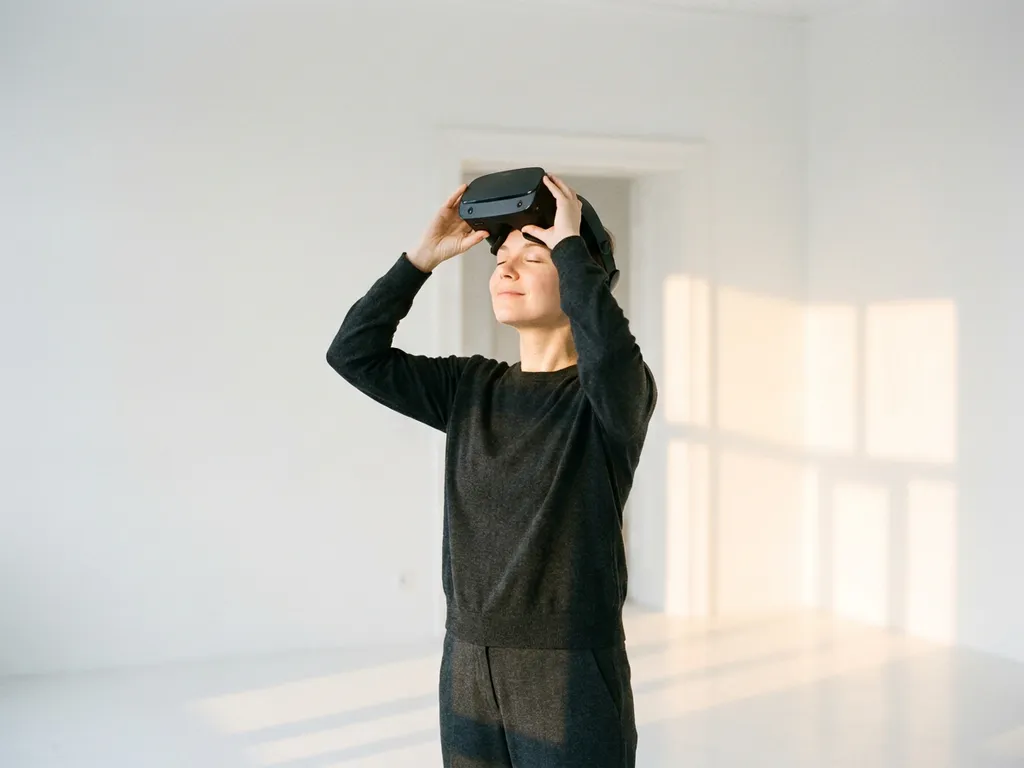
Virtual reality offers a wide range of positive effects that span learning, health, empathy, professional development, and social inclusion. At its core, VR works by placing people inside experiences rather than asking them to observe from a distance, which fundamentally changes how the brain processes and retains information. The sections below explore the most significant benefits across education, mental health, the workplace, rehabilitation, culture, and accessibility.
How does virtual reality change the way people learn?
Virtual reality transforms learning by replacing passive consumption with active, embodied experience. When learners are placed inside a simulation, they engage multiple senses simultaneously, which strengthens memory encoding and improves retention far beyond what reading or watching can achieve. VR turns abstract concepts into tangible environments that learners can explore at their own pace.
The core mechanism behind this shift is experiential engagement. Traditional education relies heavily on symbolic representation: words, diagrams, and videos that describe reality. VR removes that layer of abstraction. A student learning about the water cycle does not read about evaporation; they stand inside a cloud formation. A medical trainee does not study an anatomical diagram; they navigate a three-dimensional model of the human heart.
This matters because the brain encodes experiences differently from information. When an event involves spatial awareness, physical movement, and emotional engagement, it forms richer, more durable memories. This is why experiential learning has long been recognized as more effective than lecture-based instruction, and VR is the most scalable form of experiential learning available today.
For educators working with complex or sensitive subject matter, VR also removes barriers that would otherwise make direct experience impossible. Students can explore historical events, visit ecosystems under threat, or practice high-stakes decision-making in safe, repeatable environments. Each session can be replayed, paused, and adapted to individual learning styles, making VR one of the most flexible tools in modern education.
What mental health benefits does virtual reality offer?
Virtual reality offers measurable mental health benefits by creating controlled, immersive environments where people can safely confront fears, practice coping strategies, and build psychological resilience. Clinicians and researchers have applied VR in the treatment of anxiety disorders, phobias, post-traumatic stress, and chronic pain management, with outcomes that support its growing role in therapeutic settings.
In exposure therapy, VR allows practitioners to gradually introduce patients to anxiety-triggering scenarios in a way that is both controllable and repeatable. Someone with a fear of public speaking can practice in front of a virtual audience. Someone recovering from trauma can revisit a reconstructed environment at a pace that suits their therapeutic progress. The sense of presence that VR creates, the feeling of actually being there, is what makes these simulations therapeutically effective rather than merely illustrative.
Beyond clinical applications, VR has demonstrated value in stress reduction and mindfulness. Immersive natural environments, guided breathing exercises within virtual landscapes, and calming sensory experiences have all shown the capacity to lower physiological stress markers. For people who struggle to access traditional therapeutic settings due to geography, stigma, or cost, VR offers a meaningful alternative pathway to mental wellness support.
How does VR build empathy and perspective-taking?
VR builds empathy by allowing people to inhabit perspectives they would never otherwise access. Unlike reading about another person’s experience or watching a documentary, stepping into a first-person virtual environment activates a sense of embodied presence that makes the emotional reality of another life feel immediate and personal. This is one of the most powerful and distinctive positive effects of virtual reality.
The mechanism is rooted in what researchers describe as the Proteus effect and embodied cognition: when a person experiences the world through a different body or perspective, their attitudes and empathy toward that perspective shift measurably. VR experiences designed around social issues, such as homelessness, displacement, disability, or discrimination, have been used by NGOs, humanitarian organizations, and educational institutions to generate genuine emotional engagement with causes that might otherwise feel distant.
This is central to the work we do at Rooftop Immersive. Our immersive experiences for clients like UNICEF and PwC are built on the principle that perspective-taking is not just emotionally resonant, it is transformative. When someone spends even a few minutes experiencing life through another lens, their capacity for understanding and action increases in ways that passive media rarely achieves. VR does not just inform people about injustice or hardship, it invites them to feel it, and that distinction changes behavior.
What are the benefits of VR for workplace training?
VR improves workplace training by enabling employees to practice complex, high-stakes, or rarely occurring scenarios in a safe and repeatable environment. Whether training surgeons, emergency responders, customer service teams, or industrial workers, VR closes the gap between theoretical knowledge and real-world performance by giving people the experience of doing before they face the consequences of doing it wrong.
The practical advantages are significant. Training programs that previously required expensive equipment, physical locations, or risk exposure can be delivered through a headset. New employees can onboard into simulated work environments before their first day. Teams can rehearse crisis scenarios without disrupting operations. Compliance and safety training can be delivered at scale across multiple locations simultaneously.
Beyond efficiency, VR training produces better outcomes because it engages learners actively rather than passively. A worker who has navigated a virtual emergency evacuation will respond more quickly and confidently in a real one than a colleague who only watched a safety video. The emotional realism of the simulation, the pressure, the spatial awareness, the need to make decisions, creates the kind of muscle memory and situational fluency that traditional training methods struggle to replicate.
VR also allows organizations to track performance data in ways that classroom training cannot. Attention patterns, decision points, error rates, and response times can all be measured within the simulation, giving learning and development teams genuinely actionable insight into where training gaps exist and how to address them.
Can virtual reality improve physical rehabilitation?
Yes, virtual reality can meaningfully improve physical rehabilitation by making therapeutic exercises more engaging, measurable, and motivating. Patients recovering from strokes, injuries, or neurological conditions often face the challenge of performing repetitive movements over extended periods. VR transforms these exercises into interactive, goal-driven experiences that sustain motivation and improve adherence to recovery programs.
The neurological basis for VR’s effectiveness in rehabilitation is well established. The brain responds to virtual movement in ways that overlap significantly with real movement. For stroke patients relearning motor functions, VR environments that require reaching, grasping, or navigating space can activate neural pathways associated with physical recovery. The visual and spatial feedback provided by the virtual environment reinforces the brain’s motor learning process.
Pain management is another area where VR has shown genuine promise. Immersive environments that redirect attention away from painful stimuli have been used in burn treatment, post-surgical recovery, and chronic pain management. The intensity of sensory engagement that VR provides appears to reduce the subjective experience of pain during procedures and recovery, offering a non-pharmacological complement to traditional pain management approaches.
How does VR benefit museums, exhibitions, and cultural institutions?
VR benefits museums and cultural institutions by extending the reach, depth, and emotional impact of their collections beyond what physical display alone can achieve. Virtual reality allows institutions to recreate lost artifacts, transport visitors to historical moments, and offer immersive perspectives on artworks and environments that no physical exhibition could replicate, all while attracting younger, digitally engaged audiences.
For institutions facing declining visitor numbers or aging demographics, VR offers a compelling tool for renewal. A museum can invite visitors to walk through an ancient city that no longer exists, stand inside a painting, or witness a historical event from within the moment itself. These are not gimmicks layered onto a collection. When designed with care, they deepen the meaning of the artifacts they surround and create emotional connections that outlast the visit.
Cultural institutions also benefit from VR’s capacity to democratize access. Collections that are geographically inaccessible, physically fragile, or limited in display space can be experienced virtually by audiences anywhere in the world. Schools, community groups, and international visitors who could never travel to a particular institution can engage with its collection meaningfully through immersive digital formats.
We understand this balance intimately. The institutions we work with are not looking for technology for its own sake. They are looking for partners who recognize that technology should enhance the storytelling power of cultural artifacts, not compete with it. Our approach ensures that every digital layer we add serves the narrative and emotional integrity of the institution’s mission.
What are the social and accessibility benefits of virtual reality?
Virtual reality expands social participation and accessibility by removing barriers of geography, physical ability, and socioeconomic circumstance that prevent people from accessing experiences, education, and opportunities. VR creates environments where people with mobility limitations can travel, where students in under-resourced schools can access world-class learning, and where communities separated by distance can share meaningful experiences together.
For people with physical disabilities, VR offers forms of engagement that the built environment often denies. Someone who cannot climb a mountain, visit a heritage site, or attend a live performance can experience all of these things through immersive virtual environments. This is not a consolation prize. When VR is designed with genuine care for the user’s experience, it delivers real emotional and cognitive value that enriches quality of life.
Social connection is another underappreciated benefit. Shared VR experiences, whether a group of students exploring a virtual ecosystem or a team collaborating inside a spatial simulation, create a sense of collective presence that strengthens bonds and facilitates communication. For organizations working across borders, VR meetings and collaborative environments reduce the isolation that remote work can produce.
There is also a broader equity argument for VR in education and public communication. When immersive experiences are designed to adapt to different languages, learning styles, and levels of prior knowledge, they become tools for inclusion rather than exclusion. AI-driven personalization, which we integrate into many of our experiences, means that a single VR program can serve a diverse audience without requiring separate versions or compromising depth for any individual user.
The positive effects of virtual reality are not theoretical. They are being realized today in classrooms, hospitals, cultural institutions, and training centers across the world. If you are exploring how immersive technology could serve your organization’s goals, whether in education, public engagement, brand experience, or cultural programming, we would welcome the conversation. Contact us to explore what a purposefully designed VR experience could achieve for you.
Gerelateerde artikelen
- What are the benefits of experiential marketing?
- What is immersive and interactive media?
- How to create immersive content?
- What are the different types of immersive experiences?
- Can ChatGPT do 3D modeling?
- What are the benefits of immersive installations for brands?
- How to create an immersive experience?
- How does interactive storytelling engage audiences?
- What are the benefits of immersive museum experiences?