
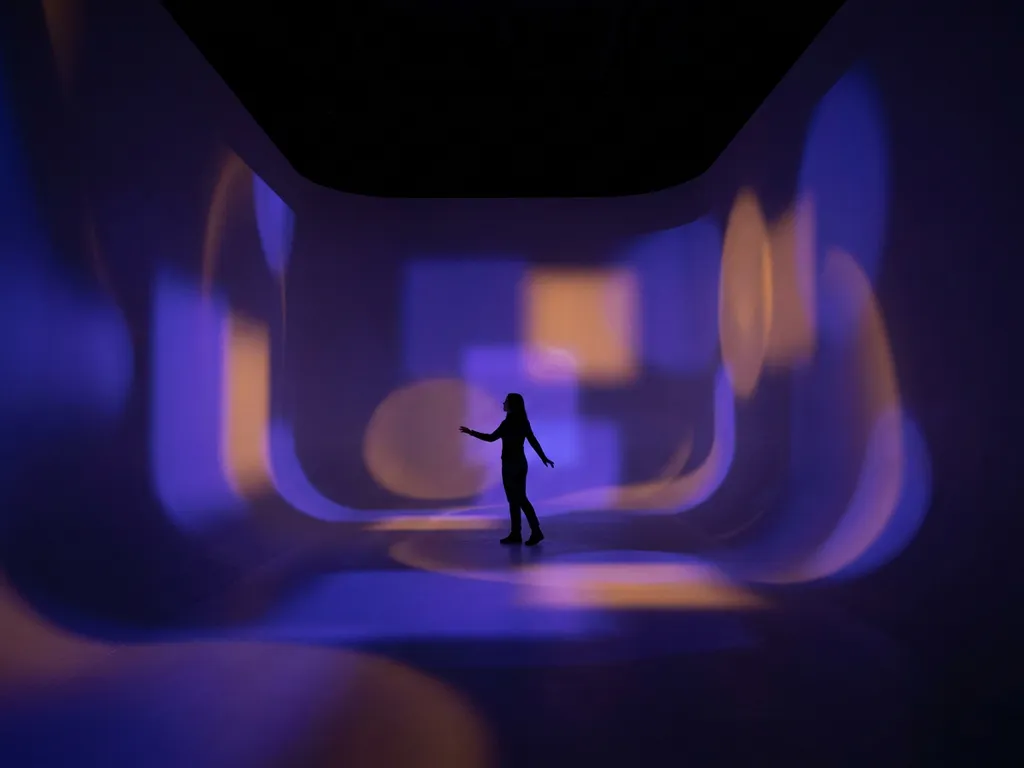
Experiential marketing is the future because it replaces passive consumption with active participation, turning audiences into genuine brand advocates through memorable, physical engagement. Unlike traditional advertising, which interrupts attention, experiential marketing earns it by creating moments people want to be part of. The questions below unpack exactly why this shift is happening and what it means for brands, institutions, and educators in 2026.
What makes experiential marketing more effective than traditional advertising?
Experiential marketing is more effective than traditional advertising because it engages people through direct participation rather than observation. When someone physically interacts with a brand, touching, exploring, making decisions, they form stronger memories and emotional associations than any billboard or pre-roll ad can produce. The brain encodes experiences differently from passive information, making them far more durable.
Traditional advertising operates on frequency: the more someone sees a message, the more likely they are to remember it. Experiential marketing operates on depth. A single well-designed activation can outperform months of media spend in terms of emotional resonance, because the person becomes part of the story rather than a recipient of it.
This connects directly to what researchers call the forgetting curve, the well-documented tendency for people to lose passively received information rapidly. Multisensory experiences disrupt this pattern. When sight, sound, touch, and even smell are engaged simultaneously, the brain creates richer memory traces that are harder to forget. An immersive experience that activates multiple senses does not just communicate a message; it anchors it.
There is also a social dimension that traditional advertising cannot replicate. People share experiences with others, physically in the moment, and digitally afterward. A compelling activation generates organic content, word-of-mouth, and social proof that no media buy can manufacture.
How does experiential marketing drive brand loyalty?
Experiential marketing drives brand loyalty by creating emotional memories tied directly to a brand. When people feel something meaningful during an interaction with a company, curiosity, wonder, connection, even challenge, they associate those feelings with the brand itself. Loyalty built on emotion is significantly more resilient than loyalty built on price or convenience.
The mechanism is straightforward: shared experiences create identity. When a person participates in a brand activation, they are not just learning about a product, they are doing something with it. That act of participation creates ownership. They were there. They made choices. The brand becomes part of their personal story in a small but genuine way.
This is especially powerful for brands targeting younger audiences who are highly skeptical of traditional advertising. They do not want to be marketed to; they want to be invited into something worth their time. Experiential campaigns that deliver genuine value, entertainment, education, or a perspective shift, earn trust in a way that a 30-second spot simply cannot.
Repeat engagement deepens this effect. When a brand consistently delivers meaningful physical experiences, it builds a relationship rather than a transaction. Over time, that relationship becomes the foundation of advocacy: customers who recommend not because of a referral incentive, but because the experience was genuinely worth sharing.
What role does immersive technology play in modern experiential campaigns?
Immersive technology expands what is physically possible in experiential marketing by adding digital layers to real-world environments. Augmented reality, virtual reality, mixed reality, and spatial computing allow brands to create experiences that would be impossible, impractical, or prohibitively expensive through purely physical means, transporting audiences to other places, bringing products to life in three dimensions, or simulating scenarios that change how people think and feel.
The distinction between immersive and interactive is worth clarifying here. An interactive experience responds to user input, a touchscreen, a button, a choice. An immersive experience surrounds the person, engaging their full perceptual field so that the boundary between the experience and reality becomes temporarily blurred. The most effective modern activations combine both: they are immersive in environment and interactive in participation.
Extended reality (XR), the umbrella term for AR, VR, and MR, has matured significantly. Campaigns that once required purpose-built venues and expensive hardware can now run on smartphones, standalone headsets, or location-based AR without QR codes. This scalability makes immersive technology accessible to a far wider range of campaign types and budgets.
AI-driven personalization adds another dimension. When an experience can adapt in real time to a visitor’s language, pace, or choices, it stops feeling like a broadcast and starts feeling like a conversation. That shift from one-to-many to one-to-one is where immersive technology genuinely changes what experiential marketing can achieve.
Which industries benefit most from experiential marketing?
While virtually any sector can benefit from experiential marketing, the industries that see the greatest returns are those where emotional connection, complex messaging, or audience engagement are central challenges. These include retail and consumer brands, cultural institutions, education, NGOs, and the events and entertainment sector.
Cultural institutions and museums
Museums and galleries face declining footfall and aging visitor demographics. Experiential installations, from AR layers over physical artworks to fully immersive 360-degree environments, give institutions a way to deepen engagement with existing collections while attracting audiences who might not otherwise visit. The goal is not to replace the artifact but to extend its story in ways that resonate with contemporary visitors.
Education and social impact organizations
For educators and NGOs, experiential marketing is not about selling a product, it is about changing minds and behaviors. Complex social issues, abstract scientific concepts, or emotionally difficult topics become accessible when people can step inside them. VR simulations that put someone in another person’s situation build empathy in a way that a lecture or pamphlet cannot. The immersive experience meaning here shifts from entertainment to genuine transformation.
Consumer brands and retail
For brands competing in saturated markets, experiential activations create moments of genuine differentiation. Product launches, pop-up experiences, and brand events that use immersive technology generate the kind of attention and social sharing that traditional media buys cannot replicate. The experience becomes the campaign.
How do brands measure the ROI of experiential marketing?
Brands measure the ROI of experiential marketing through a combination of direct metrics and downstream indicators. Direct metrics include footfall, dwell time, participation rates, and social sharing volume. Downstream indicators include brand recall, purchase intent, net promoter score changes, and long-term customer lifetime value, all of which require measurement frameworks set up before the campaign launches.
One of the persistent challenges in experiential ROI is that its most valuable effects are delayed. A person who visits an immersive brand activation may not purchase immediately, but their likelihood of recommending the brand, returning to it, or choosing it over a competitor increases over time. Capturing this requires tracking beyond the event itself.
Digital integration makes measurement more precise. When an immersive experience includes interactive screens, AR activations, or AI-driven touchpoints, every interaction generates data, which paths people took, which moments held attention longest, which choices were made. This behavioral data is far richer than the impression metrics that dominate traditional advertising measurement.
The most useful framing for ROI in experiential marketing is cost-per-meaningful-engagement rather than cost-per-impression. A person who spends fifteen minutes inside a brand experience and leaves with a genuine emotional memory represents a fundamentally different value proposition than someone who glanced at a banner ad for two seconds.
What are the biggest challenges of running an experiential marketing campaign?
The biggest challenges in experiential marketing are logistical complexity, scalability, budget management, and maintaining consistent quality across multiple touchpoints or venues. Unlike a digital campaign that can be adjusted in real time, a physical activation involves hardware, space, staffing, and timing, all of which must align precisely for the experience to work as intended.
Scalability is a particular pressure point. A single flagship installation can be extraordinary, but replicating that quality across multiple cities, events, or audience groups requires careful modular design from the start. Brands that do not plan for scale often find that their most successful activations cannot be extended without a complete rebuild.
Budget complexity is another real challenge. Experiential campaigns involve production costs that span physical fabrication, technology development, content creation, and on-site delivery. The factors that influence cost include the level of technical sophistication, the number of simultaneous users the experience must support, the duration of the campaign, and the degree of personalization required. Understanding these variables early is essential for realistic planning.
There is also the challenge of audience readiness. Not every audience is equally comfortable with new technology, and an experience that works beautifully for a tech-savvy urban demographic may need significant adjustment for a different context. The best experiential campaigns are designed with the specific audience in mind from the very first concept stage, not retrofitted for them later.
Should brands invest in experiential marketing in 2026?
Yes, and the case for doing so in 2026 is stronger than it has ever been. Audiences are more resistant to passive advertising than at any previous point, attention is more fragmented, and the bar for what counts as genuinely engaging content continues to rise. In this environment, experiences that physically involve people are not just differentiated; they are increasingly the only reliable way to create lasting brand memory.
The technology landscape in 2026 supports this investment more practically than before. Immersive technologies have become more accessible, more reliable, and more scalable. Spatial computing platforms, standalone VR hardware, and geospatial AR have all matured to the point where high-quality activations no longer require the budgets or lead times they once did. The barrier to entry has dropped while the quality ceiling has risen.
For brands in competitive categories, experiential marketing is increasingly a strategic necessity rather than a creative luxury. The brands that will define their categories over the next decade are those building genuine relationships with their audiences through participation and presence, not those spending more on the same passive formats that audiences are already tuning out.
For cultural institutions, educators, and NGOs, the argument is equally compelling. The ability to create empathy, shift perspectives, and make complex ideas tangible is precisely what immersive experiences deliver at their best. If your organization needs to move people, not just inform them, experiential is the most powerful tool available. If you are ready to explore what that could look like for your brand or institution, we would love to help you design something that genuinely connects. Contact us to start the conversation.
Gerelateerde artikelen
- What is an example of experiential marketing?
- How to create a brand activation?
- What is XR vs VR vs AR?
- What is an example of a non immersive virtual reality?
- What is immersive learning?
- How to create immersive content?
- What is an example of immersive learning experience?
- How do immersive installations work?
- How do you create VR content for marketing campaigns?