
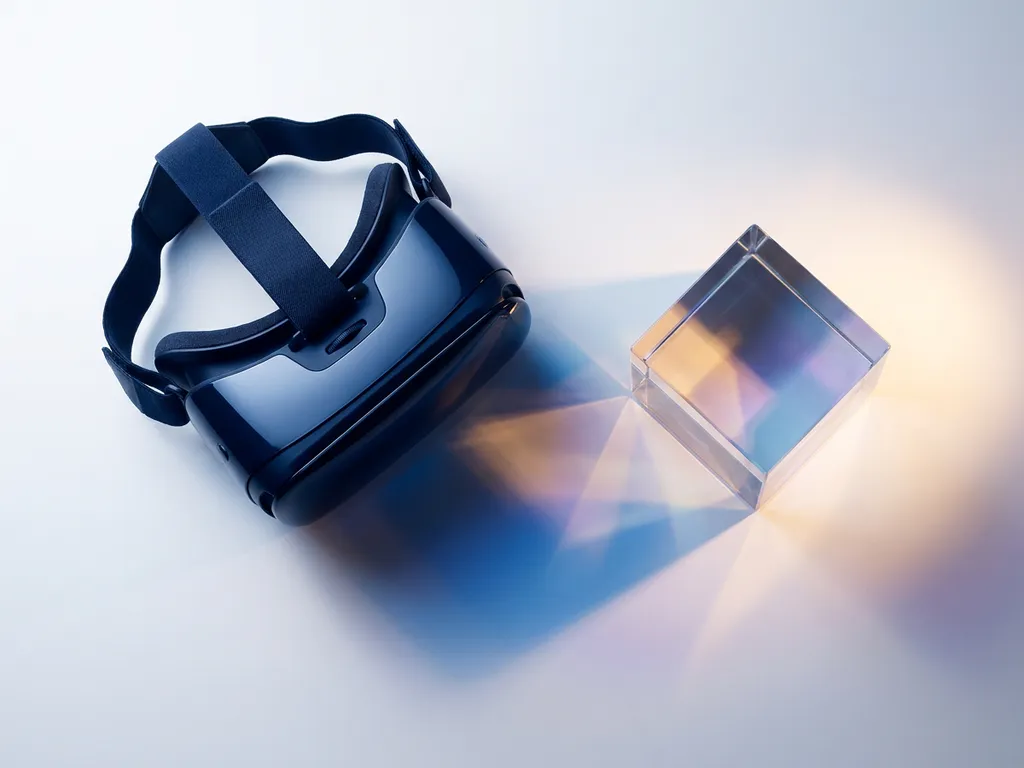
To create VR content for a marketing campaign, you combine immersive 360-degree or interactive virtual environments with brand storytelling, then distribute the experience through headsets, mobile devices, or browser-based platforms. The result is a campaign format that places the audience inside the brand’s world rather than simply showing it to them from the outside.
The process spans creative concept development, technical production in engines like Unreal Engine or Unity, and a distribution strategy matched to your audience’s access to hardware. Done well, VR marketing content creates the kind of emotional memory that passive video advertising rarely achieves, because it activates spatial awareness, presence, and genuine sensory engagement rather than passive viewing.
Below, we answer the most common questions brands ask before commissioning VR content for a campaign.
What types of VR content work best for marketing campaigns?
The VR formats that perform best in marketing are cinematic 360-degree brand films, interactive product experiences, and location-based activations. Each format serves a different campaign objective: 360-degree films build emotional brand affinity, interactive experiences drive product understanding and consideration, and location-based activations generate physical footfall and social sharing at events or retail environments.
Choosing between these formats depends on what you want the audience to do, feel, or understand after the experience. A luxury automotive brand launching a new model benefits from a cinematic VR drive through a dramatic landscape, because the goal is desire and emotional association. A training or onboarding campaign for a B2B brand benefits more from an interactive simulation, because the goal is knowledge retention and decision-making confidence.
Shared or group VR experiences, where multiple participants wear synchronized headsets simultaneously, are particularly powerful at events and exhibitions. They create collective moments that audiences talk about and share, extending the campaign’s reach organically beyond the physical space. Volumetric video, which captures real people as three-dimensional holograms, adds a layer of authenticity that purely animated VR sometimes lacks and works well for campaigns built around human stories or spokesperson-led messaging.
How does VR marketing content differ from traditional video advertising?
VR marketing content differs from traditional video advertising primarily in the relationship it creates between viewer and brand. Traditional video is a broadcast medium: the audience watches from outside the frame. VR places the audience inside the experience, making them a participant rather than an observer. This shift from passive consumption to active presence is what drives the deeper emotional engagement that immersive experiences consistently produce.
In traditional advertising, attention is borrowed. The brand interrupts something the viewer was already doing. In VR, attention is given willingly, because the format requires the viewer to enter and engage with a dedicated environment. There are no competing visual distractions, no social media feeds running alongside the content, no second screen. The audience is, by definition, present.
This has measurable consequences for memory and brand recall. When the brain processes a spatially embodied experience, it encodes that memory differently than it encodes a watched video. The sense of having been somewhere, rather than having seen something, creates stronger and more durable associations. For brands trying to build lasting emotional connections in an overloaded media landscape, that difference is significant.
The trade-off is that VR content requires more from the audience in terms of access and effort, and more from the brand in terms of production investment and distribution planning. It is not a replacement for broadcast advertising but a complement to it, most effective when the campaign goal demands deep engagement rather than broad reach.
What does the production process for a VR marketing campaign look like?
The production process for a VR marketing campaign moves through four broad phases: creative development, pre-production and technical design, production and build, and testing and deployment. Each phase involves close collaboration between the brand, the creative team, and the technical team, and the quality of the brief at the start directly shapes the quality of the experience at the end.
Creative development and concept
This phase defines the campaign objective, the target audience, the emotional journey the experience should create, and the key message the audience should leave with. A strong VR brief is not simply a repurposed video brief. It asks different questions: Where is the audience placed? What can they look at? What can they do? What moment should feel most powerful? The answers to these questions shape every subsequent decision.
Pre-production and technical design
Once the concept is approved, the team designs the environment, writes the narrative arc, and determines the technical architecture. For interactive experiences, this includes mapping user pathways and decision points. For cinematic experiences, it includes storyboarding each scene in 360 degrees, which is fundamentally different from traditional linear storyboarding because every direction the viewer might look needs to be considered. Platform and hardware decisions are also locked in at this stage.
Production, build, and deployment
Production involves 3D modelling, environment building, animation, audio design, and integration of any interactive logic. For campaigns using real-world footage, volumetric capture or 360-degree filming takes place during this phase. The final experience is then tested across all target devices, refined based on feedback, and packaged for deployment. Deployment planning covers whether the experience will run on standalone headsets, mobile devices, web browsers, or a combination of all three.
What equipment and platforms do you need to distribute VR campaign content?
The equipment and platforms you need depend on where your audience will access the VR content. The three main distribution channels are standalone VR headsets, mobile devices, and web-based platforms. Each has different hardware requirements, reach potential, and experience quality trade-offs.
Standalone headsets such as the Meta Quest series offer high-quality immersive experiences without requiring a connected PC or phone. They are the preferred choice for event-based activations and location-specific campaigns where the brand controls the hardware. For campaigns that need to reach audiences at scale without providing hardware, mobile-based VR using a smartphone and a simple headset viewer, or a fully web-based 360-degree experience accessible in any browser, dramatically lowers the barrier to entry.
For enterprise or high-end brand activations, tethered headsets connected to powerful rendering hardware deliver the most visually sophisticated experiences, but require dedicated physical spaces and technical support. Platforms like WebXR allow brands to publish VR-compatible content accessible through a standard URL, making distribution as straightforward as sharing a link while still delivering a meaningful spatial experience on compatible devices.
The honest answer for most campaigns is a layered distribution strategy: a premium headset experience for events and activations, paired with a web-accessible version for broader audience reach. This ensures the experience reaches both the people physically present at the activation and those who encounter the campaign digitally afterward.
How much does it cost to create VR content for a marketing campaign?
The cost of creating VR content for a marketing campaign varies considerably based on a set of interconnected factors rather than a single price point. Understanding what drives cost helps brands scope projects realistically and allocate budget where it creates the most impact.
The primary cost drivers include the level of interactivity, the visual complexity of the environment, the length of the experience, the number of distribution platforms, and whether the content uses real-world footage, volumetric capture, or fully computer-generated environments. A purely cinematic 360-degree film built on existing footage is significantly less resource-intensive than a fully interactive, multi-scene VR experience with branching narratives and custom 3D environments.
Other factors that influence investment include the need for custom hardware at events, the scale of the activation, ongoing content updates after launch, and whether the experience needs to be localised into multiple languages. AI-driven personalisation, which can adapt the experience in real time to the viewer’s preferences or context, adds capability but also adds development complexity.
The most effective approach is to start with a clear campaign objective and work backward to the minimum viable experience that achieves it. A focused, well-executed VR experience with a single strong emotional moment will consistently outperform an ambitious but under-resourced production that tries to do everything at once.
How do you measure the ROI of a VR marketing campaign?
ROI for a VR marketing campaign is measured through a combination of engagement metrics, brand impact indicators, and downstream commercial outcomes. The right measurement framework depends on the campaign objective, but the most commonly tracked metrics include time spent in the experience, completion rates, post-experience brand recall, emotional response data, and conversion actions taken after the VR interaction.
Time-in-experience is one of the most telling engagement signals. When audiences spend significantly longer with VR content than with equivalent video content, that difference reflects genuine attention rather than passive exposure. Completion rates matter too: a high percentage of viewers completing the full experience indicates that the content held attention throughout, not just in the opening seconds.
Brand recall and emotional impact are best measured through post-experience surveys, either immediately after the VR session at a live event or through follow-up research. These qualitative measures capture what the metrics cannot: whether the audience felt something, whether they understood the brand message, and whether the experience changed their perception.
For campaigns with a direct commercial goal, downstream metrics such as website visits, product enquiries, or purchase intent scores in the weeks following an activation provide the clearest evidence of commercial return. Connecting VR engagement data to CRM or campaign analytics platforms allows brands to trace the journey from immersive experience to measurable business outcome.
What are the most common mistakes brands make with VR marketing?
The most common mistake brands make with VR marketing is treating it as a novelty rather than a storytelling medium. When VR is deployed simply because it is technologically impressive, without a clear narrative purpose or emotional goal, audiences notice. The experience feels like a demonstration rather than a story, and the brand impact is minimal despite the production investment.
A closely related mistake is neglecting the physical context in which the VR experience will be consumed. A technically excellent experience deployed in a poorly staffed, logistically chaotic event environment will underperform. The moment a visitor puts on a headset is part of the brand experience, not just the content inside it. Every touchpoint around the VR, from how the headset is handed over to what happens when the experience ends, shapes the overall impression.
Other mistakes worth avoiding include:
- Overloading the experience with information. VR is a medium for feeling and doing, not reading. Campaigns that try to communicate too many messages inside a single VR experience dilute the emotional impact of all of them.
- Ignoring accessibility and comfort. Motion sickness remains a real concern for a percentage of users, particularly in experiences with artificial locomotion. Designing for comfort from the start, rather than retrofitting fixes later, protects both the audience and the brand’s reputation.
- Failing to plan for distribution. Building a high-quality VR experience and then having no clear plan for how audiences will access it is a surprisingly common oversight. Distribution strategy should be part of the brief from day one.
- Skipping post-experience measurement. Without a measurement framework in place before the campaign launches, it is impossible to demonstrate return on investment or improve future activations based on what worked.
The brands that get the most from VR marketing are those that approach it the same way they approach any high-quality creative production: with a clear objective, a strong concept, a realistic production timeline, and a plan for how the experience connects to the broader campaign. If you are ready to explore what a VR campaign could look like for your brand or organisation, we would welcome the conversation. Contact us to discuss your project.
Gerelateerde artikelen
- Which questions should you ask an immersive agency?
- What services does an immersive-content agency provide?
- How can I create a digital museum?
- What are examples of immersive experiences?
- What are 10 real-world examples of augmented reality?
- How big is the immersive experience market?
- How do I create an immersive experience?
- What are the benefits of taking a virtual field trip in immersive virtual reality?
- How to create an immersive exhibition?