
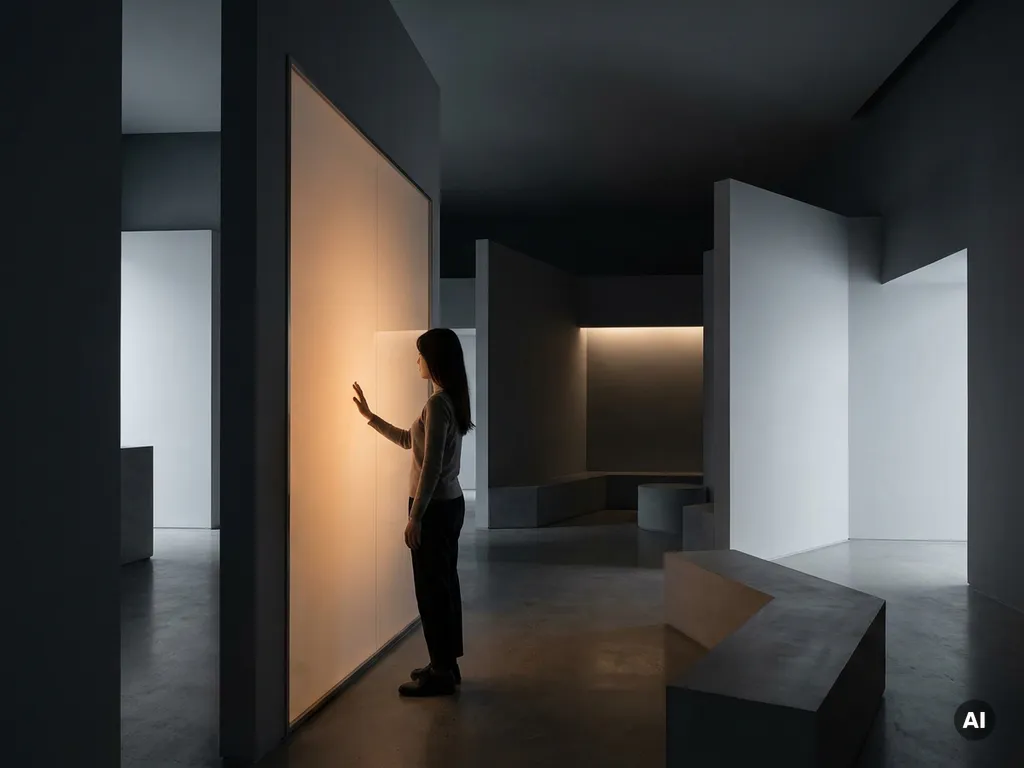
To make an experience center interactive, you need to replace passive observation with active participation, designing spaces where visitors make choices, trigger responses, and shape their own journey through the content. The key is combining immersive technology, intentional spatial design, and compelling storytelling so that every touchpoint invites engagement rather than simply presenting information. The sections below unpack each dimension of that challenge, from the foundational elements to the decisions that determine long-term success.
What elements make an experience center truly interactive?
An experience center becomes truly interactive when visitors are agents, not spectators. The core elements are responsive environments that react to presence or input, multi-sensory stimulation that engages more than sight and sound, and meaningful choice architecture that lets visitors influence what happens next. Remove any one of these and the experience risks becoming a sophisticated display rather than genuine interaction.
Responsive environments use sensors, motion tracking, or touch interfaces to detect visitor behavior and feed it back into the space. This feedback loop is what separates an interactive exhibit from a passive installation. When a visitor steps onto a pressure-sensitive floor and the surrounding projection shifts, or when they speak to an AI-powered character and receive a contextually relevant reply, they experience agency, and agency creates memory.
Multi-sensory design amplifies that effect. Scent, temperature, texture, and spatial audio are powerful engagement tools that most experience centers still underuse. A visitor who smells pine resin while exploring a virtual forest, or feels vibration beneath their feet during a historical battle scene, is processing the experience through their body, not just their eyes. That embodied engagement produces stronger emotional recall.
Finally, meaningful choice architecture means giving visitors decisions that actually matter within the narrative or learning flow. Branching pathways, personalized content streams, and collaborative challenges all qualify. Choices that feel arbitrary or cosmetic do not; visitors quickly sense when their input changes nothing, and engagement drops accordingly.
How does immersive technology transform a static space?
Immersive technology transforms a static space by dissolving the boundary between the physical environment and digital content, turning walls, floors, and objects into dynamic surfaces that respond, inform, and surprise. Technologies like augmented reality, projection mapping, virtual reality, and spatial audio convert fixed architecture into a living medium, one that can shift context, mood, and narrative in real time.
Projection mapping is one of the most immediate transformations available. A bare concrete wall becomes a cascading waterfall, a historical timeline, or an abstract data visualization without any permanent construction. The physical structure remains unchanged, but its perceptual reality is completely different. This flexibility is especially valuable for institutions that need to rotate content without major renovation costs.
Augmented reality layers add depth to physical objects. A museum artifact can display its provenance, cultural context, or a reconstruction of its original form when a visitor points a device at it. An AR portal can transport visitors to a geographically or historically remote location while they remain physically present in the space. These layers do not replace the artifact; they amplify it.
Virtual reality creates entirely new spatial dimensions within an existing footprint. A 20-square-meter room can contain an ocean floor, a city from 1920, or the interior of a human cell. For experience centers working with limited physical space but ambitious narrative goals, VR dramatically expands what is possible without expanding the building. Combined with haptic feedback and spatial audio, the result is full sensory immersion that static displays simply cannot achieve.
What types of interactivity work best for different audiences?
The most effective type of interactivity depends on the audience’s age, motivation, and the context of their visit. Children respond strongly to gamified, physical interaction: touch, movement, and reward loops. Adult learners engage best with narrative-driven exploration and meaningful choice. Corporate or professional audiences often respond to simulation-based challenges that connect directly to their real-world roles.
Interactivity for younger and family audiences
Children and family groups thrive with interaction that feels like play. AR treasure hunts, interactive floor projections that react to movement, and story-driven games with clear goals and immediate feedback all perform well. The key is low barrier to entry: no instruction manual, just intuitive engagement. Physical movement is a strong asset here because it channels natural energy into the experience rather than fighting against it.
Interactivity for adult and professional audiences
Adults, particularly in educational, corporate, or cultural contexts, respond to interactivity that respects their intelligence and gives them control over depth. Branching narratives, AI-powered conversational characters, and simulation environments where choices carry consequences are highly effective. These audiences also appreciate collaborative interactivity, experiences designed for small groups that require discussion and shared decision-making to progress. The social dimension adds a layer of meaning that solo digital interaction often lacks.
How do you design visitor journeys that maintain engagement throughout?
Designing a visitor journey that sustains engagement from entry to exit requires a deliberate arc: an opening hook that establishes emotional investment, a middle section with varied pacing and escalating depth, and a closing moment that creates lasting resonance. Without this arc, even technically impressive spaces suffer from engagement drop-off after the initial novelty wears off.
Pacing is one of the most underestimated design variables. Sustained high stimulation leads to fatigue. Alternating between high-intensity interactive moments and quieter reflective zones allows visitors to process what they have experienced and arrive at the next activation with renewed attention. Think of it as dynamic range: the quiet passages make the peaks more powerful.
Personalization extends engagement further. When visitors feel the experience is responding to them specifically, their choices, their language, their pace, they remain invested because the content feels authored for them rather than broadcast at them. AI-driven personalization can adapt content in real time based on how a visitor moves through the space, what they linger on, or how they respond to prompts. This transforms a fixed installation into an experience that is genuinely different for each person who enters.
Exit design is equally important and frequently neglected. The final moment of an experience center visit should be a designed touchpoint, not an afterthought. Whether it is a reflective prompt, a shareable digital souvenir, or a call to continued action, the closing beat determines what visitors carry with them and whether they talk about the experience afterward.
What role does storytelling play in interactive experience centers?
Storytelling is the connective tissue that transforms a collection of interactive elements into a coherent, emotionally meaningful experience. Without a narrative framework, even technically sophisticated installations feel like demonstrations. With strong storytelling, every sensor, projection, and interactive touchpoint becomes part of a larger journey that visitors want to complete.
The most effective storytelling in interactive experience centers is spatial: it uses the architecture and flow of the space to advance the narrative rather than relying solely on text or audio. Visitors move through chapters. The room they enter after a particular choice reflects the consequence of that choice. The lighting shifts as the story reaches its emotional peak. Space itself becomes a storytelling medium.
Character is another powerful storytelling lever. AI avatars and non-player characters can carry narrative threads, respond to visitor input, and create the sense of a living world within the experience. When a visitor can have a genuine conversation with a virtual guide who adapts to their questions, the boundary between story and interaction dissolves entirely. We design these AI-driven characters to feel like genuine presences rather than scripted kiosks, a distinction that visitors feel immediately.
Storytelling also provides the emotional anchor that makes content memorable. Facts presented as facts are forgotten. Facts embedded in a story that a visitor has participated in are retained. For educational and cultural institutions, this is not a creative luxury: it is a core strategy for achieving the learning and awareness outcomes that justify the investment in an immersive experience center.
How do you measure whether an experience center is engaging visitors?
Measuring engagement in an experience center requires combining behavioral data, qualitative feedback, and outcome-based metrics. No single measurement tells the full story, but together they reveal whether the interactive design is achieving its goals, whether those goals are dwell time, knowledge retention, emotional impact, or conversion to a desired action.
Behavioral data includes dwell time at individual exhibits, movement patterns through the space, interaction rates with touchpoints, and completion rates for guided journeys. Sensors, cameras with anonymized tracking, and digital interaction logs all contribute to this picture. High dwell time at a specific installation suggests genuine engagement. Low interaction rates with a touchpoint suggest a design or communication problem worth investigating.
Qualitative feedback through exit surveys, facilitated conversations, or digital prompts adds the dimension that behavioral data cannot capture: how visitors felt, what they understood, and what they will remember. For educational experience centers, pre- and post-visit knowledge assessments provide direct evidence of learning outcomes. For brand experience centers, brand recall and sentiment surveys measure emotional impact.
Social sharing is a useful secondary signal. When visitors voluntarily photograph, film, or post about their experience, they are expressing genuine engagement, and amplifying the experience center’s reach at the same time. Designing specific moments that are visually compelling and share-worthy is a deliberate engagement strategy, not a vanity metric.
Should you build a permanent or modular interactive experience center?
The choice between a permanent and modular interactive experience center depends on your content lifecycle, audience diversity, and operational flexibility needs. Permanent installations deliver deeper immersion and stronger spatial identity but require significant upfront investment and carry the risk of content becoming dated. Modular systems offer adaptability and reusability across locations but may sacrifice some of the environmental coherence that makes permanent spaces so powerful.
Permanent experience centers make the strongest case when the core content is stable, the location is fixed, and the institution has a long-term commitment to the space. Museums with enduring collections, corporate headquarters with consistent brand narratives, and educational institutions with established curricula are natural candidates. The investment in permanent architecture and bespoke technology pays off over years of visitor throughput.
Modular systems are the right choice when content needs to travel, rotate, or evolve frequently. A brand that runs seasonal activations, an NGO that takes its awareness campaign to multiple cities, or an educational organization that serves different schools each term will benefit from modular hardware and software that can be reconfigured without rebuilding from scratch. The operational efficiency of a well-designed modular system often outweighs the experiential advantages of a permanent build.
A hybrid approach is increasingly common and often the most practical. A permanent spatial framework, the architecture, the flow, the sensory infrastructure, provides the identity and immersive depth that visitors remember. Within that framework, modular content layers can be updated, swapped, or personalized without touching the physical structure. This combination protects the long-term investment while keeping the experience fresh for repeat visitors.
If you are weighing these decisions for your own project and want a partner who can help you navigate the trade-offs, we would welcome the conversation. Contact us to explore what kind of interactive experience center makes sense for your space, your audience, and your goals.
Gerelateerde artikelen
- What are five types of immersive technology?
- What are the different types of immersive theater experiences?
- What are examples of interactive activities?
- What are planetarium domes made of?
- What makes immersive experiences memorable?
- What are the types of immersive technology?
- What is the 20 20 20 rule for VR?
- What are the different types of immersive experiences?
- What is an immersive installation?