
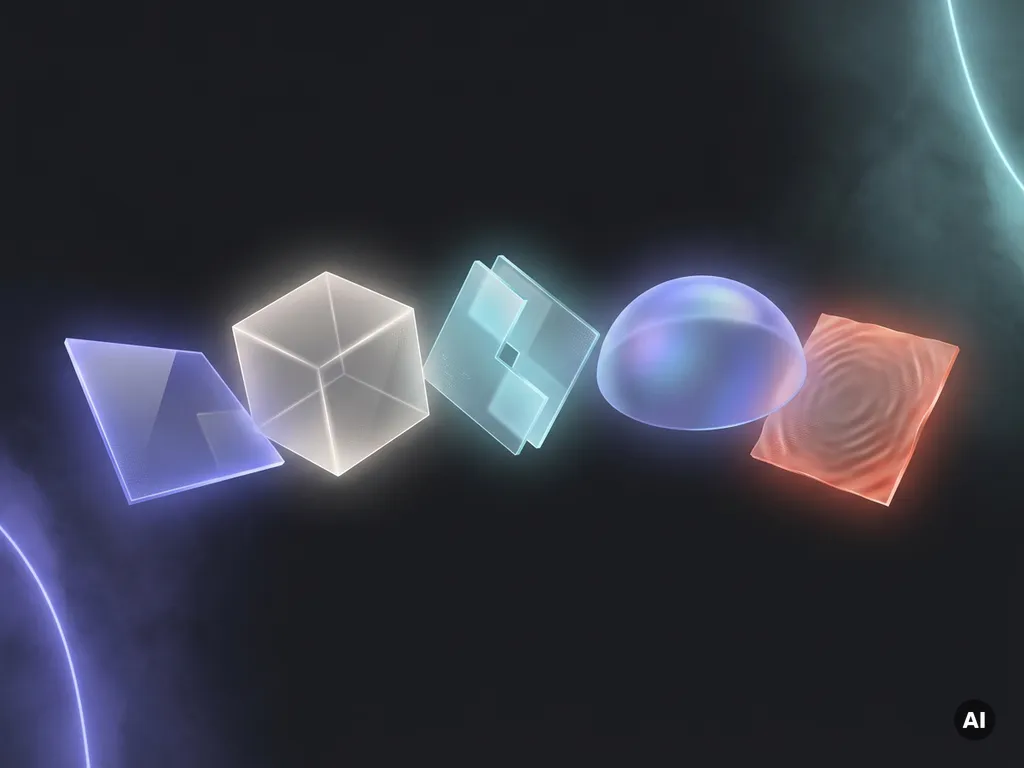
The five main types of immersive technology are augmented reality (AR), virtual reality (VR), mixed reality (MR), immersive installations, and extended reality (XR), an umbrella term that covers all the others. Each type differs in how deeply it replaces or enhances the physical world, and in the hardware and sensory channels it engages. Understanding these distinctions helps organizations choose the right approach for their specific goals, whether that is education, brand activation, cultural storytelling, or large-scale audience engagement.
How do the five types of immersive technology actually differ from each other?
The five types of immersive technology differ primarily in the degree to which they replace or augment physical reality, the hardware required, and the level of user agency they allow. AR overlays digital content onto the real world; VR replaces it entirely; MR anchors digital objects to physical space in real time; immersive installations transform physical environments without requiring personal headsets; and XR serves as the collective name for all of the above.
Think of these types as existing on a spectrum. At one end, AR keeps you grounded in your surroundings while adding a digital layer. At the other end, VR removes the physical world completely, placing you inside a fully rendered environment. Mixed reality sits between the two, allowing virtual objects to interact with real surfaces and respond to physical movement. Immersive installations operate differently again, they reshape the physical space itself using projection, sound, scent, and tactile elements, so no personal device is needed. XR, finally, is not a sixth type but a conceptual framework that unites all the others under a single term.
Choosing between them depends on your audience, your content, your venue, and the depth of engagement you want to create.
What is augmented reality and where is it used?
Augmented reality (AR) is a technology that overlays digital content, 3D models, animations, text, or interactive elements, onto the real world, typically viewed through a smartphone, tablet, or AR headset. The physical environment remains visible; digital elements are added on top of it. AR is used across retail, education, marketing, tourism, museums, and live events.
In practice, AR takes many forms. A museum visitor might point a phone at a painting and watch it animate with hidden stories. A brand might launch a product by letting customers place a 3D version of it in their living room before purchasing. A city campaign might use geospatial AR to embed digital content at precise GPS coordinates across an urban landscape, no QR codes required.
AR in education and cultural settings
In education, AR brings abstract concepts to life. A history lesson becomes a walk through a reconstructed battlefield; a biology class becomes an exploration of a life-size 3D cell. For cultural institutions, AR portals can transport visitors to distant locations, while AR art activations add interpretive layers to physical exhibits without touching the original work.
AR in brand and marketing contexts
For brands, AR activations at events and product launches create shareable, memorable moments that passive advertising cannot replicate. AR posters, hologram twins, and interactive product models all extend the life and reach of a campaign beyond the screen. We use AR across all of these contexts, designing experiences that connect digital storytelling with the physical spaces people already inhabit.
What is virtual reality and what makes it fully immersive?
Virtual reality (VR) is a technology that replaces the physical world entirely with a computer-generated environment, experienced through a headset that tracks head movement and blocks out external visual input. What makes VR fully immersive is the combination of a wide field of view, spatial audio, and real-time responsiveness to the user’s movement, creating a convincing sense of presence in a place that does not physically exist.
VR experiences range from passive to fully interactive. A passive VR experience might be a cinematic 360-degree film that places viewers inside a humanitarian crisis or a natural wonder, generating empathy through presence alone. An interactive VR experience goes further, allowing users to make decisions, manipulate objects, or complete tasks within the virtual environment, making it exceptionally effective for training simulations, educational scenarios, and entertainment.
For groups and events, location-based VR synchronizes multiple headsets so that participants share the same virtual world simultaneously. This format scales to hundreds of visitors and has been used in museums, exhibitions, and awareness campaigns around the world. The depth of engagement VR delivers, emotional, cognitive, and physical, makes it one of the most powerful tools available for behavior-change storytelling and experiential learning.
What is mixed reality and how does it differ from AR?
Mixed reality (MR) is a technology that anchors digital objects to the physical world in real time, allowing virtual elements to interact with real surfaces, respond to physical movement, and persist as the user moves through space. The key difference from AR is depth of integration: AR places digital content on top of reality, while MR makes digital content behave as if it genuinely exists within reality.
In an AR experience, a 3D model floats on your screen relative to where you point your camera. In a mixed reality experience, that same model sits on your actual desk, casts a shadow consistent with your room’s lighting, and stays in place when you walk around it. MR requires more sophisticated hardware, devices like the Apple Vision Pro use spatial mapping and real-time environmental understanding to achieve this level of integration.
This distinction matters enormously for application design. MR is particularly suited to architectural visualization, product design review, surgical planning, and next-generation training environments where the relationship between digital content and physical space must be precise and believable. As hardware matures in 2026, MR is moving from specialist use cases toward broader creative and educational applications.
What are immersive installations and how do they engage audiences at scale?
Immersive installations are physical environments transformed through projection, spatial audio, lighting, scent, temperature, and other sensory elements to create an enveloping experience, without requiring visitors to wear a headset or hold a device. They engage audiences at scale because many people can experience them simultaneously, and the barrier to entry is simply walking through a door.
This format is uniquely powerful for public engagement. A 360-degree projection dome can immerse thousands of visitors in a shared visual narrative over the course of a day. A 4D cinema adds sound, scent, warmth, and motion to a film screening, turning passive viewing into a full-body event. Interactive installations respond to visitor movement, turning audiences from observers into participants.
For museums, cultural institutions, and large-scale events, immersive installations solve a problem that headset-based technologies cannot: they require no instruction, no individual setup, and no technical literacy. The experience begins the moment someone enters the space. This accessibility makes them especially effective for diverse audiences, including children, older visitors, and people who might feel uncertain about wearing unfamiliar technology.
From an operational perspective, installations can be designed as permanent fixtures, traveling exhibitions, or temporary event installations, each with different considerations around scalability, logistics, and longevity. Explore our past projects to see how this format has been applied across sectors.
Which type of immersive technology is best for education and training?
For education and training, interactive VR and AR are generally the most effective types of immersive technology, because they combine active participation with realistic simulation, the two factors most strongly linked to knowledge retention and behavior change. The best choice depends on the subject matter, the learning environment, and the number of learners involved.
VR excels when the goal is to place learners inside a situation they could not otherwise safely or practically experience, a surgical procedure, a conflict zone, a historical event, or a high-risk industrial environment. The sense of presence VR creates activates emotional and cognitive responses that deepen learning in ways that video or text cannot replicate.
AR is more practical for classroom or workplace settings where learners need to interact with their real environment while accessing digital guidance. It works well for step-by-step procedural training, language learning overlaid on physical objects, and scenarios where learners must apply knowledge to their actual surroundings rather than a simulated one.
Immersive installations serve education effectively at a group level, particularly for awareness campaigns, museum-based learning, and public engagement on complex social issues. When a topic needs to reach a broad, diverse audience without requiring individual device setup, a well-designed installation can deliver emotional impact and conceptual clarity simultaneously.
AI-driven personalization adds another dimension: experiences that adapt to a learner’s language, pace, and prior knowledge make immersive education more inclusive and more effective across diverse populations.
What is the difference between XR and the other immersive technology types?
Extended reality (XR) is not a separate technology type but an umbrella term that encompasses augmented reality, virtual reality, and mixed reality, along with any future immersive formats that blend physical and digital experience. The difference between XR and the individual types is one of scope: XR describes the entire spectrum, while AR, VR, and MR each describe a specific point on it.
The term XR has become widely used in industry, policy, and academic contexts because it provides a single shorthand for discussing immersive technology as a category. When an organization says it is developing an “XR strategy,” it means it is considering how AR, VR, MR, and related technologies might serve its goals, rather than committing to one specific format at the outset.
In practice, many of the most compelling immersive experiences combine multiple XR formats. A museum exhibition might use AR for individual object exploration, VR for a deeper narrative journey, and MR for interactive spatial elements, all within the same visitor experience. Understanding XR as a spectrum rather than a fixed set of tools encourages more creative, audience-centered thinking about how technology and storytelling can work together.
Whether you are designing a brand activation, an educational programme, or a cultural exhibition, the most important question is not which technology type to use, it is what experience you want to create, and for whom. If you are ready to explore what the right combination of immersive technology could do for your project, we would love to hear from you. Contact us to start the conversation.
Gerelateerde artikelen
- How can a show improve the overall visitor experience?
- What services does an immersive-content agency provide?
- How can I create a digital museum?
- What are planetarium domes made of?
- What does immersive event mean?
- How much do brand activations cost?
- What are the benefits of multisensory learning?
- What are the three levels of immersion?
- How much space is needed for dome installations?