
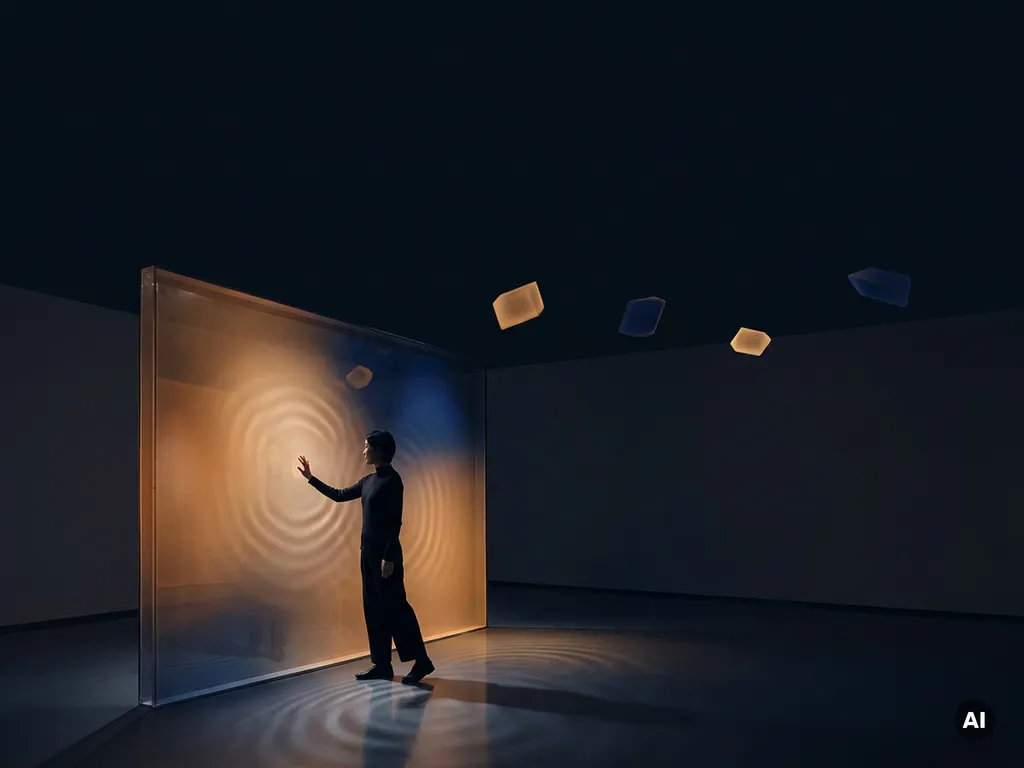
Interactive activities are structured experiences that require active participation from the audience rather than passive observation. They include hands-on workshops, digital simulations, role-playing exercises, gamified learning modules, live polls, augmented reality explorations, and collaborative problem-solving tasks. What makes them valuable is their ability to shift people from spectators into participants, deepening understanding and emotional connection in the process.
Interactive activities span a wide range of contexts, from classrooms and museums to brand activations and social impact campaigns. The right format depends on your audience, your goals, and the depth of engagement you want to create. The sections below answer the most common questions about interactive activities across each of these contexts.
What makes an activity truly interactive?
An activity is truly interactive when it requires the participant to make a choice, take an action, or respond to feedback that meaningfully shapes their experience. Passive formats deliver content to an audience; interactive formats invite the audience to co-create the experience. The key markers are agency, responsiveness, and consequence: the participant does something, the experience responds, and that response matters.
Not all engagement is equal. Clicking a button on a touchscreen qualifies as interaction at its most basic level, but deeper interactivity involves emotional investment, decision-making, and a sense that the participant’s input genuinely influences the outcome. A quiz where wrong answers lead to new information is more interactive than one that simply marks answers right or wrong. A physical installation that responds to movement creates a stronger sense of agency than a scrolling webpage.
The most effective interactive activities share three qualities:
- Agency: Participants have real choices, not just the illusion of them
- Feedback loops: The experience responds to what the participant does in a meaningful way
- Emotional stakes: The outcome feels relevant to the participant personally
When these three elements align, interaction becomes engagement, and engagement becomes memory.
What are examples of interactive activities in education?
Interactive learning activities in education include role-playing simulations, collaborative group challenges, digital quizzes with branching outcomes, virtual field trips, escape room-style problem-solving, and hands-on experiments. These formats replace passive listening with active participation, which research consistently links to stronger knowledge retention and higher motivation among learners of all ages.
Classroom-based interactive learning activities
In traditional classroom settings, interactive activities often take the form of Socratic questioning, peer teaching, think-pair-share exercises, and live polling tools like interactive whiteboards. These low-tech approaches remain effective because they require students to articulate their thinking, respond to others, and defend positions, all of which deepen comprehension.
Gamified learning structures, where students earn points, unlock levels, or compete in knowledge challenges, add motivational layers that keep learners engaged across longer sessions. Subject-specific simulations, such as mock trials for law students or virtual dissections for biology classes, allow learners to practice skills in realistic contexts without real-world risk.
Technology-driven interactive education
Digital and immersive technologies have significantly expanded what interactive learning activities look like. Virtual reality experiences can place students inside historical events, biological systems, or engineering challenges. Augmented reality overlays can animate diagrams, bring textbook illustrations to life, or transform a school corridor into an interactive science exhibit.
For institutions working on complex or sensitive topics, immersive formats offer something traditional media cannot: the experience of perspective. A learner who virtually inhabits another person’s situation develops empathy alongside knowledge, making the learning both intellectually and emotionally durable.
What are examples of interactive activities at events and exhibitions?
Interactive activities at events and exhibitions include touchscreen information stations, live demonstrations, participatory art installations, AR-enhanced displays, gamified treasure hunts, 360-degree projection domes, and hands-on making workshops. These formats transform passive visitors into active participants, increasing dwell time, emotional connection, and the likelihood that they will share the experience with others.
Museums and cultural institutions have been at the forefront of this shift. Rather than presenting objects behind glass with text labels, forward-thinking curators now design experiences where visitors can explore artifacts through digital layers, interact with historical reconstructions, or contribute their own responses to the exhibition’s themes. The result is a visit that feels personal rather than prescribed.
For large-scale events and trade shows, interactive activities serve a different but equally important function: they create memorable moments in crowded, competitive environments. A 360-degree dome screening, a mixed reality demonstration, or a collaborative digital installation gives attendees a reason to stop, engage, and remember a brand or institution long after the event ends. You can explore how these formats come together in real-world settings by looking at our completed projects.
What are examples of interactive activities for brand marketing?
Interactive activities for brand marketing include augmented reality product try-ons, gamified social media challenges, immersive pop-up experiences, interactive video campaigns, live brand activations with gesture or motion response, and AI-powered digital characters that hold real-time conversations with visitors. These formats generate authentic engagement by giving audiences something to do rather than something to watch.
The shift away from passive advertising toward participatory brand experiences reflects a broader change in how audiences relate to brands. People who interact with a brand, physically or digitally, develop stronger recall and more positive associations than those who simply see an advertisement. When an interaction is surprising, playful, or emotionally resonant, it becomes shareable, extending the campaign’s reach organically.
Effective brand marketing interactive activities tend to align closely with brand identity. A luxury automotive brand might use a high-fidelity virtual reality driving experience to communicate performance and precision. A consumer goods company might deploy an augmented reality activation at a festival that lets attendees personalize a product and see it rendered in three dimensions. The format should feel like a natural extension of what the brand stands for, not a technology demonstration for its own sake.
How do interactive activities differ from immersive experiences?
Interactive activities require participant input to function, while immersive experiences surround participants with sensory stimulation that creates a feeling of presence, whether or not they actively participate. The key distinction is that interactivity is about agency and response, while immersion is about environment and atmosphere. The most powerful experiences combine both: they place participants inside a world and give them meaningful ways to act within it.
A 360-degree film viewed in a dome is immersive but not necessarily interactive if the viewer cannot influence what happens. A touchscreen quiz is interactive but not immersive if it exists on a flat screen in a neutral environment. When you combine spatial audio, physical environment design, responsive technology, and narrative depth, you create something that is both, and that combination is where the deepest engagement happens.
For brands, educators, and cultural institutions, understanding this distinction helps clarify what they actually need. If the goal is emotional transportation, immersion is the priority. If the goal is knowledge acquisition or behavioral change, interactivity is essential. If the goal is lasting impact, designing for both simultaneously produces the strongest results. At Rooftop Immersive, we build experiences that operate at this intersection, where environment and agency reinforce each other.
What types of interactive activities work best for NGOs and social impact campaigns?
For NGOs and social impact campaigns, the most effective interactive activities are those that build empathy through perspective-taking, translate complex data into lived experience, and inspire action rather than passive sympathy. Formats that work particularly well include first-person VR narratives, participatory storytelling installations, interactive decision-making simulations, and digital experiences that connect individual choices to collective outcomes.
The challenge for social impact communicators is that the topics they work with, displacement, climate change, poverty, health inequality, are often emotionally overwhelming or cognitively abstract. Traditional media can inform audiences about these issues, but interactive and immersive formats can help people feel the weight of them in ways that motivate genuine behavior change.
A well-designed interactive activity for a social campaign might place a participant in the position of making the same decisions faced by someone in a refugee camp, or allow them to explore the long-term consequences of a single policy choice through a branching simulation. These formats do not replace advocacy or policy work, but they create the emotional conditions in which people become more receptive to both. The key is that the interaction must feel respectful, ethically grounded, and genuinely informative rather than exploitative or sensationalized.
How do you choose the right interactive activity for your goals?
Choosing the right interactive activity starts with clarity about three things: what you want participants to know, feel, or do differently after the experience; who those participants are and what context they will encounter the activity in; and what resources, physical space, technology, and time you have available. The format should serve the outcome, not the other way around.
A useful framework for making this decision involves working through the following questions:
- What is the primary goal? Knowledge transfer calls for different formats than emotional engagement or behavioral change
- Who is the audience? Age, familiarity with technology, group size, and cultural context all shape which formats will feel natural rather than alienating
- Where will the activity take place? A physical space, digital platform, or hybrid environment each opens and closes different possibilities
- How long do participants have? A two-minute brand activation requires a very different design approach than a forty-minute educational module
- What does success look like? Defining measurable outcomes, engagement time, comprehension scores, social shares, and donation conversions helps you evaluate whether the chosen format is working
Budget and production complexity also play a role. A highly customized immersive installation involves different cost factors than a digital AR experience deployed via smartphone, with considerations including hardware requirements, content development scope, physical build complexity, and ongoing maintenance. Understanding these dimensions early allows you to match ambition to resource reality without compromising the quality of the outcome.
If you are weighing options for an upcoming project and want guidance on which interactive format will best serve your specific goals, we would be glad to help you think it through. Reach out through our contact page and let us explore what is possible together.
Gerelateerde artikelen
- How can a show improve the overall visitor experience?
- What are the different types of immersive theater experiences?
- Why do people like immersive experiences?
- What are the advantages and disadvantages of immersive technology?
- What are the benefits of integrating immersive technologies with STEM education?
- Can immersive experiences reduce anxiety?
- What are the psychological effects of immersion?
- Is 3D modeling a good career choice?
- What are the technical requirements for immersive installations?