
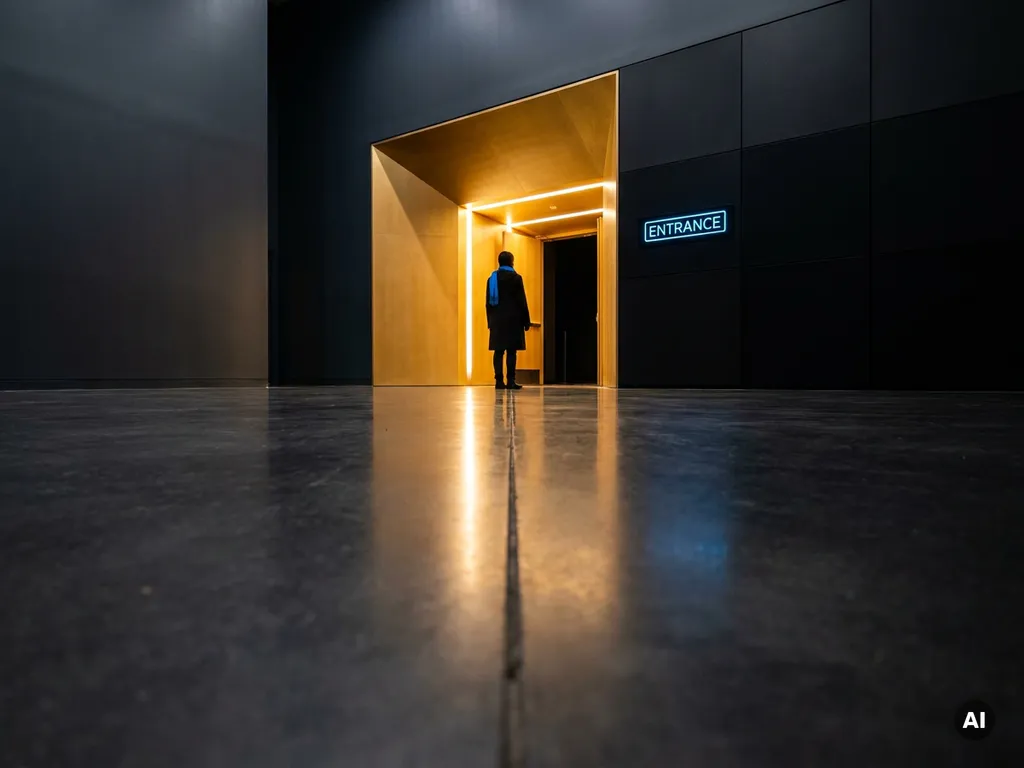
Immersive theater experiences fall into several distinct types, including promenade theater, site-specific performances, participatory co-created work, and large-scale puzzle-driven formats like Sleep No More-style experiences. Each type places audiences inside the story rather than in front of it, replacing the passive observer role with active presence, movement, and sometimes direct influence over the narrative. This article unpacks the most important formats, clarifies how they differ, and helps you identify which approach fits your project or vision.
How is immersive theater different from traditional theater?
Immersive theater removes the boundary between performer and audience. Where traditional theater seats spectators in rows facing a fixed stage, immersive theater places audiences inside the performance environment itself, free to move, explore, and sometimes interact with the story unfolding around them. The audience is not watching an event; they are inhabiting it.
In conventional theater, the fourth wall is a defining structural feature. Actors perform on a raised stage, lighting separates the fictional world from the auditorium, and audiences receive the story from a single, predetermined perspective. Immersive theater dismantles all of this. There is no fixed viewpoint. Different audience members may witness entirely different scenes, follow different characters, or uncover entirely different narrative threads during the same performance.
This shift has profound implications for emotional impact. When you can walk through the space a character inhabits, touch the objects they interact with, or stand close enough to feel the tension in a scene, the story stops being abstract. It becomes physical and personal. That quality, the ability to generate genuine empathy through presence, is what makes immersive performance so compelling for storytellers, educators, and brands alike.
What is promenade theater and how does it work?
Promenade theater is a format in which audiences move through a series of spaces or locations as the performance unfolds, following performers or being guided from scene to scene. Rather than sitting in a fixed seat, audience members walk, or promenade, through the performance environment, encountering different moments of the story as they travel.
The term has roots in outdoor performance traditions where audiences would follow actors through gardens, streets, or public spaces. In contemporary practice, promenade theater can take place in warehouses, historic buildings, forests, or purpose-built environments. The movement itself becomes part of the experience: the physical journey mirrors the narrative journey.
Practically, promenade theater works by designing a space with multiple simultaneous scenes happening at different points. Audiences may be directed along a single path, or they may be given freedom to choose their own route. In either case, the design ensures that no matter where an audience member wanders, they encounter a complete and emotionally coherent fragment of the larger story. The cumulative effect is a performance that feels discovered rather than delivered.
What is site-specific theater?
Site-specific theater is performance created for and inseparable from a particular location. The space is not a neutral backdrop, it is a core dramaturgical element. The story, staging, and meaning of the work are all shaped by the specific history, architecture, and atmosphere of the chosen site.
A site-specific production set in an abandoned factory uses the decay, the machinery, and the silence of that space as part of its storytelling. The same script performed in a conventional theater would lose something essential. This is the defining quality of site-specific work: the performance cannot simply be relocated without fundamentally changing what it communicates.
Sites commonly used include decommissioned industrial buildings, historic houses, underground tunnels, rooftops, forests, and public squares. The choice of location often carries symbolic weight, a performance about memory staged in a care home, or a piece about labor rights performed in a former textile mill. That resonance between content and context is what gives site-specific theater its distinctive power. For cultural institutions and public sector organizations, it is also a format that can activate overlooked spaces and invite communities into new relationships with their built environment.
What are Sleep No More-style experiences?
Sleep No More-style experiences are large-scale, non-linear immersive theater productions in which audiences roam freely through a multi-room environment, wearing masks and following whichever performers or storylines interest them. Named after Punchdrunk’s landmark production, this format gives each audience member a unique, self-directed journey through a sprawling narrative world.
The defining features of this format are freedom of movement, simultaneity, and designed discovery. Dozens of performers move through dozens of rooms simultaneously. Audiences choose who to follow, which doors to open, and which objects to examine. Every room contains narrative clues, letters, photographs, set dressing, that reward the curious. No single audience member sees the complete story in one visit, which is by design.
The mask worn by audiences in many of these productions serves a specific purpose: it creates a visual distinction between performers and spectators, grants anonymity, and subtly shifts the psychological contract of the experience. Wearing a mask, you become a witness rather than a participant in the conventional sense, present, watching, but invisible.
This format demands significant investment in spatial design, performer training, and narrative architecture. But the payoff is an experience that generates intense personal investment and word-of-mouth engagement. Audiences return multiple times to uncover what they missed, and the conversations they have afterward become part of the experience itself.
What is participatory or co-created theater?
Participatory theater is a format in which audience members actively contribute to the performance, shaping scenes, making decisions, or even performing alongside professional artists. Co-created theater takes this further, involving community members or participants in the development of the work itself, not just its execution.
In participatory theater, the audience is not a passive receiver but an active agent. This might mean being asked to vote on an outcome, improvise a response to a performer, take on a role within the narrative, or physically move objects that affect the story. The degree of participation varies enormously, from light-touch interaction to full integration into the dramatic action.
Co-created work goes deeper. Here, the people who will eventually experience the performance also help build it. Community theater, social impact projects, and educational productions often use this approach to ensure that the work reflects the lived experience of its audience. The result is theater that carries genuine authenticity because the people it speaks about have had a hand in shaping how their story is told.
For organizations working in education, social change, or community engagement, participatory and co-created theater offers something no passive format can: a sense of ownership. When people help make a story, they invest in it differently. That investment translates into deeper understanding, stronger emotional resonance, and more durable behavioral change.
How do escape rooms and puzzle-based experiences relate to immersive theater?
Escape rooms and puzzle-based experiences share immersive theater’s core quality, placing participants inside a designed environment where they must engage actively rather than observe passively. However, the primary driver in escape rooms is problem-solving and challenge completion, whereas immersive theater prioritizes narrative, emotion, and character.
The relationship between these formats is closer than it might appear. Many contemporary escape rooms incorporate theatrical elements: actors, branching narratives, and emotionally resonant storylines that give the puzzle-solving a dramatic context. Conversely, some immersive theater productions include puzzle mechanics, hidden clues, and interactive challenges that reward attentive, curious participants.
The key distinction lies in intent. Escape rooms are fundamentally goal-oriented, you succeed or fail based on whether you solve the puzzles within the time limit. Immersive theater is experience-oriented, success is defined by what you felt, discovered, or understood, not by any measurable outcome. When these two approaches are combined thoughtfully, they produce some of the most engaging formats in the experiential landscape: narratively rich environments where exploration feels urgent and every discovery carries emotional weight.
For brands, educators, and cultural institutions, this hybrid space is particularly valuable. It combines the engagement mechanics of game design with the empathy-generating power of storytelling, a combination that drives both participation and retention.
What is the difference between immersive theater and experiential brand activations?
Immersive theater is primarily a narrative and artistic form, its goal is emotional and dramatic impact. Experiential brand activations use immersive techniques to create memorable encounters with a brand, product, or message. The methods often overlap significantly, but the underlying purpose and success metrics differ.
In immersive theater, the story is the product. Audiences come for the experience itself, and the value is intrinsic, what they feel, think, or discover during the performance. In a brand activation, the experience is a vehicle. Its purpose is to create positive associations, drive engagement, generate shareable content, or communicate a brand message in a way that traditional advertising cannot.
That said, the best experiential brand activations borrow heavily from immersive theater’s toolkit: spatial storytelling, sensory design, performer-led interaction, and narrative architecture. When a brand creates an environment that audiences want to explore, linger in, and talk about afterward, it is drawing on exactly the same principles that make Sleep No More or a site-specific production compelling.
At Rooftop Immersive, we work across both territories, designing experiences that carry genuine narrative depth whether the brief comes from a cultural institution or a global brand. The distinction between art and activation matters less than the quality of the experience itself and the authenticity of the story being told.
Which type of immersive theater experience is right for your project?
The right type of immersive theater experience depends on your audience, your objectives, your space, and the story you need to tell. There is no universally superior format, each type has distinct strengths that make it better suited to specific contexts, budgets, and goals.
Consider these guiding factors when choosing a format:
- Audience size and behavior: Promenade and Sleep No More-style formats work well for larger audiences who can self-direct. Participatory and co-created formats are more powerful with smaller, more engaged groups.
- Narrative complexity: If your story has multiple threads, perspectives, or timelines, non-linear formats like free-roam immersive theater allow you to express that complexity spatially. Linear promenade formats work better for single-arc narratives.
- Space and location: Site-specific theater demands a location with inherent meaning or atmosphere. If your space is neutral or purpose-built, other formats may serve you better.
- Depth of engagement: If behavior change, empathy-building, or genuine learning is the goal, participatory and co-created approaches tend to generate the deepest and most durable impact.
- Brand or institutional objectives: For brand activations, puzzle-based or exploration-driven formats often generate the strongest social sharing and engagement metrics. For cultural institutions, site-specific and promenade formats tend to honor the integrity of collections and spaces.
The most important question is not which format is most impressive, but which format best serves the people who will experience it. A technically spectacular production that does not connect emotionally will always underperform a simpler, more honest experience that genuinely moves its audience.
If you are exploring immersive theater for an educational program, a cultural exhibition, a brand campaign, or a public engagement project, the range of possibilities is broader than it has ever been. You can explore some of the work we have created across these formats in our project portfolio. And if you are ready to talk through what the right approach might look like for your specific context, we would love to hear from you, feel free to contact us and start the conversation.
Gerelateerde artikelen
- What are five types of immersive technology?
- What are interactive Experiences?
- What are examples of immersive experiences?
- What is immersive entertainment?
- What are the disadvantages of augmented reality?
- What is XR (extended reality)?
- How does virtual reality impact society?
- What is the difference between WebAR and app-based AR for marketing?
- What is AR content production?