
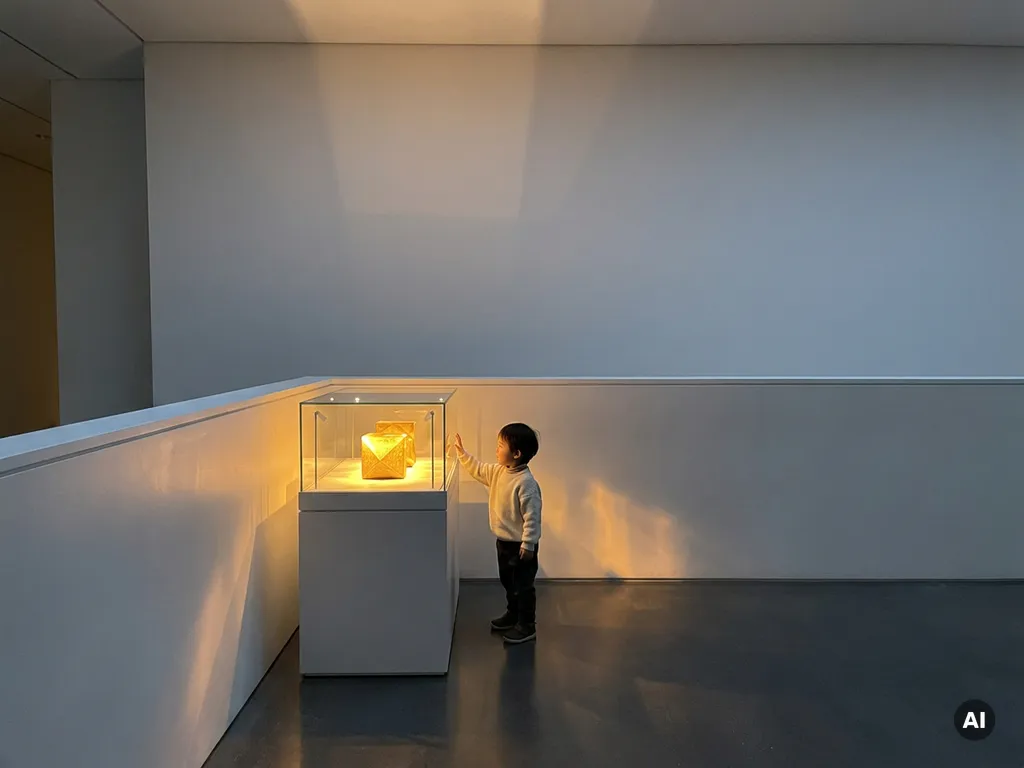
Museums become more interactive by layering digital technologies, multisensory design, and participatory storytelling onto their physical spaces. Augmented reality, virtual reality, interactive screens, and spatial audio are the most widely adopted tools, but the real transformation happens when these technologies serve the story rather than compete with it. The sections below answer the most common questions curators, directors, and exhibition designers ask when planning an interactive visitor experience.
What technologies are museums using to become more interactive?
Museums are currently using augmented reality, virtual reality, interactive touchscreens, projection mapping, spatial audio, AI-powered guides, and digital twins to create more engaging visitor experiences. These tools allow institutions to add interpretive layers to physical objects, simulate environments that no longer exist, and invite visitors to participate rather than simply observe.
The most widely adopted technologies in 2026 fall into a few clear categories. AR and VR are used to contextualize artifacts and transport visitors to historical settings. Interactive screens and kiosks let visitors explore collections at their own pace. Projection mapping transforms architecture and surfaces into dynamic storytelling canvases. AI avatars and virtual guides answer visitor questions in real time, adapting their responses to age, language, and interest level.
What distinguishes leading institutions is not the number of technologies deployed but how thoughtfully they are integrated. A single well-placed AR portal that reveals a painting’s historical context can be more impactful than a room full of disconnected screens. The goal is always to deepen the connection between visitor and collection, not to impress with novelty alone. Explore the range of immersive projects that demonstrate how this integration works in practice.
How does augmented reality enhance museum exhibits?
Augmented reality enhances museum exhibits by overlaying digital content, animation, and contextual information directly onto physical objects or spaces, allowing visitors to see what the naked eye cannot. AR can reveal how a sculpture looked when it was painted, animate a fossil to show how the creature moved, or place a historical artifact inside the broader world it came from.
In practical terms, AR in museums works through smartphone apps, dedicated tablets, or headsets that visitors use to scan an object or a marker in the gallery. The device then renders a digital layer, which might be a 3D animation, an archival photograph, a spoken narrative, or an interactive element that responds to the visitor’s gestures.
The most effective AR museum experiences share a few qualities. They add meaning rather than distraction, they work without lengthy onboarding, and they respect the pace of the visitor. A visitor standing in front of a medieval manuscript should feel that the AR layer opens a door into the past, not that it pulls them away from the physical object in front of them. When designed with that principle in mind, AR becomes one of the most powerful tools available for deepening emotional engagement with a collection.
What is the difference between passive and interactive museum experiences?
A passive museum experience is one where the visitor observes without influencing the content, such as reading a label, watching a video, or walking through a static display. An interactive museum experience invites the visitor to make choices, trigger responses, solve problems, or contribute to the narrative, creating a two-way relationship between the visitor and the exhibit.
The distinction matters because interactivity fundamentally changes how people process and retain information. When a visitor actively participates, whether by assembling a virtual artifact, navigating a simulated historical event, or responding to a question posed by an AI guide, they invest cognitively and emotionally in a way that passive observation rarely achieves.
This does not mean passive elements have no place in a museum. Quiet contemplation in front of a great work of art is itself a meaningful experience. The most successful exhibitions combine both modes, using passive moments for emotional depth and interactive elements for exploration and discovery. The key is intentional design: knowing when to invite participation and when to step back and let the object speak for itself.
How can museums use VR without overwhelming visitors?
Museums can use VR without overwhelming visitors by keeping experiences short and purposeful, providing clear onboarding, offering opt-in rather than mandatory participation, and situating VR within a broader exhibition flow that includes non-digital moments. VR is most effective when it answers a specific question the visitor is already asking, rather than serving as a standalone spectacle.
Design for duration and comfort
VR experiences in museum settings work best when they run between three and eight minutes. Longer sessions increase the risk of motion discomfort, fatigue, and queue congestion. Designing for a focused, contained experience, one that illuminates a single aspect of the collection or transports the visitor to a specific moment in time, ensures that the technology serves the exhibition’s purpose without dominating it.
Integrate VR into the visitor journey
Placing a VR station at the end of a thematic gallery, after visitors have already built context through objects and interpretation, makes the immersive leap feel earned rather than arbitrary. Visitors who arrive at a VR experience already emotionally primed by what they have seen are far more likely to engage deeply and leave with a lasting impression. Offering a seating option and clear exit cues also reduces anxiety for first-time VR users, who still make up a significant portion of museum audiences.
What role does multisensory design play in museum interactivity?
Multisensory design plays a central role in museum interactivity because human memory and emotional response are strongest when multiple senses are engaged simultaneously. When a visitor can hear the ambient sounds of an ancient marketplace, feel the texture of a replica artifact, and smell a scent associated with a historical period, the experience moves from informational to genuinely immersive.
Most museums default to visual and auditory stimulation, but the full sensory palette, including touch, scent, and spatial awareness, is underused and highly effective. Tactile stations that allow visitors to handle reproductions engage a different kind of intelligence than reading a label. Scent diffusers calibrated to a specific environment, a forest, a workshop, a spice market, trigger associative memory in ways that images alone cannot.
At Rooftop Immersive, we design with all the senses as a core principle, not an afterthought. Our immersive experience design approach treats spatial sound, scent, temperature, and tactile elements as integral components of the storytelling toolkit. The result is an experience that visitors carry with them long after they leave the building, because it has engaged them at a level deeper than the visual.
How can smaller museums become more interactive on a limited budget?
Smaller museums can become more interactive on a limited budget by prioritizing a single high-impact technology, leveraging visitor-owned smartphones, using modular and reusable digital content, and partnering with educational institutions or technology providers who share their mission. Full-scale immersive installations are not a prerequisite for meaningful interactivity.
Several cost-effective approaches deliver strong results without requiring major capital investment. AR experiences triggered by printed image markers, for example, require no dedicated hardware beyond a visitor’s smartphone and a well-designed app. Interactive audio guides that respond to location or object scanning add a participatory layer without physical construction. Digital storytelling kiosks built on standard consumer hardware can be updated remotely, reducing long-term maintenance costs.
The factors that most influence the cost of any interactive museum project include the complexity of the content, the number of languages and accessibility formats required, the hardware needed, and whether the experience needs to be updated regularly. A focused brief, a phased rollout, and a clear sense of which visitor question the technology is answering will always produce better results than a broad, undirected investment in novelty. Starting with one well-executed interactive element and measuring its impact before expanding is a sound strategy for institutions working within tight constraints.
How do you measure whether interactive museum experiences are working?
Interactive museum experiences are working when they produce measurable increases in dwell time, visitor satisfaction, return visits, and demonstrable learning or emotional outcomes. Measurement should be designed into the experience from the start, using a combination of behavioral data, visitor feedback, and qualitative observation.
The most reliable indicators of success vary depending on the goal of the experience. For engagement-focused installations, dwell time and repeat interaction rates are strong signals. For educational experiences, pre- and post-visit surveys that test knowledge retention or attitude change provide meaningful evidence of impact. For brand or audience development goals, visitor demographics, social sharing rates, and media coverage offer useful data points.
Digital interactive elements have a significant advantage over static displays in this regard: they generate data automatically. Touch interactions, navigation paths through a VR environment, completion rates for guided experiences, and language selections all provide insight into how visitors are actually using the experience, not just how designers imagined they would. This data loop allows institutions to refine and improve their interactive offerings over time, making each iteration more effective than the last.
Ultimately, the most important measure is whether the experience has changed something in the visitor: their understanding, their empathy, their connection to the collection, or their intention to return. If you are ready to explore what that kind of impact could look like for your institution, we would welcome the conversation. Contact us to discuss how we can help bring your vision to life.
Gerelateerde artikelen
- What is immersive dome projection?
- How to make an exhibition stand stand out?
- How can I use augmented reality?
- How to create immersive content?
- What are the 4 elements of virtual reality?
- How do you optimize spatial design for different audiences?
- Should I use AR filters for my product launch?
- What are the principles of good spatial design?
- What kind of computer do I need for 3D modeling?