
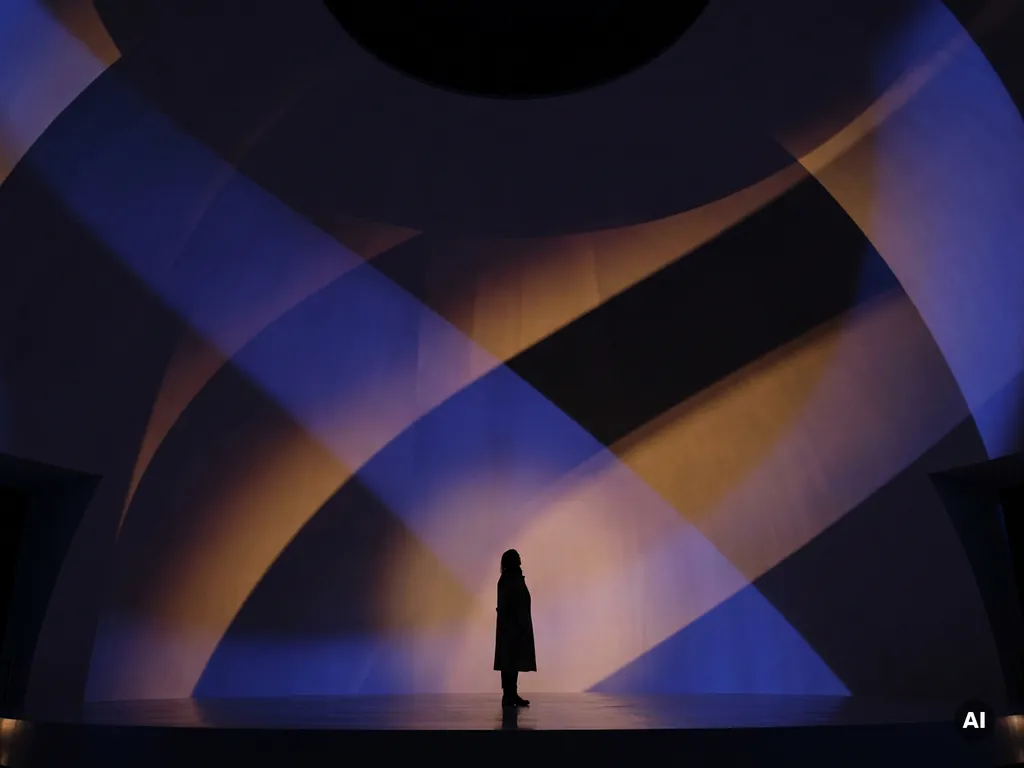
Immersive experiences become memorable when they trigger genuine emotional responses, engage multiple senses simultaneously, and place the audience inside a story rather than in front of it. The most lasting experiences are not defined by the sophistication of the technology used, but by how deeply they connect with something personal and human. The questions below unpack exactly what separates a forgettable activation from an experience people carry with them for years.
Why do some immersive experiences stay with people for years?
Immersive experiences stay with people for years when they create a moment of genuine personal significance: a shift in perspective, an unexpected emotional connection, or a sense of having truly been somewhere or understood something new. The experience becomes a memory not because it was spectacular, but because it was meaningful to the individual who lived it.
Memory research consistently points to the same underlying mechanism: we remember events that carry emotional weight. When an experience moves us, surprises us, or challenges how we see the world, the brain encodes it differently from routine information. The physical and spatial nature of immersive design amplifies this effect. Being inside an environment, rather than observing it from a distance, activates a deeper sense of presence that makes the brain treat the experience as something that genuinely happened rather than something that was simply watched.
There is also a social dimension. Experiences shared with others, or experiences that give people something worth talking about afterward, extend their lifespan far beyond the moment itself. When someone describes what they felt inside an installation to a friend, they relive and reinforce the memory. The experience continues to work long after the visitor has left the space.
What role does emotion play in making an experience memorable?
Emotion is the single most reliable predictor of whether an experience will be remembered. Without an emotional anchor, even the most technically impressive immersive environment fades quickly. Experiences that provoke curiosity, wonder, empathy, or even discomfort create the neurological conditions that convert short-term impressions into long-term memories.
This is not simply about making people feel good. Emotional impact in immersive design can take many forms: the quiet awe of stepping inside a recreated historical moment, the uncomfortable recognition of seeing a social issue from an unfamiliar perspective, or the playful delight of interacting with something that responds to your presence. What matters is that the emotion is genuine and earned by the experience itself, not manufactured through superficial effects.
For organisations working on social impact, education, or brand connection, this has a practical implication. An experience designed to build empathy or shift a point of view must first earn the audience’s emotional trust. That means prioritising authentic storytelling over visual spectacle and ensuring that every design choice serves the emotional arc of the journey rather than existing for its own sake.
How does multisensory design affect audience recall?
Multisensory design significantly strengthens audience recall by encoding an experience across multiple memory pathways simultaneously. When sight, sound, smell, touch, and spatial awareness are all activated together, the brain creates a richer and more durable memory trace than any single sense could produce alone. This is why a familiar scent can instantly transport someone back to a specific place and time.
Most digital experiences engage only two senses: vision and hearing. Immersive design that incorporates physical sensation, ambient temperature, scent, or haptic feedback creates a fundamentally different kind of encounter. The body remembers what the eyes alone cannot. This is particularly powerful in educational and awareness contexts, where deep retention is the goal rather than surface-level exposure.
The practical challenge is integration. Adding sensory layers for their own sake can overwhelm or distract rather than enhance. Effective multisensory design is intentional: each element reinforces the same emotional and narrative intention, creating coherence rather than noise. At Rooftop Immersive, we approach immersive design as a holistic sensory architecture, where every element from spatial layout to ambient scent serves the experience’s core purpose.
What’s the difference between passive and interactive immersive experiences?
Passive immersive experiences place the audience inside a world but do not require their participation to unfold. Interactive immersive experiences respond to the audience’s choices, movements, or input, making each person an active participant rather than a spectator. The key distinction is agency: interactive experiences give the audience a role in shaping what happens.
Passive immersive experiences
Passive formats, such as 360-degree films, projection-mapped environments, or cinematic VR, are powerful for delivering controlled emotional narratives. The audience surrenders to the experience, which allows for precise storytelling and consistent emotional pacing. These formats excel when the goal is to transport people into a specific perspective or moment, particularly in awareness campaigns, cultural exhibitions, or brand storytelling where the narrative must remain intact.
Interactive immersive experiences
Interactive formats introduce decision points, physical interaction, or real-time responsiveness. When an audience member can influence the outcome of a story, solve a challenge within an environment, or see their own actions reflected back at them, their engagement deepens considerably. Research into learning and behaviour change consistently shows that active participation produces stronger retention and more durable attitude shifts than passive observation alone.
Neither format is inherently superior. The right choice depends on the experience’s purpose, the audience’s context, and the narrative demands of the content. Many of the most effective immersive experiences combine both: a guided journey with moments of genuine interactivity woven in at key points.
How does storytelling structure shape the memorability of an experience?
Storytelling structure shapes memorability by giving an experience a beginning, a turning point, and a resolution that the audience can hold onto. Without narrative structure, even a visually stunning immersive environment becomes a series of disconnected impressions. With it, the audience follows an arc that gives meaning to each moment and builds toward something worth remembering.
The most enduring immersive experiences borrow from the same principles that make great literature and film memorable: a clear emotional journey, a moment of genuine tension or revelation, and a resolution that leaves the audience changed in some small but meaningful way. The physical and spatial qualities of immersive design add a layer that traditional storytelling cannot: the audience does not just witness the story, they inhabit it.
Structure also determines pacing, which is critical in spatial experiences. Moving too quickly through an environment prevents emotional absorption. Staying too long in one register creates fatigue. The best immersive storytelling creates rhythm, alternating between moments of intensity and moments of reflection, so that the experience breathes and the audience remains present throughout.
Experiential storytelling that works at this level requires close collaboration between narrative designers, spatial architects, and technologists. The story must be built into the space itself, not layered on top of it as an afterthought.
What makes an immersive experience feel authentic rather than gimmicky?
An immersive experience feels authentic when the technology serves the story rather than becoming the story. Gimmicky experiences use impressive tools to generate short-term surprise without emotional depth. Authentic experiences use whatever tools are necessary, and only those tools, to create a moment that resonates with genuine human meaning.
Authenticity in immersive design comes from several interconnected qualities. First, the content must be grounded in something true: a real perspective, a genuine cultural artefact, a human story that deserves to be told. Second, the design choices must be coherent, with every sensory element reinforcing the same intention rather than competing for attention. Third, the experience must respect the audience’s intelligence, inviting them into something rather than performing at them.
One of the clearest signals of a gimmicky experience is when the technology is the first thing people talk about afterward. When someone leaves an immersive exhibition saying “that was incredible VR,” the technology dominated the memory. When they leave saying “I had no idea what it felt like to be in that situation,” the story dominated, and the technology did its job invisibly. That invisibility is the hallmark of authentic immersive design.
How do you measure whether an immersive experience was truly memorable?
Measuring the memorability of an immersive experience requires looking beyond immediate engagement metrics toward indicators of lasting impact: what audiences recall days or weeks later, how their attitudes or behaviours shift, and whether the experience generated sustained conversation or sharing beyond the event itself.
Immediate feedback, such as dwell time, interaction rates, and post-experience surveys, provides useful data on engagement but tells only part of the story. True memorability shows up in delayed recall studies, in the way people describe the experience to others, and in measurable changes in awareness, empathy, or intent that persist after the initial encounter.
For educational and social impact applications, success metrics often include knowledge retention assessed days after the experience, shifts in stated attitudes toward a topic, and observable changes in behaviour or decision-making. For brand and marketing applications, metrics tend to focus on brand association strength, social amplification, and the quality of emotional connection rather than simple reach.
The most meaningful measurement frameworks are designed before the experience is built, not after. Knowing what success looks like from the outset shapes every creative and technical decision that follows. If you are exploring how to build and measure an immersive experience that genuinely moves your audience, browse our recent projects to see how we approach impact across different sectors, or contact us to start a conversation about what meaningful looks like for your organisation.
Gerelateerde artikelen
- What is immersive dome projection?
- How to create a brand activation?
- How to attract people in an exhibition?
- What makes something an immersive experience?
- How do I measure the success of an AR marketing campaign?
- What is an immersive installation?
- What are the benefits of immersive installations for brands?
- What are some examples of virtual reality?
- How do you create VR content for marketing campaigns?