
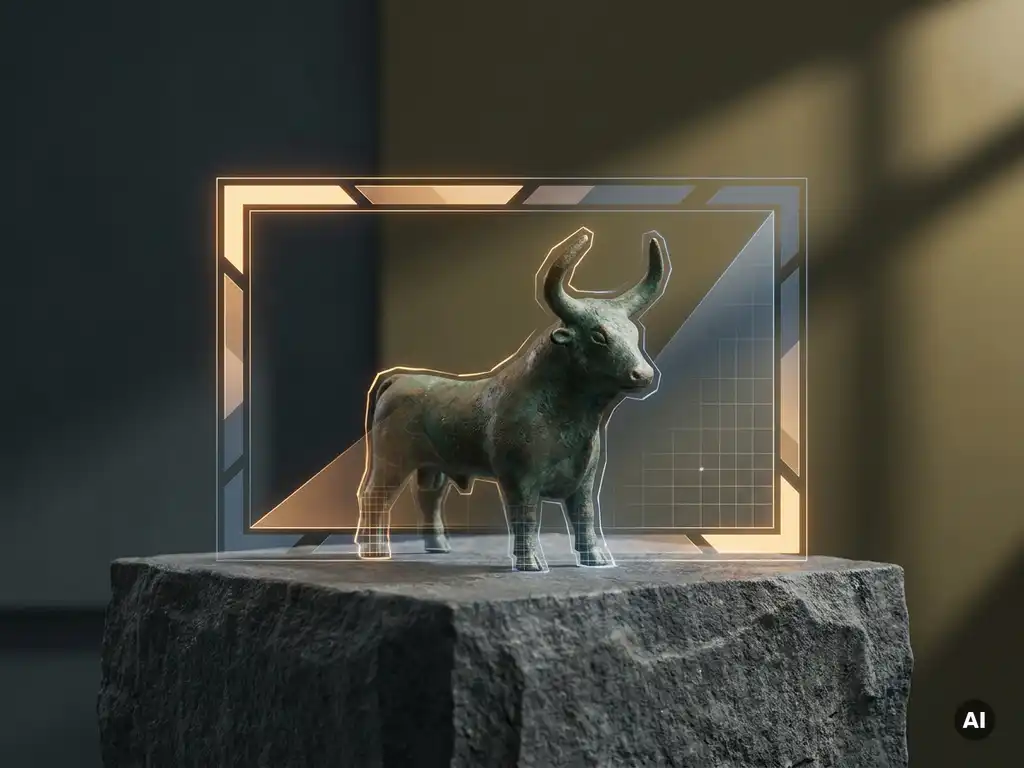
Digital cultural heritage refers to cultural materials and knowledge that exist in digital form, either born digitally or converted from physical originals. This includes digitized artworks, manuscripts, oral histories, architectural records, and intangible traditions preserved through audio, video, or 3D data. The field spans everything from scanned museum collections to immersive reconstructions of lost historical sites. The questions below unpack how digital heritage is created, preserved, and experienced, and why it matters more in 2026 than ever before.
How does cultural heritage become digital?
Cultural heritage becomes digital through a deliberate process of capturing, converting, and storing physical or intangible cultural materials in a digital format. This can happen through photography, 3D scanning, audio recording, video documentation, or photogrammetry, a technique that builds precise three-dimensional models from overlapping photographs. The result is a digital surrogate or representation that can be stored, shared, and experienced independently of the original object or place.
The process typically begins with an assessment of what needs to be preserved and why. Conservators and archivists prioritize materials based on their fragility, cultural significance, and accessibility. A crumbling medieval manuscript, for example, may be digitized using multispectral imaging to reveal text invisible to the naked eye. A traditional dance form might be captured through motion capture technology, preserving not just the visual performance but the precise mechanics of movement.
Once digitized, materials are processed, described with metadata, and stored in structured repositories. Metadata, the descriptive information attached to each digital file, is what makes heritage discoverable and usable. Without it, even the highest-resolution scan becomes a needle in a digital haystack. Organizations like the Europeana network and national digital libraries have developed shared standards to make this metadata consistent across borders and institutions.
What types of cultural heritage can be digitized?
Virtually every category of cultural heritage can be digitized, from tangible objects to intangible living traditions. The main types include material artifacts, built heritage, natural heritage, documentary heritage, and intangible cultural heritage such as language, music, ritual, and craft knowledge. Each type requires different tools and approaches, but all can be captured and preserved in digital form with the right methodology.
- Material artifacts: Paintings, sculptures, ceramics, textiles, and archaeological finds are digitized through high-resolution photography, 3D scanning, and reflectance transformation imaging.
- Built heritage: Historic buildings, ruins, and urban landscapes are documented using LiDAR scanning, drone surveys, and photogrammetry to produce accurate architectural records.
- Documentary heritage: Books, maps, manuscripts, photographs, and film are digitized through flatbed scanning, high-resolution cameras, and digital restoration processes.
- Audiovisual heritage: Music recordings, oral histories, radio broadcasts, and film archives are transferred from analog formats to digital files before the original carriers degrade beyond recovery.
- Intangible heritage: Languages, traditional knowledge, performing arts, and social practices are captured through video documentation, linguistic transcription, and community-led recording projects.
- Natural heritage: Ecosystems, geological formations, and biodiversity data are documented through environmental sensors, satellite imagery, and biological databases.
The breadth of what can be digitized reflects a growing recognition that heritage is not confined to objects behind glass. Living cultures, endangered languages, and traditional ecological knowledge are as worthy of digital preservation as any museum artifact.
What is the difference between digitization and digital preservation?
Digitization is the act of converting physical heritage into digital form, while digital preservation is the ongoing work of ensuring those digital files remain accessible and usable over time. Digitization is a one-time event; digital preservation is a continuous commitment. Without active preservation, even perfectly digitized files can become unreadable as software, hardware, and file formats evolve and eventually become obsolete.
Think of digitization as taking a photograph of a painting. Digital preservation is everything that happens afterward, storing the photograph in multiple locations, converting it to new formats as old ones expire, checking files regularly for corruption, and maintaining the metadata that explains what the image shows and where it came from.
The distinction matters enormously for institutions planning heritage projects. Many organizations have invested heavily in digitization only to discover years later that their files are stored in formats no longer supported by current software, or on physical media, like CD-ROMs or early hard drives, that have physically degraded. Digital preservation requires dedicated resources, technical expertise, and institutional commitment that extends well beyond the initial scanning project.
Leading frameworks for digital preservation, including those developed by the Library of Congress and the Digital Preservation Coalition, emphasize redundancy, format migration, and integrity checking as core practices. The goal is not just to keep files alive but to keep them meaningful, ensuring that future users can understand, trust, and use what has been preserved.
Why is digital cultural heritage at risk of being lost?
Digital cultural heritage is at risk primarily because of technological obsolescence, institutional instability, and the fragility of digital storage media. Unlike stone carvings or illuminated manuscripts that have survived centuries, digital files can become permanently inaccessible within a decade if they are not actively maintained. This phenomenon, sometimes called “a digital dark age,” is one of the most pressing concerns in the heritage sector today.
Several specific threats compound this risk:
- Format obsolescence: File formats that were standard twenty years ago may be unreadable by current software. Without regular format migration, entire archives can become locked in unusable containers.
- Hardware failure: Hard drives, servers, and storage media degrade over time. Without redundant backups stored in multiple physical locations, a single hardware failure can destroy irreplaceable collections.
- Funding gaps: Digital preservation requires sustained financial investment. When institutions face budget cuts, preservation infrastructure is often one of the first casualties.
- Lack of expertise: Many cultural institutions lack the in-house technical expertise to manage long-term digital preservation effectively, creating dependency on external providers whose continuity cannot be guaranteed.
- Born-digital content: An increasing proportion of contemporary culture exists only in digital form, social media posts, digital artworks, websites, and online archives, with no physical original to fall back on if the digital version is lost.
- Geopolitical and climate risk: Server infrastructure concentrated in specific regions is vulnerable to conflict, natural disaster, and the growing physical risks posed by climate change.
The urgency is real. UNESCO has repeatedly highlighted the vulnerability of digital heritage, and the scale of what has already been lost, early websites, video game history, digital artworks from the 1990s and early 2000s, serves as a stark reminder that digital does not mean permanent.
How are museums and institutions using digital heritage today?
Museums and cultural institutions are using digital heritage in 2026 to expand access, deepen engagement, and future-proof their collections. Applications range from online collection databases and virtual tours to augmented reality exhibitions and AI-powered visitor guides. The most forward-thinking institutions are moving beyond simple digitization to create genuinely interactive experiences that bring heritage to life in new ways.
Expanding access beyond physical walls
One of the most significant shifts is the move toward open-access digital collections. Major institutions have made millions of high-resolution images freely available for download and reuse, enabling researchers, educators, and artists around the world to engage with materials they could never visit in person. This democratization of access has fundamentally changed who can participate in cultural heritage.
Enhancing the physical visitor experience
Inside galleries and exhibition spaces, digital tools are being used to add interpretive layers to physical objects. Augmented reality applications allow visitors to point a device at an artifact and see it reconstructed in its original context, animated, or explored from angles impossible with the physical object alone. Interactive screens, spatial audio, and digital reconstructions of lost or damaged works are becoming standard features in leading institutions worldwide.
We work directly with museums and cultural organizations to design these kinds of layered experiences, ones where technology deepens rather than distracts from the story the collection is trying to tell. Explore some of our heritage and cultural projects to see how this approach takes shape in practice.
What is the difference between digital cultural heritage and immersive heritage experiences?
Digital cultural heritage is the preserved digital record of cultural materials, the scans, files, databases, and archives. Immersive heritage experiences are a way of presenting that heritage, transforming digital records into environments people can step into, explore, and feel. The first is about preservation and access; the second is about engagement and emotional resonance. Both are valuable, and the most powerful heritage projects connect them deliberately.
A digitized ancient site, for example, exists as a collection of 3D scan data, photographs, and historical records. An immersive experience built from that data might allow a visitor to walk through the site as it appeared two thousand years ago, hear the sounds of daily life, and interact with reconstructed objects, all within a physical installation or virtual reality environment. The underlying digital heritage is the foundation; the immersive experience is the bridge between that data and human meaning.
This distinction matters for institutions making investment decisions. Digitization and preservation are non-negotiable responsibilities. Immersive experiences are a creative and strategic choice about how to activate that preserved heritage for audiences. The two are complementary, not competing, and the most effective institutions treat them as different phases of the same long-term commitment to cultural relevance.
At Rooftop Immersive, we specialize in the space where preserved digital heritage becomes something people can genuinely inhabit, designing sensory, spatial experiences that honor the integrity of the source material while making it emotionally accessible to new audiences.
Who is responsible for protecting digital cultural heritage?
Responsibility for protecting digital cultural heritage is shared across multiple levels, from international bodies and national governments to individual institutions, communities, and technology companies. No single actor can do it alone, and the most resilient preservation systems are built on distributed responsibility with clear coordination between layers.
At the international level, UNESCO’s Charter on the Preservation of the Digital Heritage establishes a framework for how member states should approach the protection of digital cultural materials. The Internet Archive, Europeana, and similar organizations provide shared infrastructure that extends beyond what any single institution could sustain independently.
National governments and memory institutions, libraries, archives, and museums, carry primary responsibility within their own jurisdictions. Many countries have legal deposit frameworks requiring digital publications to be submitted to national libraries, though enforcement and scope vary significantly. Cultural institutions bear direct responsibility for the collections in their care, including the ongoing investment in preservation infrastructure.
Communities themselves play a growing role, particularly for intangible and indigenous heritage. Community-led digitization projects, where knowledge holders direct what is recorded, how it is stored, and who can access it, represent a more ethical and sustainable model than top-down institutional approaches. Technology companies, cloud providers, software developers, platform operators, also bear meaningful responsibility, given how much digital heritage depends on their infrastructure and the longevity of their file format support.
What does the future of digital cultural heritage look like?
The future of digital cultural heritage is defined by greater interactivity, broader access, and deeper integration between physical and digital worlds. Emerging technologies, including spatial computing, AI-driven interpretation, and real-time 3D rendering, are making it possible to experience heritage in ways that were purely theoretical a decade ago. The challenge ahead is ensuring that this technological progress serves preservation and equity, not just spectacle.
AI is already transforming how heritage is processed and interpreted. Machine learning models can transcribe handwritten manuscripts at scale, identify objects across vast image collections, translate historical texts, and generate contextual interpretations tailored to different audiences. This dramatically reduces the time and cost of making collections discoverable and meaningful.
Spatial computing platforms are enabling new forms of heritage experience that blend the physical and digital seamlessly. Visitors to a historic site can overlay reconstructed elements onto what they see in front of them, experiencing past and present simultaneously. Communities separated from their physical heritage by displacement or distance can reconnect with it through immersive digital environments that feel genuinely present rather than representational.
The ethical dimensions of digital heritage will also grow in importance. Questions about who owns digitized heritage, who controls access, and whose stories are centered in digital reconstructions are becoming central to how institutions and communities approach these projects. The future belongs to those who treat digital heritage not as a technical problem but as a cultural responsibility, one that demands both technological ambition and human humility.
If you are working to bring your institution’s heritage to life in ways that genuinely move people, we would love to explore what that could look like together. Contact us to start the conversation.
Gerelateerde artikelen
- What are some examples of digital cultural heritage?
- Is XR training expensive?
- What are five applications of virtual reality?
- How to create a brand activation?
- How to attract people in an exhibition?
- What is spatial design in immersive experiences?
- What technologies are used in immersive experiences?
- How do immersive experiences help brands connect with Gen Z?
- What are the technical requirements for immersive installations?