
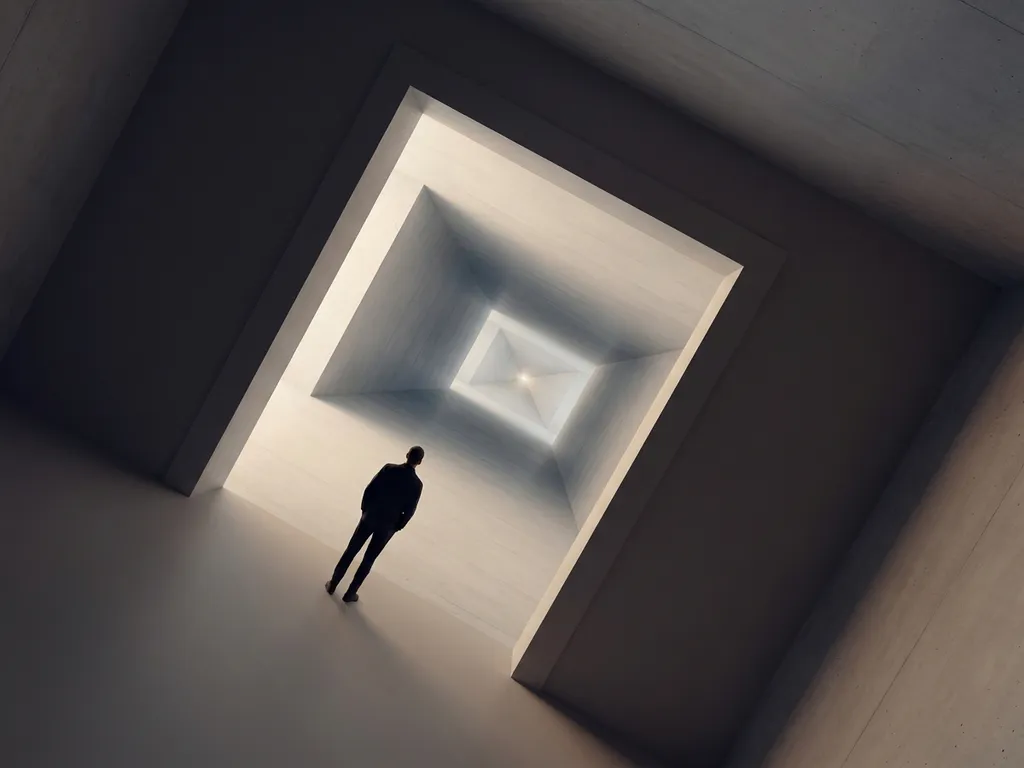
Spatial design in immersive experiences is the intentional shaping of physical and digital space to guide how people move, feel, and connect with an environment. Unlike conventional design disciplines, it treats the entire sensory environment, light, sound, texture, temperature, and scale, as a unified medium for storytelling. The questions below unpack how spatial design works, why it matters, and where it creates the most powerful results.
How does spatial design differ from traditional interior or graphic design?
Spatial design in immersive experiences differs from traditional interior or graphic design by treating the entire environment as a narrative tool rather than a functional or aesthetic surface. Where interior design arranges space for comfort and usability, and graphic design communicates through two-dimensional visuals, spatial design orchestrates every element of an environment to produce a specific emotional or cognitive response in the person moving through it.
Traditional interior design asks: how do people live or work comfortably in this space? Graphic design asks: how do we communicate a message visually? Spatial design in an immersive context asks something fundamentally different: how does this space make someone feel, and what does it make them do?
This shift in intent changes everything. A spatially designed immersive environment is built around a visitor’s journey, not around a floor plan or a visual hierarchy. Every transition, every threshold, every change in light or sound is a deliberate decision that shapes perception. The space itself becomes the medium, not just the container.
This is why immersive experiences feel so distinctly different from even the most beautifully designed buildings or exhibitions. When spatial design is working at its best, visitors do not notice the design at all. They simply feel transported, curious, moved, or changed, without being able to explain exactly why.
What role do the senses play in spatial design?
The senses are the primary instruments of spatial design. An immersive environment communicates not through text or screens alone, but through everything a visitor sees, hears, smells, touches, and physically feels. Each sensory layer adds depth to the experience and increases the likelihood that the encounter will be remembered long after it ends.
Vision remains the dominant channel, but spatial designers working in immersive contexts deliberately engage the full sensory spectrum. Consider what each layer contributes:
- Sound sets emotional tone and pace. Spatial audio can make a room feel vast or intimate, threatening or safe, before a visitor has consciously registered anything.
- Scent is the most direct route to memory and emotion. The right scent can transport someone to a forest, a childhood kitchen, or a historical moment in seconds.
- Touch and texture anchor visitors in physical reality, grounding digital or abstract content in something tangible and real.
- Temperature and airflow signal transitions and reinforce narrative. Moving from a warm, enclosed space into a cooler, open one communicates change without a single word.
- Proprioception, the sense of one’s own body in space, is engaged through scale, floor surface, and spatial layout, shaping how confident or vulnerable a visitor feels.
We design with all of these dimensions in mind, not just the visual and auditory ones. This multisensory approach is what separates a genuinely immersive experience from a sophisticated display. When multiple senses confirm the same story, the brain accepts it as real, and that acceptance is what creates lasting emotional impact.
How does spatial design shape visitor behavior and emotional response?
Spatial design shapes visitor behavior and emotional response by using the physical and sensory environment to guide attention, movement, and feeling without explicit instruction. The layout of a space, the direction of light, the height of ceilings, and the rhythm of transitions all influence what visitors notice, where they go, and how they feel at each stage of the experience.
This influence operates largely below conscious awareness. Research in environmental psychology consistently shows that people respond to spatial cues automatically. A narrow corridor creates anticipation. A sudden opening into a large, lit space produces awe. A low ceiling with warm tones encourages intimacy and reflection. These are not accidental effects. In immersive experience design, they are engineered outcomes.
Emotional pacing is one of the most powerful tools available to a spatial designer. Just as a film builds tension before releasing it, an immersive space can move a visitor through a carefully sequenced emotional arc. Designers control the rhythm of revelation, deciding what a visitor discovers first, what is held back, and what lands as the emotional peak of the journey.
Behavior follows emotion. Visitors who feel curious explore more deeply. Visitors who feel safe engage more openly. Visitors who feel awe are more likely to reflect, share, and remember. For organizations working in education, social impact, or brand engagement, this connection between spatial design and behavioral response is not a creative luxury. It is the core mechanism through which the experience achieves its purpose.
What is the relationship between spatial design and digital technology in immersive experiences?
In immersive experiences, spatial design and digital technology are not separate disciplines. They are interdependent layers of a single environment. Digital technology, augmented reality, projection mapping, interactive screens, spatial audio, and real-time sensors, extends what physical space alone can achieve, while spatial design ensures that technology serves the human experience rather than overwhelming it.
The most common failure in technology-driven experiences is the absence of spatial thinking. When digital elements are layered onto a space without consideration for how visitors move, perceive, and feel, the result is disorienting rather than immersive. The technology becomes the attraction rather than the medium, and the emotional depth of the experience collapses into spectacle.
When spatial design and digital technology are developed together from the beginning, the results are qualitatively different. A projection does not just fill a wall. It responds to where visitors stand and what they have already experienced. An AR layer does not just overlay information. It reveals something that changes the meaning of the physical object in front of you. A sensor-triggered soundscape does not just play audio. It makes a visitor feel that the space itself is alive and responsive.
This integration is at the heart of what we build. From concept to completed installation, every digital element is designed in dialogue with the physical environment, ensuring that technology deepens the spatial story rather than interrupting it. Extended reality tools like AR and VR are most powerful when the space around them has been designed to prepare visitors emotionally and perceptually for what they are about to encounter.
Which industries benefit most from spatial design in immersive experiences?
The industries that benefit most from spatial design in immersive experiences are those where understanding, empathy, engagement, or memory are critical outcomes. This includes cultural institutions, education, public health and NGO campaigns, brand marketing, and event production, any context where information alone is insufficient and felt experience is required.
Cultural institutions and museums
Museums and galleries face a structural challenge: static objects in static spaces struggle to compete for the attention of audiences raised on interactive media. Spatial design gives cultural institutions the tools to make heritage feel alive. A spatially designed exhibition does not just display artifacts. It creates the conditions for visitors to connect emotionally with what those objects represent. Immersive environments can transport visitors to the time and place of a historical event, make abstract concepts tangible, and draw younger audiences into collections they might otherwise walk past.
Education and social impact organizations
For educators and NGOs, spatial design solves a problem that no amount of written or visual content can fully address: the gap between knowing something intellectually and feeling it viscerally. Complex social issues, scientific concepts, and historical events become genuinely comprehensible when experienced spatially. Visitors do not just learn about a refugee’s journey or a climate scenario. They move through it, and that movement creates a quality of understanding that persists far longer than information delivered through traditional media.
Brand and experiential marketing
In a saturated media environment, brands need experiences that generate genuine emotional memory rather than passive exposure. A spatially designed brand activation gives visitors something to inhabit rather than observe. The experience becomes the message, and the physical memory of being inside that space creates an association with the brand that no screen advertisement can replicate.
What makes a spatially designed immersive experience memorable?
A spatially designed immersive experience becomes memorable when it produces a genuine emotional state that the visitor did not expect to feel. Memorability is not created by technical complexity or visual spectacle alone. It emerges when every element of the environment, space, light, sound, scent, narrative, and interaction, converges to produce a moment of authentic human response.
Several qualities consistently distinguish memorable immersive experiences from impressive ones:
- Emotional specificity. The experience is designed to produce a particular feeling, not just a general sense of wonder. Visitors leave knowing what they felt and why it mattered.
- Sensory coherence. Every sensory layer reinforces the same narrative. Nothing contradicts or distracts. The environment feels like a single, intentional world.
- Personal relevance. The experience connects to something the visitor already cares about or recognizes. AI-driven personalization can deepen this by adapting content to language, pace, or learning style in real time.
- A moment of surprise or revelation. The most memorable experiences contain at least one moment where the visitor’s perception shifts. Something they thought they understood is reframed, and that reframing stays with them.
- Physical embodiment. The visitor’s body was part of the experience. They moved through it, touched something, heard it from inside. Embodied memory is more durable than observed memory.
Memorability is ultimately the measure of whether a spatially designed experience has done its job. An experience that visitors describe vividly weeks later, that changes how they think about a subject or feel about a brand, has succeeded. One that fades within hours, however technically impressive, has not. If you are exploring what a spatially designed immersive experience could achieve for your organization, we would welcome the conversation. Contact us to start shaping something that genuinely stays with people.
Gerelateerde artikelen
- Does projection mapping require a custom animation?
- What are examples of immersive art?
- What is immersive dome projection?
- Can installation art be interactive?
- What are examples of immersive experiences?
- What are the challenges of spatial computing?
- What is a 360 degree video?
- What are some examples of immersive experiences?
- What is immersive and interactive media?