
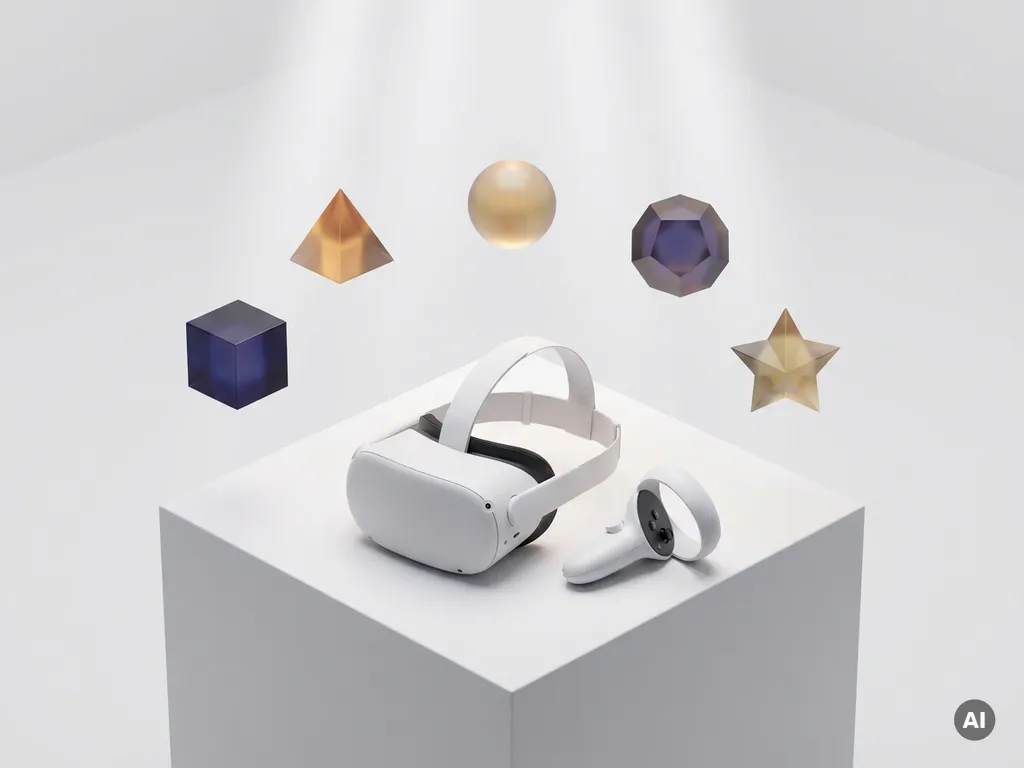
Virtual reality is used across five major application areas: education and training, healthcare and therapy, cultural experiences, marketing and brand activations, and social impact campaigns. Each application leverages VR’s ability to place people inside a simulated environment, making abstract concepts tangible and emotional responses genuine. The sections below explore each application in depth, alongside practical guidance on when and how to use VR effectively.
How is virtual reality being used across industries today?
Virtual reality is being used across industries to replace passive information delivery with active, embodied experience. From surgical training in hospitals to product launches in retail, organizations are adopting VR applications because they create a level of presence and emotional engagement that screens, slides, and printed materials simply cannot match. The technology has matured well beyond novelty, and in 2026 it functions as a reliable production tool for learning, storytelling, and audience engagement at scale.
The breadth of virtual reality uses spans both commercial and purpose-driven sectors. Brands use VR to create memorable activations at events and trade shows. Schools and universities deploy it to teach subjects that are difficult or impossible to experience in a classroom. Hospitals and therapy centers apply it to pain management, phobia treatment, and surgical simulation. Museums bring historical periods back to life. NGOs use it to build empathy around humanitarian crises. In each case, the underlying logic is the same: when people experience something rather than simply hear about it, retention, empathy, and motivation all increase significantly.
The range of formats available today also expands what counts as a VR application. Passive, cinematic 360-degree films sit at one end of the spectrum. Fully interactive simulations with real-time branching decisions sit at the other. Between those poles are guided group experiences, location-based installations, and AI-driven personalized journeys. Understanding which format fits which goal is the first step in deploying VR effectively.
How does virtual reality improve learning and training outcomes?
Virtual reality improves learning and training outcomes by allowing learners to practice skills, explore environments, and make decisions in a safe, repeatable simulation. Instead of reading about a procedure or watching a demonstration, learners perform the action themselves, which activates different cognitive pathways and accelerates both retention and skill transfer. Research across medical, industrial, and educational settings consistently supports experiential learning as more effective than passive instruction.
Several mechanisms explain why VR applications in education outperform traditional methods for specific learning goals:
- Safe failure: Learners can make mistakes without real-world consequences, encouraging experimentation and deeper engagement with the material.
- Contextual learning: Placing a concept inside a realistic environment gives abstract knowledge a physical frame of reference that makes it easier to recall and apply.
- Emotional encoding: Experiences that trigger genuine emotion are remembered longer. VR’s sense of presence reliably produces emotional responses that text and video cannot.
- Scalable consistency: Every learner receives the same scenario, eliminating the variability that comes with human instructors or limited physical resources.
In practice, virtual reality examples in education include medical students practicing surgical procedures on virtual patients, engineering trainees navigating hazardous industrial environments, and school pupils walking through historical events or ecosystems that no longer exist. For organizations like schools, universities, and corporate L&D teams, the investment in immersive education pays off most clearly when the subject matter is high-stakes, emotionally complex, or physically inaccessible.
What role does VR play in healthcare and therapy?
In healthcare and therapy, VR plays a well-established role in pain management, phobia treatment, rehabilitation, and clinical training. By immersing patients or trainees in a controlled virtual environment, clinicians can deliver therapeutic interventions, simulate medical procedures, and support recovery in ways that complement or in some cases reduce reliance on traditional methods.
Clinical and therapeutic applications
On the therapeutic side, VR is used to treat conditions including post-traumatic stress disorder, specific phobias, anxiety disorders, and chronic pain. Exposure therapy delivered through VR allows clinicians to introduce feared stimuli in a controlled, graduated way without requiring access to real-world settings. Burn patients, for example, have used VR environments during wound care to redirect attention and reduce perceived pain levels. Stroke rehabilitation programs use interactive VR exercises to support motor recovery by making repetitive movement engaging and measurable.
Medical training and simulation
For training, VR enables surgeons, nurses, and paramedics to rehearse complex procedures on virtual anatomy before performing them on real patients. This reduces the cognitive load of first-time procedures and builds procedural confidence in a risk-free environment. Simulation-based training is particularly valuable for rare or high-pressure scenarios that trainees may not encounter frequently during conventional placements. As hardware becomes lighter and more affordable, adoption across hospital systems and medical schools continues to accelerate through 2026.
How are museums and cultural institutions using virtual reality?
Museums and cultural institutions are using virtual reality to bring inaccessible, fragile, or lost heritage to life, attract younger and more diverse audiences, and deepen the emotional impact of their collections. Rather than replacing physical artifacts, VR functions as an interpretive layer that gives visitors context, perspective, and presence that a label or audio guide cannot provide.
Concrete virtual reality examples in cultural settings include reconstructions of ancient cities that visitors can walk through in full scale, immersive re-enactments of historical events from multiple perspectives, and digital exhibitions that allow global audiences to experience collections without traveling. For institutions facing declining visitor numbers or an aging demographic, VR offers a credible path to relevance without compromising curatorial integrity.
The most effective museum VR applications share a common principle: technology serves the story, not the other way around. When a virtual environment is built around a genuine curatorial question or narrative, it deepens engagement rather than distracting from it. We design VR experiences for cultural institutions with that principle at the center, ensuring that the immersive layer amplifies the meaning of the collection rather than competing with it. Our project portfolio includes work across cultural and educational contexts where this balance has been central to the brief.
What is virtual reality used for in marketing and brand experiences?
In marketing, virtual reality is used to create brand activations that move beyond passive advertising and place audiences inside a brand’s story. VR applications in marketing include product launch experiences, trade show installations, experiential campaigns, and virtual showrooms that allow customers to interact with products or environments before committing to a purchase decision.
The core advantage of VR in brand experience is emotional ownership. When a person steps inside a brand’s world rather than watching it on a screen, the memory formed is qualitatively different. The experience becomes something that happened to them, not something they observed. This distinction matters because emotional memories drive brand preference and word-of-mouth advocacy in ways that impression-based metrics cannot fully capture.
Practical VR applications for marketing teams include:
- Virtual product demonstrations: Allowing customers to configure, explore, and interact with products in a virtual environment before physical availability.
- Event activations: Creating shareable, high-impact moments at trade shows, festivals, or retail locations that generate organic reach.
- Brand storytelling: Placing audiences inside a brand’s origin story, manufacturing process, or values-driven narrative in a way that builds genuine connection.
- VR cinema for groups: Synchronized group experiences that create shared emotional moments, ideal for internal brand events or large-scale activations.
How does VR support social impact and NGO campaigns?
VR supports social impact campaigns by generating genuine empathy at a scale that traditional media struggles to achieve. When audiences experience a humanitarian crisis, environmental issue, or social injustice from the inside rather than observing it from a distance, their emotional response is measurably deeper and their willingness to act is significantly higher. This makes VR one of the most powerful tools available to NGOs and public sector organizations working on behavior change and awareness.
The mechanism is perspective-taking. VR places the viewer in another person’s body, environment, or situation. That shift in perspective produces empathy that is felt rather than intellectually acknowledged, which is the foundation of lasting attitude and behavior change. Organizations like UNICEF have used VR to bring donors and policymakers into the lived reality of the communities they serve, creating a sense of urgency and connection that statistics and reports cannot replicate.
For NGOs working with complex or sensitive subjects, VR also offers control over the narrative environment. Designers can shape what the audience sees, hears, and feels, ensuring that the experience is ethically constructed and that vulnerable communities are represented with dignity. Effective social impact VR is built collaboratively with the communities it depicts, not simply about them.
What’s the difference between passive and interactive VR experiences?
Passive VR experiences are pre-recorded, cinematic environments where the viewer observes but does not influence the narrative. Interactive VR experiences allow the participant to make decisions, manipulate objects, move through environments freely, and shape the outcome of the experience. The choice between the two depends entirely on the learning or engagement goal, not on which format is more technically advanced.
When passive VR works best
Passive, 360-degree VR is ideal when the goal is emotional immersion in a specific narrative, and when consistency of message matters. Documentary-style VR, brand storytelling films, and empathy-building experiences for NGO campaigns often benefit from a directed, cinematic approach. The viewer’s attention is guided, the emotional arc is controlled, and the production quality can match broadcast standards. Passive VR is also easier to scale and deploy across multiple venues without requiring complex interaction infrastructure.
When interactive VR adds value
Interactive VR is the stronger choice when the goal involves skill acquisition, decision-making practice, or personalized exploration. Training simulations, educational environments, and entertainment experiences all benefit from interactivity because the participant’s agency increases both engagement and retention. The trade-off is higher production complexity and the need for more robust hardware and facilitation. For organizations with clear learning outcomes or behavior-change objectives, that investment is well justified.
When should organizations choose VR over other immersive technologies?
Organizations should choose VR over other immersive technologies when full environmental presence is essential to the goal, when the subject matter cannot be experienced safely or practically in the real world, or when the emotional depth of the experience needs to exceed what augmented reality or interactive screens can deliver. VR is not always the right tool, but it is the right tool when nothing else can substitute for being there.
Augmented reality, mixed reality, and interactive installations each have distinct strengths. AR overlays digital content onto the real world, making it ideal for location-based activations, product visualization, and outdoor campaigns where physical context matters. Mixed reality, particularly on platforms like Apple Vision Pro, blends virtual and physical elements in real time, suited to next-generation enterprise and design applications. Interactive screens and 4D installations serve large audiences in high-traffic environments without requiring individual headsets.
VR becomes the clearest choice in these scenarios:
- The subject is physically inaccessible, dangerous, or no longer exists
- Deep emotional immersion is the primary objective
- Learners need to practice a complex skill in a repeatable, safe environment
- The experience requires complete removal from the participant’s current surroundings
- A group needs a shared, synchronized emotional moment
At Rooftop Immersive, we guide organizations through this decision as part of every project brief. The right technology is always the one that serves the story and the audience most effectively, and sometimes that means recommending a different format entirely. If you are exploring what immersive technology could do for your project, we invite you to contact us and start that conversation.
Gerelateerde artikelen
- What is XR vs VR vs AR?
- What part of the brain is responsible for sensory memory?
- What is the immersive learning method?
- Can AI make AR?
- What are the types of immersive experience?
- What are the types of learning experiences?
- Can you make money off 3D modeling?
- What are some examples of virtual reality?
- What is immersive learning?