
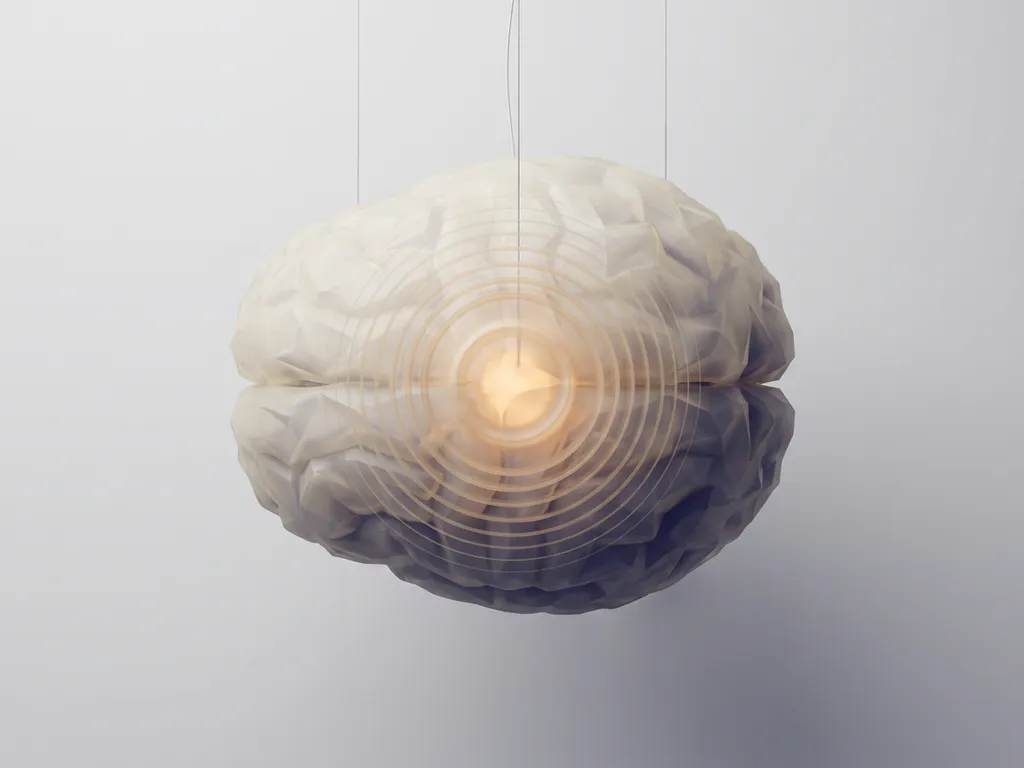
The primary brain regions responsible for sensory memory are the sensory cortices, specialized areas of the cerebral cortex that correspond to each sense. Visual sensory memory (iconic memory) is held in the visual cortex, auditory sensory memory (echoic memory) in the auditory cortex, and so on. These regions retain raw sensory impressions for a fraction of a second before the brain decides what to pass forward for further processing.
Sensory memory is the shortest-lived form of memory, lasting anywhere from a few hundred milliseconds to roughly two seconds depending on the sensory modality. It operates automatically and largely below conscious awareness, acting as a buffer between the overwhelming volume of incoming stimuli and the brain’s limited capacity for focused attention.
The sections below explore how each sensory brain region works, why the processing happens so fast, and what this means for anyone designing experiences that need to genuinely stick.
Where in the brain does sensory memory actually form?
Sensory memory forms in the primary sensory cortices, the specialized cortical regions that first receive and briefly retain raw input from each sense. Visual information is held in the occipital lobe’s visual cortex, sound in the auditory cortex of the temporal lobe, touch in the somatosensory cortex of the parietal lobe, and smell in the olfactory bulb and piriform cortex. Each modality has its own dedicated holding area.
What makes this remarkable is that sensory memory does not require conscious engagement to form. The brain registers and briefly stores sensory impressions automatically, even when attention is directed elsewhere. This is why you can reconstruct the last few words someone said even if you were not actively listening: the auditory cortex held the sound briefly enough for attention to catch up.
The specificity of these regions matters enormously for experience design. When a designer adds a scent to an environment, a texture to an object, or a spatial sound to a room, each of these triggers a distinct cortical region. The more modalities engaged simultaneously, the more of the brain is activated, and the richer the sensory memory trace left behind.
How does the brain process sensory memory so quickly?
Sensory memory processes so quickly because it bypasses higher cognitive functions entirely. The sensory cortices operate as pre-attentive processors: they capture and hold raw perceptual data before the prefrontal cortex or hippocampus are even involved. This pre-attentive processing happens in milliseconds, driven by dedicated neural pathways that prioritize speed over depth.
The brain evolved this rapid processing as a survival mechanism. An organism that had to consciously deliberate before registering a sudden movement or a sharp sound would not survive long. Sensory memory is the brain’s way of keeping a rolling buffer of the immediate environment, constantly refreshed, so that attention can be directed to whatever matters most.
The speed also explains why multisensory environments feel so immediately immersive. When sight, sound, smell, and touch are all activated together, the brain’s sensory cortices fire in parallel rather than in sequence. There is no lag, no deliberation: the experience simply arrives, whole and immediate. This is one of the reasons well-designed immersive spaces feel qualitatively different from watching a screen: they engage the brain’s fastest processing systems simultaneously.
What are the different types of sensory memory in the brain?
The main types of sensory memory correspond to the five primary senses, each stored in its own cortical region. The three most studied are iconic memory (visual), echoic memory (auditory), and haptic memory (touch). Olfactory and gustatory sensory memory also exist, and the olfactory system is particularly notable for its unusually direct pathway to emotional and long-term memory structures.
Iconic memory: the visual buffer
Iconic memory is the brief visual impression that persists after an image disappears, lasting roughly 200 to 500 milliseconds. Research by cognitive psychologist George Sperling in the 1960s established that humans can hold a large amount of visual information in this buffer, but it decays almost instantly unless attention selects it for transfer to working memory. This is why a quick glance at a complex scene can leave a fleeting but detailed impression.
Echoic memory: the auditory trace
Echoic memory lasts significantly longer than iconic memory, typically three to four seconds. This extended duration makes sense evolutionarily: language and environmental sounds unfold over time, so the brain needs a longer auditory buffer to make sense of sequences. The auditory cortex holds this trace, allowing the brain to process the full shape of a spoken word or a musical phrase before deciding whether to attend to it.
Haptic and olfactory memory
Haptic (touch) sensory memory is processed in the somatosensory cortex and is particularly relevant in physical environments where texture, temperature, and resistance are present. Olfactory sensory memory is unique because the olfactory bulb connects directly to the amygdala and hippocampus, the brain’s emotional and long-term memory centers, without the relay through the thalamus that other senses require. This direct pathway is why a familiar scent can trigger vivid, emotionally charged memories with a speed and intensity that visual or auditory cues rarely match.
What’s the difference between sensory memory and working memory in the brain?
Sensory memory and working memory are distinct stages in the brain’s memory hierarchy. Sensory memory is passive, automatic, and extremely brief: it holds raw perceptual data in the sensory cortices for milliseconds to a few seconds without any conscious effort. Working memory is active, capacity-limited, and deliberate: it is managed primarily by the prefrontal cortex and holds information in mind for active use, typically for up to 30 seconds with conscious maintenance.
The key distinction is attention. Sensory memory exists whether or not you are paying attention. Working memory only receives information that attention selects from the sensory buffer and passes forward. Most of what enters sensory memory never reaches working memory at all: it simply decays and disappears.
This distinction has direct implications for how experiences are designed. A visually cluttered environment may overwhelm the iconic memory buffer, making it harder for any single element to be selected by attention and transferred to working memory. By contrast, a carefully curated multisensory environment, one where each sensory element is intentional and distinct, makes it easier for the brain to select and retain what matters. Designing for attention is as important as designing for sensation.
Does the hippocampus play any role in sensory memory?
The hippocampus does not store sensory memory itself, but it plays a critical role in converting sensory impressions into long-term memories. Sensory memory forms and decays in the sensory cortices without hippocampal involvement. However, when a sensory experience is attended to, emotionally significant, or repeated, the hippocampus becomes active, binding together the sensory details, context, and emotional tone into a consolidated long-term memory trace.
This process, known as memory consolidation, is why the hippocampus is often described as the brain’s indexer rather than its storage unit. It does not hold the memory itself; it links the distributed cortical representations, the sight, the sound, the smell, the feeling, into a coherent, retrievable episode.
For immersive experience designers, this distinction is practically important. Sensory richness alone does not guarantee lasting memory. The hippocampus needs something to work with: emotional salience, novelty, personal relevance, or repetition. An experience that engages multiple senses and carries emotional or narrative weight is far more likely to be consolidated into long-term memory than one that is merely visually spectacular.
How do sensory memory brain regions relate to immersive learning experiences?
Immersive learning experiences work by deliberately activating multiple sensory memory regions simultaneously, increasing the likelihood that information is attended to, emotionally encoded, and consolidated into long-term memory. When learners can see, hear, and physically interact with content, and when that content is placed in a meaningful spatial and narrative context, the brain engages its full sensory architecture rather than a single channel.
Traditional classroom or screen-based learning primarily activates iconic and echoic memory. The learner sees and hears content, but the experience is largely passive. The sensory buffer fills, attention is required to sustain engagement, and without emotional resonance or active participation, much of the information decays before reaching long-term storage. This is the neurological basis of the forgetting curve: information not meaningfully encoded fades rapidly.
Immersive environments change this equation in several ways. Physical presence activates haptic and spatial memory systems. Scent, where used deliberately, engages the olfactory pathway’s direct connection to emotional memory. Narrative and social context provide the emotional salience the hippocampus needs to consolidate what is being experienced. And interactivity, the ability to make choices, explore, and act within an environment, transforms passive reception into active encoding.
At Rooftop Immersive, we design with precisely this neuroscience in mind. Whether we are building a VR training simulation for a professional audience, an AR-layered museum exhibition, or a full 360-degree dome experience for thousands of visitors, our approach starts with the question of which sensory systems need to be activated and why. Technology is the vehicle; the brain is the destination. When both are understood, the result is not just a memorable experience: it is one that genuinely changes how people think, feel, and act.
If you are exploring how multisensory design could strengthen your next educational program, exhibition, or brand activation, we would be glad to think through it with you. Contact us to start the conversation.
Gerelateerde artikelen
- Can you give me some examples of digital museums?
- What are the three types of VR?
- How to create a brand activation?
- Does AR VR require coding?
- What is a 360 degree video?
- What are the psychological effects of immersion?
- How much does it cost to create a VR experience?
- What is an example of an immersive experience?
- What are the ROI benefits of experiential marketing campaigns?