
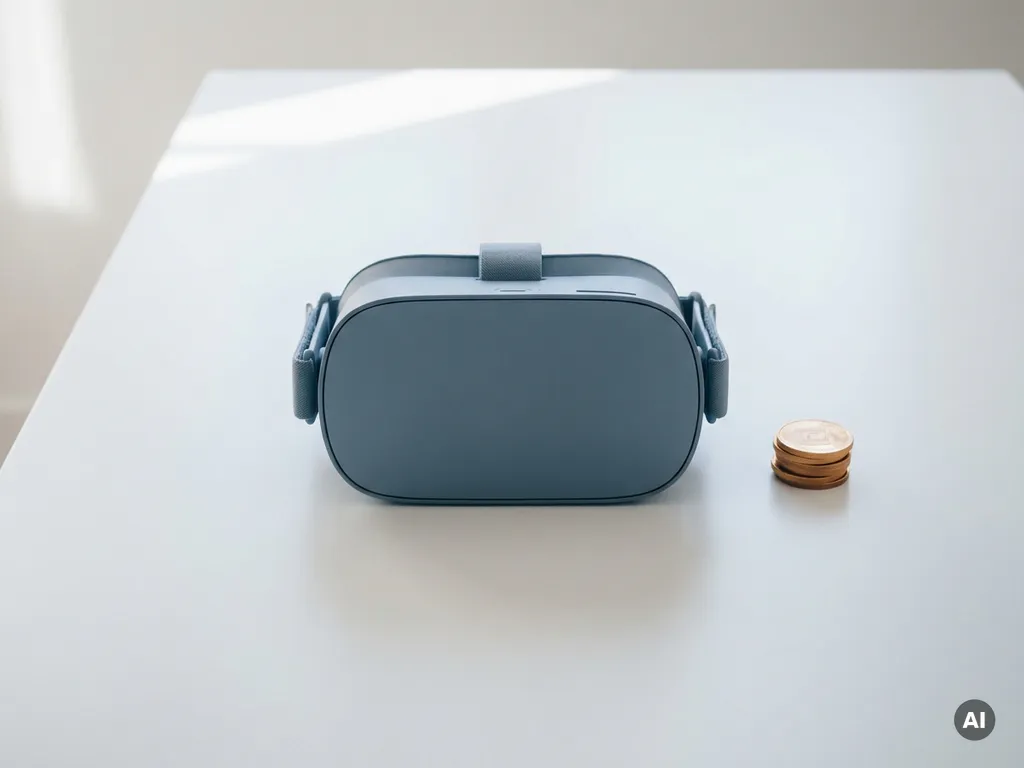
XR training is not inherently expensive, but the cost varies widely depending on the complexity, scale, and format of the experience. Entry-level solutions can be surprisingly accessible, while fully custom, multi-sensory immersive programmes represent a more significant investment. The key is understanding what drives the price and whether the return justifies it. The questions below unpack every dimension of XR training cost, from initial build to long-term ROI.
What actually drives the cost of XR training?
The cost of XR training is driven primarily by the level of interactivity, the complexity of the content, the hardware required, and whether the experience is built from scratch or adapted from an existing framework. These four variables shape the budget more than any single line item, and understanding them helps organisations make informed decisions from the outset.
Interactivity is one of the biggest cost levers. A passive 360-degree video experience, where the learner observes rather than participates, requires far less development time than a fully interactive simulation where decisions trigger branching outcomes. The more the learner can do, touch, choose, or influence, the more complex the underlying logic and the higher the development cost.
Content complexity follows closely behind. Training that involves recreating a highly specialised environment, such as a surgical theatre, an industrial facility, or a historically accurate cultural setting, demands detailed 3D modelling, rigorous accuracy checks, and often expert consultation during production. Generic environments cost less to build than bespoke, technically precise ones.
Hardware is another factor that is frequently underestimated. Standalone VR headsets, AR devices, mixed reality platforms, and the infrastructure to manage and update content all carry both upfront and ongoing costs. The number of simultaneous users, the physical locations involved, and whether hardware is purchased or leased all affect the total budget.
Finally, ongoing maintenance, content updates, and learner management systems add to the lifetime cost of any XR training programme. A well-planned immersive training solution accounts for these from the beginning rather than treating them as afterthoughts.
How does XR training cost compare to traditional training?
XR training typically has a higher initial development cost than traditional training, but a lower cost per learner over time. Once an immersive experience is built, it can be deployed repeatedly across large groups without proportional increases in cost, whereas traditional training often scales linearly with the number of trainers, venues, and hours required.
Consider what traditional training actually costs in practice. Instructor fees, travel, venue hire, printed materials, lost productivity during off-site sessions, and the logistical overhead of coordinating large cohorts all accumulate quickly. For organisations running recurring training programmes, such as onboarding, compliance, or safety inductions, these costs repeat every cycle.
XR training shifts the cost structure. The investment is front-loaded into design and development, but the per-session cost drops significantly once the experience is deployed. A well-built VR training module can be used thousands of times without meaningful degradation in quality or consistency, something no human-led session can guarantee.
There is also a quality consistency argument. Traditional training quality varies with the trainer, the room, the time of day, and the energy of the group. Immersive training delivers the same experience every time, which matters enormously in contexts where standardisation is critical, such as safety procedures, medical protocols, or customer service behaviours.
What is the ROI of XR training?
The ROI of XR training comes from a combination of reduced training costs at scale, improved knowledge retention, faster skill acquisition, and measurable reductions in errors, accidents, or retraining cycles. The financial return is strongest for organisations with large, recurring training needs or high-stakes learning outcomes where mistakes carry significant consequences.
Retention is one of the most compelling arguments for immersive learning. Research in cognitive science consistently shows that people retain information far more effectively when they experience it actively rather than passively absorbing it through text or lecture. XR training creates the kind of embodied, contextual memory that transfers more reliably into real-world behaviour.
In high-stakes sectors, the cost of a single preventable error, whether a workplace accident, a compliance failure, or a poor customer interaction, can far exceed the cost of developing an immersive training programme. When XR training measurably reduces error rates or shortens the time it takes for employees to reach competency, the return becomes straightforward to calculate.
Organisations should also factor in the data advantage. Modern XR training platforms capture detailed behavioural analytics, showing exactly where learners struggle, how long they take on specific tasks, and which decisions they make under pressure. This level of insight is impossible to gather from a classroom session and enables continuous improvement of both the training and the operational processes it supports.
Does XR training cost more for small organisations?
Small organisations often face a higher relative cost for XR training because they have fewer learners across whom to spread the development investment. However, this does not mean XR training is out of reach. Off-the-shelf solutions, shared platforms, and modular design approaches make immersive training increasingly accessible regardless of organisation size.
The per-learner cost calculation is the most important lens for smaller organisations. If a custom XR experience costs a fixed amount to develop and is used by a large enterprise across thousands of employees, the per-learner cost is low. For a smaller organisation with a more modest cohort, that same experience carries a higher per-person cost unless the content is reused extensively over time.
Several strategies help smaller organisations manage this. Licensing existing immersive content rather than commissioning custom development dramatically reduces upfront costs. Partnering with other organisations in the same sector to co-develop shared training assets distributes the investment. And choosing modular designs that can be updated incrementally, rather than rebuilt from scratch, extends the value of the initial build.
It is also worth noting that some of the most impactful applications of XR training, particularly in education, NGOs, and cultural institutions, are designed precisely for organisations where budget is a constraint but impact is paramount. Scalable, purpose-driven immersive experiences are a core part of what we build at Rooftop Immersive, and the design process always starts with understanding what the budget needs to achieve, not just what it is.
What’s the difference between custom and off-the-shelf XR training?
Custom XR training is built specifically for an organisation’s context, brand, content, and learning objectives, while off-the-shelf XR training uses pre-built environments, scenarios, or modules that can be licensed and deployed quickly. The key distinction is fit versus speed: custom delivers precision, off-the-shelf delivers immediacy.
Custom XR training
Custom development gives organisations complete control over every element of the experience, from the environment and characters to the branching logic and assessment criteria. This is the right choice when the training content is highly specific, when brand consistency matters, or when the learning scenario cannot be approximated by a generic solution. The development timeline is longer and the investment is higher, but the result is an experience that fits the organisation’s needs exactly and can be updated as those needs evolve.
Off-the-shelf XR training
Pre-built XR training solutions cover common training topics such as fire safety, customer service, unconscious bias, and basic equipment operation. They can be deployed quickly, often within days, and the cost is typically structured as a licence fee rather than a development investment. The trade-off is that the content is generic by design. It may not reflect the organisation’s specific environment, terminology, or culture, which can limit how deeply learners engage with it.
Many organisations find that a hybrid approach works best: licensing off-the-shelf content for broadly applicable topics while investing in custom development for the training scenarios that are genuinely unique to their context.
Which XR training format is the most cost-effective?
Passive VR experiences, such as 360-degree video, are generally the most cost-effective XR training format for organisations new to immersive learning. They require less development complexity than fully interactive simulations, work on widely available and affordable hardware, and can still deliver significantly stronger engagement than traditional video or e-learning.
That said, cost-effectiveness is always relative to the learning objective. A passive VR experience is cost-effective for building empathy, introducing environments, or delivering narrative-driven content. But for training that requires practising a physical skill, navigating a complex decision tree, or responding to unpredictable scenarios, interactive formats deliver better learning outcomes and therefore better value even at a higher development cost.
AR-based training, delivered via smartphone or tablet, sits in a particularly accessible cost tier. Because it uses devices learners already own, it eliminates hardware costs almost entirely. AR training works well for on-the-job support, step-by-step procedural guidance, and contextual learning that happens in the real environment rather than a simulated one.
At the more sophisticated end, mixed reality and fully interactive VR simulations offer the deepest learning outcomes but require the greatest investment. These formats are most cost-effective when the training is high-stakes, frequently repeated, and difficult or dangerous to practise in the real world. You can explore the range of immersive experiences we have built to see how different formats serve different learning and engagement goals.
When does investing in XR training make financial sense?
Investing in XR training makes clear financial sense when the training is recurring, the learner group is large, the subject matter is complex or high-stakes, or when traditional training methods are consistently failing to produce the behavioural outcomes the organisation needs. The stronger any of these conditions, the more compelling the case for immersive learning.
Recurring training is the most straightforward justification. Any programme that runs multiple times per year, whether for onboarding, compliance, safety, or skills development, benefits from the economics of a fixed development cost spread across repeated deployments. The longer the programme runs, the lower the effective cost per learner becomes.
High-stakes content is another clear trigger. When the consequences of poor training are serious, whether measured in safety incidents, regulatory penalties, reputational damage, or failed customer interactions, the cost of inadequate training almost always exceeds the cost of building something genuinely effective. XR training’s ability to create realistic, consequence-free practice environments is particularly valuable here.
Organisations should also consider the signal that immersive training sends. For educational institutions, NGOs, and cultural organisations, deploying thoughtful, well-designed XR experiences communicates seriousness of purpose. It attracts learners, donors, and partners who recognise the commitment to genuine impact over surface-level engagement.
If you are weighing whether XR training is the right investment for your organisation, the most useful first step is a conversation about your specific context, objectives, and constraints. We would be glad to help you think it through, so feel free to contact us and start that conversation.
Gerelateerde artikelen
- Can an audience interact with a projection show?
- How do you create content for a 360 dome experience?
- What makes immersive experiences memorable?
- What are the different types of interactive museums?
- What are VR examples?
- What are five applications of virtual reality?
- What are the psychological effects of immersion?
- How do you create compelling interactive narratives?
- How does spatial design affect user engagement?