
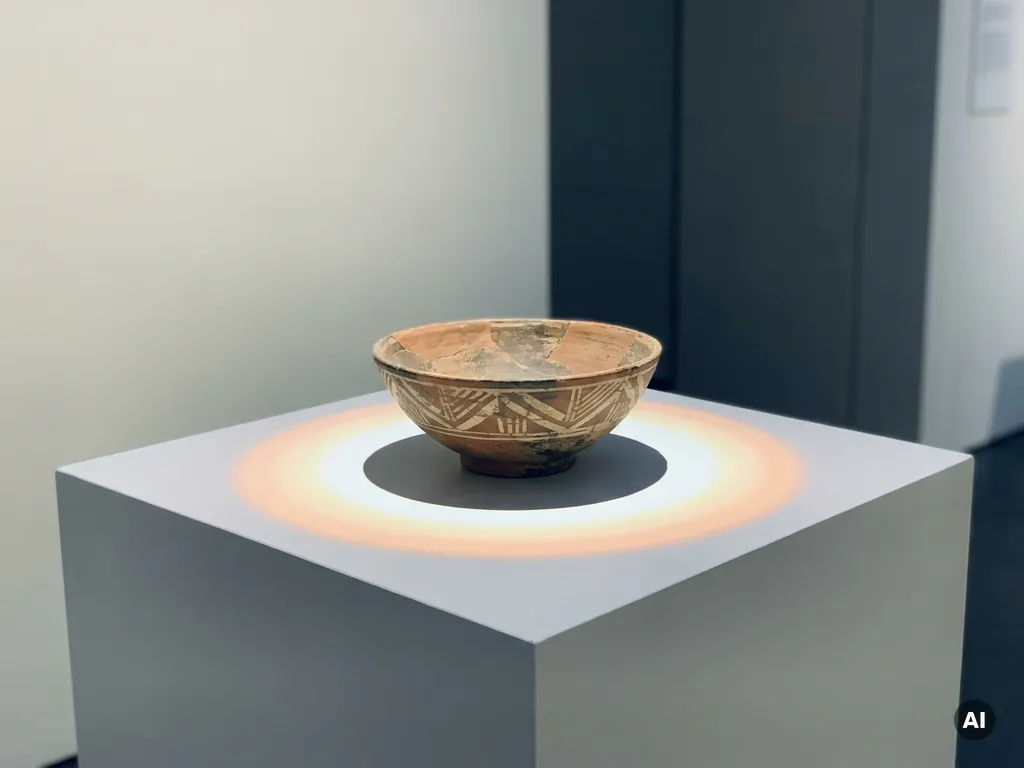
Digital cultural heritage refers to cultural materials, artifacts, monuments, traditions, and knowledge, that have been converted into digital formats for preservation, access, and engagement. This includes everything from 3D-scanned ancient sculptures and digitized manuscript collections to immersive virtual reconstructions of lost historical sites. The field spans both born-digital content and the digitization of physical objects, and it is reshaping how institutions share human history with the world. The sections below explore the most important questions around what digital cultural heritage looks like in practice, how it is created, and what challenges remain.
How are physical artifacts and heritage sites turned into digital formats?
Physical artifacts and heritage sites are turned into digital formats through a range of capture and modeling technologies, including photogrammetry, 3D laser scanning, multispectral imaging, and volumetric video. These methods record the geometry, texture, and, in some cases, the material composition of an object or site, producing high-fidelity digital representations that can be stored, shared, and experienced independently of the original.
Photogrammetry works by taking hundreds of overlapping photographs from different angles and using software to reconstruct a precise 3D model. Laser scanning emits pulses of light and measures how they reflect back, capturing millions of data points per second to build what is known as a point cloud. Together, these approaches can document everything from a fragile medieval manuscript to an entire archaeological site, creating records that survive even if the physical original deteriorates or is destroyed.
For heritage sites too large or remote to capture in a single session, drone-mounted sensors are increasingly used to survey vast areas quickly. Underwater photogrammetry has made it possible to document shipwrecks and submerged ruins that would otherwise be inaccessible to most researchers and the public. Once captured, these digital assets can be used in virtual museums, educational platforms, AR applications, or immersive experiences that bring heritage directly to audiences around the world.
What are the most well-known examples of digitized cultural collections?
Some of the most well-known examples of digitized cultural heritage collections include the Google Arts and Culture platform, the Europeana digital library, the British Museum’s online collection, and the Smithsonian’s 3D digitization program. These initiatives have made millions of objects, artworks, and historical documents freely accessible to anyone with an internet connection.
The Smithsonian Institution has been particularly ambitious in its approach, publishing thousands of freely downloadable 3D models of objects from its collections, ranging from Apollo lunar samples to ancient Egyptian artifacts. Europeana aggregates digitized content from more than 3,000 European cultural institutions, providing a single access point for paintings, maps, music, film, and archival records across the continent.
Google Arts and Culture has partnered with hundreds of museums globally to offer high-resolution imagery and virtual gallery tours. The Vatican Apostolic Library has digitized thousands of ancient manuscripts, making texts that were previously accessible only to scholars in Rome available to researchers worldwide. These projects collectively represent one of the largest expansions of public access to cultural knowledge in human history.
How are AR and VR used to bring cultural heritage to life?
Augmented reality and virtual reality bring cultural heritage to life by allowing people to experience historical environments, interact with reconstructed artifacts, and explore sites that no longer exist or are physically inaccessible. AR overlays digital content onto the real world, while VR places users inside fully simulated historical environments, both creating forms of engagement that static images and text cannot replicate.
In museum settings, AR museum experiences allow visitors to point a smartphone or wear a headset and see a shattered ancient vase restored to its original form, watch a painted figure move, or hear an artifact narrate its own history. At archaeological sites, AR portals can reconstruct vanished buildings on top of their ruins, letting visitors see what a Roman forum or a Mayan temple looked like at the height of its civilization.
Virtual reality takes this further by transporting users entirely into a reconstructed past. A visitor can walk through the streets of ancient Pompeii before the eruption, stand inside the Sistine Chapel during its construction, or explore a heritage site on the other side of the world without leaving their city. We design experiences of this kind, immersive VR journeys through cultural and historical environments, that combine cinematic quality with genuine educational depth, making heritage feel immediate and personal rather than distant and abstract.
What role do digital twins play in preserving endangered heritage?
Digital twins play a critical role in preserving endangered heritage by creating precise, complete digital replicas of sites and structures that are at risk from conflict, climate change, urban development, or natural decay. These replicas serve as permanent records that can support restoration efforts, academic research, and public access even if the physical site is damaged or destroyed.
A digital twin of a heritage site is more than a photograph or a basic 3D model. It captures spatial relationships, material properties, and structural details at a level of accuracy that allows architects and conservators to use it as a reference for physical reconstruction. When the Cathedral of Notre-Dame in Paris was damaged by fire, the detailed laser scan data that had been collected years earlier proved invaluable to restoration teams working to rebuild the structure accurately.
In conflict zones and areas affected by climate-driven coastal erosion, digital twin programs are racing to document sites before they are lost. Organizations like CyArk have used this approach to preserve dozens of endangered World Heritage sites, from Palmyra in Syria to the temples of Bagan in Myanmar. The resulting datasets are shared with governments, researchers, and cultural institutions as a form of distributed preservation that no single disaster can erase.
What is intangible cultural heritage and how is it digitally preserved?
Intangible cultural heritage refers to living traditions, practices, knowledge, and expressions that communities recognize as part of their cultural identity, including oral traditions, performing arts, rituals, craftsmanship techniques, and social customs. Because it exists in human practice rather than physical form, preserving it digitally requires capturing performance, knowledge, and context rather than simply scanning an object.
Oral traditions and performing arts
Oral storytelling, music, dance, and ceremonial performance are documented through high-quality audio and video recording, often combined with ethnographic annotation that explains the cultural significance of what is being captured. Archives like those maintained by UNESCO and national cultural institutions hold thousands of hours of recorded performance, song, and spoken tradition from communities around the world. Increasingly, 360-degree video and spatial audio are used to capture the full sensory context of a performance, preserving not just the content but the atmosphere and setting.
Traditional knowledge and craft
Traditional craftsmanship, agricultural practices, and medicinal knowledge are documented through detailed instructional video, written transcription, and interactive digital guides. Some institutions are experimenting with AI-driven knowledge bases that allow users to query traditional knowledge systems in natural language, making the information more accessible than a static archive. The challenge with intangible heritage is always the risk of decontextualization, stripping a practice of the community meaning that gives it life, which is why the most responsible digital preservation projects involve the communities themselves in deciding how their heritage is recorded and shared.
How do museums use interactive screens and AI to engage visitors with heritage?
Museums use interactive screens and AI to engage visitors with heritage by transforming passive viewing into active exploration. Touchscreen kiosks allow visitors to zoom into high-resolution artwork, explore object histories in multiple languages, and access contextual layers of information on demand. AI-powered tools go further, enabling personalized recommendations, conversational interfaces, and real-time responses to visitor questions.
AI avatars and non-player characters are emerging as particularly compelling engagement tools. A visitor can hold a conversation with a historically informed AI character representing a figure from the past, asking questions and receiving contextually appropriate answers. This creates a sense of dialogue with history that a traditional exhibit panel cannot provide. We develop AI-driven interactive experiences of this kind for cultural institutions, designing virtual characters that can speak knowledgeably about an artifact or era while adapting their responses to the visitor’s age, language, and level of prior knowledge.
Interactive screens placed throughout a gallery can also serve as wayfinding tools, accessibility aids for visitors with disabilities, and data collection points that help institutions understand how people move through and engage with their spaces. When designed thoughtfully, these technologies enhance rather than distract from the objects and stories at the heart of a collection, deepening the emotional resonance of a visit rather than replacing it with spectacle.
What challenges affect the long-term accessibility of digital cultural heritage?
The long-term accessibility of digital cultural heritage is affected by technological obsolescence, funding constraints, intellectual property disputes, and unequal global access to digital infrastructure. Even when heritage has been successfully digitized, ensuring that it remains accessible, usable, and meaningful over decades requires ongoing investment and deliberate institutional strategy.
Technological obsolescence is one of the most persistent risks. File formats, software platforms, and hardware standards change rapidly, and digital files created in one era can become unreadable in another without active migration efforts. Institutions must continuously update their storage systems and convert files to current formats, a process that requires both technical expertise and sustained funding.
Intellectual property and community rights present another layer of complexity. Not all digitized heritage is free to share. Copyright, Indigenous data sovereignty, and cultural sensitivity all determine what can be published openly and what must remain restricted. Communities whose heritage is being digitized have a legitimate interest in controlling how it is represented and accessed, and institutions that ignore this risk causing real harm alongside their preservation work.
Finally, the digital divide means that the communities whose heritage is being preserved are not always the ones with reliable access to it. A high-bandwidth immersive virtual experience is of little use to a community without fast internet infrastructure. Designing for accessibility across different levels of connectivity and device capability is an ongoing challenge for the field. If your institution is working to make cultural heritage more accessible and engaging, we would welcome the opportunity to explore what is possible together, contact us to start the conversation.
Gerelateerde artikelen
- How to create a virtual exhibition?
- What kind of technology is used in museums?
- What is an example of augmented reality advertising?
- What are experiential marketing techniques?
- Can spatial media increase foot traffic to physical locations?
- How can I create shareable brand moments without requiring app downloads?
- How do I create an immersive experience?
- How do 360-degree experiences work in marketing?
- What makes an immersive experience?