
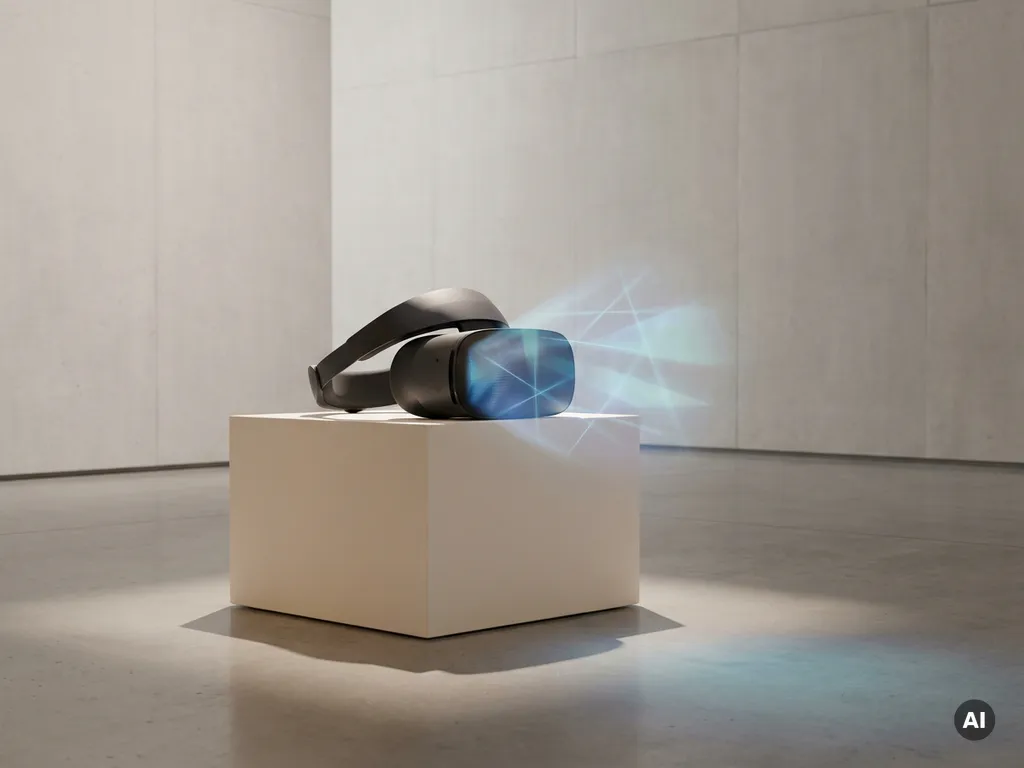
Museums today use a wide range of digital technologies to transform static collections into living, participatory experiences. The most common include augmented reality (AR), virtual reality (VR), interactive touchscreens, AI-driven personalization tools, digital twins, and large-scale immersive installations. These technologies are not novelties, they are becoming fundamental to how cultural institutions attract new audiences, deepen engagement, and stay relevant in a world shaped by digital expectation. The sections below answer the most common questions visitors, curators, and cultural leaders ask about museum technology in 2026.
How has technology changed the museum visitor experience?
Technology has shifted the museum visitor experience from passive observation to active participation. Where visitors once moved through galleries reading printed labels, they now interact with digital layers that respond to their presence, choices, and curiosity. The result is an experience that feels personal, dynamic, and emotionally resonant rather than fixed and one-directional.
This shift has also changed who museums can reach. Digital tools allow institutions to serve visitors with different languages, learning styles, and accessibility needs without creating separate physical pathways. A child, a researcher, and a first-time visitor can each move through the same space and encounter content calibrated to their level of engagement.
Perhaps most significantly, technology has extended the museum experience beyond the building itself. Pre-visit digital content builds anticipation. Post-visit apps and online archives keep the connection alive. The physical gallery becomes one node in a broader experiential journey rather than the beginning and end of the encounter.
What is augmented reality used for in museums?
Augmented reality in museums is used to add digital layers of content, animation, narration, historical context, or interactive elements, directly onto physical objects, spaces, or artworks. Visitors typically access AR through a smartphone, tablet, or headset, and the technology overlays information that enriches what they see without replacing the original object.
The applications are genuinely diverse. AR can bring a centuries-old painting to life with animated characters stepping out of the frame. It can reconstruct a ruined archaeological site so visitors see it as it once stood. It can translate an exhibit’s text into any language in real time, or reveal the internal mechanics of an object that cannot be physically opened.
AR portals and spatial storytelling
One of the most powerful AR formats for cultural spaces is the AR portal, a virtual doorway that transports visitors into a fully realised environment. A natural history museum might use a portal to place visitors inside a prehistoric landscape. A history museum might use one to step into a reconstructed street from another century. The physical gallery becomes a launching point for spatial storytelling that no printed panel could replicate.
AR for collections that cannot be touched
Many museum objects are fragile, rare, or housed behind glass. AR creates a way for visitors to interact with virtual representations of those objects, rotating them, examining details, or seeing them in their original context, without any risk to the physical artefact. This is particularly valuable for archaeological collections, textiles, and works on paper.
How do museums use virtual reality for education and storytelling?
Museums use virtual reality to place visitors entirely inside a story or historical moment, creating a level of immersion that no physical exhibit can match. VR removes the boundary between observer and subject, visitors do not look at a depiction of an event, they stand inside it, which produces a qualitatively different kind of understanding and emotional response.
For education, this is transformative. Abstract concepts become tangible. Historical events that are difficult to convey through objects and text alone become experiential. A visitor wearing a VR headset can witness the scale of a natural disaster, walk through a reconstructed ancient city, or experience a moment in history from the perspective of someone who lived it.
VR also enables museums to exhibit things they could never physically house. The interior of a space station, the surface of another planet, or the interior of a living cell are all environments that VR can render with scientific accuracy. For science museums and natural history institutions, this opens an entirely new category of exhibition.
Group VR experiences, where multiple visitors share a synchronised virtual environment, add a social and collaborative dimension. Rather than an isolating individual experience, shared VR becomes a foundation for discussion and collective reflection, which is particularly effective in educational settings.
What are interactive displays and how do they work in museum settings?
Interactive displays in museums are digital screens or surfaces that respond to visitor input, touch, gesture, voice, or proximity, to deliver content in a non-linear, participatory way. Unlike static panels, they invite visitors to explore at their own pace, follow their own questions, and engage with depth rather than breadth.
In practice, interactive displays range from large touchscreen tables where visitors can explore a map or timeline, to motion-sensitive walls that respond when someone walks past, to kiosk-style screens that allow visitors to search a collection, watch archival footage, or take a quiz. The technology behind them typically combines high-resolution displays, touch or gesture sensors, and content management systems that serve different content based on visitor interaction.
What makes interactive displays effective in museum settings specifically is their ability to serve multiple audiences simultaneously. A single display can offer a simplified children’s pathway, a detailed scholarly layer, and a translated version, all within the same interface. This flexibility makes them one of the most versatile tools available to exhibition designers.
What is a digital twin and can museums use them?
A digital twin is a precise, three-dimensional digital replica of a physical object, space, or environment, created through photogrammetry or 3D scanning. Museums can use digital twins to document collections, create virtual replicas of gallery spaces, and build interactive experiences around objects that are too fragile, too large, or too remote to exhibit conventionally.
For collections management, digital twins offer a level of documentation that photography cannot match. A scanned artefact can be examined from every angle, measured precisely, and shared with researchers anywhere in the world without the object leaving its storage environment.
For visitor experience, digital twins of locations are particularly compelling. A museum can create a navigable 3D replica of an archaeological site, a historical building, or even its own galleries, allowing visitors to explore spaces virtually before or after their physical visit. This is equally useful for accessibility, visitors who cannot move through a space physically can experience it fully through its digital twin.
Digital twins of products and objects can also anchor AR and VR experiences, providing the photorealistic foundation onto which interactive content is built.
How do AI and personalization technologies work in modern museums?
AI and personalization technologies in museums work by adapting the content, pacing, and depth of an experience to the individual visitor in real time. Rather than delivering a single fixed narrative to every person who enters, AI-driven systems can read signals, language preference, engagement patterns, prior choices, and adjust what a visitor sees, hears, or is prompted to explore next.
The most visible application is AI-powered virtual guides or avatars that can hold real conversations with visitors, answer questions in natural language, and respond to follow-up queries without a human operator. These AI characters can be designed to represent historical figures, fictional guides, or neutral informational voices, and they can operate in multiple languages simultaneously.
Behind the scenes, AI also supports content curation. A visitor who spends more time with one period of history than another might receive recommendations tailored to that interest, similar to how a streaming platform learns viewing preferences. This kind of responsive curation makes a large collection feel navigable rather than overwhelming.
Personalization also has accessibility implications. AI systems can automatically adjust text size, language complexity, audio description, or content format based on visitor need, making the museum more genuinely inclusive without requiring staff intervention at every point.
What immersive installation technologies do museums use for large audiences?
For large audiences, museums use immersive installation technologies that fill entire rooms or structures with sensory content, projection, sound, scent, temperature, and movement, creating environments that visitors inhabit rather than observe. These installations are designed to be experienced collectively, making them well-suited to high-footfall institutions and landmark exhibitions.
360-degree projection domes
Interactive 360-degree domes use curved projection surfaces to surround visitors with imagery and sound on every side. The effect is total visual immersion, there is no edge to the screen, no frame to break the illusion. These structures can accommodate hundreds of visitors at a time and are used for everything from planetarium-style science presentations to artistic installations and cultural storytelling experiences.
4D cinema environments
4D cinema installations extend the visual and audio experience with physical sensations, directional sound, scent diffusion, temperature changes, vibration, and air movement. When a visitor watches a scene set in a forest, they might simultaneously smell pine resin and feel a cool breeze. This multi-sensory layering creates a depth of immersion that purely visual media cannot achieve, and the emotional impact tends to be significantly stronger as a result.
Both formats are scalable and can be configured for temporary exhibitions or permanent gallery installations, making them flexible tools for institutions of different sizes and ambitions.
Which museum technology is right for different types of collections?
The right museum technology depends on the nature of the collection, the intended audience, and the story the institution wants to tell. There is no single solution that serves every context equally well, the most effective technology choices are those that amplify what is already compelling about a collection rather than imposing a digital layer for its own sake.
For art museums and galleries, AR and projection-based installations tend to work well because they can enhance the visual experience of existing works without physically altering them. AR layers can add historical context, artist biography, or alternative interpretations directly onto a canvas or sculpture, deepening the encounter without displacing the original.
For history and archaeology museums, VR and digital twins are particularly powerful. They allow institutions to reconstruct environments, objects, and moments that no longer physically exist. A fragment of pottery becomes far more meaningful when a visitor can see a VR reconstruction of the civilization that made it.
For science and natural history museums, interactive displays and immersive installations are often the strongest fit. These collections frequently involve scales, the very large, the very small, the very fast, that are difficult to convey through static exhibits. Interactive technology makes those scales tangible and explorable.
For cultural institutions focused on social impact, empathy-building, and behavior change, such as human rights museums or NGO-backed exhibitions, immersive VR experiences and AI-driven personalization offer the deepest engagement. These tools allow visitors to inhabit another perspective, which is among the most powerful mechanisms for shifting understanding and inspiring action.
At Rooftop Immersive, we work across all of these contexts, helping cultural institutions identify which technologies genuinely serve their collection and their audience rather than simply adding digital complexity. Our work spans AR, VR, AI-driven personalization, and large-scale immersive installations, always designed around the story the institution needs to tell. If you are exploring what technology could do for your museum or exhibition, we would welcome the conversation, contact us to start.
Gerelateerde artikelen
- What is the difference between experience marketing and experiential marketing?
- What are five applications of virtual reality?
- What is a digital exhibit?
- What are the challenges of creating immersive experiences?
- Why do people like immersive experiences?
- What are some examples of immersive experiences?
- What is an example of an immersive experience?
- What makes a successful branded immersive experience?
- How do dome installations create immersive experiences?