
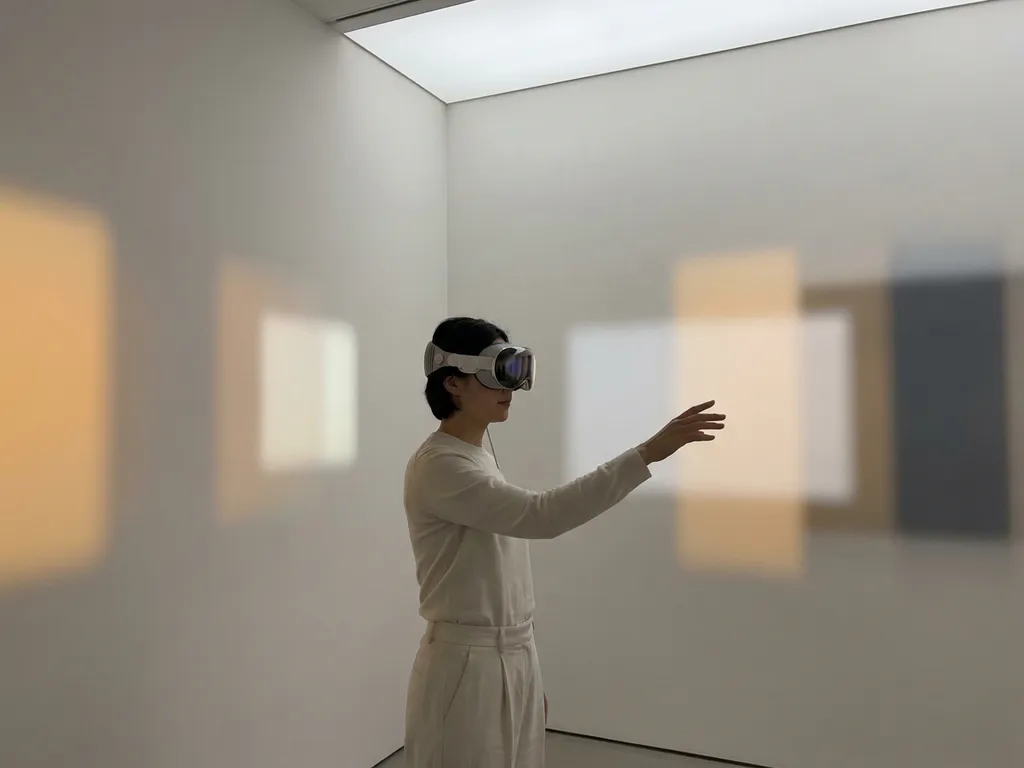
Mixed reality is used across a wide range of industries and organizations, from global brands and museums to schools, NGOs, and event producers. It is not a niche technology reserved for tech companies; it is an experiential tool that any organization can deploy when they need to bridge the physical and digital worlds in a meaningful way. The sections below unpack exactly who is using it, how, and why it works for each context.
What industries are adopting mixed reality the fastest?
The industries adopting mixed reality fastest in 2026 are education, healthcare, cultural heritage, retail, and experiential marketing. These sectors share a common need: they must communicate complex, emotionally charged, or highly spatial information to audiences who are difficult to engage through screens alone. Mixed reality fills that gap by anchoring digital content to the physical world.
Education leads adoption because immersive, hands-on learning demonstrably improves retention and comprehension. Healthcare follows closely, using mixed reality for surgical training, patient education, and rehabilitation. Cultural institutions, museums, heritage sites, and galleries, are rapidly integrating spatial digital layers to revitalize collections and attract younger audiences. In retail and marketing, brands use mixed reality to create product experiences that go beyond passive advertising.
The common thread across all of these sectors is the need to make abstract or intangible things feel real. Mixed reality does not just display information; it places that information inside the physical environment where a person already stands, which creates a qualitatively different kind of engagement.
How do museums and cultural institutions use mixed reality?
Museums and cultural institutions use mixed reality to add digital layers of meaning to physical objects and spaces, allowing visitors to interact with artifacts, explore historical reconstructions, and experience stories that the objects themselves cannot tell. This approach deepens emotional impact without replacing or overshadowing the original collection.
In practice, this takes many forms. A visitor standing in front of a centuries-old painting might use a device to see the scene come alive, hear the artist’s voice, or step inside the depicted landscape. A heritage site might overlay a reconstructed version of a building onto its ruins, so visitors experience both past and present simultaneously. Natural history museums use mixed reality to animate fossil specimens or simulate extinct ecosystems at life scale.
For cultural leaders, mixed reality solves two persistent challenges at once: declining visitor engagement and difficulty reaching younger, digitally native audiences. Rather than asking visitors to read more text panels, mixed reality invites them to participate actively. The result is a visit that is remembered not just as an outing but as an experience, the kind that prompts return visits, social sharing, and word-of-mouth recommendation.
We work closely with museums and cultural institutions to design experiences where technology enhances the storytelling power of artifacts rather than competing with them. The goal is always to deepen the relationship between visitor and collection, not to replace it with spectacle.
How are brands and marketers using mixed reality for campaigns?
Brands and marketers use mixed reality to create activations that people can physically engage with, remember, and share, moving beyond passive advertising into experiences that generate genuine emotional connection and measurable reach. Mixed reality campaigns are particularly effective at product launches, trade shows, retail environments, and live events.
A product launch might use mixed reality to let potential customers interact with a 3D version of a product before it physically exists. A retail brand might deploy spatial AR so shoppers can visualize furniture in their own homes or see how clothing fits without trying it on. At events and trade shows, mixed reality installations create shareable moments that extend campaign reach far beyond the physical venue.
What makes mixed reality compelling for marketers is that it converts passive observers into active participants. Attention in a saturated media landscape is scarce, but when someone is physically interacting with a brand experience, moving through it, responding to it, making choices within it, their attention is fully committed. That depth of engagement translates into stronger brand recall and a higher likelihood of sharing the experience with their network.
For experiential marketing directors and creative agencies, mixed reality also offers measurable data. Interaction patterns, dwell time, and engagement rates within a mixed reality activation can inform future campaign decisions in ways that traditional out-of-home advertising cannot.
What role does mixed reality play in education and training?
Mixed reality plays a transformative role in education and training by making abstract concepts tangible, enabling safe practice of high-stakes skills, and personalizing the learning experience to individual pace and style. It is particularly powerful for subjects that are difficult to teach through text or video alone: complex systems, spatial reasoning, empathy-building, and procedural skills.
In formal education, mixed reality allows students to explore the inside of a cell, walk through a historical event, or conduct a chemistry experiment without physical materials or safety risk. These experiences do not just illustrate; they immerse the learner in the subject matter, which research in cognitive science consistently links to improved retention and deeper understanding.
In professional training, the applications are equally compelling. Medical trainees practice procedures on virtual anatomy overlaid onto physical mannequins. Safety engineers walk through simulated industrial environments to identify hazards. Customer-facing teams practice difficult conversations with AI-driven virtual characters that respond in real time.
For learning and development professionals working in organizations with distributed teams or complex curricula, mixed reality also offers scalability. A single well-designed immersive learning module can be deployed across locations and adapted for different languages, learning styles, or experience levels, something traditional classroom training cannot easily achieve.
Which types of events and exhibitions use mixed reality?
Mixed reality is used across trade shows, brand activations, public exhibitions, cultural festivals, corporate events, and educational showcases. Any event format where organizers need to create a memorable, participatory experience, rather than a passive one, is a strong candidate for mixed reality integration.
Trade shows and product launches use mixed reality to demonstrate products that are too large, too fragile, or not yet physically available. A car manufacturer can place a full-scale 3D model of a new vehicle in a booth without shipping the car. An architecture firm can walk clients through a building that has not yet been built.
Public exhibitions and cultural festivals use mixed reality to add interactive layers to outdoor spaces, turning city squares, parks, or heritage sites into living canvases. Visitors explore the space differently when digital content responds to their physical movement and location.
Corporate events use mixed reality for keynote enhancements, immersive brand storytelling, and team experiences that create shared emotional memory. For event producers working under tight timelines and high audience expectations, mixed reality installations also offer a reliable “wow factor” that is difficult to achieve through conventional staging alone.
Should small organizations invest in mixed reality, or is it only for large enterprises?
Mixed reality is not exclusively for large enterprises; small and mid-sized organizations, including NGOs, independent museums, and educational institutions, can access meaningful mixed reality experiences when they work with the right creative partner and scope their projects appropriately. The key is matching ambition to budget and starting with experiences that deliver clear, measurable value.
The factors that most influence what any organization can achieve include the scale of deployment, the complexity of the content, the hardware required, and the level of interactivity. A small NGO running an awareness campaign might commission a focused AR portal experience that transports viewers into a community they are trying to support: powerful, purpose-built, and achievable without an enterprise budget. A large corporation might invest in a fully custom mixed reality installation across multiple venues simultaneously.
What matters most is not organizational size but clarity of purpose. Organizations that know exactly what behavior change, emotional response, or learning outcome they want to achieve are better positioned to invest wisely in mixed reality than large organizations that deploy it as a novelty. A well-scoped, purpose-driven experience almost always outperforms a technically impressive one that lacks a clear goal.
What’s the difference between who uses AR versus who uses VR versus who uses mixed reality?
AR, VR, and mixed reality attract different users based on context, audience mobility, and the relationship between physical and digital content. AR overlays digital content onto the real world and is used primarily by marketers, retailers, and cultural institutions where audiences remain physically present in a space. VR immerses users in a fully digital environment and is favored for deep training simulations, emotional storytelling, and experiences that require complete separation from the physical world. Mixed reality blends both: digital and physical objects coexist and interact in real time, and is used by organizations that need the depth of VR with the spatial anchoring of AR.
Who primarily uses AR
Augmented reality is the format of choice for brands running product activations, retailers enabling virtual try-on, museums adding interpretive layers to physical objects, and educators enriching printed materials with animated content. AR works wherever the audience is mobile and engaged with a physical environment: the digital layer enhances what is already there rather than replacing it.
Who primarily uses VR
Virtual reality is used most intensively in healthcare training, military and safety simulation, empathy-driven storytelling for NGOs, and entertainment. It is the right tool when the goal is to remove a person from their current environment entirely and place them inside a controlled, fully designed experience. The trade-off is that VR requires dedicated hardware and a stationary user, which limits spontaneous or large-scale public deployment.
Who primarily uses mixed reality
Mixed reality is used by organizations that need the most sophisticated form of spatial computing, where virtual objects must respond to and interact with the real physical environment in real time. This includes advanced training environments, next-generation product design workflows, and high-end experiential installations. As hardware like Apple Vision Pro matures and becomes more accessible, the range of organizations adopting mixed reality is expanding rapidly beyond early enterprise adopters into education, culture, and public engagement.
Understanding which format fits your goals is the first step toward designing an experience that genuinely works. If you are exploring how mixed reality, AR, or VR could serve your organization’s specific needs, we would love to help you think it through: contact us to start the conversation.
Gerelateerde artikelen
- What is immersive experience and how does it work?
- What are some examples of interactive museum exhibits?
- What are experiential marketing techniques?
- What are the types of learning experiences?
- What are the benefits of immersive learning?
- What are examples of immersive technology?
- How do you create an immersive experience?
- How do you measure success in experiential marketing?
- How does spatial design affect user engagement?