
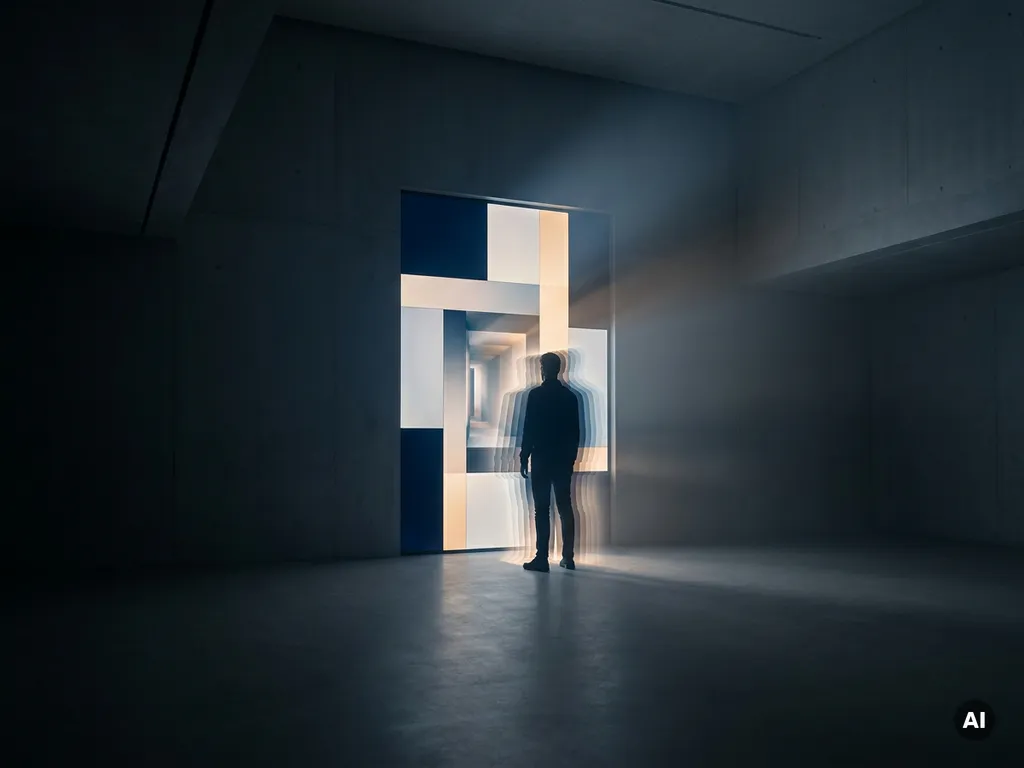
An immersive experience is a designed environment or encounter that surrounds participants with sensory stimuli, sight, sound, touch, smell, and sometimes movement, so completely that they feel present inside the experience rather than simply observing it. Unlike passive media such as film or static exhibitions, immersive experiences are built to activate multiple senses simultaneously and invite active participation. The questions below unpack exactly how this works, what technologies make it possible, and where it delivers the most powerful results.
What makes an experience truly ‘immersive’?
An experience becomes truly immersive when it engages multiple senses at once, removes the psychological distance between the participant and the content, and creates a genuine sense of presence. It is not defined by any single technology but by the depth of sensory and emotional engagement it produces, the feeling of being inside something rather than looking at it.
Three qualities consistently separate immersive design from conventional media. First, multi-sensory activation: immersive environments layer sound, spatial visuals, physical elements, and sometimes scent or temperature to build a coherent world around the participant. Second, agency: participants can move through, interact with, or influence the experience rather than receiving it passively. Third, emotional presence: the design is structured to trigger genuine emotional responses, curiosity, empathy, awe, or urgency, rather than simply delivering information.
At Rooftop Immersive, we design with all five senses as a starting point, not an afterthought. That distinction matters because most digital content is built for screens and speakers alone. When you add spatial dimension, physical sensation, and narrative depth, the experience moves from something people consume to something people genuinely inhabit.
What technologies power immersive experiences?
Immersive experiences are powered by a combination of extended reality technologies, including virtual reality (VR), augmented reality (AR), and mixed reality (MR), alongside spatial audio, projection mapping, haptic feedback, AI-driven personalization, and physical installation design. No single technology defines immersive experience; the power comes from how these tools are combined.
The core technology stack typically includes:
- VR headsets and platforms built in engines like Unreal Engine or Unity, enabling fully synthetic environments
- AR layers delivered via smartphones, tablets, or headsets that overlay digital content onto the physical world
- Projection systems and LED volumes that transform physical spaces into dynamic visual environments
- Spatial and binaural audio that places sound precisely in three-dimensional space
- AI and real-time personalization that adapts content to the participant’s language, pace, or learning style
- Haptic and sensory hardware including scent diffusers, temperature elements, and tactile feedback devices
- Volumetric capture and photogrammetry that digitize real people, objects, and spaces into interactive 3D assets
The sophistication of an immersive experience lies not in deploying the most advanced hardware but in selecting the right combination of tools to serve the story being told. Technology is always in service of the experience, never the other way around.
How does an immersive experience actually work?
An immersive experience works by systematically removing the barriers between a participant and the content, replacing the frame of a screen or stage with a surrounding environment that the participant enters, moves through, and responds to. The brain interprets this multi-sensory input as closer to reality than conventional media, which deepens attention, emotional response, and memory retention.
In practical terms, the process works on three levels simultaneously:
- Spatial design establishes the physical or virtual environment, the architecture of the experience, whether that is a custom dome, a VR world, or an AR-enhanced room.
- Narrative structure guides the participant through the experience with intention, creating moments of discovery, tension, empathy, or resolution.
- Sensory layering reinforces the narrative at every moment, sound cues, visual transitions, physical sensations, and interactive triggers all work together to maintain the sense of presence.
When these three levels are aligned, the participant’s cognitive and emotional systems engage in a way that passive media cannot replicate. This is why immersive experiences consistently outperform traditional formats for knowledge retention, behavior change, and emotional impact. The brain does not merely process the content, it experiences it.
What’s the difference between VR, AR, and mixed reality experiences?
Virtual reality (VR) replaces the real world entirely with a synthetic environment; augmented reality (AR) overlays digital content onto the real world without replacing it; and mixed reality (MR) blends digital and physical elements so they interact with each other in real time. The key distinction is how much of the physical environment remains visible and interactive during the experience.
Virtual Reality
VR places participants inside a fully digital environment using a headset that blocks out the physical world. This makes it ideal for experiences that require complete transportation, training simulations, empathy-building scenarios, or cinematic storytelling where controlling every visual element matters. Passive VR uses pre-rendered 360° film; interactive VR allows participants to make choices, move freely, and influence outcomes.
Augmented Reality
AR keeps participants grounded in their physical environment while adding digital layers, 3D objects, animations, information, or interactive characters, that appear anchored to the real world through a screen or headset. AR is particularly effective for outdoor activations, museum enhancements, product experiences, and educational tools where the physical context is part of the story. It requires no headset for smartphone-based delivery, which significantly lowers the barrier to participation.
Mixed Reality
MR, as demonstrated by platforms like Apple Vision Pro, enables real-time interaction between digital objects and the physical environment. A virtual character can sit on a real chair; a digital model can be placed on an actual table and examined from every angle. MR is the frontier of spatial computing and represents the direction in which immersive technology is rapidly evolving in 2026 and beyond.
Where are immersive experiences used today?
Immersive experiences are used across education, cultural institutions, brand marketing, healthcare, public sector communication, and entertainment. Any context where deeper engagement, stronger emotional connection, or more effective knowledge transfer is needed is a context where immersive design adds measurable value.
The most active application areas today include:
- Education and training: VR and AR simulations allow learners to practice complex or dangerous scenarios safely, making abstract concepts tangible and memorable
- Museums and cultural institutions: immersive installations and AR layers breathe new life into collections, attract younger audiences, and deepen the emotional connection to artifacts and stories
- Brand and experiential marketing: AR activations, interactive installations, and VR brand worlds create shareable, emotionally resonant encounters that traditional advertising cannot replicate
- NGOs and public awareness campaigns: perspective-shifting VR experiences build empathy around complex social issues, driving behavior change more effectively than statistics or text alone
- Events and exhibitions: 360° domes, 4D cinemas, and location-based VR transform events into destinations rather than occasions
We have developed immersive projects across all of these sectors, working with organizations ranging from global brands to UNICEF, and the pattern is consistent: when the experience is designed with genuine intent, the impact follows.
Why do immersive experiences create stronger impact than traditional media?
Immersive experiences create stronger impact than traditional media because they activate the brain’s presence response, the same neurological mechanism that makes real-world events memorable. When the brain perceives an experience as spatially real and emotionally relevant, it encodes the memory more deeply, triggers stronger empathic responses, and is more likely to translate the experience into changed attitudes or behavior.
Several specific mechanisms explain this advantage:
- Embodied cognition: physically moving through or interacting with content engages motor and spatial memory, not just declarative memory
- Perspective-taking: stepping into another person’s viewpoint, literally, in VR, activates empathy in ways that reading or watching a story cannot match
- Reduced cognitive distance: when information is experienced rather than received, the gap between knowing and feeling closes significantly
- Active participation: making choices within an experience creates personal investment in the outcome, which strengthens both attention and retention
This is not a theoretical advantage. Organizations working on behavior change, skills development, and public awareness consistently find that immersive formats outperform conventional ones when the goal is genuine impact rather than simple awareness. The immersive design approach we take is built around this principle from the first creative brief.
How long does it take to develop an immersive experience?
Development timelines for immersive experiences range from several weeks for focused activations to twelve months or more for complex, custom-built installations or educational programs. The timeline depends on the scope of the experience, the technologies involved, the degree of interactivity required, and how much original content, 3D assets, film, spatial audio, AI logic, needs to be created from scratch.
Key factors that influence development time include:
- Complexity of the narrative: a linear cinematic VR piece requires less development than a branching interactive simulation
- Volume of original assets: custom 3D environments, volumetric video capture, and bespoke sound design each add significant production time
- Hardware integration: experiences designed for specific installations, custom domes, or synchronized multi-headset environments require additional technical development and testing
- Iteration and co-creation: the depth of collaboration with the commissioning organization during the design phase shapes both quality and timeline
- Localization and personalization: AI-driven adaptation across languages or learning styles adds a layer of development that pays dividends in reach and relevance
A realistic approach is to treat immersive development the way you would treat any high-quality production: the time invested in the design and prototyping phase directly determines the quality and durability of the final experience.
Who should consider investing in an immersive experience?
Any organization that needs to move people, emotionally, intellectually, or behaviorally, and finds that conventional media is falling short should consider investing in an immersive experience. This includes museums seeking to engage new audiences, educators working with difficult or abstract subject matter, brands competing in saturated markets, and NGOs trying to build genuine empathy around complex social issues.
Immersive investment makes the most sense when one or more of the following conditions apply:
- The subject matter is difficult to convey through text, images, or video alone
- The goal is behavior change or deep attitude shift, not just awareness
- The audience is hard to reach or easily disengaged through traditional formats
- The experience needs to be scalable across multiple locations, languages, or audience types
- The organization wants to signal innovation, relevance, and genuine commitment to its mission
The investment is shaped by factors such as scope, technology, content volume, and longevity, there is no single price point because no two immersive experiences are alike. What remains consistent is the return: when designed with clear intent and the right creative partner, immersive experiences deliver impact that outlasts any campaign and reaches audiences that conventional media cannot touch. If you are ready to explore what this could look like for your organization, we would welcome the conversation, contact us to start.
Gerelateerde artikelen
- What is an example of an immersive experience?
- What are the advantages and disadvantages of immersive technology?
- What are the guiding principles of immersive learning?
- How much does augmented reality cost?
- What is the role of sound in immersive experiences?
- What are the types of immersive experience?
- What is immersive learning?
- What are the benefits of immersive installations for brands?
- What equipment is needed for AR content production?