
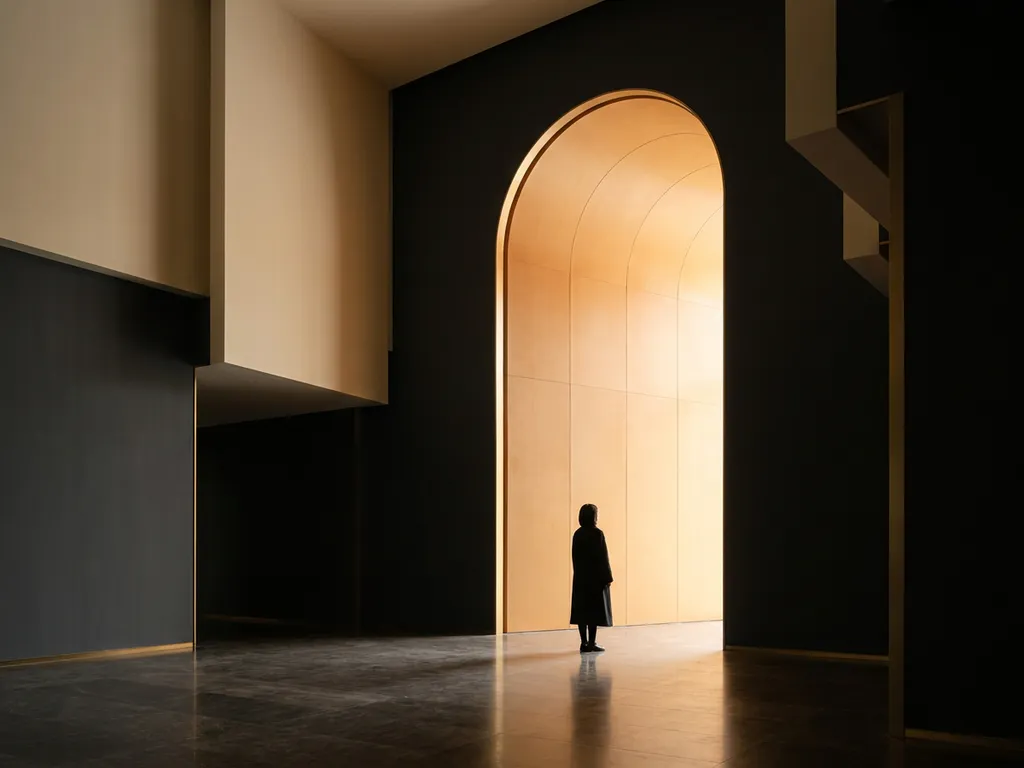
Creating an immersive experience means designing an environment where people are fully surrounded by a story, a world, or a concept, engaging not just their eyes and ears, but their senses, emotions, and imagination all at once. The result is an experience people do not simply watch; they inhabit it. The sections below unpack everything from the technology involved to the production timeline, so you understand exactly what goes into building something that truly stays with people.
What makes an experience truly immersive?
An experience becomes truly immersive when it removes the distance between the audience and the content. Instead of observing from the outside, participants are surrounded by the world being created for them. This happens through a combination of multisensory engagement, spatial design, emotional narrative, and interactivity that responds to the person inside it.
The term immersive is often used loosely, but its meaning is precise: to submerge completely. In experience design, that means eliminating the frame. A traditional screen or stage has an edge where the audience stops and the content begins. A genuinely immersive experience dissolves that edge. Sound comes from every direction. Visuals wrap around the space. Physical elements, temperature, scent, texture, reinforce what the senses are receiving. The body and the mind receive consistent signals from the same fictional or educational world.
What separates an immersive experience from an interactive one is depth rather than participation alone. An interactive experience lets you press a button or make a choice. An immersive experience makes you feel as though you are somewhere else entirely, or as though the content is happening to you rather than for you. The most powerful immersive experiences combine both qualities: they are interactive and immersive simultaneously.
Multisensory design is central to this. Research in cognitive science consistently shows that memory formation is stronger when multiple senses are engaged at the same time. When you smell the forest while walking through a virtual woodland, or feel vibration beneath your feet as a story builds to its climax, the brain encodes the experience more deeply than it would from visual information alone. This is why immersive experiences are not just more engaging, they are more memorable.
What types of technology are used in immersive experiences?
Immersive experiences draw on a broad toolkit of technologies, including virtual reality (VR), augmented reality (AR), mixed reality (MR), spatial audio, projection mapping, motion tracking, haptic feedback, and AI-driven personalisation. The specific combination depends on the goals, the audience, and the physical environment in which the experience will live.
Spatial and projection technologies
Projection mapping transforms physical surfaces, walls, floors, sculptures, buildings, into dynamic visual canvases. When paired with spatial audio systems that position sound in three-dimensional space, the result is a fully enveloping environment that requires no headset. Interactive 360-degree domes take this further, surrounding audiences with seamless visuals across a curved surface, making them ideal for large-scale events, museums, and educational installations.
Headset-based technologies
VR headsets place users inside fully rendered digital environments, blocking out the physical world entirely. AR headsets and smartphone-based AR overlay digital content onto the real world without replacing it. Mixed reality platforms, including devices like the Apple Vision Pro, blend both approaches in real time, allowing virtual objects to interact convincingly with physical surroundings. Each technology creates a different relationship between the user and the content, which is why choosing the right format is one of the most important early decisions in any immersive project.
Sensory and AI layers
Beyond visual technology, advanced immersive experiences incorporate scent diffusion systems, haptic suits or controllers, temperature variation, and physical set elements that reinforce the digital world. AI adds a further dimension by enabling experiences to adapt in real time, responding to a user’s language, pace, emotional state, or choices to create a personalised journey rather than a fixed one.
How does storytelling shape an immersive experience?
Storytelling is the architecture of an immersive experience. Technology creates the environment, but narrative gives people a reason to care about being inside it. Without a clear story, a world with stakes, characters, tension, and meaning, even the most sophisticated technology produces spectacle rather than impact.
In traditional media, storytelling is linear. A film has a beginning, middle, and end that every viewer experiences in the same sequence. Immersive storytelling is spatial and often non-linear. The audience moves through the narrative rather than sitting in front of it. This means the story must be designed to work from multiple entry points, at varying paces, and with different levels of engagement from different people.
The most effective immersive narratives use what designers call environmental storytelling, embedding meaning into every element of the space. A detail on the wall, a sound cue, the temperature of a room: all of these carry narrative weight. When done well, the audience absorbs the story through the environment itself, not just through explicit dialogue or text.
Emotional resonance is the ultimate measure of immersive storytelling. An experience that makes someone feel grief, wonder, urgency, or joy has succeeded where a purely informational experience would fail. This is particularly powerful in educational and social impact contexts, where the goal is not just to inform but to shift perspective, to help someone genuinely understand what it feels like to be in another situation entirely.
What are the key steps to designing an immersive experience?
Designing an immersive experience follows a structured process that moves from strategic intent through creative development to technical production and final delivery. While every project is different, the core steps remain consistent regardless of scale or technology.
- Define the goal and audience. Every design decision flows from understanding what the experience needs to achieve and who it is for. A brand activation for a product launch requires a fundamentally different approach than an educational VR module for secondary school students.
- Develop the narrative and concept. Before any technology is chosen, the story and emotional journey must be mapped. What should the audience feel at each moment? What do they need to understand, believe, or do differently by the end?
- Select the right technology mix. Once the concept is clear, the appropriate technologies are chosen to serve it. Technology follows narrative, not the other way around.
- Design the spatial experience. The physical or virtual environment is designed in detail, including movement flows, sensory layers, interaction points, and pacing.
- Build and prototype. Content is produced, environments are rendered or constructed, and early versions are tested with real users to identify where the experience loses momentum or clarity.
- Refine and integrate. Feedback from testing is used to sharpen every element, from audio timing to interaction design to physical set dressing.
- Deploy and support. The finished experience is installed or distributed, with ongoing technical support to ensure consistent quality across every audience encounter.
Co-creation with the client runs through every stage. The most impactful experiences emerge from deep collaboration between creative technologists and the people who understand the audience, the institution, or the brand from the inside.
How long does it take to build an immersive experience?
Building an immersive experience typically takes between two months and twelve months, depending on the complexity of the concept, the technologies involved, the scale of the physical installation, and the level of custom content required. Smaller AR activations or interactive installations can be delivered in weeks; large-scale VR productions or permanent museum installations may take the better part of a year.
Several factors directly influence the timeline. Custom 3D environments and volumetric video capture are time-intensive to produce at high quality. Physical set construction, hardware procurement, and on-site installation add logistical layers that purely digital projects do not face. Projects requiring regulatory approvals, accessibility compliance, or multilingual content need additional development time built in from the start.
The production process also includes time for iteration. Immersive experiences are not finished when they are first built, they are refined through testing cycles that identify friction points, technical issues, and moments where the narrative loses its hold. Rushing this phase produces experiences that underperform on the day. Budgeting adequate time for testing and refinement is one of the most important decisions a commissioning organisation can make.
Cost follows a similar logic to timeline. The factors that extend the schedule, custom content, physical installation, hardware, multilingual adaptation, AI personalisation, also increase investment. Understanding which elements are essential to the experience’s goals and which are enhancements helps organisations make informed decisions about where to focus their resources.
What’s the difference between AR, VR, and mixed reality experiences?
AR (augmented reality), VR (virtual reality), and MR (mixed reality) differ in how they relate the digital content to the physical world. VR replaces reality entirely with a digital environment. AR overlays digital content onto the real world without replacing it. Mixed reality blends both, allowing virtual and physical elements to interact with each other in real time.
Virtual reality
In a VR experience, the user wears a headset that blocks out the physical environment completely, placing them inside a fully rendered digital world. This creates the strongest sense of presence and is particularly effective for simulations, empathy-building experiences, and training scenarios where full immersion in a controlled environment is essential. VR works for both passive, cinematic experiences and fully interactive ones.
Augmented reality
AR keeps the user anchored in the real world while adding digital layers on top of it. This can be delivered through a smartphone camera, AR glasses, or purpose-built installations. Because it does not require a headset and works in everyday environments, AR is highly accessible and scalable. It is widely used for brand activations, educational overlays, museum enhancements, and location-based storytelling.
Mixed reality and extended reality
Mixed reality, sometimes called MR or spatial computing, enables virtual objects to respond to and interact with the physical environment in real time. A virtual character can sit on a real chair; a digital product can be placed on a real desk and viewed from every angle. Platforms like Apple Vision Pro represent the current frontier of this technology. The broader term extended reality (XR) is often used to describe the full spectrum, AR, VR, and MR together, as the boundaries between these formats continue to blur in 2026.
How do you measure the impact of an immersive experience?
The impact of an immersive experience is measured through a combination of behavioural data, emotional response indicators, knowledge retention assessments, and audience feedback. The right metrics depend entirely on what the experience was designed to achieve, engagement and dwell time matter most for brand activations, while learning outcomes and attitude shifts are the key measures for educational or social impact projects.
For commercially focused experiences, measurable outcomes include footfall, interaction rates, time spent inside the experience, social sharing, and conversion actions such as sign-ups or purchases. These data points are often collected through embedded sensors, interaction logs, and post-experience surveys. The advantage of digital immersive experiences is that they generate rich behavioural data that traditional physical activations cannot match.
For educational and purpose-driven experiences, impact measurement is more nuanced. Pre- and post-experience assessments can quantify shifts in knowledge or understanding. Longitudinal follow-up surveys measure whether attitude or behaviour changes persist over time. Qualitative feedback, what participants say about how the experience made them feel, provides context that numbers alone cannot capture.
Emotional impact is increasingly recognised as a valid and important metric in its own right. Experiences that generate strong emotional responses are more likely to be remembered, shared, and acted upon. When an NGO uses an immersive experience to build empathy around a social issue, the measure of success is not just how many people attended, it is whether those people left with a genuinely changed perspective.
If you are exploring what an immersive experience could do for your organisation, whether you are a museum, a brand, an educational institution, or an NGO, we would be glad to help you think through the possibilities. Contact us to start the conversation.
Gerelateerde artikelen
- What is an immersive museum?
- What is an example of experiential marketing?
- What are immersive experiences and how do they enhance user interaction?
- What are the statistics on the popularity of immersive experiences?
- What are the types of learning experiences?
- Can immersive experiences reduce anxiety?
- What is an example of immersive learning experience?
- How do immersive experiences improve experiential marketing?
- What are the benefits of immersive museum experiences?