
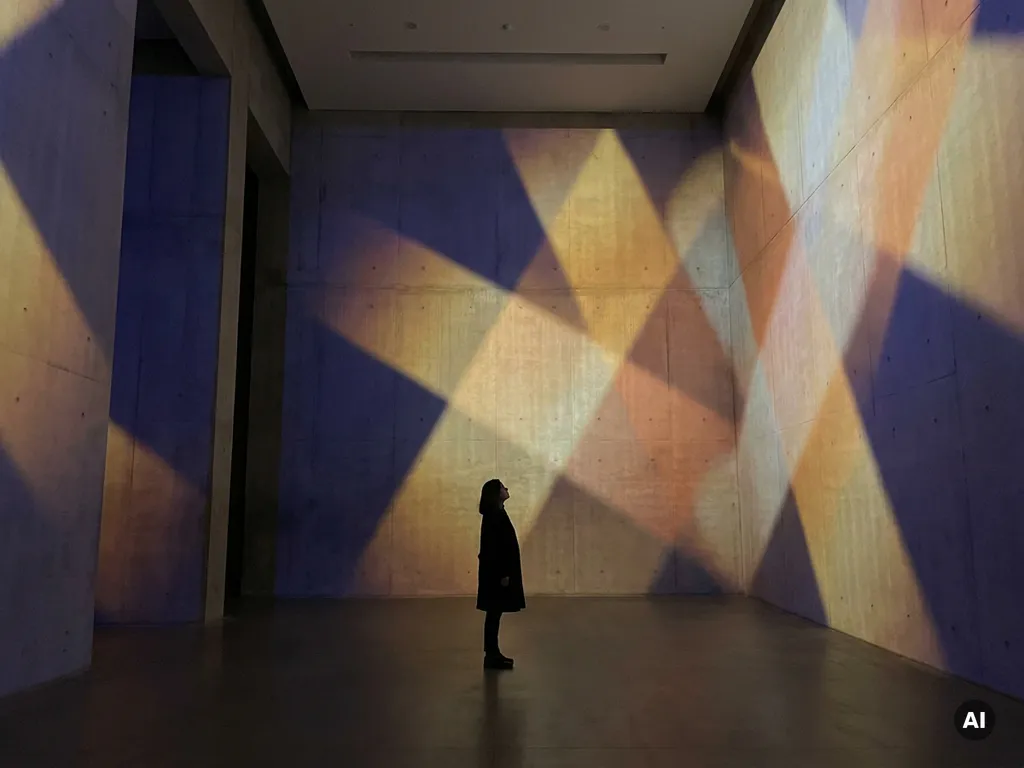
An immersive museum is a cultural or educational space that replaces passive observation with active, multi-sensory participation. Instead of displaying objects behind glass, it surrounds visitors with projected imagery, spatial sound, interactive technology, and physical environments that place them inside the story rather than outside it. The result is an experience that engages the emotions as much as the intellect.
Immersive museums range from purpose-built digital art spaces to traditional institutions that layer new technology onto existing collections. What they share is a deliberate commitment to transforming the visitor from spectator to participant. The sections below address the most common questions cultural leaders, curators, and experience designers ask when exploring this shift.
How is an immersive museum different from a traditional museum?
A traditional museum asks visitors to look; an immersive museum asks them to feel, interact, and explore. Where a conventional gallery presents objects in a fixed context, an immersive museum experience uses spatial design, technology, and storytelling to dissolve the boundary between the visitor and the subject matter. The core difference is agency: visitors make choices, move through the narrative, and shape their own encounter with the content.
In a traditional museum, meaning is communicated through labels, vitrines, and guided tours. In an immersive exhibition, meaning is conveyed through the environment itself. A visitor studying the Renaissance in a conventional gallery reads a wall text; in an immersive setting, they might stand inside a digitally reconstructed Florentine workshop, hearing the sounds of the period and watching figures move around them.
This shift also changes the social dynamic. Traditional museum visits tend to be quiet and individual. Immersive museum experiences are frequently shared, conversational, and emotionally charged, which makes them more memorable and more likely to be talked about long after the visit ends. For institutions facing declining footfall or an ageing visitor base, this distinction is not merely aesthetic. It is strategic.
What technologies power immersive museum experiences?
Immersive museum experiences are powered by a combination of projection mapping, augmented reality, virtual reality, spatial audio, interactive screens, and increasingly, artificial intelligence. No single technology defines the category; what matters is how these tools are combined to serve the story the institution wants to tell.
Projection and spatial media
Large-scale projection mapping transforms walls, floors, and ceilings into dynamic canvases. When calibrated precisely to the architecture of a space, projected imagery can make a room feel like it is breathing, shifting, or transporting visitors to another time and place. Interactive 360-degree domes take this further, wrapping audiences in a complete visual field for fully enveloping group experiences.
Augmented and virtual reality
Augmented reality overlays digital content onto the physical world, allowing visitors to point a device at an artefact and see it animated, contextualised, or transformed. Virtual reality removes the physical environment entirely, placing visitors inside reconstructed historical sites, abstract artistic worlds, or educational simulations. Both technologies can be deployed at different scales, from individual headsets to shared group installations.
AI and interactive systems
Artificial intelligence is becoming a defining force in the digital museum experience. AI-driven avatars can hold real-time conversations with visitors, adapting their responses to questions, age, and language. Interactive screens read visitor behaviour and adjust content accordingly. These systems allow a single exhibition to speak meaningfully to a primary school student and a doctoral researcher on the same afternoon, without requiring separate programmes.
What types of content work best in an immersive museum?
Content that benefits most from immersive treatment tends to be abstract, distant, emotionally complex, or difficult to convey through static objects alone. Historical reconstruction, scientific phenomena, social justice themes, natural environments, and artistic worlds that exist only in the imagination are all strong candidates for the immersive museum format.
Storytelling is the common thread. The most successful immersive exhibitions are not technology showcases; they are narrative environments in which technology is invisible because it serves the story so completely. A visitor should feel transported, not impressed by the equipment that transported them.
Practically, content that works well in immersive settings includes:
- Historical reconstructions of places or events that no longer exist or cannot be visited
- Scientific processes that operate at scales invisible to the naked eye, such as cellular biology or cosmology
- Empathy-driven social narratives that place visitors in another person’s lived experience
- Artistic worlds created specifically for spatial exploration rather than flat-screen viewing
- Educational journeys that adapt to the learner’s pace, language, or prior knowledge
Content that translates poorly tends to be linear, heavily text-dependent, or reliant on the precise physical presence of a unique object. In those cases, immersive technology works best as a complement to the original artefact rather than a replacement for it.
How do immersive museums attract and retain new audiences?
Immersive museums attract new audiences by offering an experience that feels fundamentally different from anything available on a screen at home. The physical, multi-sensory nature of a well-designed interactive museum creates a reason to visit in person that streaming and social media cannot replicate. Retention follows when the experience is emotionally resonant enough to generate word-of-mouth, repeat visits, and a sense of community around the institution.
Younger audiences in particular respond to participatory formats. Growing up with interactive digital environments, they expect cultural spaces to meet them where they are, offering agency and personalisation rather than passive reception. Immersive exhibitions that invite visitors to make choices, co-create content, or share their experience socially align naturally with these expectations.
Beyond demographics, immersive formats open museums to audiences who have historically felt excluded by the conventions of traditional cultural spaces. When an exhibition communicates through sensation and environment rather than text and prior knowledge, it becomes accessible to visitors with different educational backgrounds, language abilities, and learning styles. This is not a secondary benefit; it is a direct expansion of the institution’s potential audience.
Institutions that have integrated immersive technology into their programming consistently report longer average visit durations, stronger emotional recall, and higher rates of return visits. The experience becomes an event, something people plan around and bring others to, rather than a single quiet afternoon.
What does it cost to create an immersive museum exhibition?
The cost of creating an immersive museum exhibition varies considerably depending on the scale of the installation, the complexity of the technology involved, the depth of original content production, and the duration and portability of the exhibition. There is no single price point for immersive work because no two projects begin from the same conditions.
The key factors that shape investment include:
- Physical scale: A single-room AR experience requires very different infrastructure from a multi-room 360-degree dome installation designed for thousands of visitors.
- Content production depth: Original 3D modelling, volumetric video capture, spatial audio composition, and custom narrative writing each add layers of creative and technical investment.
- Technology selection: Consumer-grade smartphones and tablets sit at a different cost level from custom projection systems, haptic environments, or Apple Vision Pro deployments.
- Interactivity and personalisation: Exhibitions that adapt in real time to visitor behaviour, language, or choices require more sophisticated development than linear experiences.
- Longevity and portability: A permanent installation amortises its cost over years of operation; a touring exhibition must be engineered to travel, which introduces its own requirements.
- Ongoing support and updates: Software, hardware maintenance, and content refreshes are operational costs that extend beyond the initial build.
The most productive way to approach budget is to begin with the story and the audience, then identify the minimum technology required to tell that story effectively. The most expensive solution is rarely the most impactful one. We work closely with institutions from the earliest planning stages to identify approaches that match ambition with available resources, ensuring that investment is concentrated where it creates the most meaningful visitor impact.
How can museums integrate immersive technology without losing authenticity?
Museums can integrate immersive technology without losing authenticity by treating technology as a medium for storytelling rather than a statement about innovation. The guiding principle is that every digital layer should deepen the visitor’s relationship with the collection, the institution’s mission, and the human stories behind the artefacts. When technology serves those ends, it reinforces authenticity rather than undermining it.
The risk of inauthenticity arises when immersive elements are added for spectacle alone, when the digital experience overwhelms the original object, or when the institution’s voice is lost inside a generic visual language. Avoiding these pitfalls requires a clear editorial position from the outset: what does this institution believe, what story does it uniquely own, and how does each immersive element express that?
Practically, integration works best when it follows a few guiding principles:
- Start with the collection, not the technology: Identify what the artefacts or narratives need to communicate, then find the technology that serves that need.
- Preserve the primacy of the original: Immersive layers should contextualise and illuminate, never compete with or replace the source material.
- Maintain the institution’s editorial voice: The curatorial perspective should be as present in an AR overlay or VR environment as it is in a wall label.
- Involve communities in co-creation: Exhibitions about specific communities, histories, or cultures gain authenticity when those communities participate in shaping the experience.
- Test with real visitors before opening: Authentic integration reveals itself in how visitors respond, not in how the technology performs in isolation.
The institutions that navigate this most successfully tend to work with partners who understand that their role is to amplify the museum’s voice, not to impose a technological aesthetic onto it. Our approach at Rooftop Immersive is built on exactly this principle: the story always leads, and the technology follows. You can explore our work across cultural and educational projects on our projects page, and if you are ready to explore what an immersive exhibition could look like for your institution, we warmly invite you to contact us to start the conversation.
Gerelateerde artikelen
- What is 360-degree dome projection?
- What are the benefits of experiential marketing?
- Who is the leader in augmented reality?
- How to create immersive content?
- What is AR content production?
- How do you align immersive experiences with brand identity?
- What are some examples of virtual reality?
- How do dome installations create immersive experiences?
- Are immersive and experiential the same?