
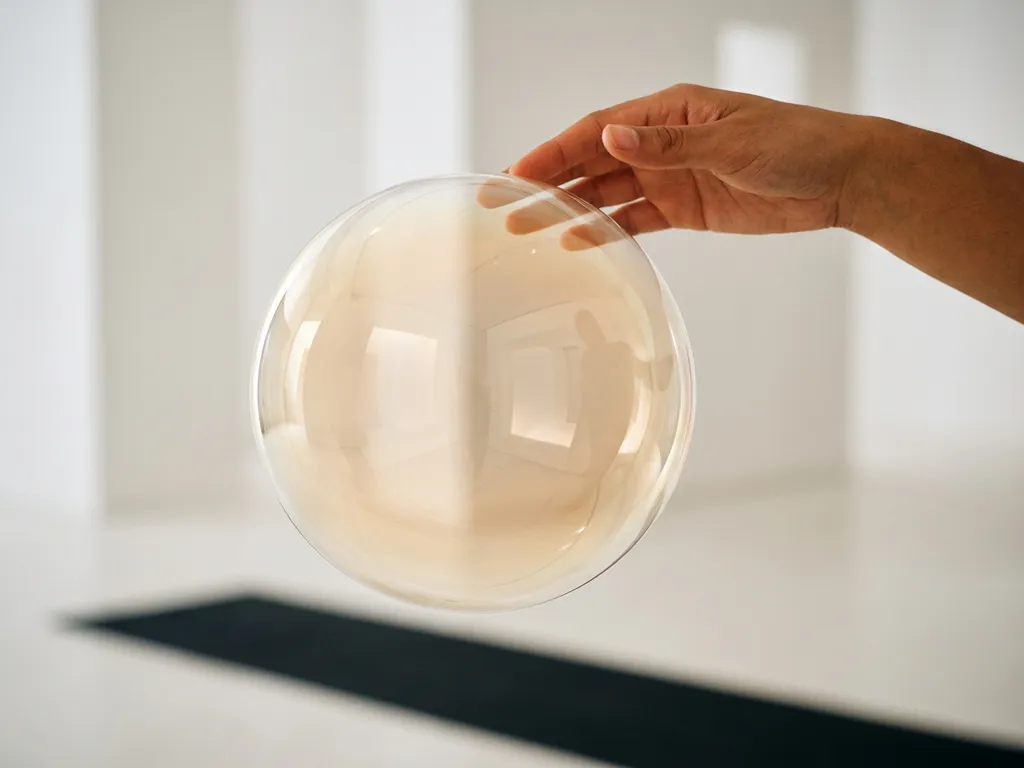
No, immersive does not simply mean 3D. An immersive experience is one that surrounds and absorbs a person so fully that they feel genuinely present within it, and that can happen through sound, scent, touch, spatial design, narrative, and emotion, with or without three-dimensional visuals. Three-dimensionality is one tool that can contribute to immersion, but it is neither a requirement nor a guarantee of it. The questions below unpack what immersion actually means, which senses it engages, and when 3D genuinely earns its place in the design.
What makes an experience truly immersive?
A truly immersive experience is one that occupies enough of a person’s attention, senses, and emotional bandwidth that the outside world temporarily fades. The defining quality is not a specific technology or format, it is the degree to which a person feels present, absorbed, and engaged in the moment. Immersion is measured by what happens inside the participant, not by the sophistication of the equipment around them.
Several conditions tend to produce this state. First, the environment must reduce distraction, physical, cognitive, or emotional barriers that pull attention away from the experience. Second, the content must be meaningful enough to hold focus, whether through story, curiosity, beauty, or emotional resonance. Third, the participant must feel some form of agency or connection, even if they are not actively controlling anything.
This is why a candlelit theatrical performance can be deeply immersive, while an expensive VR headset delivering dull content is not. The technology sets the stage; the design, narrative, and sensory layering create the immersion. At Rooftop Immersive, we approach every project by asking what emotional state the experience should produce first, and then selecting the technologies and sensory elements that best achieve it.
What senses does immersive design actually engage?
Immersive design can engage all five senses, sight, hearing, touch, smell, and taste, as well as proprioception, the sense of one’s own body moving through space. Most digital experiences address only sight and sound. Genuinely immersive design goes further, layering sensory inputs to create a richer, more believable, and more memorable experience.
Sound is often underestimated. Spatial audio that places sounds in specific locations around a person contributes enormously to a sense of presence. Scent is even more powerful in terms of emotional memory, certain smells can trigger vivid recollections and emotional responses faster than any visual stimulus. Touch, whether through haptic feedback, textured surfaces, or temperature changes, grounds a person physically in an environment. Movement through space, walking, turning, leaning, activates proprioception and makes the body a participant rather than a passive observer.
The more sensory channels an experience activates simultaneously, the harder the brain works to integrate them into a coherent whole. That cognitive effort is part of what makes multisensory experiences so memorable. Research in learning science consistently shows that information tied to multiple sensory inputs is retained more effectively and for longer than information delivered through a single channel. This is the foundation of why immersive experiences outperform traditional media for knowledge transfer, empathy building, and behavioral change.
What’s the difference between 3D and immersive experiences?
Three-dimensionality refers to the visual representation of depth, objects that appear to have volume, distance, and spatial relationships. Immersion refers to a psychological and sensory state of absorption. These are different things. A 3D render can be viewed on a flat screen with no sense of presence at all, while a carefully designed audio environment in complete darkness can feel profoundly immersive.
The confusion arises because 3D visuals are frequently used as a component of immersive experiences, particularly in VR, AR, and spatial installations. When 3D imagery is combined with spatial audio, physical movement, and meaningful narrative, it can significantly deepen immersion. But the 3D element is doing supporting work, it is not the source of the immersive quality.
A useful way to distinguish them: 3D is a visual property, while immersion is an experiential outcome. You can have 3D without immersion, and you can have immersion without 3D. The question worth asking is never “should this be in 3D?” but rather “what combination of sensory and narrative elements will make this person feel genuinely present and engaged?”
What technologies are used to create immersive experiences?
Immersive experiences draw on a wide range of technologies, often in combination. The specific tools depend entirely on the goals of the experience, the audience, the venue, and the story being told. No single technology defines immersion, the most effective projects layer multiple systems to create a coherent, absorbing whole.
Spatial and display technologies
Virtual reality headsets place participants inside fully rendered environments, blocking out the physical world entirely. Augmented reality overlays digital content onto the real world through smartphones, tablets, or headsets, blending physical and virtual layers. Mixed reality goes further, allowing virtual objects to interact with real surfaces and spaces in real time. Large-scale projection systems, including 360-degree domes, wrap entire rooms in imagery. Interactive screens respond to presence or touch, turning passive viewers into active participants.
Audio, haptic, and environmental systems
Spatial audio systems position sound in three-dimensional space, creating the sensation that sounds originate from specific directions and distances. Haptic devices deliver physical feedback through vibration, pressure, or resistance. Environmental systems control temperature, airflow, and scent to add non-visual sensory layers. Motion platforms and physical props give the body something real to respond to, reinforcing what the eyes and ears are receiving.
AI and real-time personalization
Artificial intelligence increasingly plays a role in making immersive experiences adaptive. AI-driven avatars can hold real-time conversations, responding to what a participant says or does. Personalization engines adjust the pace, language, or content of an experience based on a participant’s profile or behavior. This capacity for responsiveness transforms a fixed experience into something that feels genuinely tailored, and therefore more engaging.
Can a 2D experience be immersive?
Yes, a 2D experience can absolutely be immersive. Immersion is a psychological state, not a visual format. A flat-screen film with exceptional sound design, a compelling narrative, and emotional depth can absorb a viewer completely. A well-designed interactive installation using flat projections can hold an audience’s attention and generate genuine emotional responses. The dimensionality of the visual output is not the determining factor.
What matters is whether the experience reduces distraction, activates meaningful sensory or emotional engagement, and creates a sense of presence or connection. A 2D experience that does all three will outperform a 3D experience that does none of them. This is an important principle for anyone commissioning or designing immersive work: the temptation to default to 3D because it sounds more advanced can lead to technically impressive but experientially hollow results.
That said, 2D experiences do have natural limits. They are less effective at creating spatial presence, the feeling of being physically inside an environment, because depth cues are absent. For experiences where physical presence and embodiment are central to the goal, 2D formats will require stronger compensating elements in sound, narrative, or physical environment to achieve the same depth of immersion.
When should immersive experiences include 3D elements?
Three-dimensional elements earn their place in an immersive experience when the goal specifically requires spatial presence, depth perception, or the sensation of inhabiting an environment. When a participant needs to feel as though they are standing inside a historical site, walking through a biological system, or occupying a space that does not physically exist, 3D visuals are the most direct tool for producing that sensation. The same applies when scale, volume, or physical relationship between objects is central to the meaning of the experience.
Beyond spatial presence, 3D is valuable when it enhances emotional impact in ways that flat visuals cannot. A volumetric representation of a person, a digital twin or hologram, carries a different emotional weight than a photograph or video of the same person. An architectural model rendered in three dimensions communicates spatial relationships that a floor plan cannot. In these cases, the 3D element is doing genuine communicative work, not simply adding visual complexity.
The clearest signal that 3D is not necessary is when the story, emotion, or information can be conveyed just as effectively through sound, flat visuals, physical environment, or narrative alone. Adding 3D in those cases increases production complexity and cost without meaningfully deepening the experience. The question to ask is always whether the 3D element changes how the participant feels or understands: if the honest answer is no, it is probably not worth including.
Ultimately, the most powerful immersive experiences are built around a clear emotional or learning goal, with every sensory and technical element selected because it serves that goal. Whether that means rich 3D environments, pure spatial audio, physical scent systems, or a combination of all three depends entirely on what the experience needs to achieve. If you are exploring what the right combination might look like for your project, we would love to help you figure it out. contact us and let’s start the conversation.
Gerelateerde artikelen
- How do you make an experience center interactive?
- What are five types of immersive technology?
- What does AR stand for in marketing?
- What are the disadvantages of augmented reality?
- What are the benefits of having sensory experiences?
- How much does it cost to create a VR experience?
- Is immersive the same as virtual reality?
- How does spatial design affect user engagement?
- What are the ROI benefits of experiential marketing campaigns?