
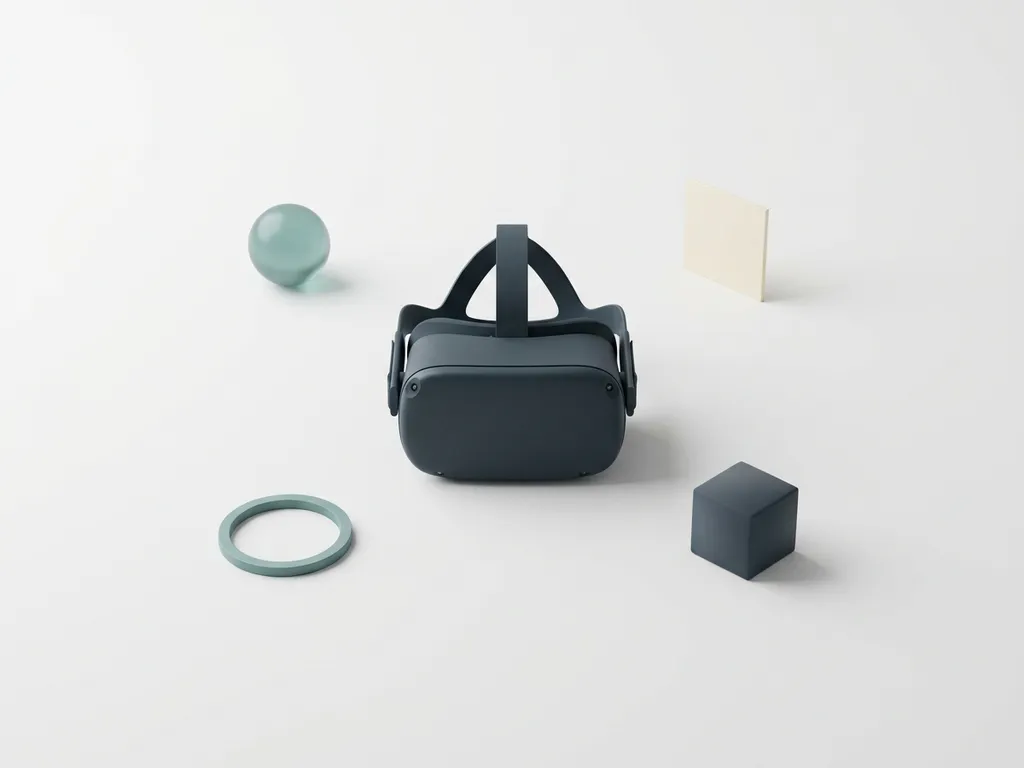
The four key concepts in immersive media are spatial presence, interactivity, multisensory design, and narrative immersion. Together, these concepts define what separates a genuinely immersive experience from a passive one: they are the building blocks that determine whether an audience simply watches something or truly enters it. Understanding each concept reveals why immersive experiences are increasingly used in education, brand engagement, and cultural storytelling, and how they are designed to create lasting impact.
How do the four concepts work together in an immersive experience?
The four concepts, spatial presence, interactivity, multisensory design, and narrative immersion, work together as an interconnected system where each element amplifies the others. No single concept creates full immersion on its own. When spatial presence grounds a person physically, interactivity gives them agency, multisensory design deepens their emotional engagement, and narrative immersion gives meaning to everything they encounter.
Think of them as four layers of a single experience. Spatial presence establishes the environment. Multisensory design makes it feel real and emotionally resonant. Interactivity invites the participant to act within that world. And narrative immersion ensures those actions carry meaning. When all four are working in harmony, the brain stops processing the experience as constructed media and begins responding to it as lived reality. That shift is what makes immersive media so powerful for learning, empathy-building, and brand connection.
In practice, a well-designed immersive experience rarely foregrounds any single concept. The spatial environment supports the story. The story motivates interaction. The interaction triggers sensory responses. Each concept feeds the next in a cycle that keeps the participant engaged, present, and emotionally invested.
What is spatial presence and why does it define immersive media?
Spatial presence is the psychological sensation of being physically located inside a mediated environment rather than observing it from outside. It is the feeling of being there rather than watching something on a screen. Spatial presence defines immersive media because without it, no amount of interactivity or storytelling can overcome the fundamental distance between the audience and the experience.
Spatial presence is created through a combination of design choices: field of view, scale, environmental depth, positional audio, and the alignment between what a person sees and what their body senses. When these elements are calibrated correctly, the brain’s perceptual systems accept the constructed environment as a real space to inhabit rather than a representation to observe.
This is why immersive formats such as 360-degree projection domes, VR headsets, and large-scale spatial installations are so effective. They fill or replace the participant’s perceptual field rather than occupying a portion of it. The result is a fundamentally different cognitive state, one where attention is no longer divided between the experience and the surrounding world.
For cultural institutions, spatial presence is what allows visitors to step inside a historical moment rather than read about it. For brands, it is what transforms a product demonstration into a world a customer can explore. For educators, it is what makes abstract concepts feel tangible and real.
What role does interactivity play in immersive media?
Interactivity transforms a participant from a passive observer into an active agent within the experience. In immersive media, interactivity means the environment responds to the participant’s choices, movements, or inputs in meaningful ways. This responsiveness is what creates a sense of personal investment and genuine engagement rather than a feeling of watching something unfold without you.
Interactivity operates on a spectrum. At one end, it is simple: a user looks in a direction and the environment responds with spatial audio. At the other end, it is complex: a learner makes decisions that alter the narrative outcome of a simulation, or a visitor triggers different layers of information by physically moving through a space. The level of interactivity appropriate for any given experience depends on its purpose and audience.
Research in learning science consistently shows that active participation deepens retention and comprehension. When people do something rather than watch it, they form stronger memories and more durable understanding. This is why interactive VR training simulations outperform passive video instruction for complex procedural skills, and why interactive AR experiences generate more brand recall than static digital advertising.
Interactivity also creates emotional ownership. When a participant’s choices shape what happens next, they feel responsible for the experience. That sense of agency is a powerful driver of empathy, particularly in social impact and educational contexts where the goal is to shift perspective or motivate behavior change.
How does multisensory design differ from audiovisual media?
Multisensory design engages the senses of smell, touch, temperature, and physical sensation alongside sight and sound, while audiovisual media is limited to what can be transmitted through a screen and speakers. The difference is not merely technical: it is neurological. Each additional sensory channel activated during an experience increases the number of memory pathways formed, making the experience more vivid, more emotionally resonant, and more durable in memory.
Traditional audiovisual media, however sophisticated, communicates through two sensory channels. A film can be visually stunning and sonically rich, but it cannot replicate the warmth of sunlight, the texture of a surface, or the smell of a forest. Multisensory design closes that gap by deliberately designing for the full body, not just the eyes and ears.
In immersive installations, multisensory elements might include directional wind effects that reinforce a visual of movement, scent diffusers that evoke a specific place or memory, haptic feedback that makes virtual objects feel physically present, or temperature shifts that signal environmental change. Each of these additions may seem subtle in isolation, but together they create an experience that the brain processes as genuinely physical rather than mediated.
For brands, multisensory design creates the kind of sensory brand associations that persist long after a campaign ends. For educators and NGOs, it is what allows abstract or distant realities, poverty, climate change, historical trauma, to feel personally immediate rather than intellectually distant.
What makes narrative immersion different from traditional storytelling?
Narrative immersion places the participant inside the story rather than in front of it. In traditional storytelling, the audience observes characters and events from a fixed external perspective. In immersive narrative, the participant occupies a position within the story world, as a witness, a character, or an agent whose choices shape what unfolds. This shift from observer to inhabitant fundamentally changes the emotional and cognitive experience of a story.
Traditional storytelling relies on the audience’s willingness to suspend disbelief and empathize with characters they are watching from a distance. Immersive narrative reduces that distance to zero. When you are standing inside a story, surrounded by its environment, responding to its events, empathy is not a cognitive choice: it is an automatic response to what your senses are telling you is real.
This is why immersive narrative is particularly powerful for social impact work. An NGO campaign that places a viewer inside the experience of a refugee family creates a qualitatively different emotional response than a documentary that tells the same story from the outside. The felt reality of the situation bypasses the psychological distance that often prevents audiences from connecting with abstract suffering or complex social issues.
Narrative immersion also changes the role of the designer. Rather than crafting a linear sequence of events, immersive storytellers must design a world that holds together from any angle, at any moment, and in response to any action the participant might take. This requires a fundamentally different approach to structure, character, and meaning-making, one that we at Rooftop Immersive consider central to every project we build.
Which immersive media format best fits each concept?
Different immersive formats are optimized for different concepts, and the strongest experiences choose formats that align with their primary design goal. Spatial presence is most fully achieved through VR headsets and 360-degree projection environments, where the participant’s visual field is entirely replaced or surrounded. Interactivity is best served by mixed reality platforms, interactive AR applications, and responsive installation design. Multisensory design thrives in physical immersive installations: 4D cinemas, sensory rooms, and spatial environments where scent, haptics, and temperature can be controlled. Narrative immersion can be achieved across formats but reaches its greatest depth in location-based VR experiences, immersive theater, and interactive storytelling environments.
- Spatial presence: VR headsets, 360-degree projection domes, large-scale spatial installations
- Interactivity: AR applications, mixed reality platforms, interactive screens and responsive environments
- Multisensory design: 4D cinemas, sensory immersive installations, haptic and scent-enabled environments
- Narrative immersion: Location-based VR, interactive narrative platforms, immersive theater and experiential storytelling
In practice, the most impactful experiences combine formats rather than relying on a single one. A museum exhibition might use spatial AR to layer narrative content over physical artifacts, haptic elements to reinforce key moments, and interactive decision points that give visitors agency over how the story unfolds. The format is always a vehicle for the concept, never the goal in itself.
How are these concepts applied in education and cultural settings?
In education and cultural settings, the four concepts are applied to solve a shared challenge: making complex, abstract, or emotionally distant content genuinely accessible and memorable. Spatial presence transports learners and visitors to environments they could not otherwise access. Interactivity replaces passive reception with active participation. Multisensory design creates the emotional depth needed for empathy and retention. Narrative immersion gives meaning and coherence to the entire experience.
In educational contexts, these concepts translate into VR simulations that place students inside historical events, AR overlays that animate scientific processes in real space, and interactive learning environments that adapt to individual pace and learning style. The result is not simply more engaging content: it is a fundamentally different mode of knowledge construction, one where understanding is built through experience rather than delivered through instruction.
In cultural institutions, the same concepts allow museums and heritage organizations to extend the reach and emotional resonance of their collections. A painting becomes a world you can step inside. A historical artifact becomes the centerpiece of a narrative you can inhabit. A cultural tradition becomes a sensory experience rather than a text panel on a wall. These approaches attract younger and more diverse audiences while deepening the engagement of existing visitors.
We work with educators, cultural leaders, and social impact organizations to design experiences that apply all four concepts in service of genuine learning and emotional connection. If you are exploring how immersive media could transform the way your audience engages with your content or mission, we would love to hear about your vision: contact us to start the conversation.
Gerelateerde artikelen
- What are five applications of virtual reality?
- What is the 20 20 20 rule for VR?
- How much do immersive installations cost?
- How do you optimize spatial design for different audiences?
- What technologies are used in immersive experiences?
- What is an immersive installation?
- What is experiential marketing?
- What are the ROI benefits of experiential marketing campaigns?
- What content works best for dome installations?