
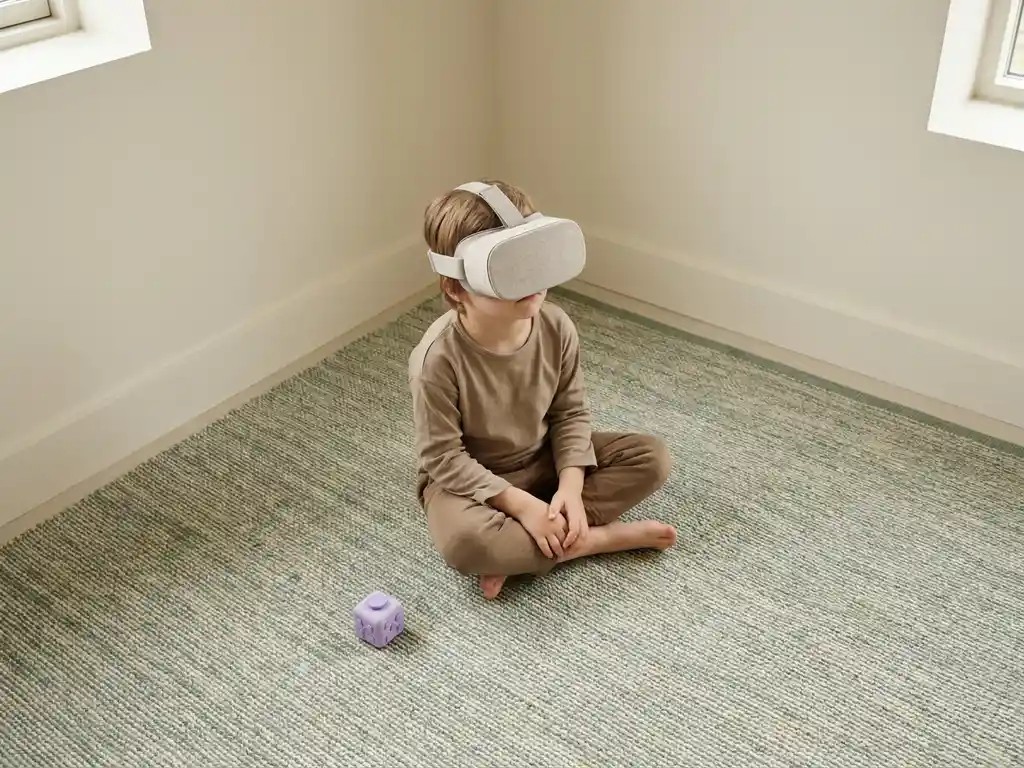
VR is not inherently bad for kids with ADHD, but it carries real risks that parents and educators need to understand before using it. The immersive nature of virtual reality can both help and hinder children with ADHD depending on the content, duration, and context of use. The sections below address the most important questions around VR and ADHD in children so you can make informed decisions.
Can VR actually worsen ADHD symptoms in children?
VR can worsen ADHD symptoms in children under certain conditions, particularly with fast-paced, highly stimulating content used for extended periods. The same sensory intensity that makes VR compelling can overwhelm the attentional systems of children with ADHD, making it harder to regulate focus and impulse control after the headset comes off.
Children with ADHD already experience difficulty with dopamine regulation, and highly stimulating virtual environments can spike that reward response sharply. When real-world activities feel dull by comparison, some children may struggle to re-engage with everyday tasks, homework, or conversation after an intense VR session. This contrast effect is one of the most commonly reported concerns among parents and clinicians.
That said, worsening symptoms is not an automatic outcome. The type of content, session length, and how the experience is framed all play a significant role. A calm, structured VR learning experience is very different from a high-speed action game, and the effects on a child’s behaviour afterward will reflect that difference.
What specific VR risks apply to kids with ADHD?
Children with ADHD face several VR-specific risks that go beyond the general concerns raised for all children. These include heightened sensory overload, difficulty disengaging from the experience, increased impulsivity after sessions, and a stronger tendency toward screen dependency due to the intense dopamine stimulation VR provides.
Unlike passive screen use, VR creates a fully enclosed sensory environment. For a child whose nervous system already processes stimulation differently, this can tip quickly from engaging to overwhelming. Signs of overload include irritability after sessions, difficulty transitioning back to quieter activities, and resistance to stopping when asked.
Impulsivity is another concern worth naming directly. The immediate feedback loops in many VR games, where actions produce instant, dramatic results, can reinforce impulsive behaviour patterns. Children with ADHD are particularly sensitive to these reward cycles, which can make moderation genuinely difficult without clear structure from a supervising adult.
There is also the question of physical side effects. Motion sickness, eye strain, and disorientation are more likely to affect children whose sensory processing is already atypical. These physical discomforts can compound emotional dysregulation, leading to meltdowns or extended unsettled behaviour after use.
Are there benefits of VR for children with ADHD?
Yes, there are meaningful benefits of VR for children with ADHD when the technology is used intentionally. Research and clinical practice suggest that well-designed VR experiences can improve focus during tasks, build social and emotional skills through perspective-taking, and make abstract or difficult concepts more accessible through embodied, hands-on learning.
One of the most significant advantages is motivation. Children with ADHD often struggle with tasks that feel disconnected from immediate reward, but VR creates an environment where engagement feels natural and intrinsic. When learning content is embedded in an interactive virtual world, children who typically resist sitting still can sustain attention for longer than they would with traditional instruction.
VR has also shown promise in therapeutic contexts, including attention training programs and social skills development. Some clinical approaches use structured VR environments to simulate real-world scenarios, such as classroom settings or social interactions, allowing children to practise responses in a controlled space before encountering them in real life.
The key distinction is always intentional design. A VR experience built with educational scaffolding, clear goals, and appropriate pacing is fundamentally different from entertainment content designed purely for stimulation. For children with ADHD, that design difference determines whether VR becomes a tool or a trigger.
How does VR affect attention span in children with ADHD?
VR affects attention span in children with ADHD in two opposing ways depending on context. During a VR session, many children with ADHD demonstrate significantly improved sustained attention because the environment eliminates competing distractions and delivers continuous sensory engagement. After a session, however, attention span can temporarily decrease as the child’s nervous system readjusts to lower stimulation.
This dual effect is important for parents and educators to understand. The in-session focus boost is real and can be leveraged for learning, but it does not automatically transfer to improved attention in everyday settings. Treating VR as a passive attention fix misses the point. The goal should be using that heightened engagement window to build skills, habits, or knowledge that carry forward.
There is also a habituation concern. If a child regularly experiences the hyper-engaging environment of VR, their baseline tolerance for lower-stimulation activities may shift. Over time, this can make it harder, not easier, for the child to attend to ordinary classroom instruction or quiet reading. Structured, limited use mitigates this risk considerably.
What age is appropriate for VR use in kids with ADHD?
Most health and technology guidance recommends that children under seven avoid VR entirely, and that children between seven and twelve use it only in short, supervised sessions with age-appropriate content. For children with ADHD specifically, these thresholds should be applied conservatively, with additional attention to individual sensory tolerance and emotional regulation capacity.
The concern with younger children is not just developmental vision health, though that is a real factor. Young children have not yet developed the cognitive tools needed to distinguish between virtual and real experiences with consistency. For a child with ADHD who already struggles with impulse regulation and reality testing in emotionally charged moments, this boundary can be even more porous.
By early adolescence, around twelve to fourteen, most children with ADHD can engage with VR more safely, provided they have established routines around usage and a trusted adult monitors the content and duration. Maturity, rather than age alone, is the more reliable guide. A child who can articulate how they feel after a session and self-regulate transitions is better placed to use VR responsibly than one who cannot yet do either.
How long should a child with ADHD use VR at a time?
For children with ADHD, VR sessions should generally be limited to ten to twenty minutes at a time, with a clear break before any follow-up session. This is shorter than the thirty-minute guideline sometimes suggested for neurotypical children, because children with ADHD are more susceptible to sensory overload, emotional dysregulation, and difficulty disengaging from immersive environments.
The transition out of VR matters as much as the session length. Abruptly ending a session without a wind-down routine is more likely to produce distress or resistance. A brief structured closing, such as a short conversation about what the child experienced, followed by a quiet activity before returning to normal tasks, helps the nervous system recalibrate.
Total daily VR time should be considered alongside overall screen time. VR is more neurologically intense than passive video viewing, so it should not simply be added on top of an existing screen schedule. On days when a child uses VR, reducing other screen-based activities is a reasonable approach to managing overall stimulation load.
What types of VR content are safer for kids with ADHD?
Calmer, structured, and goal-oriented VR content is significantly safer for children with ADHD than fast-paced, open-ended, or highly competitive experiences. The safest content categories include guided nature environments, step-by-step educational simulations, creative building experiences, and therapeutic applications designed with clinical input.
Content to approach with caution includes first-person action games with rapid scene changes, competitive multiplayer environments, and any experience designed primarily to maximise time on device through escalating reward loops. These formats are engineered to be difficult to stop, which is a particular challenge for children who already struggle with impulse control.
The pacing of content is as important as the category. Even educational VR can be overstimulating if it bombards the child with information, sound, and movement simultaneously. Well-designed immersive learning experiences, like those we create at Rooftop Immersive, are built with sensory layering in mind, introducing stimuli gradually and giving the learner agency over the pace of discovery.
Should children with ADHD use VR for learning?
Yes, children with ADHD can and often should use VR for learning when the content is purposefully designed for education and used within appropriate time limits. Immersive learning experiences address several of the core challenges ADHD presents in traditional classroom settings, including low motivation, difficulty sustaining attention, and poor retention of abstract information.
VR learning works for children with ADHD because it converts passive reception into active participation. Instead of listening to a description of a historical event or a scientific process, the child inhabits it. This embodied engagement activates multiple sensory pathways at once, which supports deeper encoding and longer retention than reading or listening alone.
The structure of the learning experience matters enormously. VR content that includes clear goals, manageable steps, immediate feedback, and natural pause points is far more effective and safer for children with ADHD than open-ended virtual environments. Educators and parents should look for experiences that are designed with learning outcomes at their core, not just immersive novelty.
If you are exploring how purposefully designed immersive experiences could support children with ADHD in educational or therapeutic settings, we would be glad to share what is possible. Feel free to contact us to start a conversation about building something that genuinely works for your learners.
Gerelateerde artikelen
- How is augmented reality used in marketing?
- What is an example of a non immersive virtual reality?
- How much does extended reality cost?
- How much do immersive installations cost?
- Is immersive the same as virtual reality?
- How much space is needed for dome installations?
- Is immersive the same as virtual reality?
- What are the technical requirements for immersive installations?
- How do you create educational immersive content?