
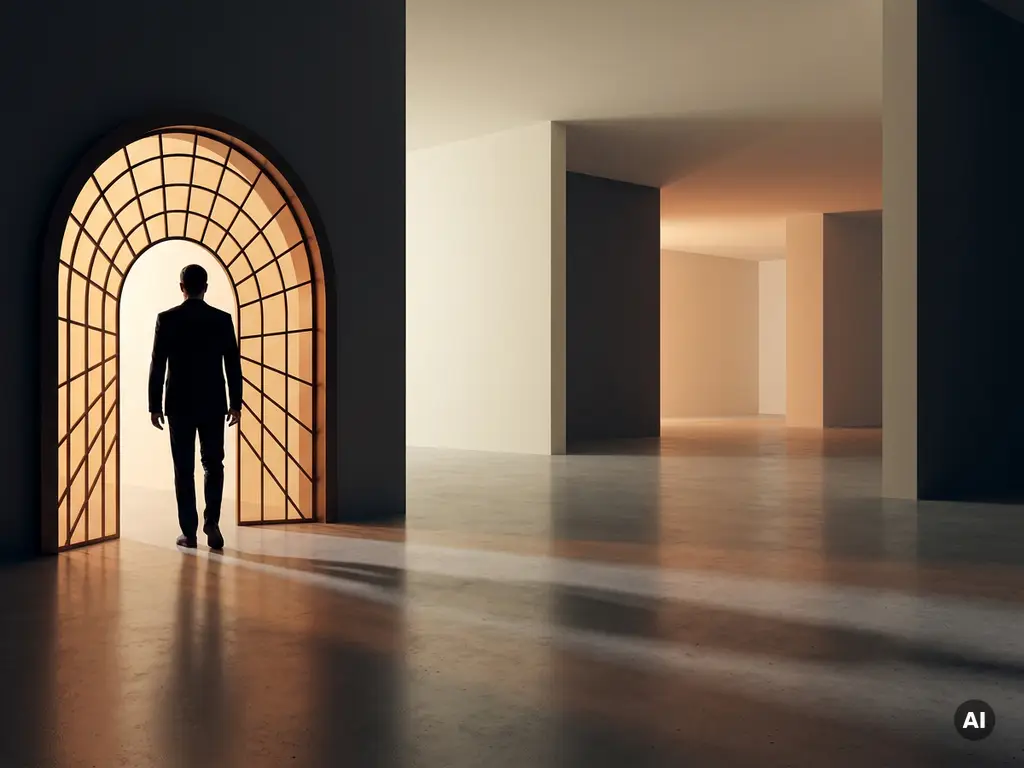
Creating immersive experiences means designing environments, narratives, and sensory layers that pull people fully into a moment, where they stop observing and start participating. The result is an experience that engages multiple senses simultaneously, connects emotionally, and leaves a lasting impression that passive media simply cannot match. Below, we answer the most important questions about immersive experience design, from the first creative spark to measuring real-world impact.
What makes an experience truly immersive?
A truly immersive experience is one that engages the whole person, not just their eyes or ears, but their sense of space, touch, smell, and emotional state. It achieves this by combining environmental design, narrative depth, and sensory stimulation so completely that the boundary between the participant and the experience dissolves. The key is removing friction between the person and the story being told.
Several qualities separate a genuinely immersive experience from one that simply looks impressive:
- Multi-sensory engagement: Sight and sound are the baseline. True immersion adds spatial audio, scent, temperature, texture, and physical feedback to create a complete sensory world.
- Agency and interactivity: When participants can influence what happens, through choices, movement, or interaction, they shift from audience members to active participants. That shift dramatically deepens engagement.
- Emotional resonance: The experience must mean something. Whether it provokes wonder, empathy, curiosity, or urgency, emotional connection is what transforms a moment into a memory.
- Spatial coherence: The physical or virtual environment must feel consistent and believable. Inconsistencies break the spell instantly.
- Personalization: Experiences that adapt to the individual, their language, pace, or emotional response, feel far more relevant and impactful than one-size-fits-all productions.
At Rooftop Immersive, we design with all five of these qualities in mind from the very first concept session. Our work with organizations like UNICEF and PwC demonstrates that immersion is not a luxury reserved for entertainment, it is a powerful tool for education, empathy-building, and genuine behavioral change.
What types of technology are used to create immersive experiences?
Immersive experiences are built using a layered combination of spatial computing, audiovisual production, interactive hardware, and increasingly, artificial intelligence. The specific technologies chosen depend on the goals of the experience, the audience, and the physical or digital context in which it will be delivered.
Spatial computing and extended reality
Augmented Reality (AR), Virtual Reality (VR), and Mixed Reality (MR) form the core toolkit of modern immersive design. AR overlays digital content onto the real world through smartphones or headsets. VR transports users into fully virtual environments. Mixed Reality, as seen on platforms like Apple Vision Pro, allows real-time interaction between physical and virtual elements in the same space.
Environmental and sensory technology
Beyond screens and headsets, immersive installations use 360-degree projection domes, spatial audio systems, scent diffusers, haptic feedback devices, and motion-tracking hardware. 4D cinema environments combine all of these, adding movement, warmth, and even physical sensations, to create full-body experiences that go far beyond what any display can achieve alone.
Artificial intelligence and real-time personalization
AI is rapidly becoming one of the most transformative forces in immersive technology. AI-driven avatars and non-player characters (NPCs) can hold real-time conversations with visitors, adapting their responses based on what is said. AI also enables experiences to adjust their language, pacing, and narrative path based on individual user behavior, making each journey feel unique.
Photogrammetry and digital twins
Photogrammetric scanning converts physical objects, people, and entire buildings into precise 3D digital models. These digital twins can then be embedded into AR or VR environments, allowing audiences to explore spaces or artifacts that would otherwise be inaccessible.
How does storytelling shape an immersive experience?
Storytelling is the architecture of an immersive experience. Technology creates the environment, but narrative gives it meaning. Without a clear story, a tension, a journey, a point of view, even the most technically sophisticated installation feels hollow. Immersive storytelling works by placing the participant inside the narrative rather than in front of it.
Effective immersive narratives share several structural qualities. They establish a clear emotional entry point, a question, a problem, or a perspective that the audience is invited to inhabit. They build through layers of discovery rather than delivering information all at once. And they resolve in a way that feels personally meaningful, not just intellectually satisfying.
For brands, this means moving beyond product messaging to create worlds that embody brand values. For educators and NGOs, it means transforming abstract data or distant realities into lived, felt experiences. When UNICEF or a museum commissions an immersive piece, the story is not decoration, it is the mechanism through which understanding and empathy are transferred.
The most powerful immersive stories also leave space for the participant. They do not dictate every response but create conditions in which genuine emotional reactions can arise naturally. That openness is what makes an experience feel authentic rather than scripted.
What’s the difference between AR, VR, and mixed reality experiences?
AR, VR, and mixed reality are three distinct forms of immersive experience that differ in how they relate to the physical world. AR adds digital layers to reality, VR replaces reality entirely, and mixed reality merges both in real time. Choosing between them depends on the context, the audience, and the depth of immersion required.
- Augmented Reality (AR): The user remains in the real world, but digital content, 3D objects, animations, information overlays, is superimposed onto their physical environment through a smartphone or AR headset. AR is highly accessible, requires no dedicated space, and works well for brand activations, outdoor campaigns, museum layers, and educational supplements.
- Virtual Reality (VR): The user is transported into a fully computer-generated environment, completely replacing their physical surroundings. VR is the most immersive format available, ideal for training simulations, empathy-driven storytelling, and experiences that require total environmental control. It requires a headset and, for group experiences, synchronized hardware setups.
- Mixed Reality (MR): MR goes beyond AR by allowing virtual objects to interact with the physical environment in real time, a virtual character can sit on a real chair, or a digital model can respond to physical movement. Platforms like Apple Vision Pro are pushing MR into new territory, enabling next-generation experiences for enterprise, education, and cultural institutions.
We design across all three formats, often combining them within a single experience to match the right level of immersion to each moment in the visitor or user journey.
How do you design an immersive experience from concept to delivery?
Designing an immersive experience from concept to delivery follows a structured creative and technical process that moves from defining goals and audience, through narrative and spatial design, into production, testing, and final deployment. Each phase builds on the last, and collaboration between creative, technical, and client teams is essential throughout.
The process typically unfolds across these key stages:
- Discovery and brief: Define the core objective, what should the audience feel, learn, or do? Identify the target audience, the physical or digital context, and the success criteria. This phase shapes every decision that follows.
- Concept development: Develop the narrative framework, sensory strategy, and technology approach. This is where creative direction, spatial design, and technology selection come together into a coherent concept.
- Prototype and validate: Build early-stage prototypes, whether physical mock-ups, storyboards, or interactive demos, to test core assumptions before full production begins. User feedback at this stage saves significant time and cost later.
- Production: Execute the full build: 3D modeling, software development, content creation, hardware integration, and environmental design. For complex projects, these workstreams run in parallel under a unified production plan.
- Testing and refinement: Test with real users in conditions as close to the final environment as possible. Identify friction points, technical failures, and moments where the narrative loses momentum.
- Deployment and support: Install, calibrate, and launch the experience. Ongoing technical support and content updates ensure the experience remains effective over time.
Our approach at Rooftop Immersive keeps the entire journey, from first idea to final delivery, under one roof. That integration means the creative vision and technical execution stay aligned at every stage, without the gaps that appear when multiple agencies hand off work between themselves. You can explore examples of this process in action across our completed projects.
How much does it cost to create an immersive experience?
The cost of creating an immersive experience varies significantly depending on a range of factors, and there is no single price point that applies across all projects. Understanding what drives cost helps organizations plan budgets realistically and make informed decisions about where to invest for maximum impact.
The key factors that shape the investment required include:
- Scope and complexity: A single AR activation for a product launch requires far less production effort than a multi-room immersive installation designed for thousands of visitors. The number of interactive elements, narrative branches, and sensory layers all add complexity.
- Technology choices: Custom VR environments built in Unreal Engine, bespoke AI-driven avatars, or large-scale 360-degree dome projections carry higher development costs than smartphone-based AR experiences.
- Hardware requirements: Some experiences require significant physical infrastructure, projection systems, haptic rigs, scent devices, or synchronized headset arrays. Hardware procurement, installation, and ongoing maintenance are part of the total investment.
- Duration and longevity: A one-time event activation has a different cost profile than a permanent museum installation or an educational programme designed to run for years and scale across multiple locations.
- Personalization and AI integration: Experiences that adapt in real time to individual users, through AI dialogue systems or dynamic content paths, require more sophisticated development than linear, fixed-path experiences.
- Content creation depth: Original 3D modelling, volumetric video capture, spatial audio production, and cinematic-quality animation all contribute meaningfully to production cost.
The most effective way to understand what an immersive experience will cost is to begin with a clear brief and a conversation about goals. Budget and ambition can then be aligned in a way that delivers maximum impact within real-world constraints.
Who should be involved in creating an immersive experience?
Creating a successful immersive experience requires a multidisciplinary team that spans creative, technical, and strategic expertise. No single discipline can deliver a truly effective immersive experience alone, the magic happens at the intersection of storytelling, design, technology, and deep knowledge of the audience being served.
The core roles typically involved include:
- Creative director and narrative designer: Responsible for the overall vision, the story arc, and the emotional journey. This person ensures that every element, visual, spatial, sonic, and interactive, serves the central narrative.
- Experience designer and spatial designer: Translates the narrative into physical and digital environments. Considers how people move through space, what they encounter at each moment, and how the environment guides their journey.
- Technology leads (AR/VR/AI developers): Build the interactive and digital systems that power the experience. Their choices determine what is technically possible within the creative vision.
- Sound designer and composer: Spatial audio is one of the most powerful and underestimated tools in immersive design. A dedicated sound specialist ensures the sonic environment reinforces every emotional beat.
- Client or subject matter expert: The organization commissioning the experience brings irreplaceable knowledge of the audience, the message, and the context. Deep collaboration with the client is not optional, it is essential.
- Producer or project manager: Keeps the entire team aligned, manages timelines and budgets, and ensures the creative vision survives contact with real-world constraints.
For organizations without in-house immersive capability, working with an integrated studio, one that houses all of these disciplines under one roof, dramatically reduces coordination risk and ensures creative coherence from start to finish.
How do you measure the impact of an immersive experience?
Measuring the impact of an immersive experience means defining success before the experience is built, then tracking behavioral, emotional, and cognitive outcomes against those benchmarks. Impact measurement is not one-size-fits-all, the right metrics depend entirely on what the experience was designed to achieve.
For commercial and brand experiences, relevant metrics often include dwell time, social sharing rates, brand recall, and conversion behavior measured before and after the activation. The depth of engagement, how long people stay, how often they return, how actively they interact, tells a more meaningful story than reach alone.
For educational and social impact experiences, the measures shift toward learning outcomes, attitude change, and behavioral intent. Pre- and post-experience surveys, observation of participant behavior during the experience, and follow-up research weeks later can all reveal whether the experience achieved genuine understanding or empathy, not just enjoyment.
Immersive technology also enables forms of measurement that traditional media cannot. Interaction data from VR or AR environments reveals exactly where participants engaged most deeply, where attention dropped, and which narrative moments triggered the strongest responses. This data feeds directly back into experience refinement and future design decisions.
The most important principle is to treat measurement as part of the design process, not an afterthought. When success criteria are defined early, every creative and technical decision can be evaluated against them, and the final experience is far more likely to deliver results that matter.
If you are ready to explore what an immersive experience could achieve for your organization, we would love to hear about your goals. Visit our studio to learn more about our work, or reach out directly to start a conversation, contact us and let’s build something that truly resonates.
Gerelateerde artikelen
- Why do people like immersive experiences?
- What is an immersive museum?
- What kind of technology is used in museums?
- How much does a virtual tour cost?
- How does virtual reality impact society?
- What are the three levels of immersion?
- What is the difference between experiential learning and immersive learning?
- What are the different types of immersive experiences?
- How do immersive installations work?