
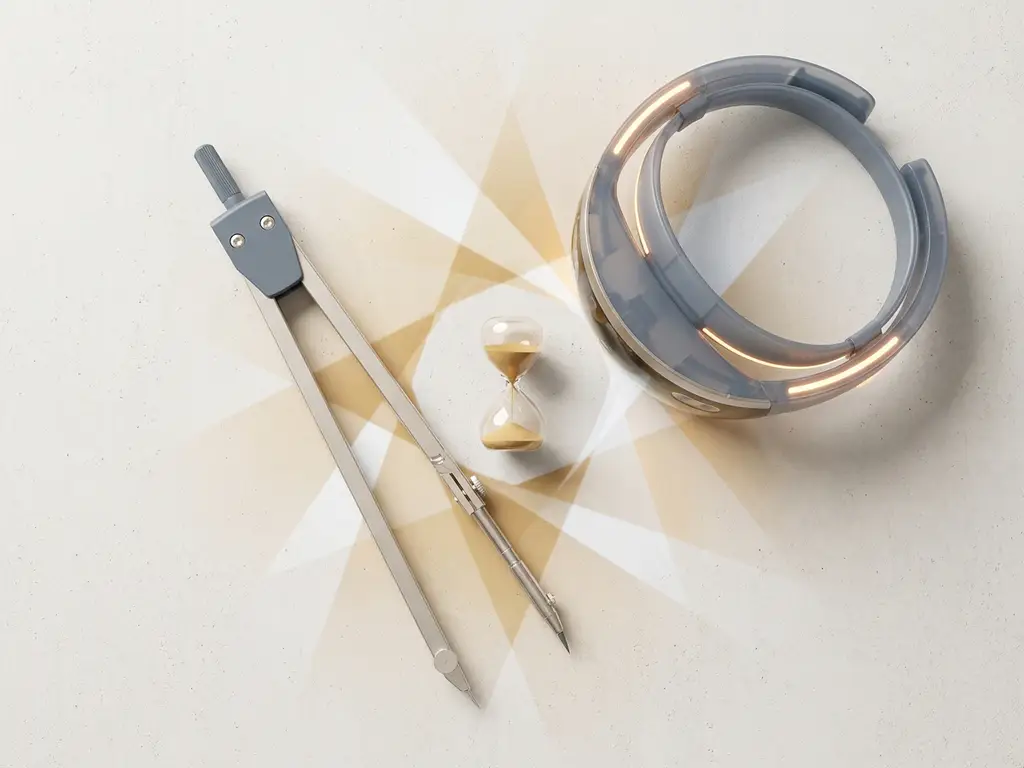
AR content production typically takes anywhere from two weeks to six months, depending on the complexity of the experience. A simple image-tracking activation or AR poster can be ready in two to four weeks, while a fully interactive AR portal, game, or multi-location geospatial experience may require three to six months of development. The single biggest variable is not the technology itself, but the clarity and completeness of the brief at the start of the project. The sections below break down each stage, common causes of delay, and how to plan your timeline realistically.
What factors determine how long AR content takes to produce?
The length of an AR production is shaped by four core variables: the complexity of the 3D assets required, the level of interactivity built into the experience, the number of platforms it must run on, and how well-defined the creative brief is from day one. A project with approved assets, a clear concept, and a single delivery platform can move very quickly. A project that requires custom 3D modelling, multi-step interactions, and simultaneous deployment across iOS, Android, and a headset will take considerably longer.
Beyond the creative and technical scope, the client-side feedback cycle plays an equally important role. Every round of revisions adds time, and the more stakeholders involved in approvals, the more that time compounds. Integration requirements also matter: if the AR experience needs to connect with a live event platform, a CRM system, or a physical installation, those dependencies introduce coordination work that sits outside the core development sprint.
Finally, content readiness is often underestimated. If 3D models, brand assets, copy, and visual identity guidelines are handed over at the start, production moves faster. If those elements need to be created from scratch or sourced and approved during the project, the timeline extends accordingly.
How long does a simple AR activation typically take?
A simple AR activation, such as an image-tracking poster, a branded AR filter, or a basic product visualisation, typically takes between two and four weeks from a confirmed brief to a deliverable experience. These projects use existing asset pipelines, established templates, and well-understood deployment frameworks, which keeps the production cycle compact and predictable.
Simple activations are characterised by a limited number of interactive states, low-polygon 3D assets or 2D animated overlays, and deployment to a single platform such as a web-based AR viewer or a social media lens. The creative development phase is short, the technical build is straightforward, and the testing phase is focused. For brand campaigns, product launches, and event activations with tight deadlines, this category of AR is the most accessible entry point.
Even within this category, the timeline can stretch if asset approvals are slow or if the brief changes after development has begun. Protecting a two-to-four-week timeline requires a locked brief and pre-approved assets before the first line of code is written.
How long do complex AR experiences like portals or interactive games take?
Complex AR experiences, including AR portals, multi-stage interactive AR games, geospatial AR activations, and volumetric hologram twins, typically require between two and six months to produce. The range reflects the significant variation in scope within this category: a single-location AR portal with a pre-built environment sits at the lower end, while a multi-location geospatial campaign with custom characters, narrative branching, and real-time data integration can occupy a full development team for four to six months.
AR portals and immersive environments
AR portals require the creation of a fully realised virtual space that users step into through their device camera. This means designing and building a three-dimensional environment, lighting it convincingly, ensuring occlusion works correctly so the portal edge feels physical, and optimising the entire scene to run smoothly on mobile hardware. Depending on the environmental complexity, this phase alone can take four to eight weeks before any interaction logic is layered on top.
Interactive AR games and multi-step experiences
AR games introduce game mechanics, scoring systems, user progression, and often multiplayer or location-based logic. Each of these systems requires design, development, testing, and iteration. The more decision points a user encounters, the more states the system must handle, and the longer the quality assurance phase becomes. A well-built AR game for an educational or brand activation context typically needs a minimum of ten to fourteen weeks from concept lock to a launch-ready build.
What are the main production phases in an AR project?
An AR project moves through five core phases: discovery and concept, pre-production and asset creation, development and integration, quality assurance and testing, and deployment and launch support. Each phase has a distinct purpose, and the time allocated to each shifts depending on the complexity of the experience being built.
- Discovery and concept: Defining the experience goals, user journey, technical requirements, and creative direction. This phase typically takes one to two weeks for simpler projects and two to four weeks for complex ones. A clear output from this phase is a production brief that all parties have approved.
- Pre-production and asset creation: Building or sourcing the 3D models, animations, environments, audio, and visual assets the experience requires. This is often the longest phase in complex projects and the phase most sensitive to changes in creative direction.
- Development and integration: Writing the code, building the AR logic, integrating assets into the chosen engine or platform, and connecting any external systems. For interactive experiences, this phase includes building and testing individual interaction states before assembling the full experience.
- Quality assurance and testing: Testing across target devices, operating systems, and real-world conditions, including different lighting environments, surface types, and network conditions. This phase is non-negotiable and should never be compressed to recover time lost elsewhere.
- Deployment and launch support: Publishing the experience, distributing it to the intended audience, and monitoring performance in the first days after launch. For location-based or event-driven AR, this phase includes on-site technical support.
What can slow down an AR production timeline?
The most common causes of AR production delays are late or incomplete asset delivery, scope changes after development has begun, slow stakeholder approval cycles, and underestimating the time required for device testing. Each of these is predictable and, with the right project structure, largely preventable.
Scope creep is particularly disruptive in AR development. Because the experience is interactive, adding a single new feature often requires changes to the user flow, additional asset creation, and re-testing of the entire system. What feels like a small addition from a creative perspective can represent a significant development effort. A well-managed AR project locks the feature set before development begins and treats post-lock additions as formal change requests with timeline implications.
Device fragmentation is a technical challenge unique to AR. An experience that performs perfectly on the latest flagship smartphone may behave differently on a two-year-old mid-range device. Testing across a representative range of hardware takes time, and discovering performance issues late in the project can require asset optimisation or code refactoring that pushes the delivery date. Building device testing into the schedule from the start prevents this from becoming a crisis.
Unclear creative direction at the brief stage is the root cause of many delays. When the concept is not fully resolved before pre-production begins, asset creation can head in the wrong direction, requiring rework that compounds through every subsequent phase. The investment made in a thorough discovery phase at the start of a project consistently pays back in time saved later.
How can AR production be delivered faster without losing quality?
AR production can be accelerated without sacrificing quality by starting with a locked brief, using modular asset libraries, running development phases in parallel where possible, and limiting the number of approval stakeholders. Speed in AR production comes from reducing uncertainty and decision latency, not from compressing the actual build time.
Modular design is one of the most effective strategies for faster delivery. When an experience is built from reusable components, such as standardised interaction patterns, pre-built environment modules, or existing character rigs, the pre-production phase shortens significantly. This is particularly valuable for brands or organisations that commission multiple AR experiences over time, since each successive project benefits from the asset library built in previous ones.
Running discovery and pre-production in parallel with early technical prototyping also compresses the overall timeline. While assets are being created, a development team can be building and testing the core AR framework, so that when assets are ready, integration can begin immediately rather than waiting for a sequential handoff.
Limiting the approval chain to two or three decision-makers with clear authority to sign off on each phase removes one of the most consistent sources of delay. Feedback is more actionable when it comes from fewer voices, and decisions are made faster when responsibility is clearly assigned.
When should AR production planning begin relative to a campaign or event?
AR production planning should begin at least eight to twelve weeks before a simple activation is needed, and four to six months before a complex experience is required. For large-scale events, museum installations, or multi-market campaigns, beginning the conversation six to nine months in advance gives the project the space it needs to be done well. Starting late is the single most reliable predictor of a compromised outcome.
The planning phase, which includes briefing, scoping, and contracting, is not passive waiting time. It is the period during which the creative direction is resolved, technical requirements are confirmed, and the production team is assembled. Compressing this phase by starting late forces shortcuts in concept development that create problems throughout the rest of the project.
For recurring campaign activations, such as seasonal brand experiences or annual event installations, the most effective approach is to begin the next cycle’s planning before the current one has launched. The learnings from a live experience, including what worked technically, what users engaged with most, and what required last-minute fixes, are most valuable when they can directly inform the next brief rather than being filed away after the fact.
If you are working toward a fixed date, whether a product launch, a festival, an exhibition opening, or a campaign flight, the timeline is not flexible. The scope must fit the time available, not the other way around. A well-defined brief delivered early gives a production team the best possible conditions to create an AR experience that genuinely connects with its audience. If you are ready to start scoping your next AR project, contact us and we will help you build a realistic plan from day one.
Gerelateerde artikelen
- What are some examples of digital cultural heritage?
- Can you give me some examples of digital museums?
- What are examples of interactive activities?
- What is an immersive art installation?
- What are VR examples?
- What are experiential marketing techniques?
- How to design an immersive experience?
- What is experiential marketing?
- What content works best for dome installations?