
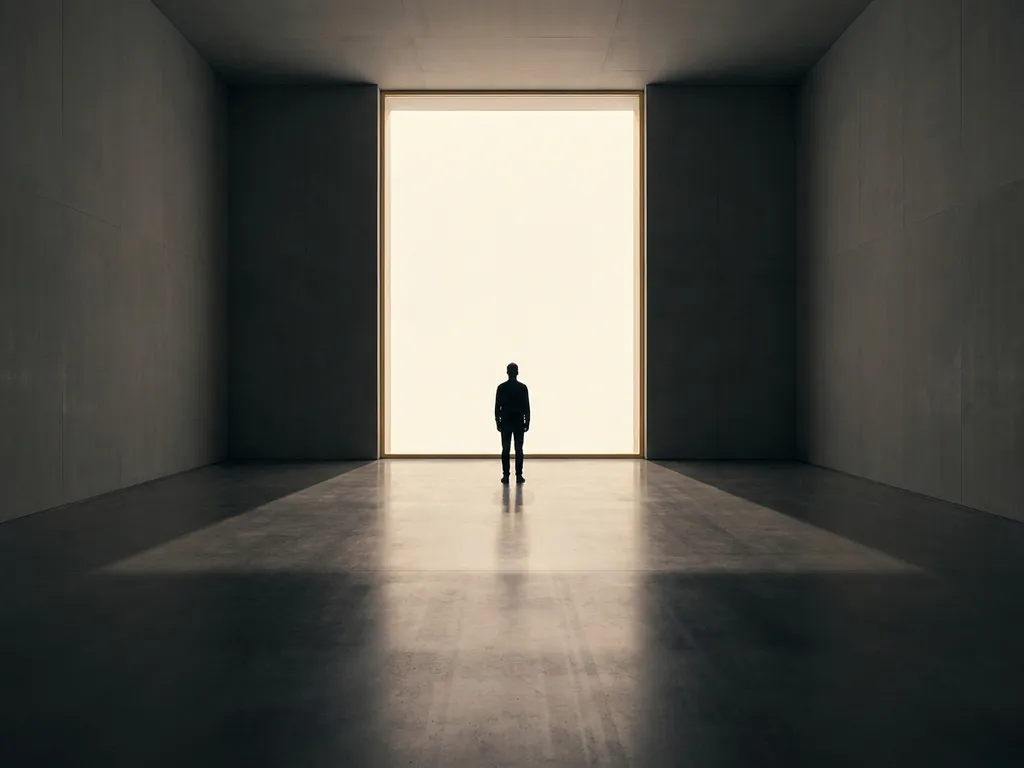
Designing an immersive experience means building an environment where people stop observing and start participating, where every sensory layer, spatial element, and narrative choice works together to pull someone fully into a world. It requires a disciplined blend of storytelling, technology, and spatial design, applied in a deliberate sequence from concept to execution. The questions below unpack each dimension of that process, from foundational principles to practical challenges.
What makes an experience truly immersive?
An experience becomes truly immersive when it surrounds a person on multiple sensory levels simultaneously, removing the psychological distance between observer and environment. Rather than presenting content to someone, it places them inside it. The result is a shift from passive reception to active presence, where the brain processes the experience as real rather than mediated.
Several factors drive that shift. First, sensory completeness matters enormously. Sight and sound are the baseline, but adding spatial audio, tactile elements, temperature, or scent dramatically increases the sense of presence. When more senses confirm the same reality, the brain accepts it more readily. Second, agency plays a critical role. People who can make choices within an experience, move through it on their own terms, or influence its outcome feel far more invested than those who watch passively. Third, narrative coherence holds everything together. Even the most technically sophisticated installation falls flat if the story logic breaks down, if transitions feel jarring, or if the emotional arc is unclear.
At Rooftop Immersive, we describe this as designing with all the senses, not just eyes and ears. A truly immersive experience is not defined by the technology it uses but by the depth of presence it creates in the person experiencing it.
What are the key stages of the immersive experience design process?
The immersive experience design process moves through five core stages: discovery and strategy, concept development, content and technology production, spatial integration, and testing and deployment. Each stage builds on the last, and skipping or rushing any one of them typically produces an experience that feels technically impressive but emotionally hollow.
Discovery and concept development
Every project begins with a deep understanding of the audience, the objective, and the space. Who will enter this experience? What should they feel, understand, or do differently afterward? What physical or digital constraints shape the environment? These questions define the creative brief. From there, concept development translates strategic goals into a narrative world, an emotional arc, and an initial technology palette. The concept must answer a fundamental question before production begins: what transformation does this experience create in the person who goes through it?
Production, integration, and deployment
Once the concept is locked, production begins across parallel tracks: 3D modelling, spatial audio design, interactive programming, content creation, and hardware specification. Integration is the phase where these tracks converge inside the physical space, and it is almost always where complexity peaks. Latency between systems, spatial calibration, and user flow all require careful testing. Deployment is not simply installation. It includes staff briefing, visitor journey mapping, and a feedback loop that allows the experience to be refined after real audiences move through it.
Which technologies are used to design immersive experiences?
Immersive experiences are built using a range of extended reality (XR) technologies, including virtual reality (VR), augmented reality (AR), mixed reality (MR), spatial computing platforms, projection mapping, interactive screens, and AI-driven systems. The right technology depends entirely on the context, audience, and intended depth of immersion.
Virtual reality places users inside a fully digital environment via a headset, blocking out the physical world entirely. It is exceptionally effective for empathy-building, training simulations, and experiences that require complete environmental control. Augmented reality layers digital content over the real world through a smartphone or AR glasses, making it ideal for location-based activations, educational overlays, and public campaigns where removing a headset is not practical. Mixed reality goes a step further by allowing virtual objects to interact with the physical environment in real time, a capability increasingly accessible through hardware like Apple Vision Pro.
Beyond headset-based technologies, 360-degree projection domes create shared immersive environments for groups, while 4D cinema setups add physical sensations like wind, scent, and vibration to visual content. AI avatars and non-player characters (NPCs) enable real-time conversational interaction within an experience, personalising the journey for each visitor. Digital twins, created through photogrammetric scanning, allow real-world locations or objects to exist as interactive 3D environments. Spatial computing ties many of these layers together, enabling content to be anchored precisely to physical coordinates without QR codes or markers.
How does storytelling shape immersive experience design?
Storytelling is the structural backbone of immersive experience design. Technology creates the environment, but narrative gives it meaning. Without a clear emotional arc, a defined protagonist or point of view, and a purposeful sequence of moments, even the most sophisticated installation becomes a series of impressive effects rather than a coherent experience.
In immersive design, storytelling operates differently than in film or theatre. The audience is not seated in front of a screen following a fixed sequence. They move through space, make choices, and encounter narrative fragments in an order that may vary. This means designers must build non-linear narrative architectures where every entry point feels complete and every pathway leads to a meaningful emotional destination. The story must work whether someone spends three minutes or thirty.
Emotional anchoring is equally important. Effective immersive storytelling identifies the single feeling the audience should carry out of the experience and engineers every sensory and spatial decision toward that feeling. At Rooftop Immersive, we work with clients to define that emotional target before a single line of code is written, because every subsequent production decision flows from it.
What role does the physical space play in an immersive design?
The physical space is not simply a container for immersive content. It is an active design element that shapes how people move, feel, and interpret what they encounter. Ceiling height, floor texture, temperature, acoustics, and the flow between zones all influence the emotional register of an experience before any digital layer is added.
Spatial design in immersive projects involves choreographing the visitor journey through the environment. Transition moments between zones are as important as the zones themselves. A sudden shift from a dark, enclosed corridor to an open, brightly lit room creates a psychological reset that can be used to signal a narrative turning point. The physical architecture can reinforce themes, create tension, or provide relief, all without a single word of narration.
Constraints are also creative opportunities. A low ceiling forces intimacy. A circular room eliminates hierarchy. An outdoor location introduces unpredictability that can be woven into the experience’s logic. The most effective immersive designers treat the physical space as a collaborator rather than a limitation, reading its inherent qualities and amplifying them through technology and narrative.
How do you design an immersive experience for different audiences?
Designing for different audiences requires adapting the sensory intensity, narrative complexity, interaction model, and pacing of an experience to match the expectations, capacities, and goals of the specific group entering it. A VR training simulation for corporate professionals demands different design choices than an AR treasure hunt for schoolchildren or an empathy installation for museum visitors.
Audience analysis should happen at the earliest stage of the process. Key variables include age range, prior familiarity with immersive technology, physical accessibility needs, group size, and the emotional state people are likely to arrive in. An audience attending a brand activation is primed for novelty and playfulness. An audience entering a memorial or awareness campaign may need a slower, more contemplative approach.
AI-driven personalisation is increasingly making it possible to adapt a single experience to multiple audience profiles in real time. Language, pacing, content depth, and interaction complexity can all be adjusted dynamically based on user input or behavioural signals. This means an immersive experience designed for a museum can serve both a curious ten-year-old and a subject-matter expert without either feeling underserved.
What are the most common mistakes in immersive experience design?
The most common mistakes in immersive experience design are prioritising technology over narrative, underestimating the importance of the visitor journey, and failing to test with real audiences before deployment. Each of these errors tends to produce experiences that impress technically but fail to create lasting emotional impact.
Technology-first thinking is perhaps the most widespread mistake. When a project begins with “we want to use VR” rather than “we want people to feel this,” the technology becomes the destination rather than the vehicle. The result is often a technically polished experience with no clear emotional purpose. The medium should serve the message, not the other way around.
Underestimating the visitor journey means neglecting what happens before and after the core experience. Queuing, onboarding, transitions, and the moment of exit all shape how people feel about the whole. An extraordinary central experience surrounded by a confusing entry process and an abrupt ending will leave audiences with a diminished overall impression.
Finally, insufficient testing with representative audiences consistently produces experiences that work in controlled conditions but break down in real use. Real visitors move unpredictably, interact in unexpected ways, and bring assumptions designers did not anticipate. Testing early and iterating based on genuine behavioural feedback is not optional. It is the difference between an experience that works and one that merely looks like it should.
How do you measure the impact of an immersive experience?
The impact of an immersive experience is measured by combining behavioural observation, self-reported feedback, engagement metrics, and outcome-based indicators aligned to the original project objectives. There is no single universal metric because impact looks different depending on whether the goal is brand recall, knowledge retention, behaviour change, or emotional resonance.
For educational and social impact applications, measurement typically focuses on knowledge gain, attitude shift, and sustained behaviour change. Pre- and post-experience surveys, follow-up assessments, and longitudinal tracking can reveal whether the experience achieved genuine learning or empathy outcomes. Research in cognitive science consistently shows that multisensory, embodied experiences produce stronger and more durable memory encoding than passive content consumption, which is why immersive formats tend to outperform traditional media on retention metrics.
For commercial and brand applications, engagement metrics such as dwell time, interaction depth, social sharing, and conversion rates provide measurable indicators of impact. Physical visitor flow data, collected through sensors or spatial analytics, reveals which zones captured attention and which were bypassed. Combining quantitative data with qualitative audience feedback creates a complete picture of what worked and what could be refined.
The most important measurement principle is defining success criteria before the experience is built, not after. Impact can only be measured against intention. If you are ready to start defining what success looks like for your next immersive project, we would welcome the conversation. Contact us to explore what is possible.
Gerelateerde artikelen
- What are the different types of interactive museums?
- How much does experiential marketing cost?
- What does immersive event mean?
- What are 10 real-world examples of augmented reality?
- What part of the brain is responsible for sensory memory?
- What is an example of multi sensory learning?
- How can I use augmented reality?
- What are branded immersive experiences?
- How do dome installations create immersive experiences?