
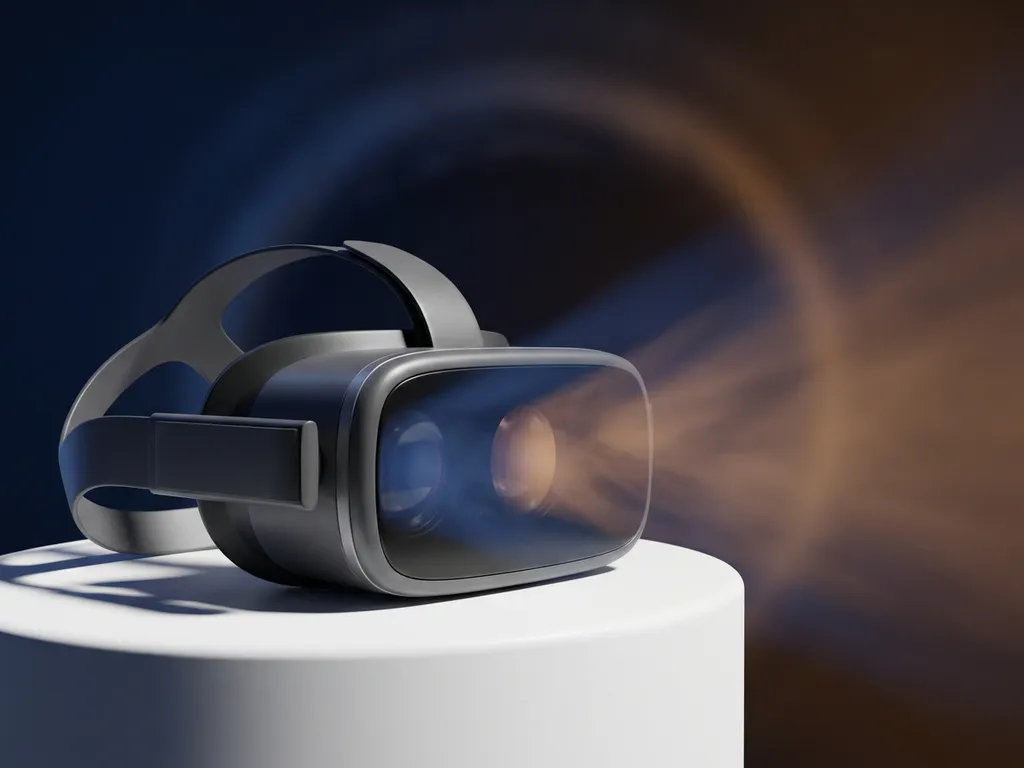
VR content production is the process of creating immersive video and interactive experiences designed to be viewed inside a virtual reality headset, placing the audience inside a fully rendered environment rather than watching from outside a screen. Unlike traditional video, VR content surrounds the viewer in 360 degrees, requiring entirely different capture methods, storytelling logic, and technical workflows. The sections below unpack each dimension of that process, from the types of content available to the tools, timelines, and decisions that shape a finished VR experience.
How is VR content different from traditional video production?
VR content differs from traditional video production in one fundamental way: the viewer is no longer an observer but a participant placed inside the scene. Traditional video uses a fixed frame that a director controls entirely. In VR, the viewer can look in any direction at any moment, which means every angle of the environment must be intentionally designed, and the story must be told without relying on cuts, close-ups, or directed gaze.
This shift changes nearly every creative and technical decision. In traditional filmmaking, a camera operator chooses what the audience sees. In VR production, the audience chooses. That means spatial audio must guide attention rather than camera movement, narrative cues must be embedded in the environment, and the sense of presence replaces the cinematic frame as the primary storytelling tool.
There are also significant technical differences. VR footage is captured with omnidirectional cameras or built entirely inside 3D engines like Unreal Engine or Unity. Post-production involves stitching footage, spatial audio mixing, and rendering environments that respond to head movement in real time. The result is not a video to be watched but a space to be inhabited, which demands a fundamentally different creative mindset from the very first day of pre-production.
What are the main types of VR content?
The main types of VR content are passive 360-degree video, interactive VR experiences, location-based VR, and simulation-based training environments. Each type serves different goals, audiences, and production requirements, and choosing the right format is one of the most important early decisions in any VR project.
Passive 360-degree video
Passive VR places the viewer inside a pre-filmed or pre-rendered environment where they can look around freely but cannot interact with objects or change the outcome. This format works well for storytelling, brand films, documentary experiences, and empathy-driven content where the goal is emotional immersion rather than active participation. Cinematically produced 360-degree content can be extraordinarily powerful precisely because it removes the barrier between the viewer and the scene.
Interactive and simulation-based VR
Interactive VR allows the viewer to make decisions, manipulate objects, complete tasks, or navigate branching narratives. This format is built inside real-time 3D engines and is the preferred choice for training simulations, educational modules, and entertainment experiences where engagement and retention matter most. The added complexity of interactivity increases both production time and cost, but the depth of engagement it creates is substantially higher than that of passive formats.
Location-based and shared VR
Location-based VR runs on synchronized headsets for groups, typically in dedicated physical spaces at events, museums, or exhibitions. This format combines the immersive power of VR with a shared social experience, making it effective for public-facing campaigns, cultural institutions, and large-scale brand activations where collective impact is the goal.
What does the VR content production process look like?
VR content production follows a structured process that moves through five core phases: discovery and concept development, pre-production, production, post-production, and deployment. The process closely mirrors traditional film or software development in its phases but differs significantly in what happens inside each one.
- Discovery and concept development: The project begins by defining the audience, the core experience goal, and the format. Is this a passive emotional journey or an interactive simulation? What hardware will it run on? What outcome should the viewer leave with? These decisions shape every subsequent choice.
- Pre-production: Scripts, storyboards, and environment designs are developed. For interactive VR, this phase also includes interaction design and user flow mapping. For live-action 360-degree content, location scouting and shot planning must account for the absence of a traditional frame.
- Production: Depending on the format, this phase involves either filming with omnidirectional camera rigs or building 3D environments inside a real-time engine. Live-action shoots require careful blocking since the camera is always visible to the viewer, and the crew must stay out of frame in all directions simultaneously.
- Post-production: Live-action footage is stitched and color-graded. 3D environments are rendered, lit, and optimized for headset performance. Spatial audio is mixed to match the three-dimensional space. Interactive logic is programmed and tested across hardware platforms.
- Deployment and integration: The finished experience is packaged for the target headset or platform, tested for comfort and performance, and delivered alongside any supporting hardware, training, or content management systems needed for ongoing use.
What equipment and tools are used in VR content production?
VR content production relies on a combination of capture hardware, real-time 3D engines, spatial audio tools, and headset platforms. The specific toolkit depends on whether the content is live-action, fully computer-generated, or a hybrid of both.
For live-action 360-degree filming, omnidirectional camera rigs capture footage in all directions simultaneously. These rigs range from consumer-level systems to professional multi-lens arrays capable of capturing high-resolution stereoscopic footage. The raw footage then goes through stitching software that seamlessly joins the individual camera feeds into a single spherical image.
For CGI and interactive VR, the primary tools are real-time 3D engines. Unreal Engine and Unity are the industry standards, offering the rendering power, physics simulation, and interaction frameworks needed to build responsive virtual environments. 3D modeling software, motion capture systems, and photogrammetry tools are used to create and scan the assets that populate those environments.
Spatial audio is handled through dedicated tools that position sound in three-dimensional space, so sounds shift naturally as the viewer turns their head. On the delivery side, the major headset platforms include standalone devices and tethered systems connected to high-performance computers, each with its own performance constraints that influence how content is built and optimized.
How long does it take to produce a VR experience?
A VR experience typically takes between six weeks and nine months to produce, depending on the complexity of the content, the level of interactivity, and the scale of the environments involved. Simple passive 360-degree experiences sit at the shorter end of that range, while fully interactive, multi-scene simulations with custom 3D assets and branching narratives require significantly more time.
Several factors directly affect the timeline. The number of unique environments or scenes, the volume of custom 3D assets required, the complexity of interaction design, the need for live-action filming, and the hardware platforms being targeted all add time to the production schedule. Projects that require extensive iteration and stakeholder review cycles will also take longer than those with clear briefs and streamlined approval processes.
One often underestimated phase is testing and optimization. VR content must perform smoothly at high frame rates to avoid discomfort for the viewer. Achieving that performance across different headset models requires careful technical refinement that cannot be rushed without compromising the quality of the experience.
What makes VR content effective for education and training?
VR content is effective for education and training because it places learners inside realistic scenarios where they can practice skills, make decisions, and experience consequences in a safe environment. The combination of presence, interactivity, and multisensory engagement activates deeper cognitive processing than reading or watching a screen, which research in learning science consistently links to stronger retention and skill transfer.
Traditional training often struggles with the gap between knowing and doing. A learner can read about a procedure, watch a demonstration, and still hesitate when facing the real situation. VR closes that gap by making the practice environment feel real enough to trigger genuine emotional and physiological responses. A medical student practicing a procedure in VR, or a new employee navigating a difficult customer conversation, builds muscle memory and decision-making confidence that passive formats cannot replicate.
For topics that are difficult, dangerous, or expensive to practice in the real world, the advantage is even more pronounced. Emergency response training, industrial safety procedures, empathy-building experiences for social issues, and complex scientific concepts all become accessible, repeatable, and scalable through immersive VR modules. We design educational VR experiences specifically to meet these needs, building content that adapts to different learning styles and can be deployed across institutions without requiring physical infrastructure at every location.
When should a brand choose VR over other immersive formats?
A brand should choose VR when the goal is deep emotional immersion, sustained engagement, or skill-based interaction that requires the viewer to feel genuinely present inside the experience. VR is the strongest format when presence itself is the point, when the audience needs to feel as though they are somewhere else entirely, not just looking at an overlay or a screen.
There are specific situations where VR consistently outperforms other immersive formats. When a brand needs to transport an audience to a location that cannot be visited in person, whether that is a factory floor, a remote landscape, or a future product environment, VR delivers that transportation convincingly. When the experience requires sustained attention over several minutes without distraction, the enclosed nature of a headset removes competing stimuli in a way that AR or interactive screens cannot. When the goal is empathy, placing a viewer inside someone else’s perspective through VR creates an emotional depth that is difficult to achieve through any other medium.
AR and mixed reality are often the better choice when the experience needs to integrate with the physical world, when audiences are in public spaces without the ability to put on a headset, or when the interaction needs to be brief and shareable. The decision between formats is ultimately a question of context, audience, and outcome rather than a hierarchy of technologies. The most effective immersive strategies often combine formats, using VR for depth and AR for reach, creating a layered experience that meets audiences wherever they are.
If you are weighing which immersive format fits your next project, or want to explore what a VR production would look like for your specific goals, we would welcome the conversation. Contact us to start a discussion about what is possible.
Gerelateerde artikelen
- How to attract people in an exhibition?
- What are two examples of experiential marketing?
- What are the four key concepts in immersive media?
- How big is the immersive experience market?
- What is immersive learning?
- How to design an immersive experience?
- What is immersive and interactive media?
- How to create a virtual reality experience?
- What are the 4 elements of virtual reality?