
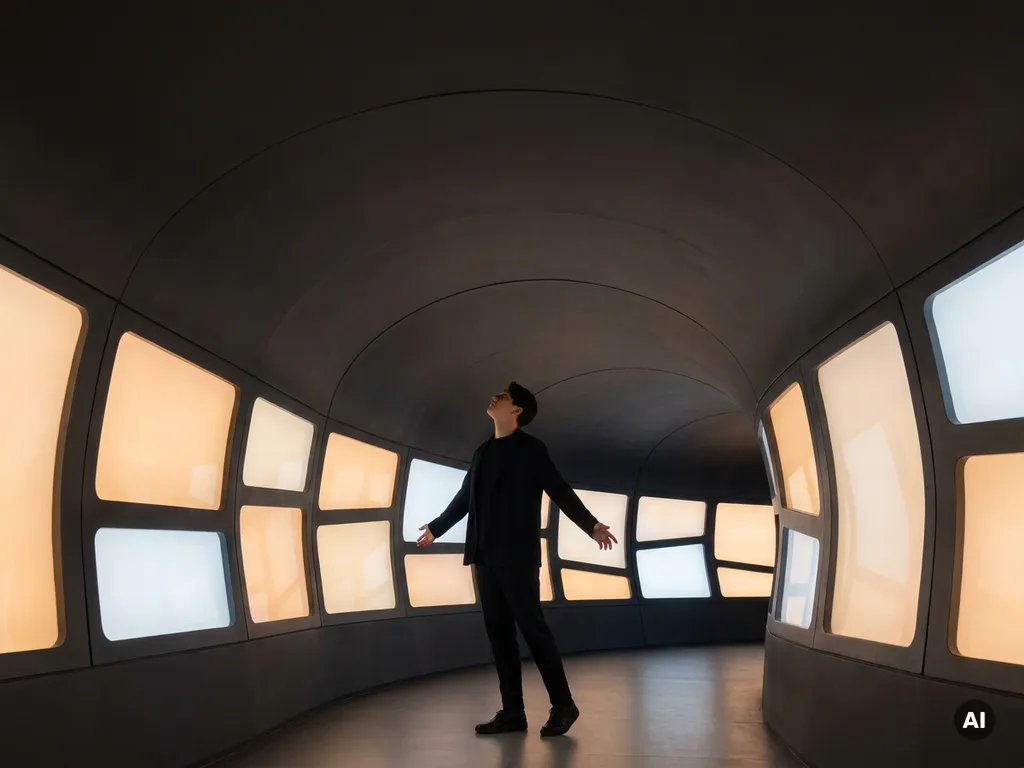
An experiential marketing agency designs and produces live, interactive brand experiences that place audiences at the center of the story rather than in front of a screen. Instead of broadcasting a message, these agencies create environments, activations, and events where people physically participate, forming memories and emotional connections that passive advertising simply cannot replicate. The questions below unpack exactly how these agencies work, what they build, and how to find the right one for your brand.
What types of campaigns does an experiential marketing agency create?
An experiential marketing agency creates campaigns that span live brand activations, immersive pop-up environments, augmented and virtual reality experiences, interactive installations, product launch events, and location-based storytelling. The common thread across all of them is direct audience participation: every campaign is designed so that the audience does something, feels something, or becomes part of the brand narrative itself.
In practice, the scope ranges enormously. At one end, a brand activation agency might produce a single-day pop-up in a city square where passersby interact with a product through touch and sound. At the other end, a full-scale immersive installation might run for months inside a museum or exhibition hall, drawing thousands of visitors through a multi-sensory environment layered with projection, scent, spatial audio, and AI-driven personalization.
Some of the most compelling campaign formats in 2026 include:
- AR activations – augmented reality overlays that transform physical spaces, product packaging, or event signage into interactive digital layers
- VR experiences – cinematic or interactive virtual environments that transport audiences to places or scenarios impossible to stage in the real world
- Immersive installations – 360-degree projection domes, 4D cinemas, and sensory rooms that surround audiences completely
- Geospatial campaigns – location-anchored digital content that activates in specific outdoor spaces without QR codes or apps
- Interactive screens and AI avatars – smart surfaces and conversational characters that respond in real time to individual visitors
What unites all of these formats is intentionality. Every element, from the lighting temperature to the narrative arc, is designed to deepen engagement and leave a lasting impression.
How does experiential marketing differ from traditional advertising?
Experiential marketing differs from traditional advertising in one fundamental way: it replaces observation with participation. Traditional advertising delivers a message to a passive audience through TV spots, print placements, or digital banners. Experiential marketing invites the audience into a live moment where they actively engage, creating a personal memory rather than a received impression.
Traditional advertising operates on reach and repetition: the more times someone sees a message, the more likely it is to stick. Experiential marketing operates on depth. A single well-designed activation can generate stronger brand recall, higher emotional resonance, and more authentic social sharing than months of paid media because the person experienced something real rather than watched something produced.
There are also structural differences in how each approach works:
- Direction of communication: Traditional advertising is one-way; experiential marketing is a dialogue between brand and audience
- Audience role: In traditional advertising, the audience is a viewer; in immersive marketing, the audience is a participant
- Measurement: Traditional advertising measures impressions and clicks; experiential marketing measures dwell time, emotional response, and behavioral change
- Longevity: A digital ad impression fades within seconds; a well-crafted physical experience can be remembered for years
This does not mean experiential marketing replaces traditional advertising: the strongest brand strategies use both in concert. But for moments when a brand needs to create genuine connection rather than simple awareness, experiential is the more powerful tool.
What industries benefit most from experiential marketing?
Experiential marketing delivers the greatest impact in industries where emotional connection, trust, or complexity make it difficult to communicate value through conventional media. The sectors that consistently see the strongest returns include consumer brands, cultural institutions, education, healthcare, NGOs, and the public sector, essentially any field where a message needs to be felt, not just heard.
Cultural and heritage institutions
Museums, galleries, and heritage sites use immersive brand experiences to attract younger audiences, extend the life of collections, and deepen visitor engagement. When a painting or artifact becomes the entry point for an interactive AR layer or a spatial storytelling journey, the emotional impact of the original object is amplified rather than replaced. Cultural institutions working with a brand experience agency can transform static exhibitions into dynamic, repeatable visitor journeys.
Education and NGOs
For educators and social impact organizations, experiential marketing services solve a problem that no brochure or video can: making abstract or emotionally difficult subjects feel real. VR simulations can place a learner inside a refugee camp, a historical event, or a scientific phenomenon. This kind of embodied learning drives comprehension and empathy at a level that traditional instructional media cannot match. Organizations like UNICEF have used immersive formats precisely because the emotional truth of an experience is far more persuasive than statistics alone.
Consumer brands and agencies
In a saturated media environment, consumer brands turn to experiential marketing to cut through noise and generate authentic advocacy. Product launches, brand activations at festivals, and interactive retail installations all create moments people photograph, share, and talk about: earned media that extends the campaign’s reach far beyond its physical footprint.
How does an experiential marketing agency measure campaign success?
An experiential marketing agency measures campaign success through a combination of engagement metrics, behavioral indicators, and longer-term brand impact data. Unlike traditional advertising, where success is often reduced to impressions or click-through rates, experiential marketing demands a richer measurement framework that captures how deeply an audience was affected, not just how many people were present.
The specific metrics used depend on the campaign’s objectives, but the most meaningful indicators typically include:
- Dwell time – how long participants actively engaged with the experience, which reflects depth of attention
- Completion rates – for multi-stage or narrative experiences, the percentage of participants who moved through the full journey
- Social amplification – organic sharing, tagging, and user-generated content created during and after the activation
- Emotional response data – gathered through post-experience surveys, biometric feedback, or in-session behavioral signals
- Behavioral change – for educational or NGO campaigns, measurable shifts in knowledge, attitude, or intended action
- Brand recall and sentiment – measured through follow-up research comparing pre- and post-experience brand perception
For campaigns with a commercial objective, agencies also track downstream indicators such as conversion rates, lead generation, and sales uplift attributable to the activation period. The most sophisticated experiential marketing services now integrate real-time analytics directly into the experience environment, allowing teams to optimize engagement on the fly rather than waiting for post-campaign reports.
What technologies do experiential marketing agencies use?
Experiential marketing agencies use a broad stack of spatial, digital, and sensory technologies to build immersive environments. The core toolkit in 2026 includes augmented reality, virtual reality, mixed reality, AI-driven personalization, projection mapping, spatial audio, interactive screens, and volumetric capture, often combined within a single activation to create layered, multi-sensory experiences.
Each technology serves a specific experiential purpose:
- AR and geospatial AR – overlay digital content onto physical environments, enabling interactions without dedicated hardware
- VR and 360-degree film – transport audiences to fully virtual environments, ideal for empathy-building or training scenarios
- Mixed reality (including Apple Vision Pro) – blend real and virtual elements in real time for next-generation interactive environments
- AI avatars and NPCs – conversational characters that respond dynamically to individual participants, personalizing the experience at scale
- 4D cinema and sensory installations – add scent, temperature, airflow, and haptic feedback to visual and audio content
- Digital twins – photogrammetric 3D models of real locations or products used in virtual showrooms, AR overlays, or training simulations
- Anamorphic and hyperrealistic animation – visually arresting content formats for outdoor screens and event environments
The most effective agencies do not lead with technology for its own sake. They select tools based on the story they need to tell and the response they want to generate. At Rooftop Immersive, we design every technical layer around a clear experiential intention: the technology serves the narrative, never the other way around.
When should a brand hire an experiential marketing agency?
A brand should hire an experiential marketing agency when its objectives require emotional depth, physical presence, or behavioral change that conventional media cannot deliver. The clearest signals that it is time to bring in a specialist brand activation agency include a major product launch, a need to shift brand perception, a campaign targeting hard-to-reach or skeptical audiences, or a moment that demands genuine memorability rather than simple awareness.
More specifically, consider engaging an experiential marketing agency when:
- You are launching something that needs to be felt, not just seen – a new product, a rebrand, or a mission-critical message
- Your audience is tuning out traditional advertising and you need a format that earns attention rather than buying it
- Your subject matter is complex, abstract, or emotionally sensitive and requires immersive storytelling to land with authenticity
- You want to generate organic social amplification through an experience people are compelled to share
- You are building a long-term educational or awareness program that needs to drive genuine behavioral change
- Your event, exhibition, or activation needs a “wow factor” that elevates it above the competition
Timing also matters. Experiential campaigns require meaningful lead time for concept development, technology integration, and production. Engaging an agency early in the planning cycle, rather than as a last-minute addition, consistently produces stronger results and greater creative ambition.
How do you choose the right experiential marketing agency?
Choosing the right experiential marketing agency comes down to three core criteria: proven creative and technical capability in the formats your campaign requires, genuine alignment with your brand values and audience, and a working model that prioritizes collaboration over vendor-client distance. A strong agency does not just execute your brief: it deepens it.
When evaluating potential partners, look closely at the following:
- Portfolio breadth and depth – has the agency delivered campaigns in your sector or for comparable challenges? Review their completed projects to assess creative range and production quality
- End-to-end capability – agencies that handle concept, design, technology, and production under one roof offer greater coherence and accountability than those that outsource key elements
- Technology fluency – does the agency stay current with emerging platforms like spatial computing, AI personalization, and geospatial AR, or are they locked into legacy formats?
- Mission alignment – particularly for educational, NGO, or cultural clients, does the agency understand the ethical and narrative responsibilities that come with immersive storytelling?
- Measurement approach – can they articulate how they will define and track success in ways that matter to your organization?
- Scalability – can the experience be adapted for different venues, audience sizes, or languages without losing its core impact?
Cost is also a factor, and the investment in experiential marketing services varies based on the complexity of the technology, the duration of the activation, the degree of customization, and the scale of production required. Rather than comparing headline prices, focus on value per engagement: the depth of impact created for each person who moves through the experience.
The right agency feels less like a supplier and more like a creative partner who is as invested in the outcome as you are. If you are ready to explore what a purposeful, multi-sensory campaign could look like for your brand or organization, we would love to hear from you. Contact us to start the conversation.
Gerelateerde artikelen
- What is an example of an immersive experience?
- What is an immersive museum?
- What is an example of immersive experience?
- Which companies use augmented reality?
- How to create a brand activation?
- How does AR work in retail?
- What is immersive and interactive media?
- Does immersive mean 3D?
- Do 3D artists get paid well?