
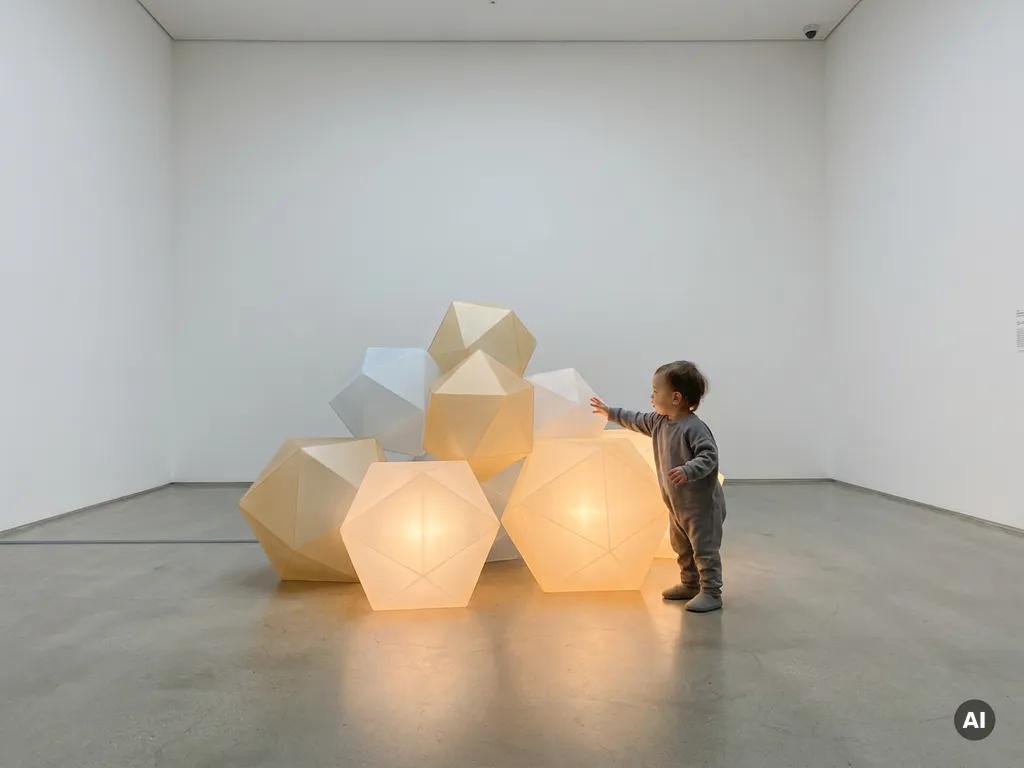
Interactive museums are cultural institutions where visitors actively engage with exhibits rather than passively observe them. These spaces are designed to invite participation, spark curiosity, and create memorable experiences through hands-on activities, digital technologies, and immersive environments. The category spans a wide range of formats, from children’s discovery centers to digital art installations and science labs, each with its own approach to engagement.
What unites them is a shared belief that learning and meaning-making happen most powerfully when people are involved, not just watching. The questions below explore the main types of interactive museums, the technologies that power them, and which formats tend to leave the deepest impression.
How do interactive museums differ from traditional museums?
Interactive museums differ from traditional museums in that they are designed around visitor participation rather than passive observation. Where a conventional museum presents artifacts behind glass with explanatory labels, an interactive museum invites visitors to touch, respond, experiment, and contribute to the experience. The visitor shifts from audience member to active participant, which fundamentally changes how information is absorbed and retained.
Traditional museums prioritize preservation and display. Their authority comes from the objects themselves, and the visitor’s role is largely interpretive. Interactive museums, by contrast, treat the visitor’s response as part of the exhibit. The experience is incomplete without engagement.
This distinction matters for memory and emotional impact. When people do something, rather than simply read about it, they are far more likely to remember it. Interactive exhibits create what educators call experiential learning, where understanding is built through direct involvement. This is why interactive formats have become increasingly important for museums trying to attract younger audiences, school groups, and first-time visitors who may not yet have a reason to care about a subject before they arrive.
What are the main types of interactive museums?
The main types of interactive museums include science and technology centers, children’s discovery museums, digital and immersive art museums, natural history museums with interactive galleries, and hybrid institutions that combine physical collections with digital experiences. Each type uses interactivity differently depending on its audience, subject matter, and educational goals.
- Science and technology centers use hands-on experiments and physical demonstrations to make abstract concepts tangible.
- Children’s discovery museums are built entirely around play-based learning for younger visitors.
- Immersive art museums use projection, sound, and spatial design to place visitors inside the artwork.
- Natural history and heritage museums increasingly add digital layers to physical collections to deepen context.
- Mixed-reality and XR experience venues use augmented and virtual reality to create fully interactive narratives.
The boundaries between these types are becoming less fixed. Many institutions now combine physical objects with digital interactivity, creating hybrid experiences that serve both preservation and engagement goals simultaneously. This blending reflects a broader shift in how cultural institutions think about their role: not just as guardians of the past, but as active spaces for discovery and dialogue.
What makes a science museum interactive?
A science museum becomes interactive when its exhibits invite visitors to test, experiment, and observe outcomes rather than simply read about scientific principles. Interactive science exhibits typically include physical mechanisms visitors can operate, simulations that respond to input, and demonstrations that make invisible processes visible. The goal is to create genuine moments of discovery rather than delivering pre-packaged information.
Classic examples include wind tunnels where visitors can observe aerodynamics in real time, electricity demonstrations that respond to touch, and engineering challenges where groups must build structures under constraints. These formats work because they place scientific reasoning in a context that feels personally relevant and immediately rewarding.
Modern science centers go further by incorporating digital simulations, data visualization, and AI-driven exhibits that adapt to visitor input. A visitor might manipulate climate variables on a large touchscreen and see projected outcomes, or use sensors to track their own body’s responses to different stimuli. These technologies allow science museums to address complex, abstract topics such as genomics, quantum physics, or climate systems in ways that physical models alone cannot achieve.
The most effective interactive science exhibits also build in social dynamics. When exhibits are designed for two or more people to engage with simultaneously, they encourage conversation, collaboration, and shared reasoning, which deepens the learning experience beyond what any individual could achieve alone.
How do immersive art museums use technology?
Immersive art museums use technology to transform art from something you look at into something you inhabit. Large-scale projection mapping, spatial audio, motion sensors, and responsive lighting are used to create environments where visitors move through and interact with the artwork itself. The most well-known examples place visitors inside digitally rendered versions of famous paintings or within entirely original sensory worlds designed for the space.
These institutions rely on a combination of hardware and creative direction. Projection mapping allows images to cover entire walls, floors, and ceilings simultaneously, eliminating the frame and placing the visitor at the center of the composition. Motion-tracking technology enables exhibits to respond to where visitors stand or how they move, making each person’s experience subtly unique.
Sound design plays an equally important role. Spatial audio systems create the impression that sound originates from specific points in a room, reinforcing the sense of being inside an environment rather than observing it from outside. When combined with scent diffusion and temperature variation, the result is a fully multisensory experience that engages the body as well as the mind.
Technology in immersive art museums is most effective when it serves the artistic intention rather than drawing attention to itself. The best implementations make the technology invisible, allowing the emotional and aesthetic impact of the work to take precedence. This balance between technical sophistication and artistic integrity is one of the defining challenges of the format, and one that separates genuinely impactful immersive exhibitions from those that prioritize spectacle alone.
What is a children’s discovery museum and how does it work?
A children’s discovery museum is an interactive cultural institution designed specifically for young visitors, typically between the ages of two and twelve, where every exhibit is built around play-based exploration and hands-on discovery. Rather than presenting information to be absorbed, these museums create structured environments where children learn by doing, experimenting, and role-playing in safe, stimulating spaces.
The exhibits in a children’s discovery museum are typically organized around real-world scenarios or developmental themes. A child might explore a miniature grocery store to learn about numbers and social interaction, build structures in a construction zone to understand physics and engineering, or engage with water tables to observe cause and effect. The design philosophy is grounded in child development research, which consistently shows that young children learn most effectively through active, self-directed play.
Staff facilitation is often a key component. Educators or explainers are present not to instruct but to ask questions, introduce challenges, and extend the child’s thinking in directions they might not have considered. This guided discovery approach respects the child’s autonomy while ensuring the experience has genuine educational depth.
In 2026, many children’s discovery museums are integrating digital tools alongside physical exhibits, including touchscreen stations, augmented reality layers, and age-appropriate coding activities. These additions expand the range of topics museums can address while maintaining the core principle that the child’s active participation drives the learning.
How are AR and VR used in interactive museum experiences?
Augmented reality (AR) and virtual reality (VR) are used in interactive museum experiences to extend what physical spaces and objects can communicate. AR overlays digital content onto the real world, allowing visitors to see additional information, animations, or reconstructions layered onto physical exhibits. VR transports visitors into fully rendered environments, enabling them to experience historical periods, distant locations, or abstract concepts as if they were present within them.
Augmented reality in museums
AR is particularly effective for adding context to physical collections. A visitor pointing a device at an ancient artifact might see it reconstructed in its original form, surrounded by the environment it came from. AR can also animate static displays, bring portraits to life, or reveal hidden layers of a painting’s composition. Because AR preserves the physical object at the center of the experience, it suits institutions that want to enhance their collections without replacing them.
Geospatial AR takes this further by anchoring digital content to specific geographic coordinates, allowing outdoor heritage sites or city environments to become part of the museum’s narrative. Visitors can walk through a historical city center and see buildings reconstructed around them, or follow an AR trail that reveals stories tied to specific locations.
Virtual reality in museums
VR creates experiences that are impossible to replicate physically. A museum addressing climate change might place visitors inside a coral reef ecosystem at different points in time, making the impact of warming oceans viscerally real. A heritage institution might offer a VR reconstruction of a site destroyed by conflict, preserving cultural memory in a form that photographs and text cannot match.
We work with both AR and VR across a range of cultural and educational applications, designing experiences where the technology serves the story rather than the other way around. The most impactful museum applications of these tools are those where the immersive format answers a question that no other medium could address as effectively.
Which type of interactive museum experience has the most impact?
The interactive museum experience with the most lasting impact is one that combines emotional engagement with active participation and personal relevance. Research in experiential learning consistently shows that people retain information more deeply when they are emotionally involved and physically engaged at the same time. No single format guarantees this, but immersive, multisensory experiences that place the visitor inside the narrative tend to produce the strongest responses.
Fully immersive environments, whether physical installations, VR experiences, or mixed-reality exhibits, are particularly effective because they reduce the psychological distance between the visitor and the subject. When someone feels present within an experience rather than observing it from outside, their emotional investment increases and their memory of the experience deepens. This is why immersive formats are increasingly used for subjects that require genuine empathy shifts, such as humanitarian issues, historical injustice, or environmental challenges.
That said, impact also depends on context and audience. A hands-on science exhibit may have more impact on a ten-year-old than a sophisticated VR installation because the format matches the developmental stage and the learning goal. For adult audiences engaging with complex social or historical narratives, immersive storytelling environments tend to be more effective than passive displays or even traditional interactive touchscreens.
The most impactful experiences also extend beyond the museum visit itself. When an exhibit gives visitors something to think about, talk about, or act on after they leave, it has succeeded at the deepest level. This is the benchmark that drives the most ambitious interactive museum design today: not just engagement in the moment, but meaning that travels with the visitor long after the doors close. If you are exploring how immersive technology can elevate your next exhibition or cultural project, we would welcome the conversation. Feel free to contact us to discuss what is possible.
Gerelateerde artikelen
- What are the advantages and disadvantages of immersive technology?
- How much does a planetarium dome cost?
- What is immersive entertainment?
- What part of the brain is responsible for sensory memory?
- What are the four key concepts in immersive media?
- Can spatial media increase foot traffic to physical locations?
- What is immersive learning?
- How do you measure success in experiential marketing?
- How do you create educational immersive content?